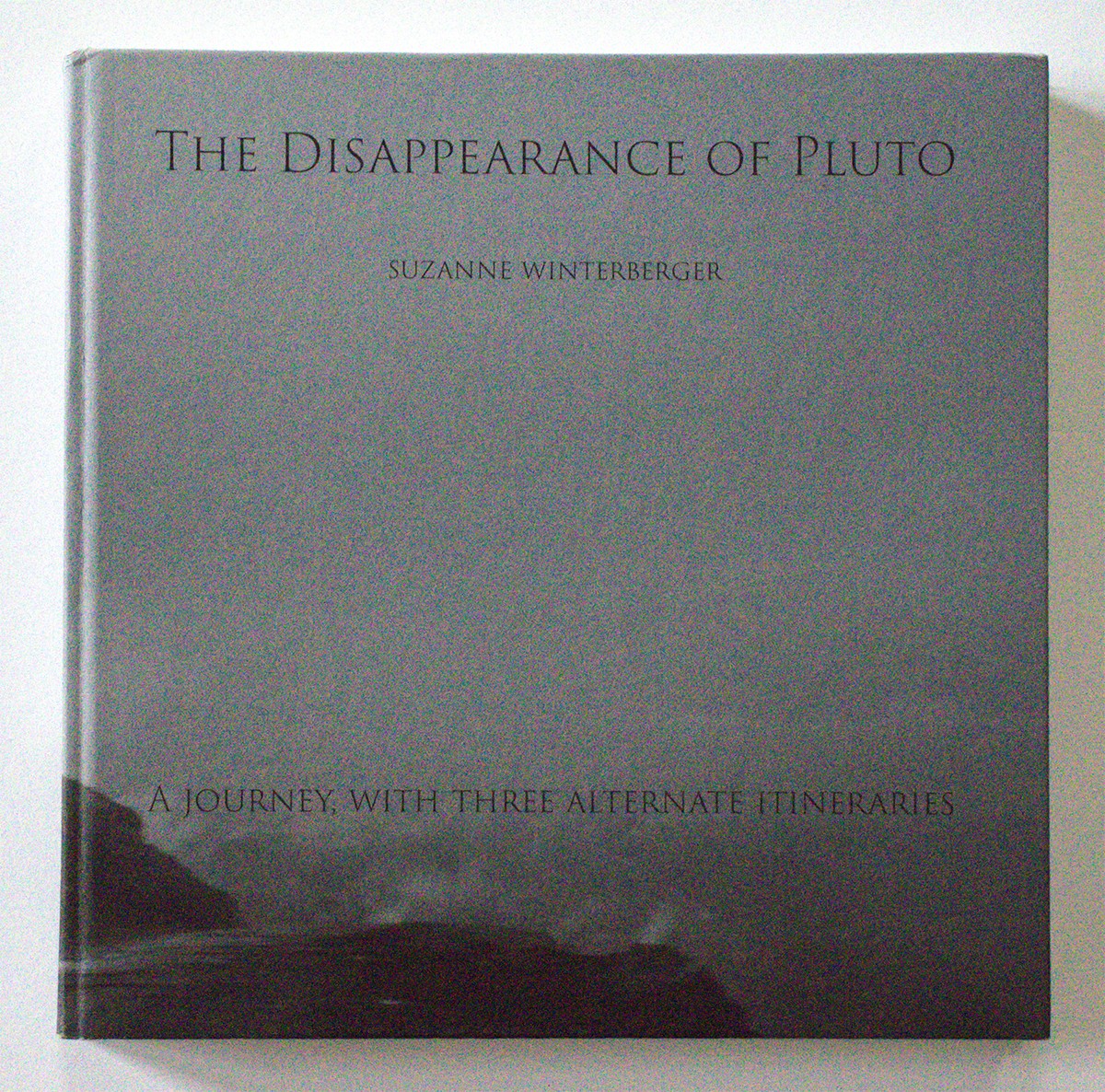
Review by Hans Hickerson ·
I am not the only photographer out there with decades behind the viewfinder who finally is able to deal with their accumulated collection of images. Photographer Suzanne Winterberger is in the same situation and has been evaluating and shaping her archive into books.
When I first considered writing about Winterberger’s The Disappearance of Pluto, I was put off by the chore of making sense of such a diverse range of photographs. How did it all fit together? Did it fit together?
I had decided to use my review to riff on Roland Barthes’ “punctum.” I was going to suggest that there are so many orphaned, “punctum-free” photos out there, looking to be validated, begging to be connected to viewers who might rescue them from oblivion, that image-makers needed to be careful not to create mere visual background noise. If you are going to share something, to ask for viewers’ attention, you had better bring your A team. You had better not waste our time messing around. You had better reach out and grab us by the lapels and convince us with something compelling. You had better start puncting.
Instead, after digging into Pluto’s pages, after spending time wandering around its “alternate universe,” I was reminded that quiet can be compelling.
There are different strands or themes to Winterberger’s images, but they are unified in a couple of ways. First, they are about observable rather than constructed reality. Winterberger started off as a photographer making constructed photographs, but later she decided that reality was more interesting. “I love reality,” she writes. “It’s not always pleasant, not always pretty, but reality is real. Maybe.” The photos in Pluto are also unified in that they are about the United States. They are a narrative of Winterberger’s observations and wanderings in her native land.
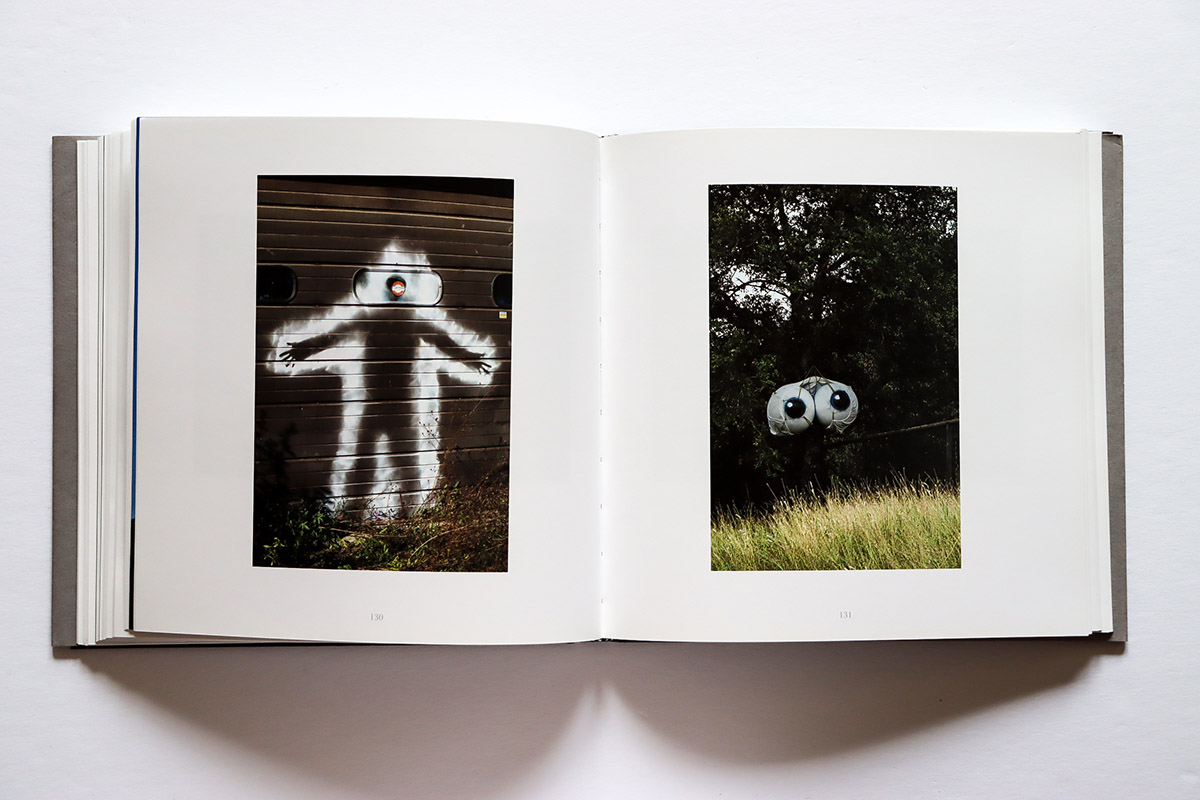
Pluto is divided into three parts, “A Strange and Troubled Land,” “Quality Cuts for the People,” and “The Letting Go” that correspond to work assembled from different time periods. The latter two titles are taken from found texts in photographs. The images in each of the three sections cover much the same ground, with a style and visual themes echoing through all three sections. Winterberger has an eye for the odd, weird, and offbeat, and she found plenty of examples for contemplation in the twenty-five states where she photographed.
A list with places and some brief descriptions is included at the end of the book. It is annoying to flip back and forth to match images and places, but it is a typical solution in photobooks. Photographers do not want labels to interfere with the visual flow of the sequence, but they know that including more information can be helpful.
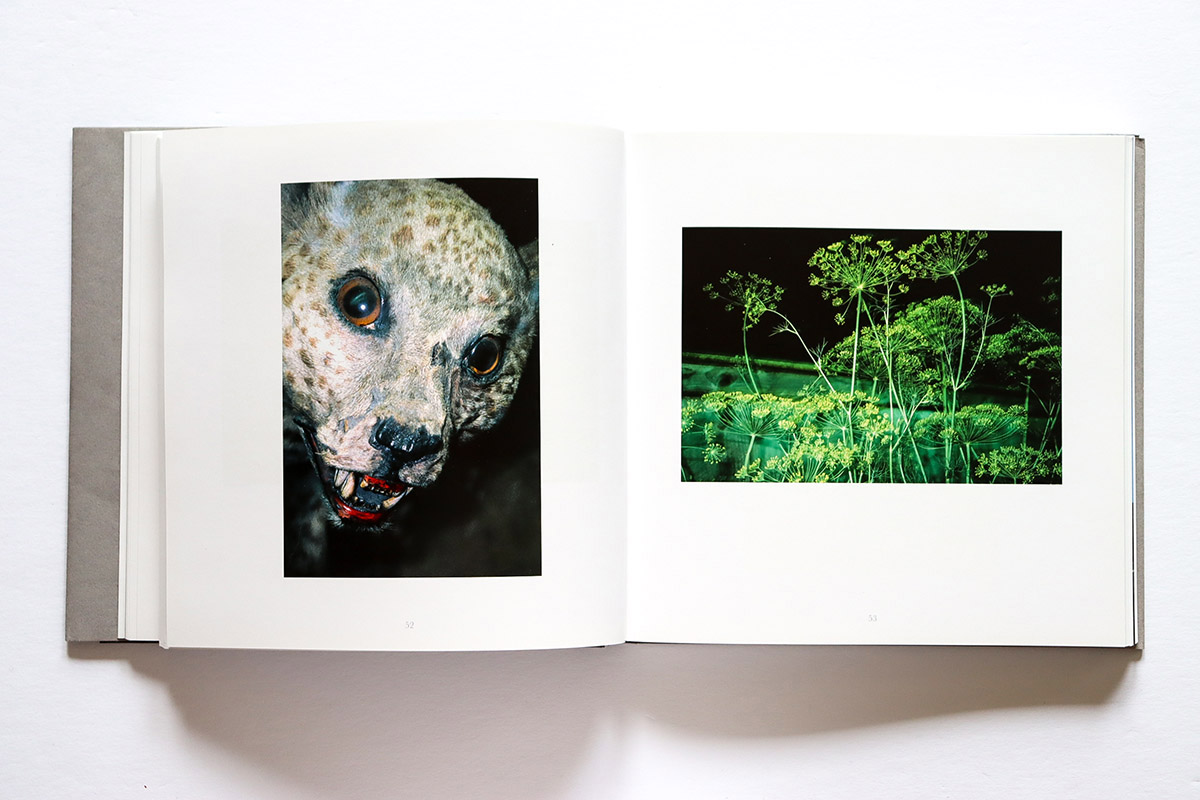
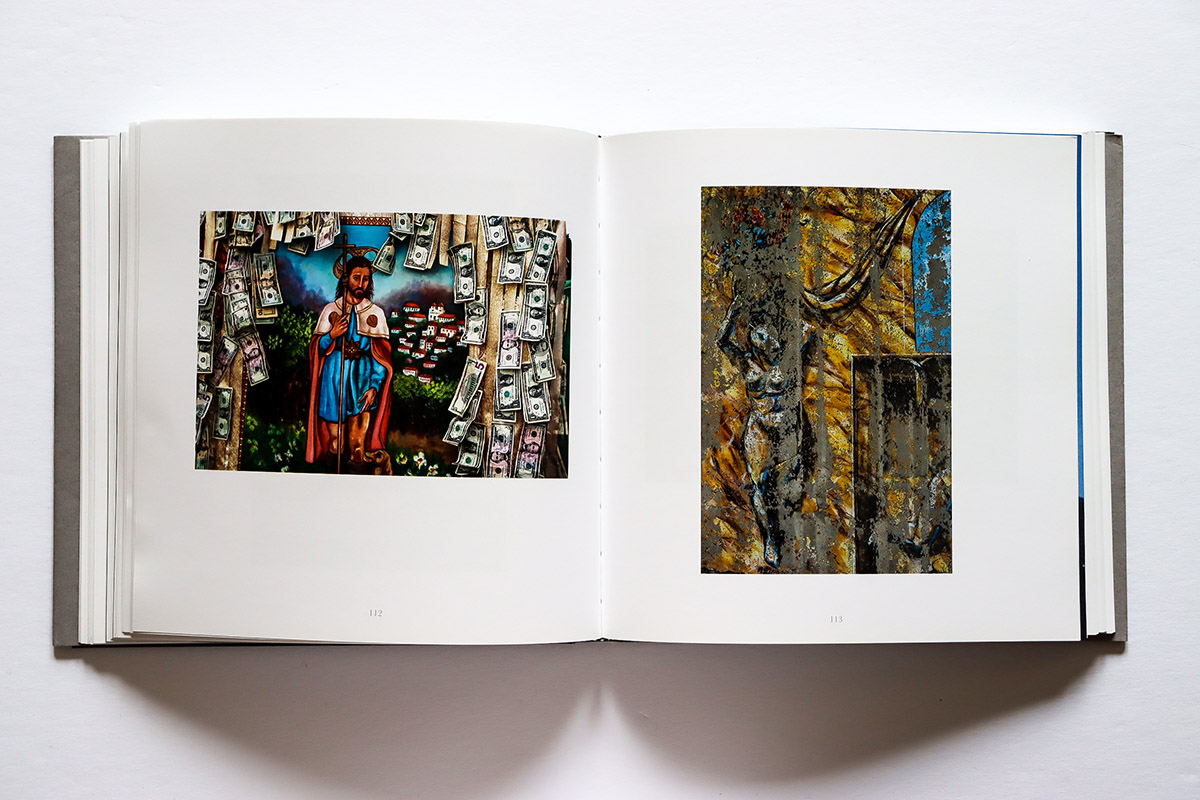
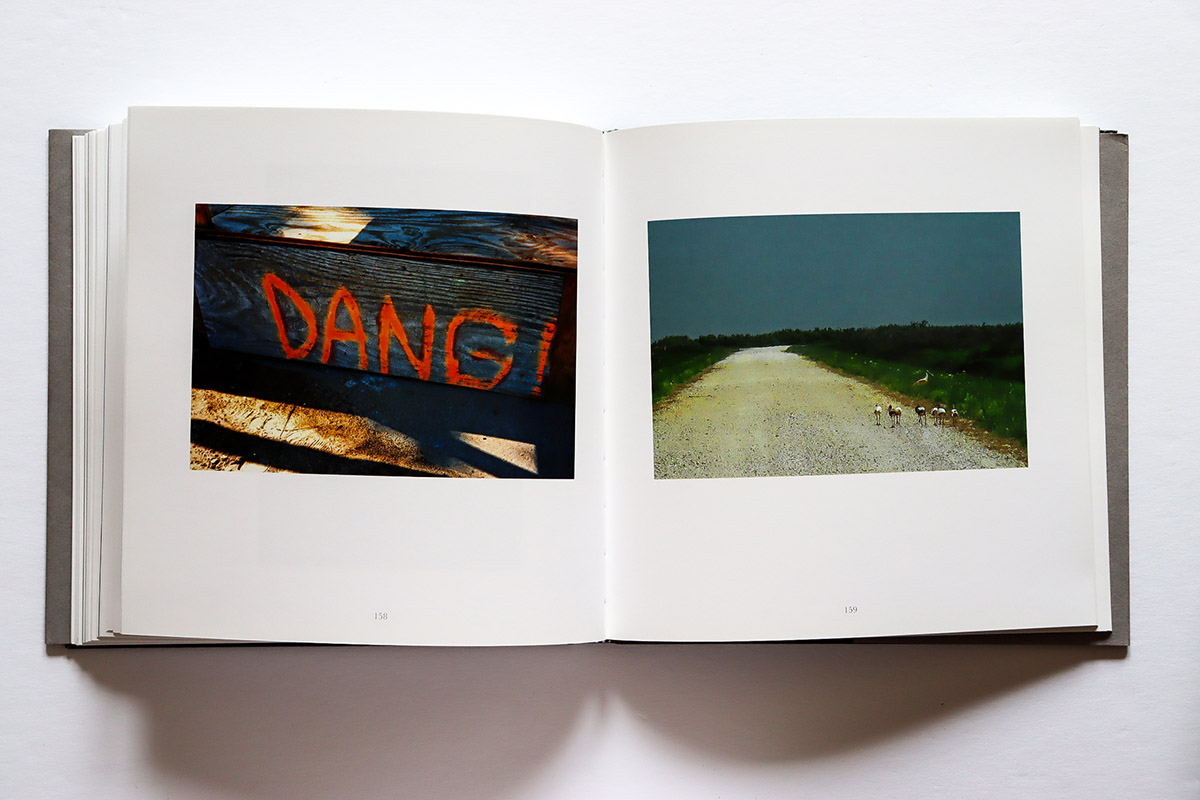
Typical Winterberger themes are Americana, people in nature, children, signs and graffiti, and animals – especially strange, fictional animals. There are other photographs that do not fall into any neat category but that are simply striking. Many photographs are obvious comments on how plain, crude, tasteless, and laughable the common culture can be in the United States. Others evoke nature or our shared human journey of life.
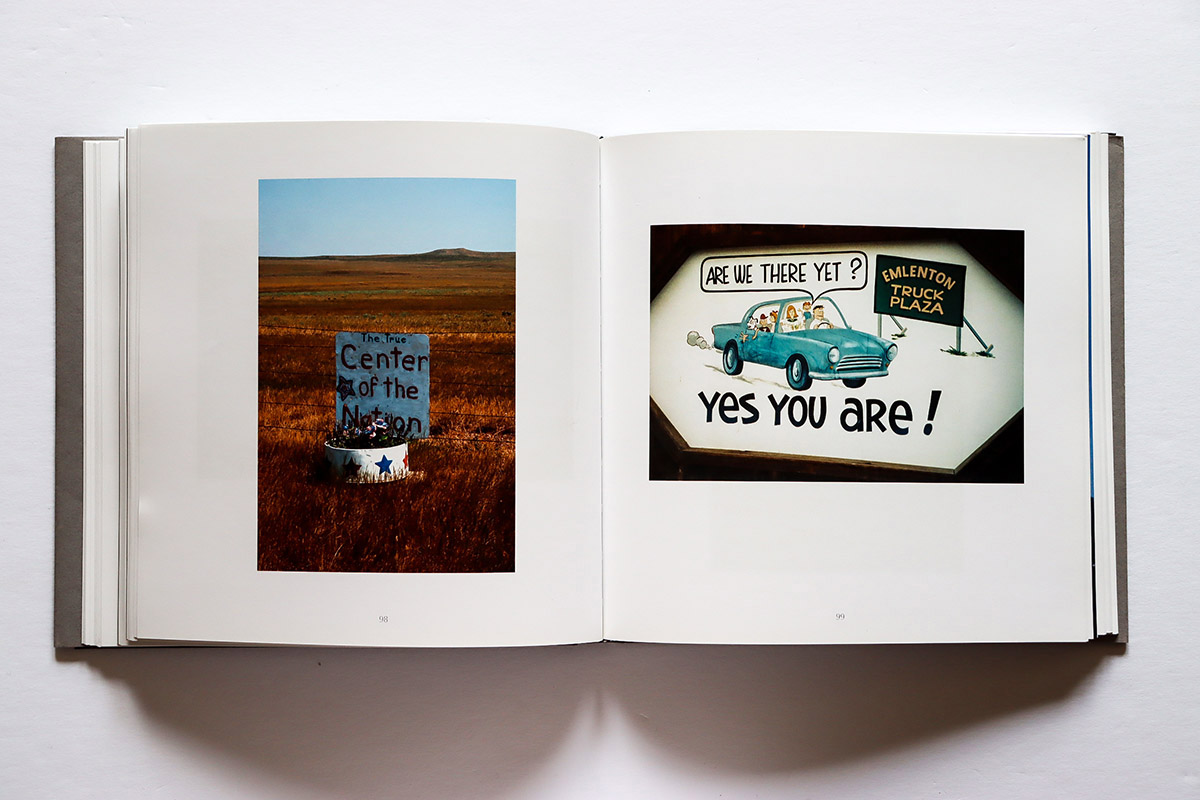
There are a lot of photographs of text, signs, and graffiti. We see writing on T-shirts, highway billboards, footpath signs, corn silos, store windows, busses, parked trailers, fences, doors, walls, buildings, steps, awnings, and garages. We are told that Elvis is dead, that Elvis is everywhere, and that Elvis cured someone’s “hemroids.” We are warned, “Please do not feed the BEGGARS” and that if you park here, “The wrath of the ancients will fall upon your head.” Texts affirm that marriages can be beautiful, that someone believes in Sherlock Holmes, and that tipping is appreciated but don’t ask for credit. Graffiti asks, “Mother should I trust the government?” and tells us that “Summertime makes Pussy Ripe!”
I will not try to read too much into the title, The Disappearance of Pluto. I could try, but it might be better just to leave it there to resonate memorably like the odd but effective names of certain pop music groups.
Although many photographers today build their projects around the idea of making their photographs work as a book, photographers traditionally just took photographs. The challenge when you have different kinds of apparently unrelated images is how to make it work in book form. It helps when you have photographs as individually engaging and wonderful as Suzanne Winterberger’s. You will enjoy the ride even if you do not see Pluto disappear.
Hans Hickerson, Editor of the PhotoBook Journal, is a photographer and photobook artist from Portland, Oregon.
____________
Suzanne Winterberger – The Disappearance of Pluto
Photographer: Suzanne Winterberger (American, lives in Pennsylvania)
Publisher: Winty’s Guides © 2025
Language: English
Texts: Suzanne Winterberger, Bruce Spear
Design: Shelle Barron
Printing: Porter Print Group
Printed hardcover with slipcase; 174 photographs; sewn binding; 208 pages; 8 X 8 inches; ISBN 978-8-9921019-0-4
____________





Articles and photographs published in the PhotoBook Journal may not be reproduced without the permission of the PhotoBook Journal staff and the photographer(s). All images, texts, and designs are under copyright by the authors and publishers.
 PhotoBook Journal
Leave a comment