Review by Gerhard Clausing •
Rich-Joseph Facun’s 1804 examines Athens, Ohio, an Appalachian town whose economic and cultural life is closely tied to Ohio University. Rather than constructing a conventional documentary narrative, Facun structures the book through a carefully paced sequence of portraits, architectural observations, and quiet still-life fragments. As the images accumulate, the photographs reveal how the presence of a dominant institution shapes the rhythms of daily life, affecting housing, employment, and the social landscape of the community. The project relies less on explanation than on the interpretive power created through image relationships.
The title refers to the year Ohio University opened, the first federally chartered institution in the Northwest Territory. In the book’s concluding essay, Facun sketches the historical context surrounding Athens: Indigenous displacement, the rise and collapse of extractive industries in southeastern Ohio, and the university’s eventual role as the region’s primary economic stabilizer. Over time the institution has come to function much like the central employer in a traditional company town. Facun’s photographs do not argue this directly; instead the dynamic emerges gradually through visual juxtaposition.
I will now discuss some of the representative images, their flow, and the overall impact.
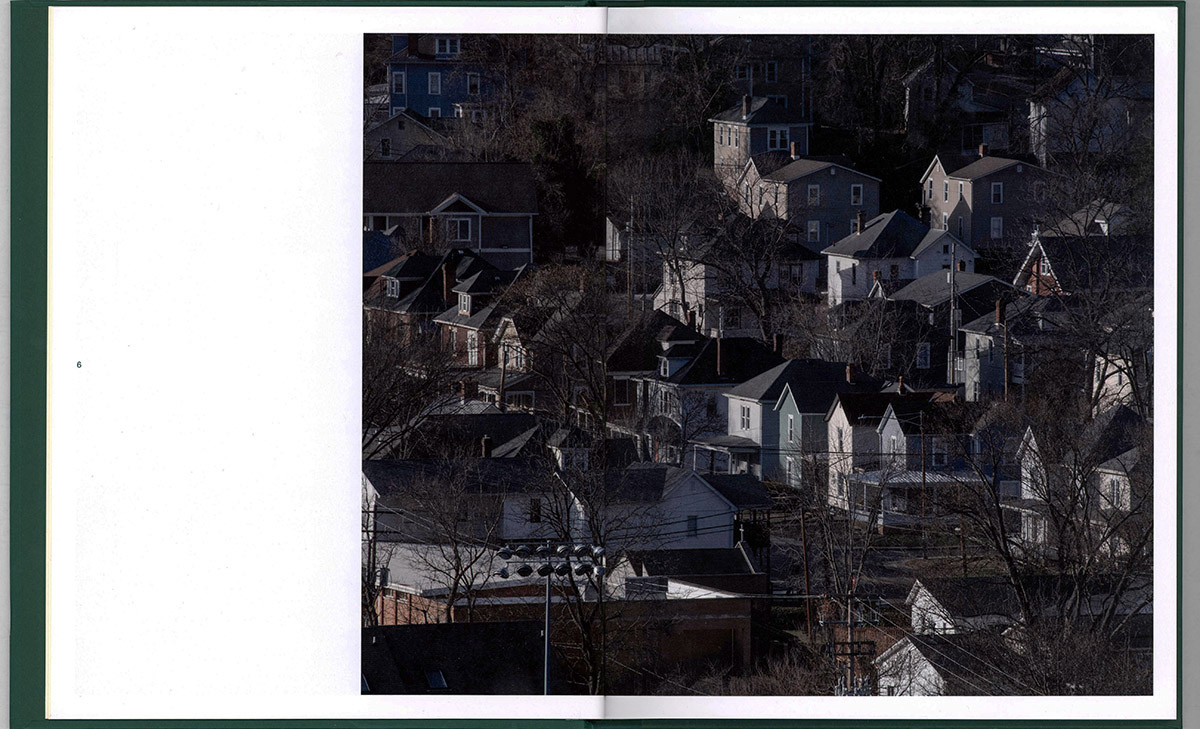
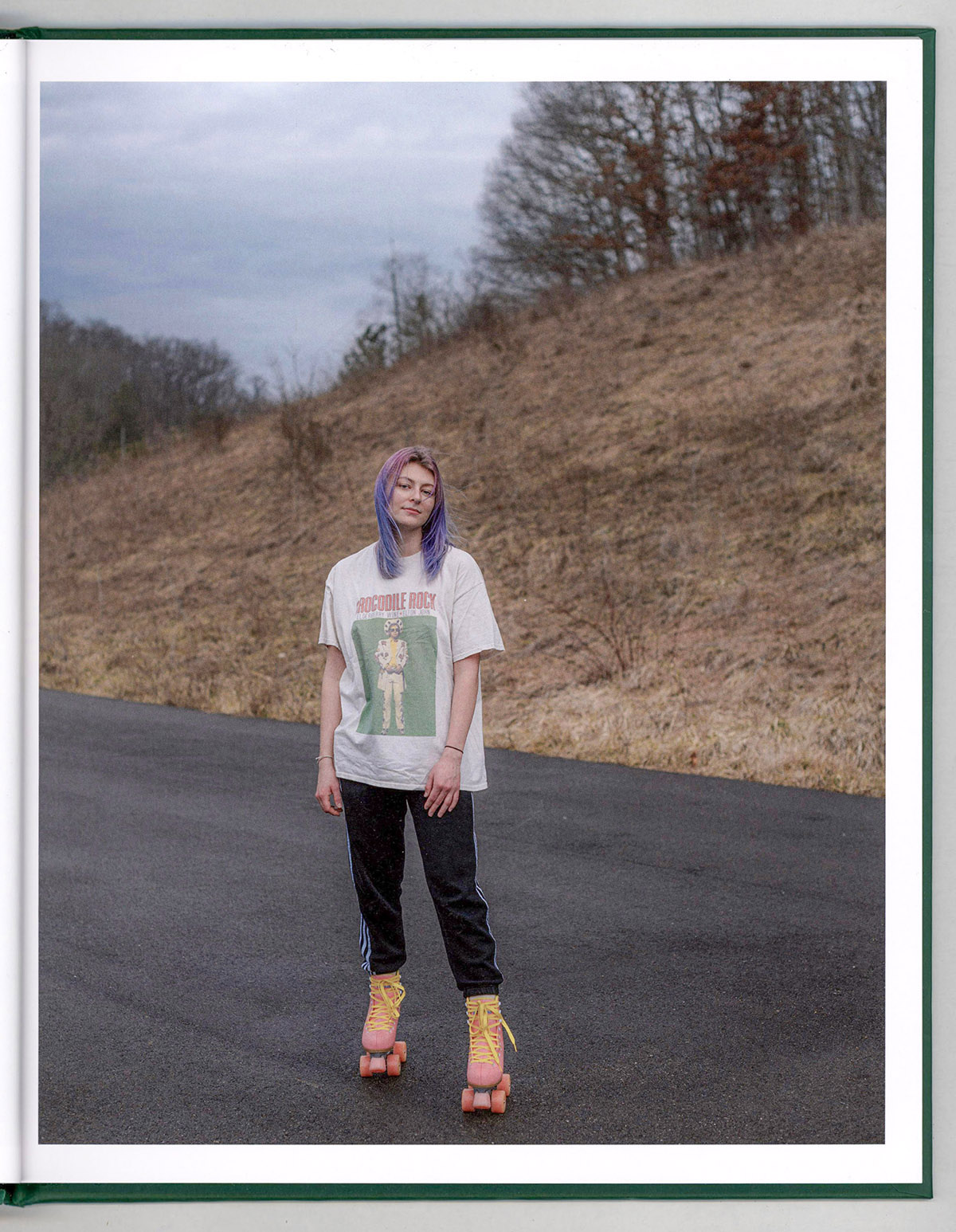
The early pages establish Athens through its terrain. Shown are houses stacked along a wooded hillside, compressed against the steep Appalachian landscape, suggesting layered habitation: students, landlords, long-time residents, and temporary tenants occupying the same space. This image is followed by a portrait of a young person standing alone on an empty road wearing roller skates. The pairing introduces one of the book’s central tensions: density versus isolation. The town appears structurally crowded yet emotionally sparse.
Facun relies on spacing and rhythm. Portraits rarely appear consecutively; they are separated by buildings, interiors, and objects, slowing the viewer’s reading and repeatedly reconnecting individuals to the environments they inhabit.
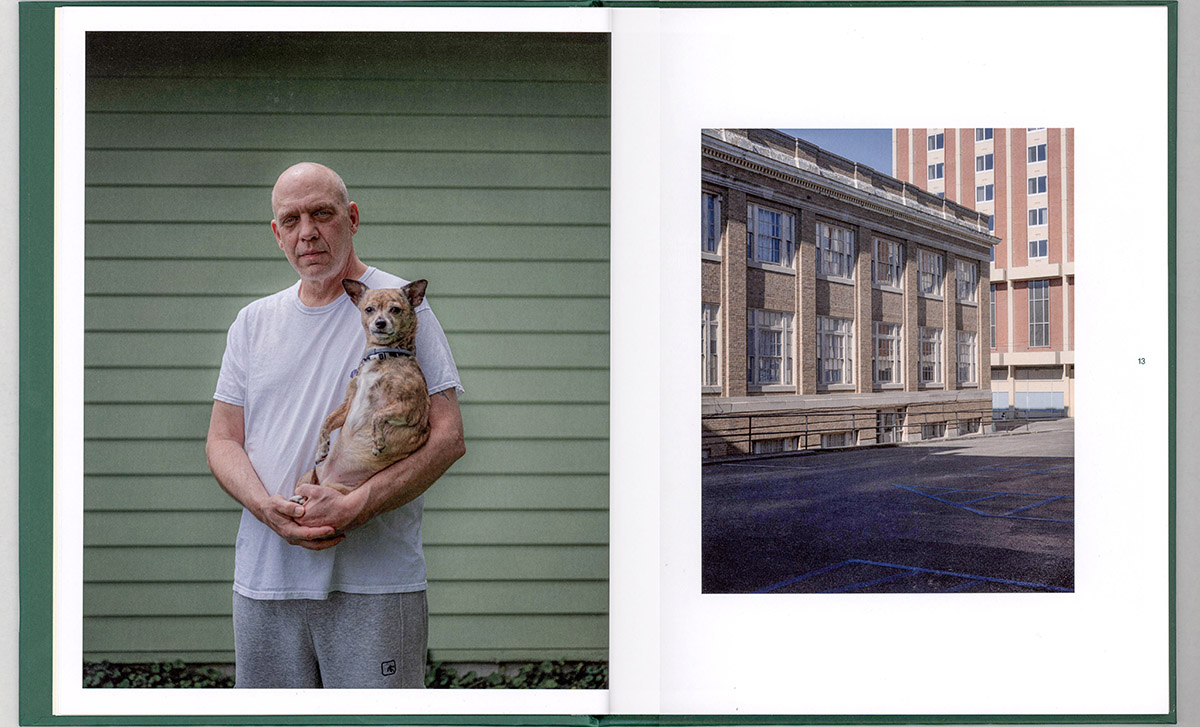
Several spreads demonstrate the photographer’s sensitivity to dialogue across the gutter. A portrait of a man holding a small dog before a pale green house faces a photograph of an institutional building and parking area. The juxtaposition contrasts domestic intimacy with institutional scale, the meaning emerging only across the double page.
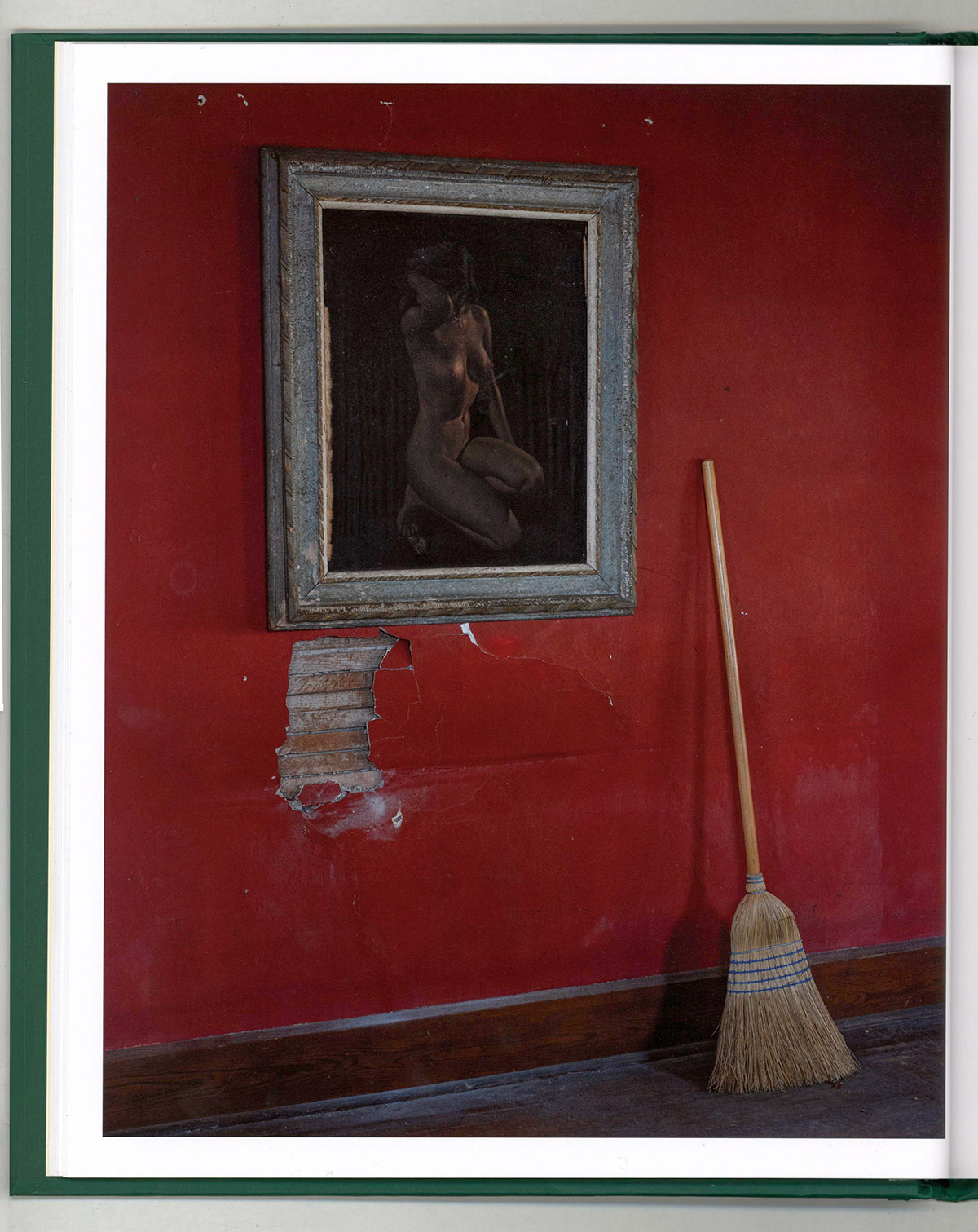
Another subtle moment occurs with a still-life image of a framed painting on a red wall beside a broom leaning against cracked plaster. Positioned between portraits, the photograph reads metaphorically: the broom suggests maintenance while the damaged wall hints at economic strain, forming a quiet allegory for the town itself – careful upkeep within an aging structure.
Object imagery also introduces cultural tension. A storefront display of firearms appears amid photographs linked to the university environment, acknowledging the political and cultural distance between the academic community and the surrounding Appalachian region. Facun does not frame the contrast polemically; the image simply adds context.
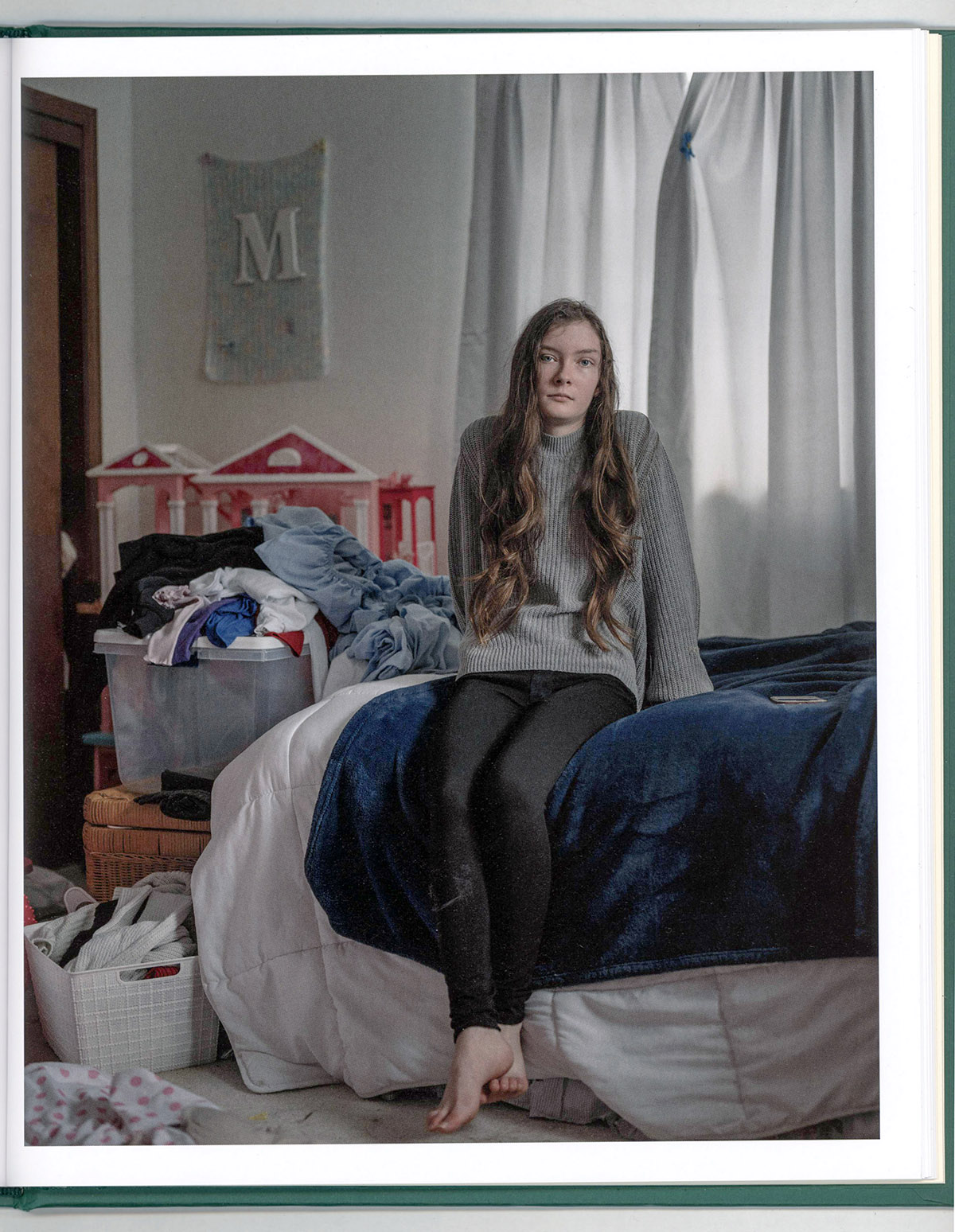
The portraits remain direct and restrained. Students, workers, retirees, and residents stand before houses, sidewalks, or modest interiors with calm, often introspective expressions. Facun avoids theatrical gestures, allowing the environments to carry much of the narrative weight.
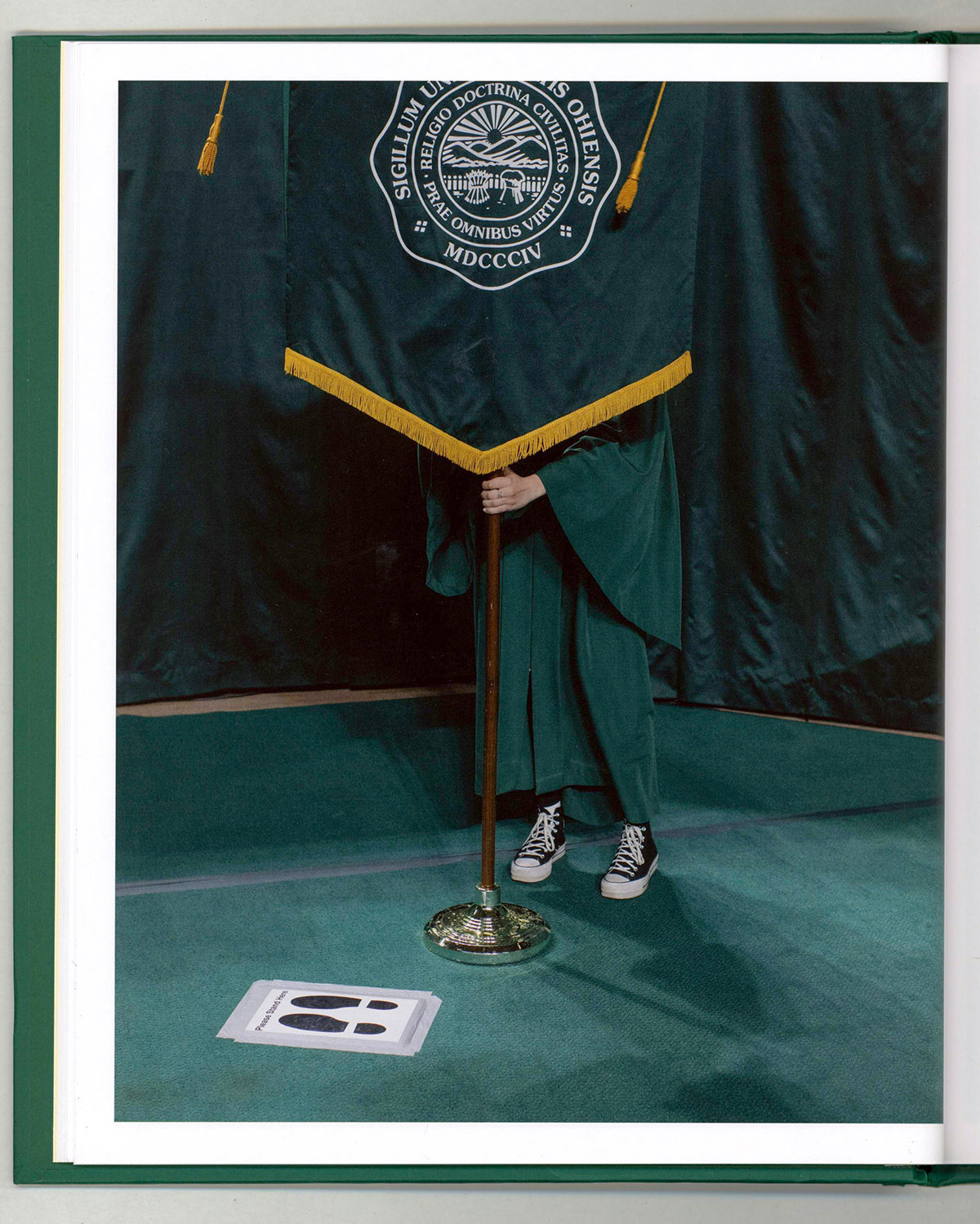
Sequencing gradually introduces a temporal dimension. Portraits of students are often followed by images suggesting permanence – aging houses, long-time residents, or quiet residential streets. One striking photograph shows a figure partly concealed beneath a graduation banner, with sneakers visible below the ceremonial cloth. Placed near photographs of rental properties and storefronts, the image subtly questions the relationship between academic success and long-term economic stability. Through such juxtapositions the book explores the difference between those who pass through Athens and those who remain.
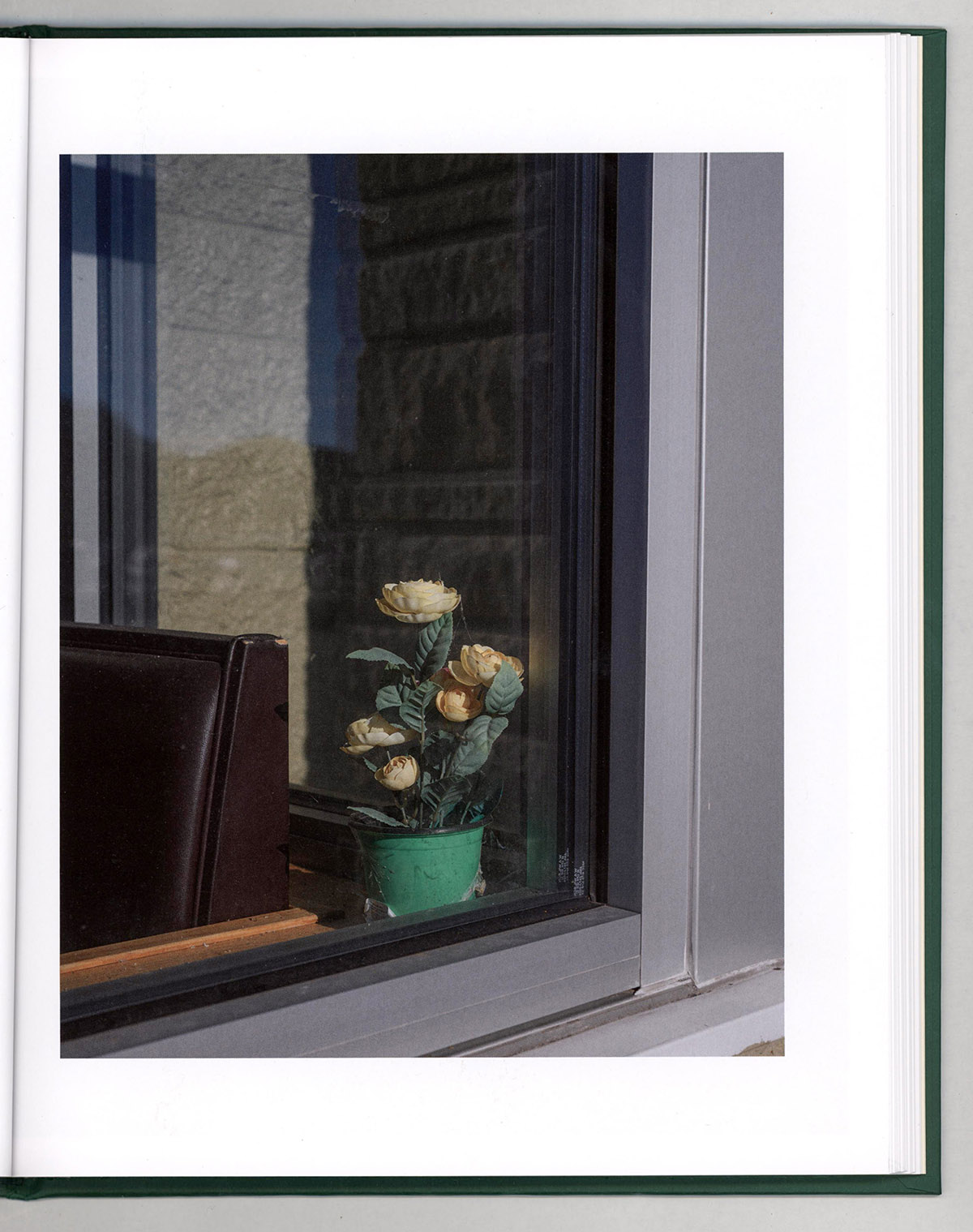
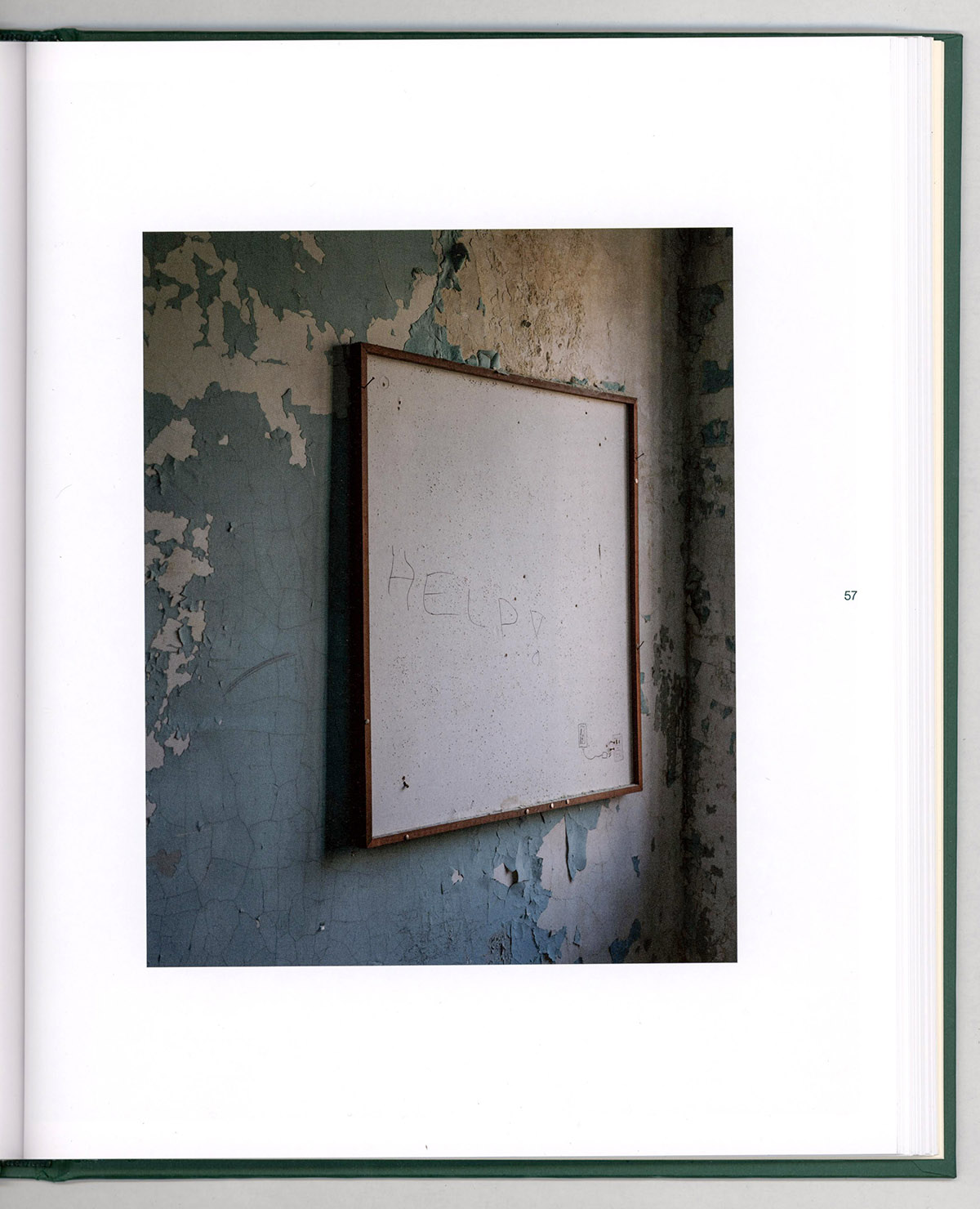
Still-life photographs assist the pacing. Window displays, such as artificial flowers visible through glass, and a blank frame with “HELP!” written on it mounted on a peeling wall function as visual punctuation marks. These images suggest private histories without fully revealing them, encouraging pauses within the sequence. At this point the viewer recognizes that the book constructs not only portraits of individuals but a broader social ecosystem shaped by the presence of Ohio University.
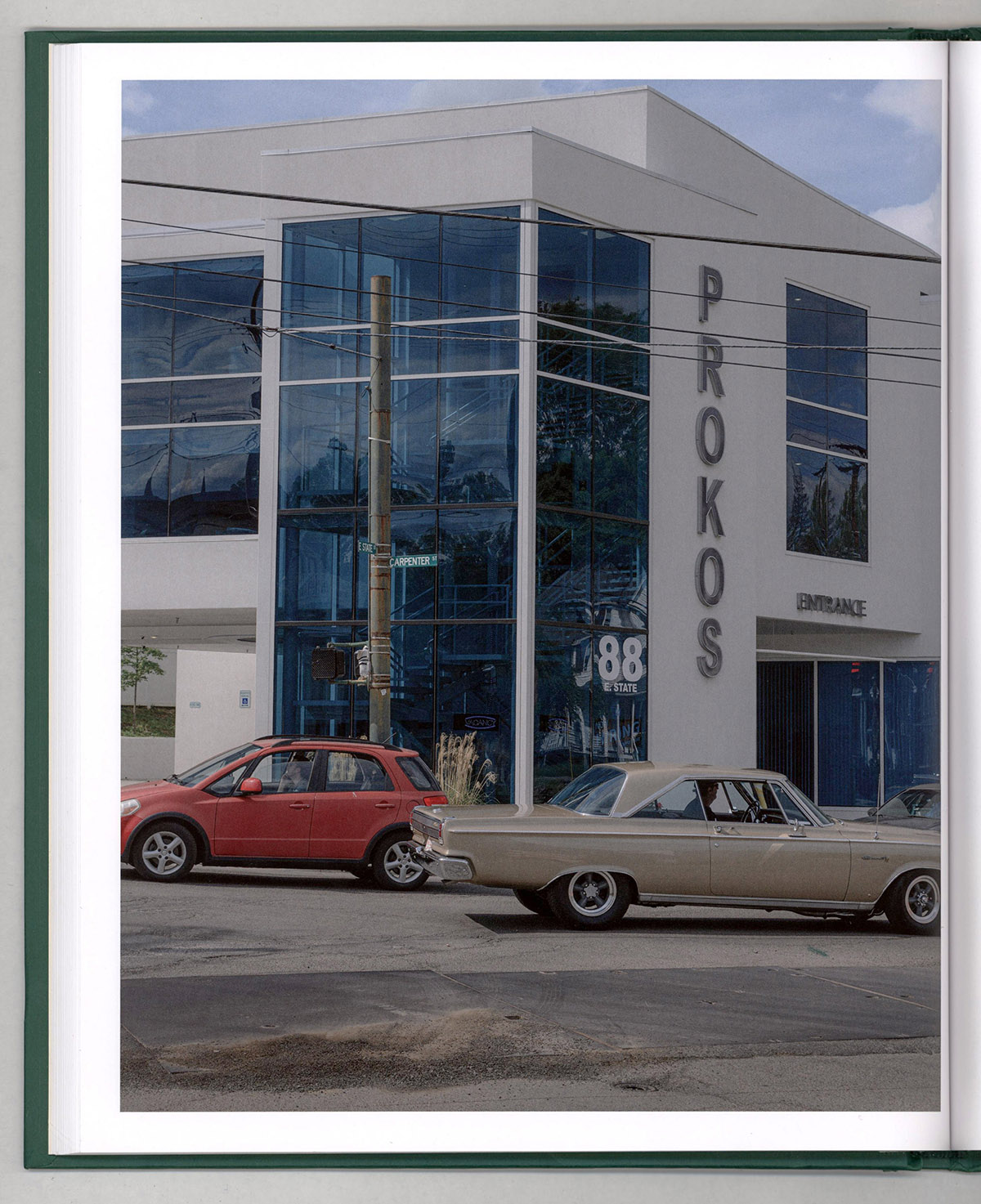
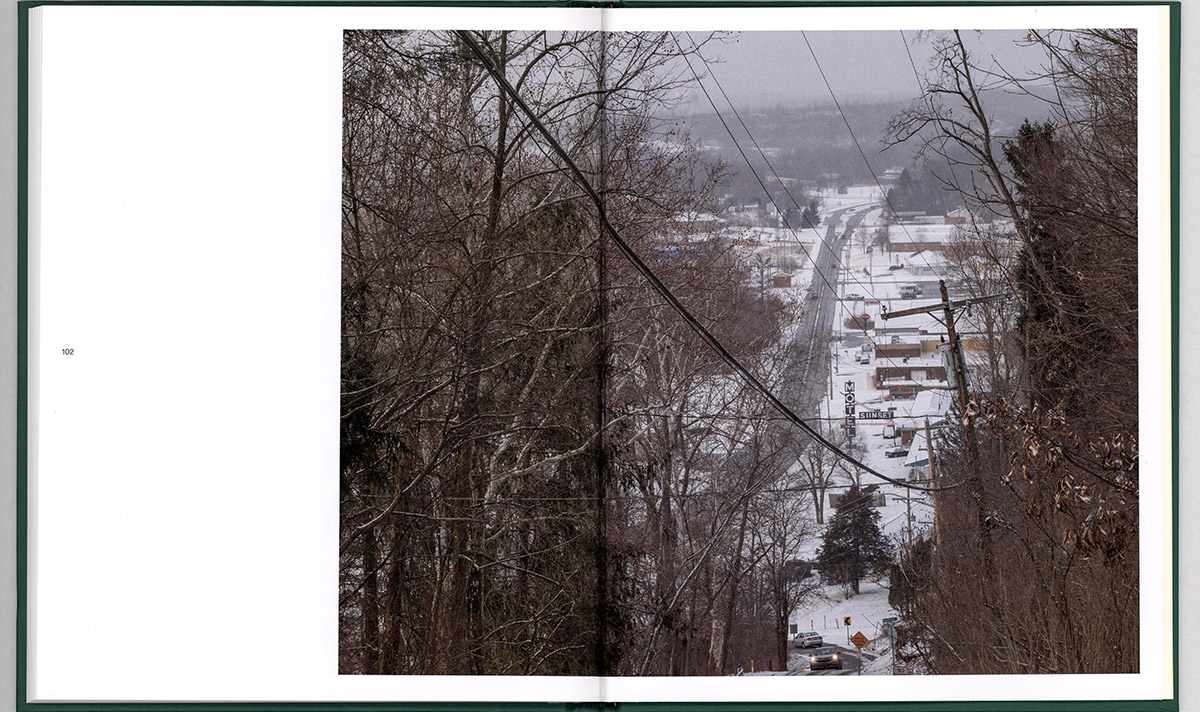
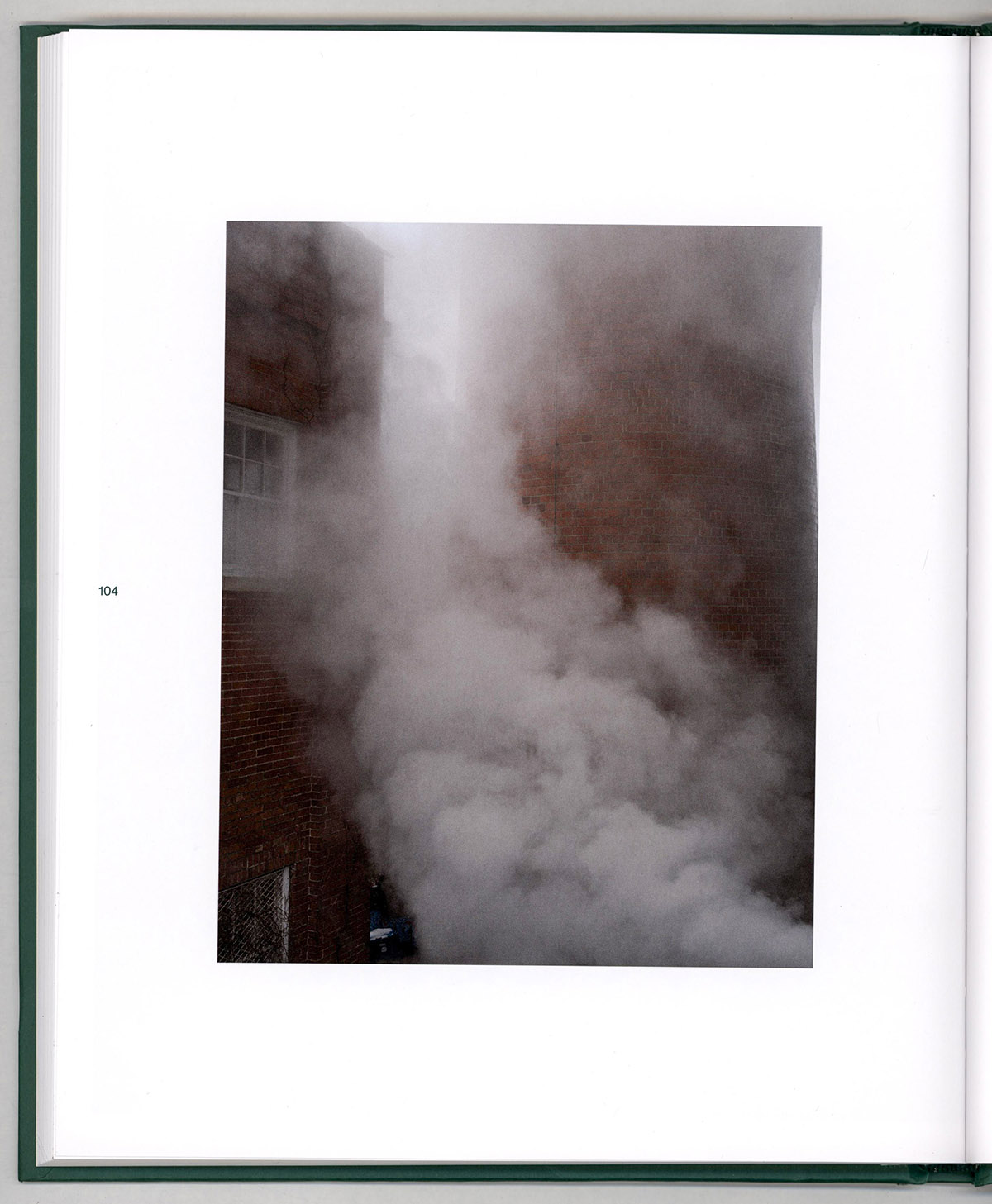
A photograph of the modern Prokos building introduces a striking architectural shift. Its glass façade contrasts with the modest residential structures seen earlier, reading as an emblem of institutional confidence set against quieter economic uncertainty. Facun does not emphasize this imbalance directly; it emerges through the juxtaposition of stable university and commercial structures beside more fragile domestic environments. Within the sequence the contrast also alters the viewer’s sense of scale: the university appears increasingly monumental while the surrounding residential spaces feel provisional. Landscapes gradually become more prominent and human figures recede somewhat. A winter road descending through the hills surrounding Athens opens the frame to a broader geographic perspective, fading into mist and suggesting distance and uncertainty. Nearby, steam rising between buildings introduces an atmospheric image that feels at once industrial and environmental.
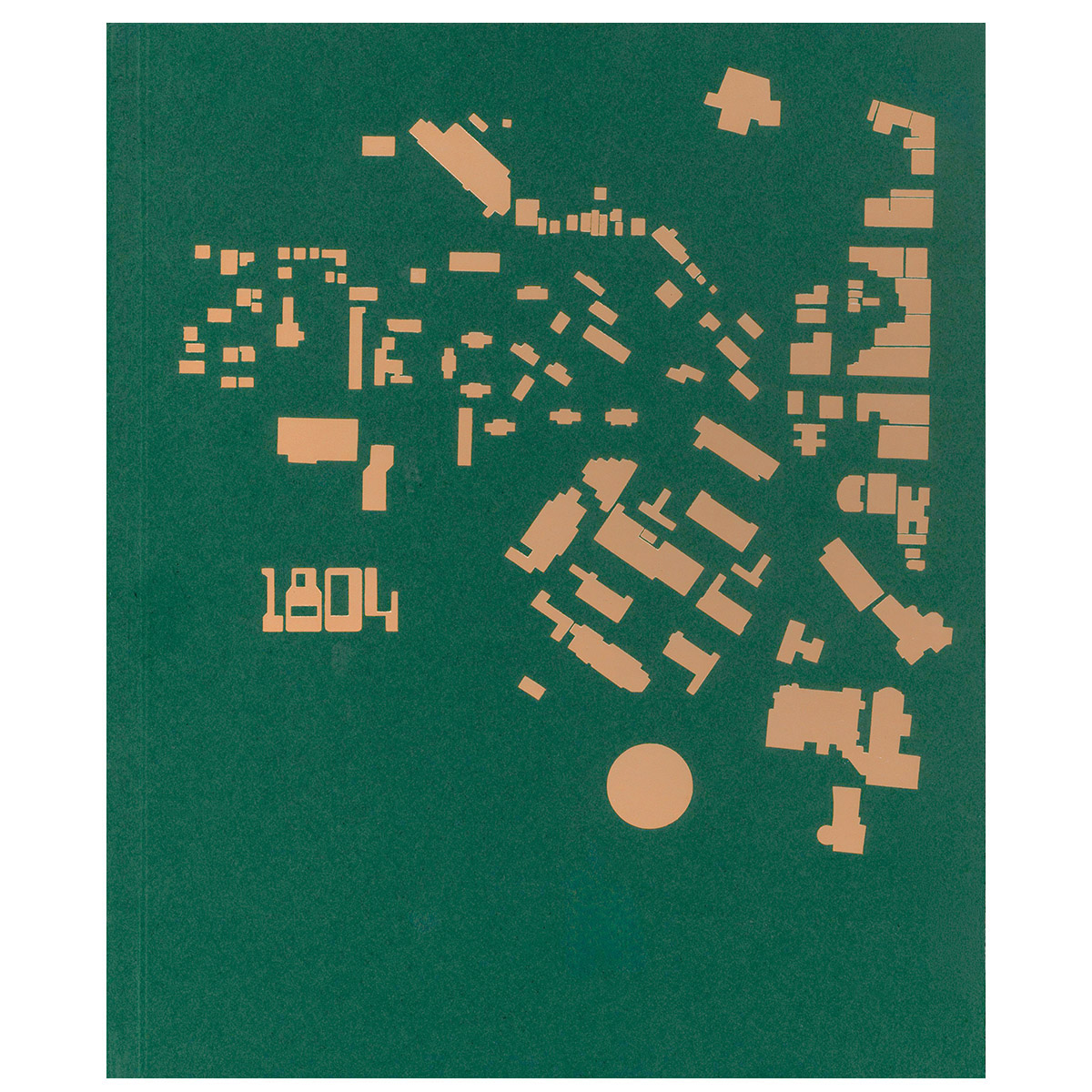
The photobook’s design, directed by Caleb Cain Marcus with Luminosity Lab, favors a restrained layout that allows the photographs to maintain visual clarity and narrative rhythm, as I have shown in the glimpses above and in the pictorial excerpts below. Printing by SYL in Barcelona provides a consistent tonal range and strong color reproduction that supports the project’s quiet observational character. The essay by the author and the details in the index of photographs provide further valuable insights.
What ultimately distinguishes 1804 is its restraint, which nevertheless adds up to a very strong statement. Facun avoids dramatic gestures and allows elegant sequencing to carry the narrative weight. Portraits, architectural fragments, and still-life details unfold in a measured rhythm that gradually reveals the structure of life in Athens, Ohio, which emerges not simply as a college town but as a community negotiating its identity within the gravitational pull of a powerful institution. Facun’s photographs register both opportunity and vulnerability within that relationship. Rather than resolving these tensions, his photographs allow them to persist, quietly, and with considerable sensitivity. This photobook is an exemplary study of difficult current developments affecting all our lives.
____________
The PhotoBook Journal previously featured reviews of Rich-Joseph Facun’s Black Diamonds and Little Cities.
____________
Gerhard (Gerry) Clausing, Editorial Consultant of The PhotoBook Journal, is an author, visual artist, and educator who explores perception, transformation, and memory.
____________
Rich-Joseph Facun — 1804
Photographer: Rich-Joseph Facun (born in Pensacola, Florida; lives in Millfield, Ohio)
Language: English
Texts: Rich-Joseph Facun
Publisher: Liars Corner, Millfield, Ohio; © 2025
Design Direction: Caleb Cain Marcus, Luminosity Lab
Concept Manager: Jasmine Facun.
Editing/Sequencing: Matt Eich, Rich-Joseph Facun, Jasmine Facun, Caleb Cain Marcus. Cover Illustration: Josh Bergman.
Hardbound with illustrated cover, 116 pages; 9.4 x 11.4 inches; printed in Spain by SYL, The Art of Books, Barcelona; ISBN 979-8-218-61402-7
____________
Articles and photographs published in the PhotoBook Journal may not be reproduced without the permission of the PhotoBook Journal staff and the photographer(s). All images, texts, and designs are under copyright by the authors and publishers.
 PhotoBook Journal
Leave a comment