Review by Matt Schneider ·
“Although we can refer to much of my work as memory-inspired, I like to think of it as documentary in nature. It serves as a historical record of urban changes, which for the most part appear invisible.” – Waisman, p. 1.
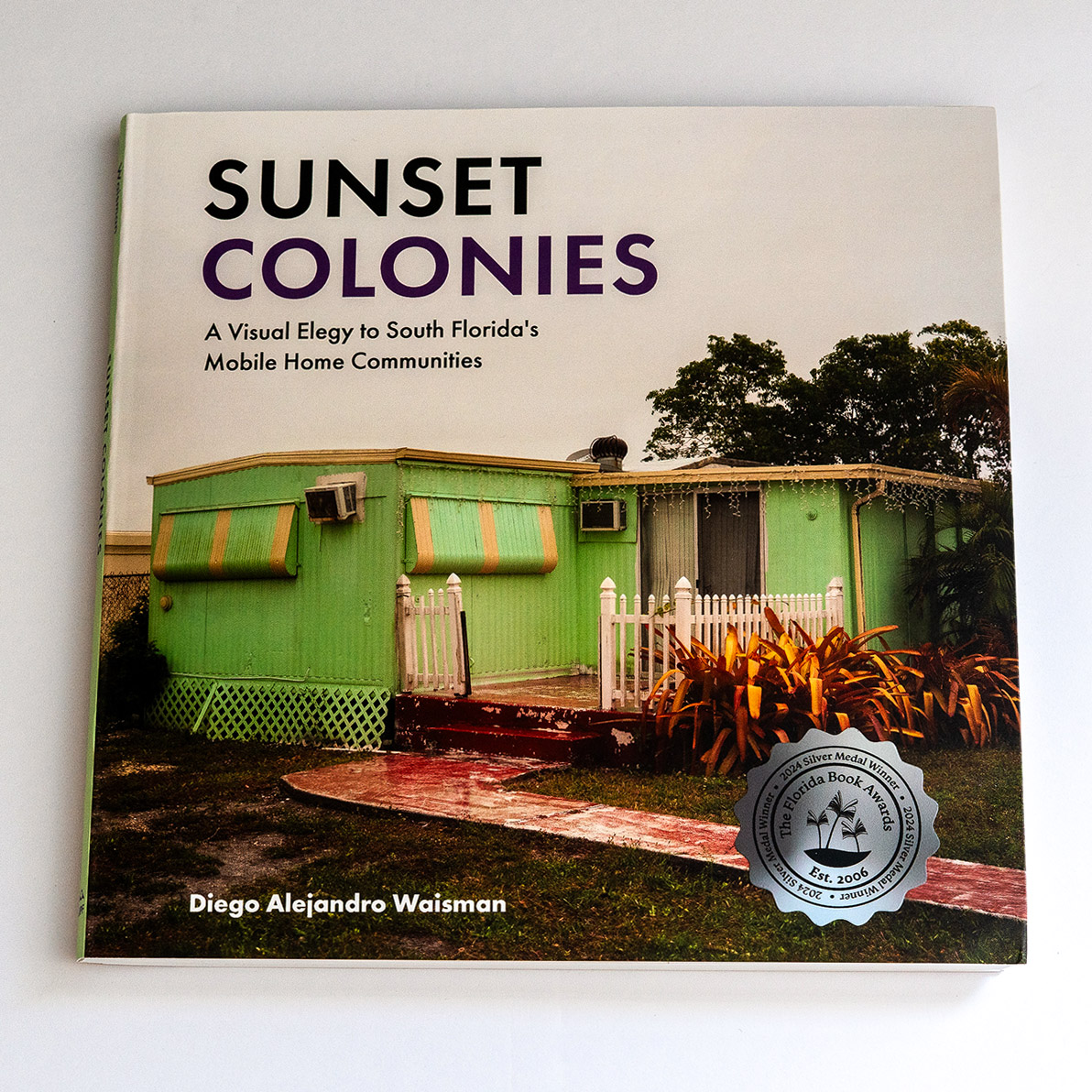
Sunset Colonies: A Visual Elegy to South Florida’s Mobile Home Communities by Diego Alejandro Waisman is a photobook that highlights a number of unfortunate tensions and contradictions. The mobile home communities documented in this photobook are simultaneously places of belonging and displacement, of aspiration and stigma, of joy and loss. Central to these tensions is the effort to replace long-standing neighborhoods, which were once marketed as a reasonably priced opportunity to buy into the American dream, with new forms of housing and businesses that will likely exclude the people who currently (or have recently) called these locations home.
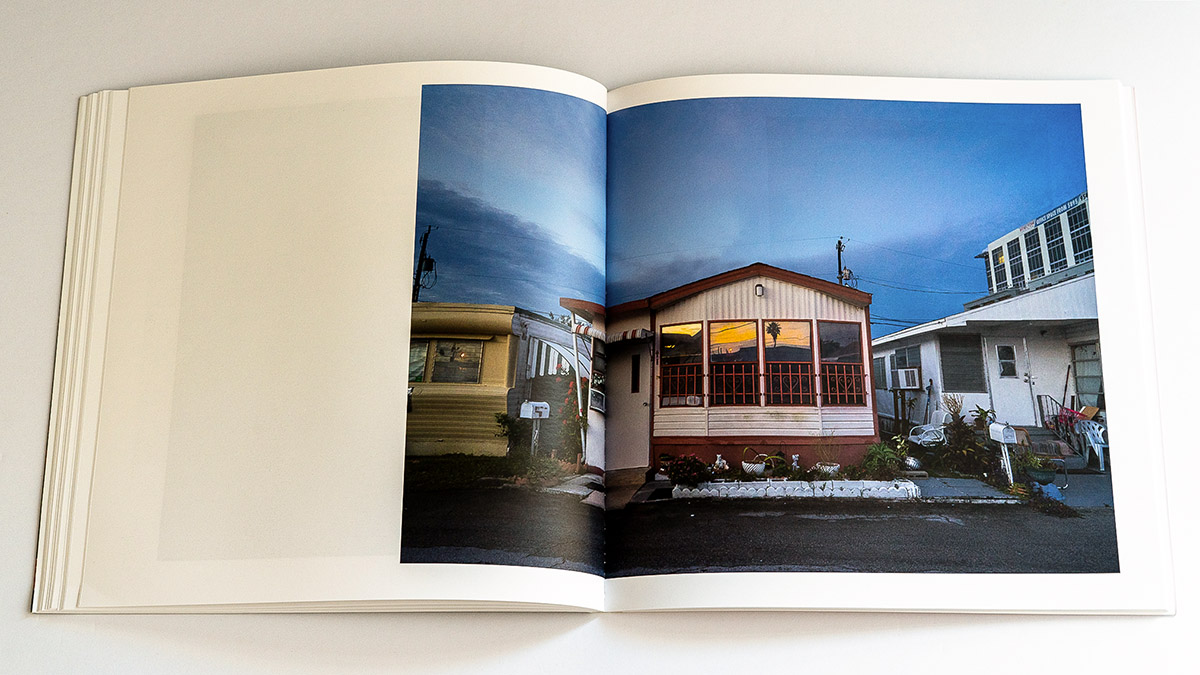
For decades, mobile homes have served a critical function in American society: they are the largest source of unsubsidized affordable housing in the country, enabling millions of Americans to afford a roof over their head, retire, and/or raise their families. Unfortunately, mobile homes are not all that mobile. Once these manufactured homes are delivered and settle into their lots, they often can’t be moved again, and multiple moves are very rarely possible. In America’s expanding urban landscape, this poses real problems for residents in mobile home parks, because even when these residents own their home, they typically lease the property beneath it. Many of these communities were once on the urban periphery, but are increasingly the subjects of public and private redevelopment efforts. It’s a trend that is occurring across the U.S., and as someone who lives in one of the country’s fastest growing metropolitan areas, Wilmington, NC, it’s not hard to spot the potential for displacement as I drive around the north side of my own city. These observations fill me with sadness, inspire a sense of inevitability and unfairness, and leave me wondering what will be lost if/when condo buildings arrive.
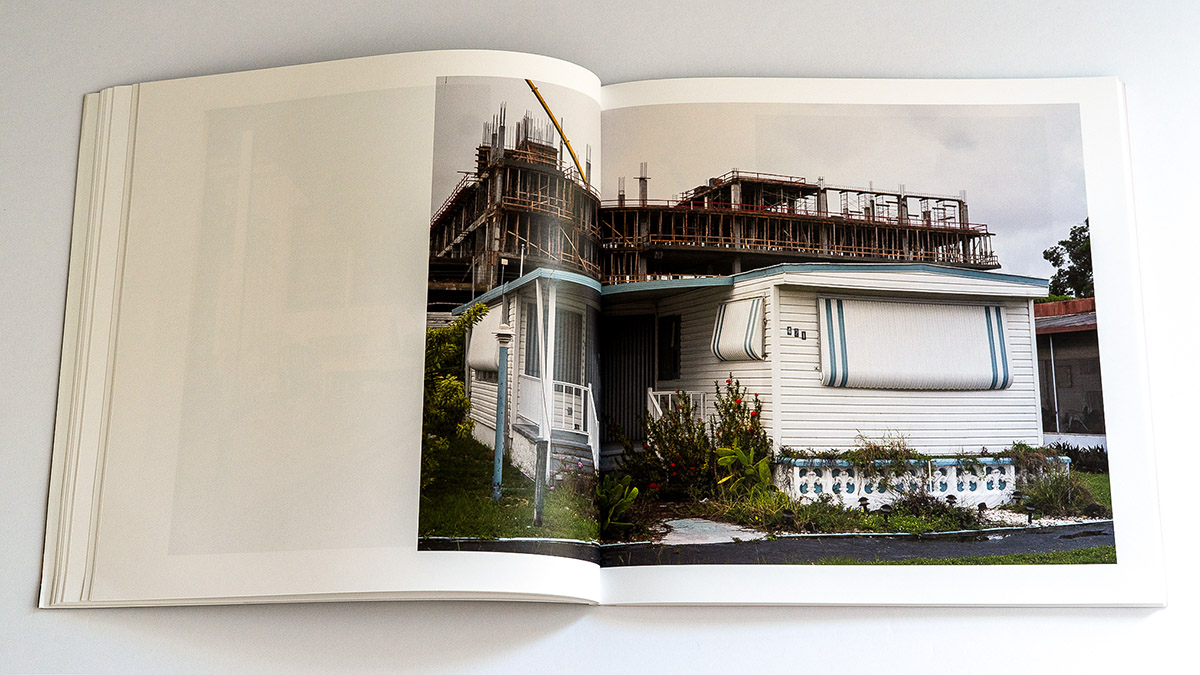
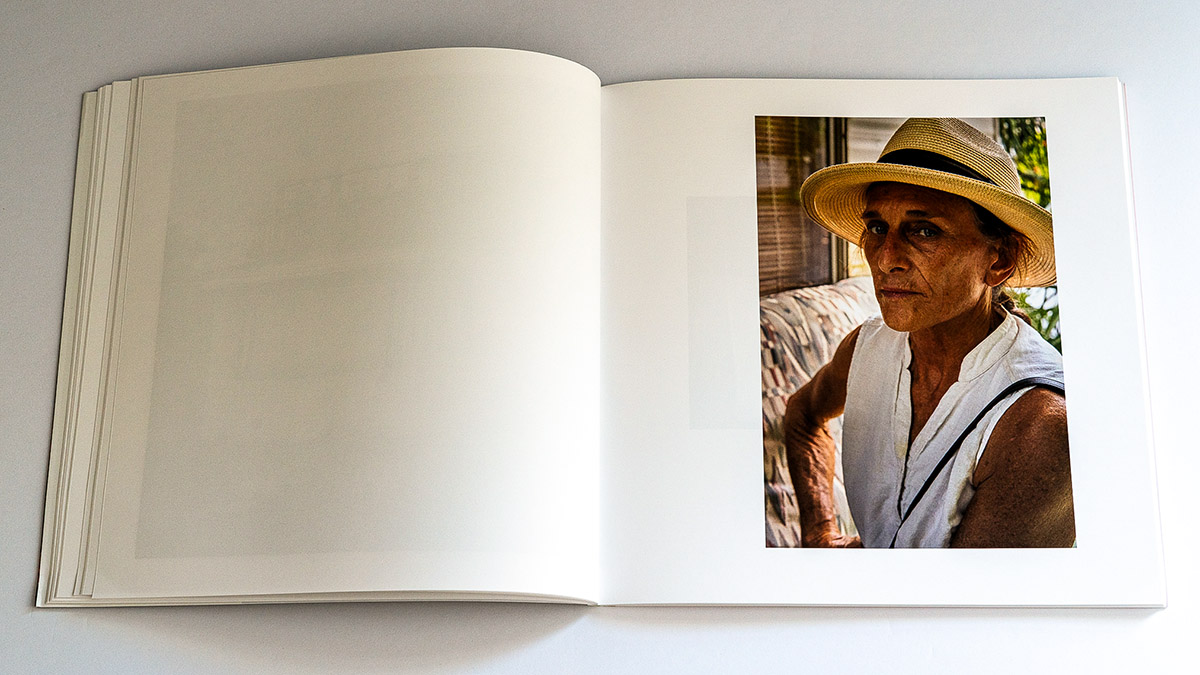
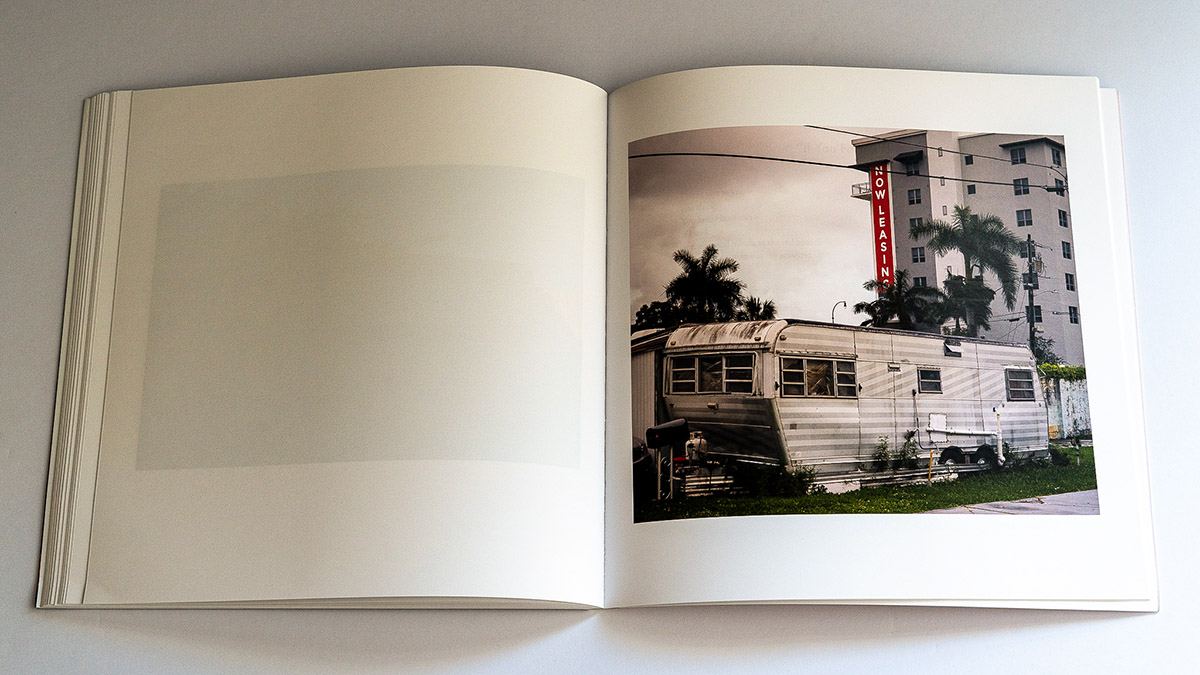
Waisman’s photobook, set in South Florida, likewise evokes these feelings and provides us with some answers about what is at stake. Through a number of resident portraits, we are asked to reckon with the fact that the displacement of manufactured home parks means the displacement of people. This point was best driven home, I thought, by a pair of photos found midway through the book. In one, a manufactured home is dwarfed by a new condo building, still under construction, but threatening to grow indefinitely taller. This is immediately followed by the second photo: a striking portrait of a woman in a Panama hat. With her grey-blue eyes, the subject gives the camera and the reader a contemplative, perhaps disapproving, sidelong look. The inclusion of portraits is made all the more powerful by the fact that photos of the homes and wider parks are, otherwise, almost entirely absent of people, leading the reader to feel as though they are observing a ghost town just before it is replaced by something new.
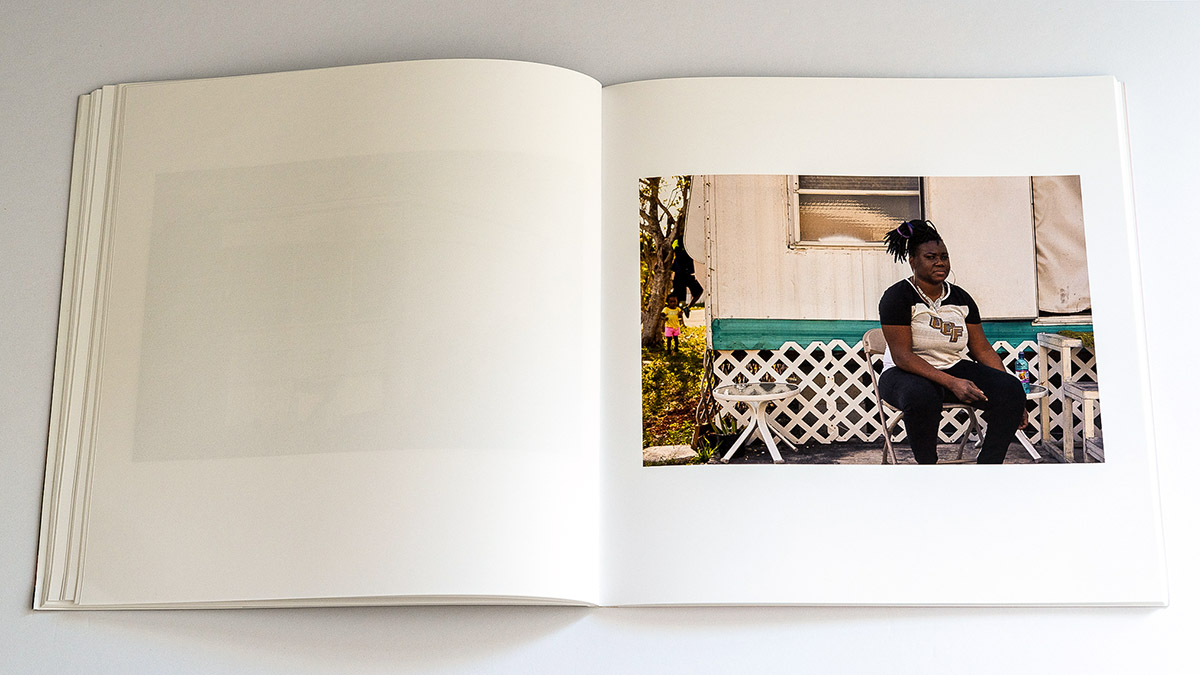
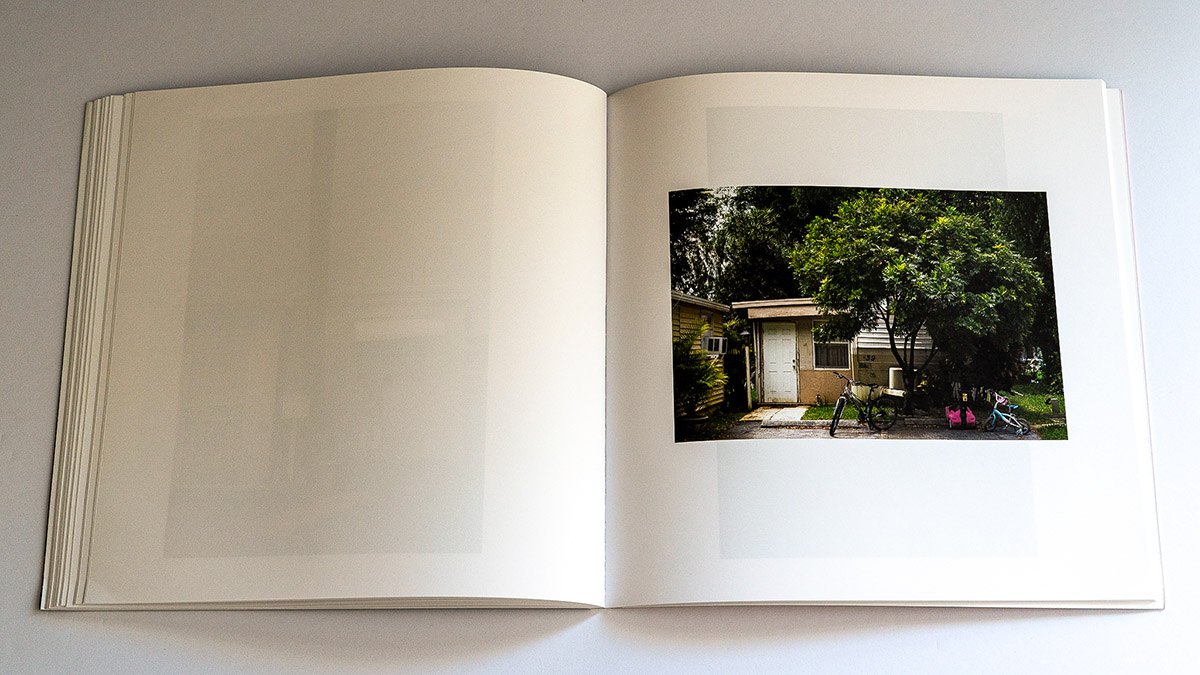
Building on this theme, Waisman reminds us that manufactured home parks, like any other community, are places of joy and potential. They are places where neighbors relate and families grow. In perhaps my favorite photo of the book, a mother wearing a University of Central Florida shirt, with a cigarette in her left hand and with a familiar, thoughtful sidelong glance at the reader, poses for a portrait outside her home. On the right, a set of movable stairs leads into her home. Behind her, the cinder blocks supporting the home are visible through the skirting that wraps around the bottom of her home. And most importantly, on the left, we see her children, including her daughter who seems to have taken an interest in the cameraman and her son, who hangs from a sturdy tree standing catty-corner to the home. Similarly, a later photo features the artifacts of childhood; outside home #39, beneath the shade of a tree, sits a plastic wagon in the shape of a pink convertible and a small girl’s bike, training wheels still attached.
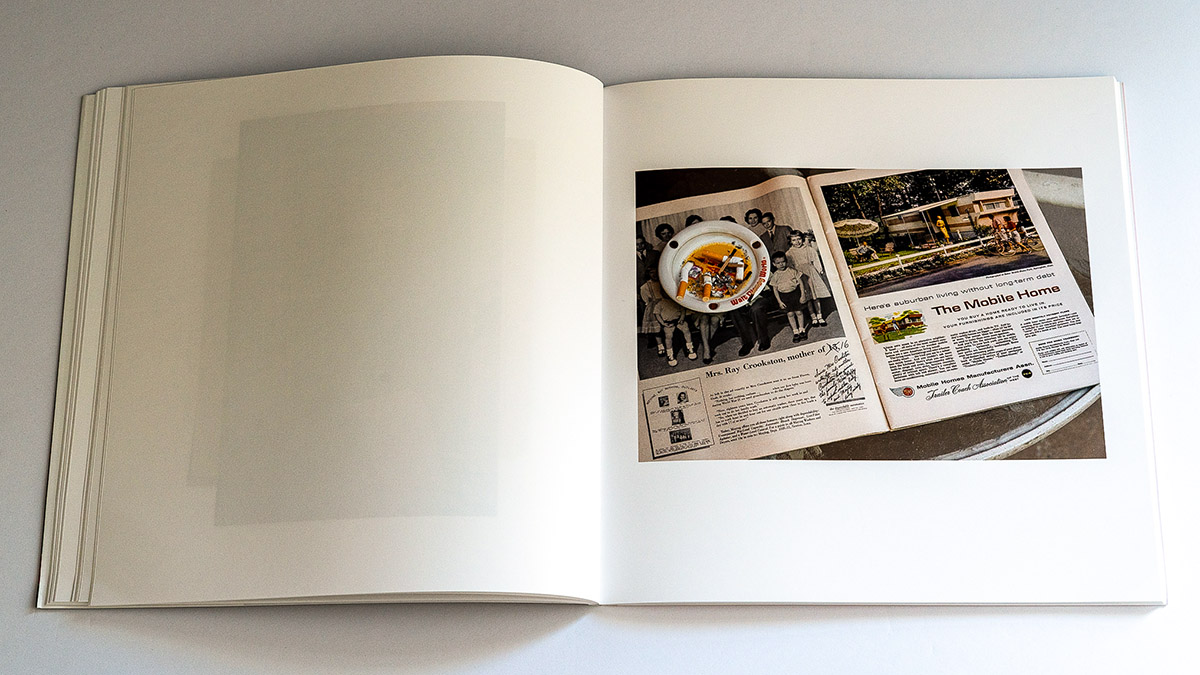
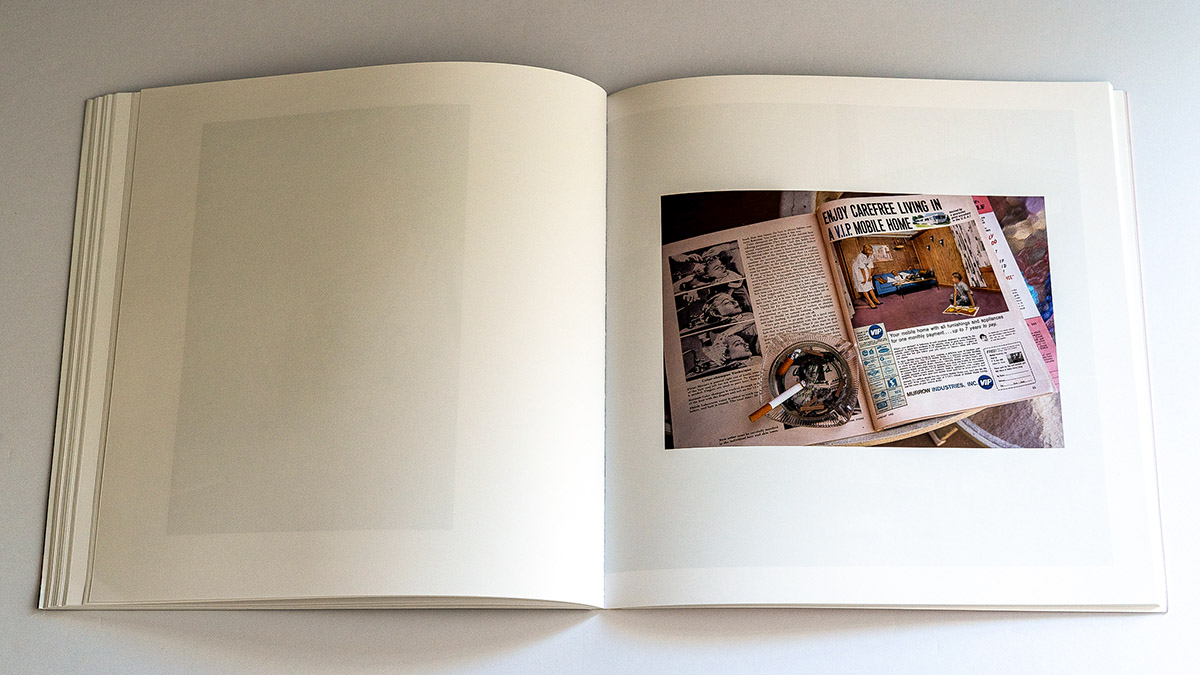
Indeed, despite the stereotypes and stigma that we know are associated with “trailer parks,” Waisman shows that, very purposefully, these are also places where some version of the American Dream was promised and is now threatened. In some cases, such as in the examples above, this is the dream of owning an affordable home in which residents can raise their families. In other cases, it’s the dream of retirement. At one point in the book, we are informed by a sign that “WE TAKE EXTRA CARE servicing Our Senior Citizens’ MOBILE HOME NEEDS All Work Guaranteed!” In fact, another strength of this book is that it shows a historical process by which these dreams were marketed by the broader industry that manufactured the homes now populating these parks. Scattered throughout Sunset Colonies are local advertisements and newspaper clippings, all of them promising more than colorfully painted aluminum sided exterior walls. They promise comfortable living/retirement in “Florida’s finest mobile home community,” “suburban living without long-term debt,” and “carefree living in a V.I.P. mobile home.” In this telling, the purchase of a manufactured home meant attaining security, stability, and perhaps even luxury.
To be sure, Waisman recognizes that manufactured home parks are not without downsides. By sharing the letters to the editor section of a 1956 edition of the The Miami Hearld, he shows that for many decades, manufactured home communities have long been a source of tension, the subject of simultaneous stigmatization and valorization. In this newspaper clipping, one letter is titled “Most Trailer Parks Crowded, Unkempt,” while the following letter is titled “Mobile Home Owners No Longer Gypsies, But Community Asset.” Waisman also suggests that there are real environmental risks that accompany owning a manufactured home in a place like South Florida, placing an ad to “Own Your Own Land In one of Florida’s Finest mobile home communities” directly adjacent to a photo of a flooded lot featuring half standing flamingo lawn ornaments. Still, it was not lost on me, as a reader, that the book is littered with signs of residents who have made investments in their small pieces of South Florida, ranging from plants, trees, and landscaping to permanent walkways and patios.
In this photobook, Waisman brings the eye of a documentary photographer to manufactured home parks in South Florida, shares a powerful but often overlooked story about class, homeownership, and the American dream(s). To subtitle this work is “A Visual Elegy to South Florida’s Mobile Home Communities” is more than appropriate. Waisman’s photos capture a significant change in America’s urban landscape and a significant loss. Given ongoing social and political discussions about the evaporation of affordable housing, this book is extremely timely. By virtue of its setting, and as evidenced by silver medal at the 2024 Florida Book Awards, this book will strongly appeal to people living in South Florida. However, just as I have, my expectation is that others will appreciate it as a book that captures a social process observable across the United States, and that it will be of particular value to photographers, historians, and others interested in documentary, memory, and urban development.
Matt Schneider is a professor and visual sociologist in Wilmington, North Carolina.
____________
Diego Alejandro Waisman: Sunset Colonies: A Visual Elegy to South Florida’s Mobile Home Communities
Photographer: Diego Alejandro Waisman
Publisher: University Press of Florida, Gainesville, FL, USA, copyright 2024
Essay Authors: Amy Galpin, Louis Herns Marcelin, Alpesh Kantilal Patel
Language: English & Spanish
Perfect Bound, Paperback, 9.00 × 9.00, 122 pages; ISBN: 9780813080734
____________
Articles and photographs published in the PhotoBook Journal may not be reproduced without the permission of the PhotoBook Journal staff and the photographer(s). All images, texts, and designs are under copyright by the authors and publishers.
 PhotoBook Journal
Leave a comment