Review by Olga Bubich ·
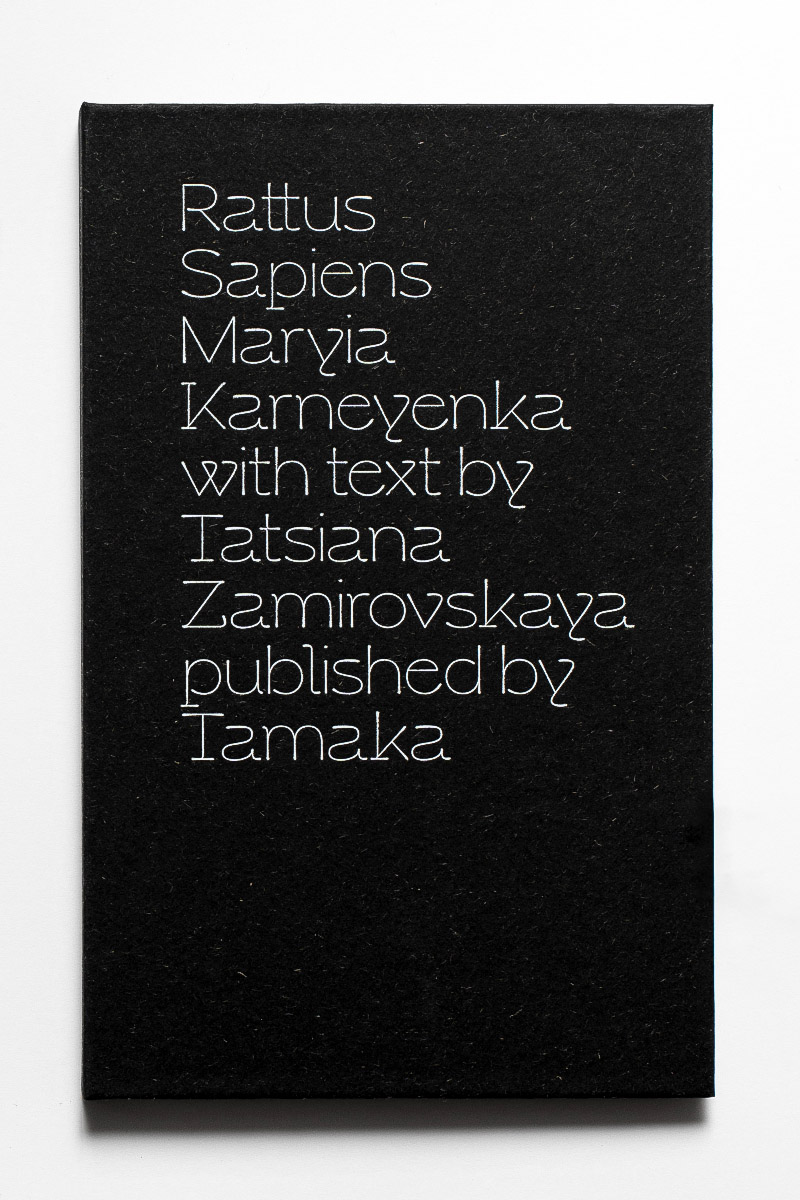
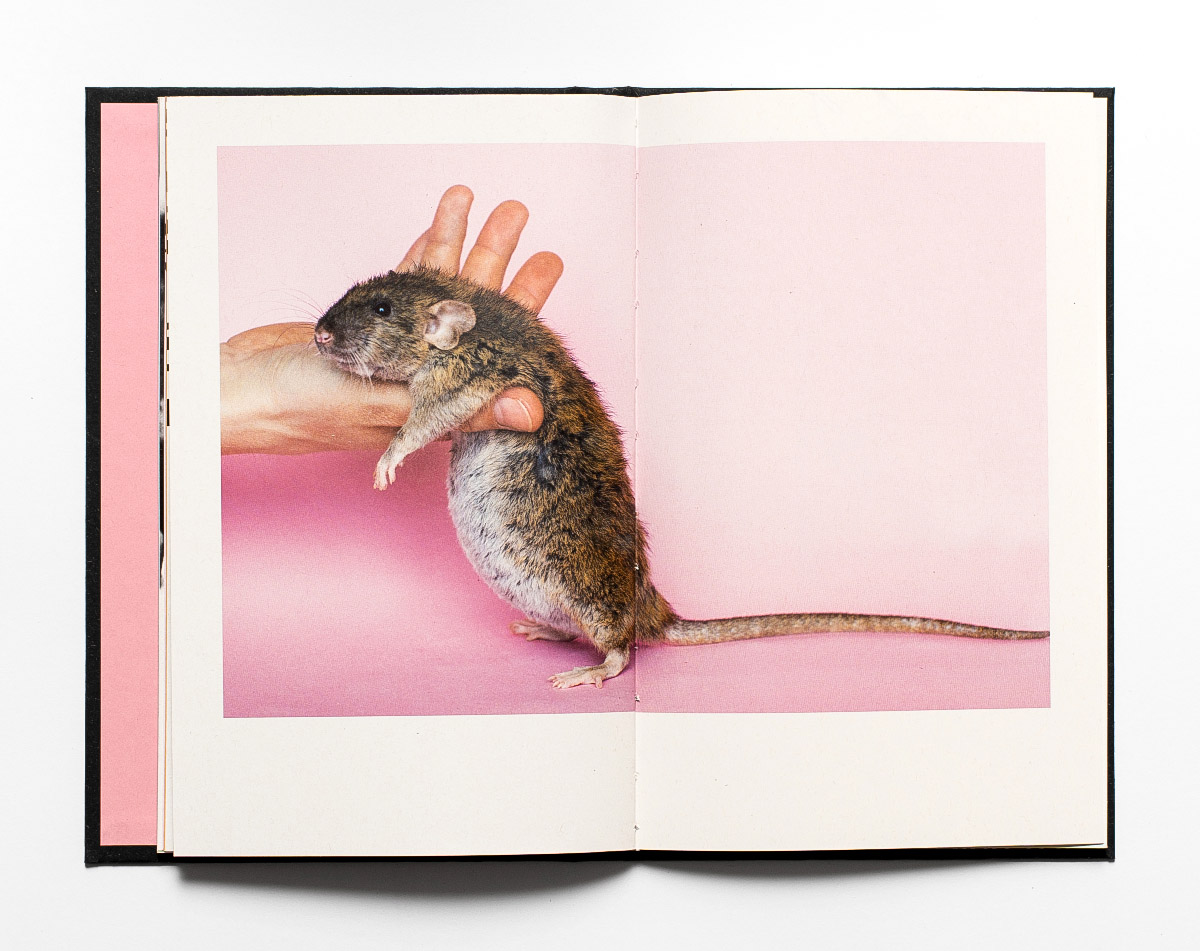
What if another highly advanced species doesn’t arrive on Earth from outer space, but is already here, among us, challenging humanity’s status as the pinnacle of civilization? After years of studying, photographing, and enjoying the company of pet rats, Belarusian photographer Mariya Karneyenka has come to the conclusion that this scenario might be possible – if not now, then in not-so-distant future. Thriving within Earth’s ecosystems, these rodents do not need to devise elaborate plans to take over the planet: they are already populating it, largely unnoticed by their bipedal neighbors.
In her mockumentary project titled Rattus Sapiens, Karneyenka invites the viewer to descend into the world down the rat’s hole – a complex visual labyrinth of allusions, references, half-truths, and quasi-scientific evidence. This universe is skillfully constructed together with Polish photobook designer and editor Ania Nałęcka-Milach, whose work has been widely recognized at international festivals and art fairs, including Les Rencontres de la Photographie d’Arles (2022), Grand Press Photo (2024, 2022), and Fotofestiwal Łódź (2022).
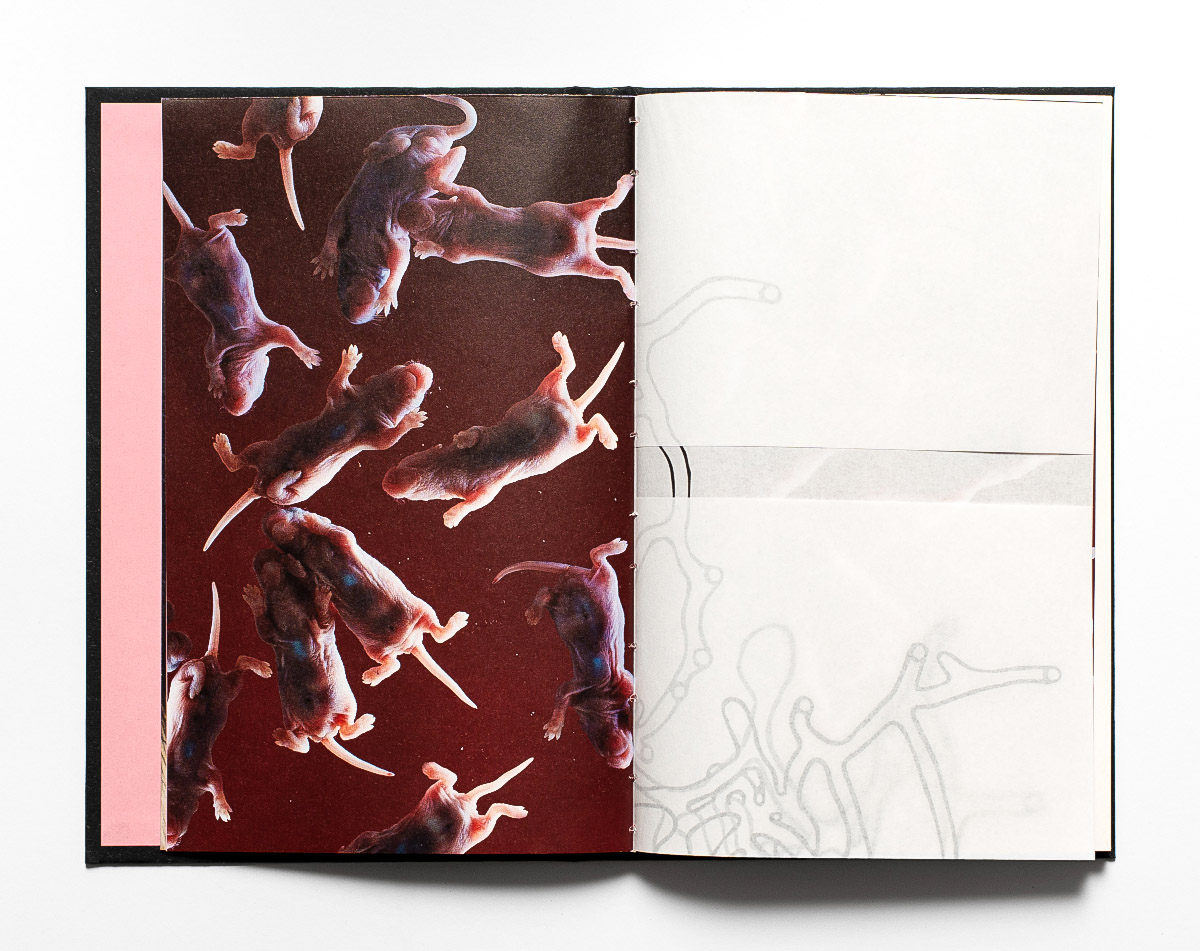
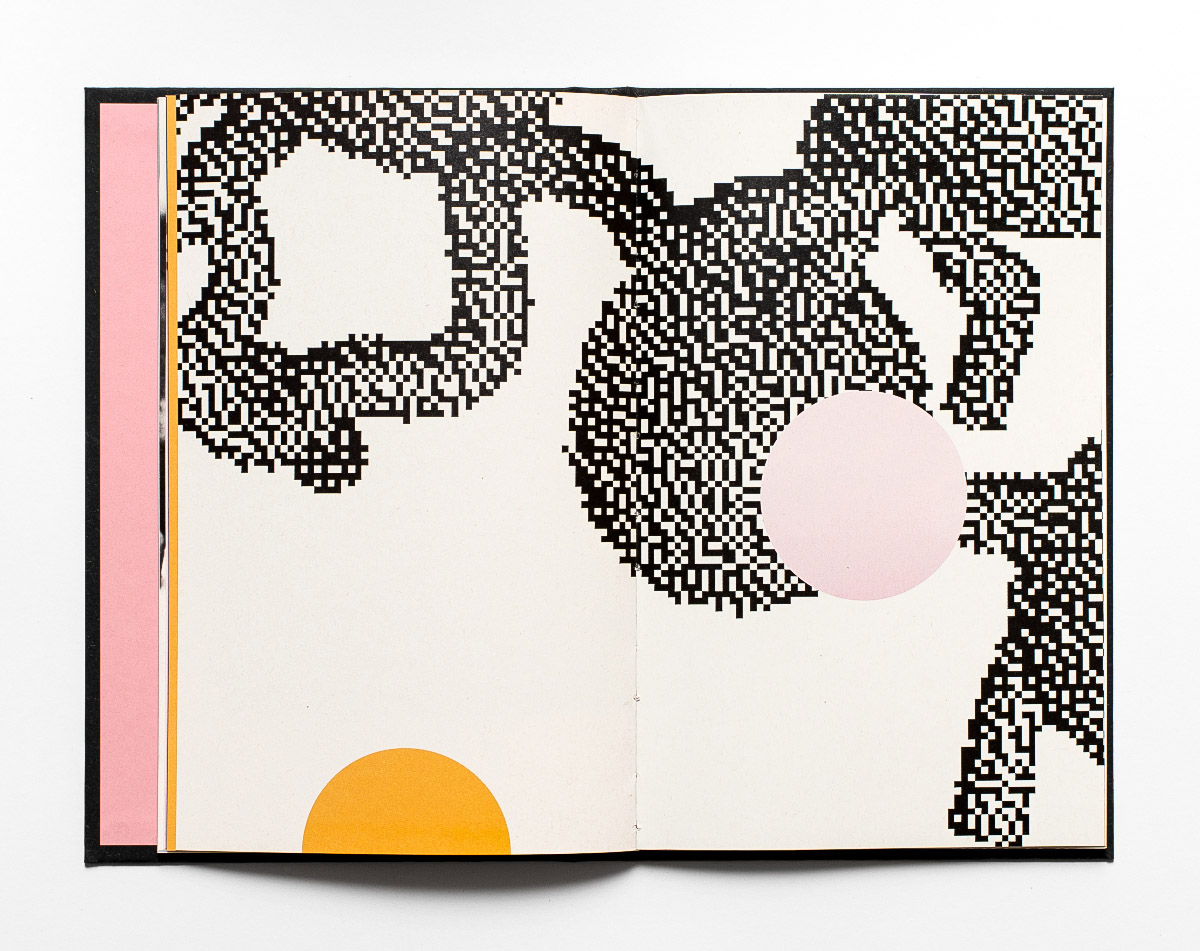
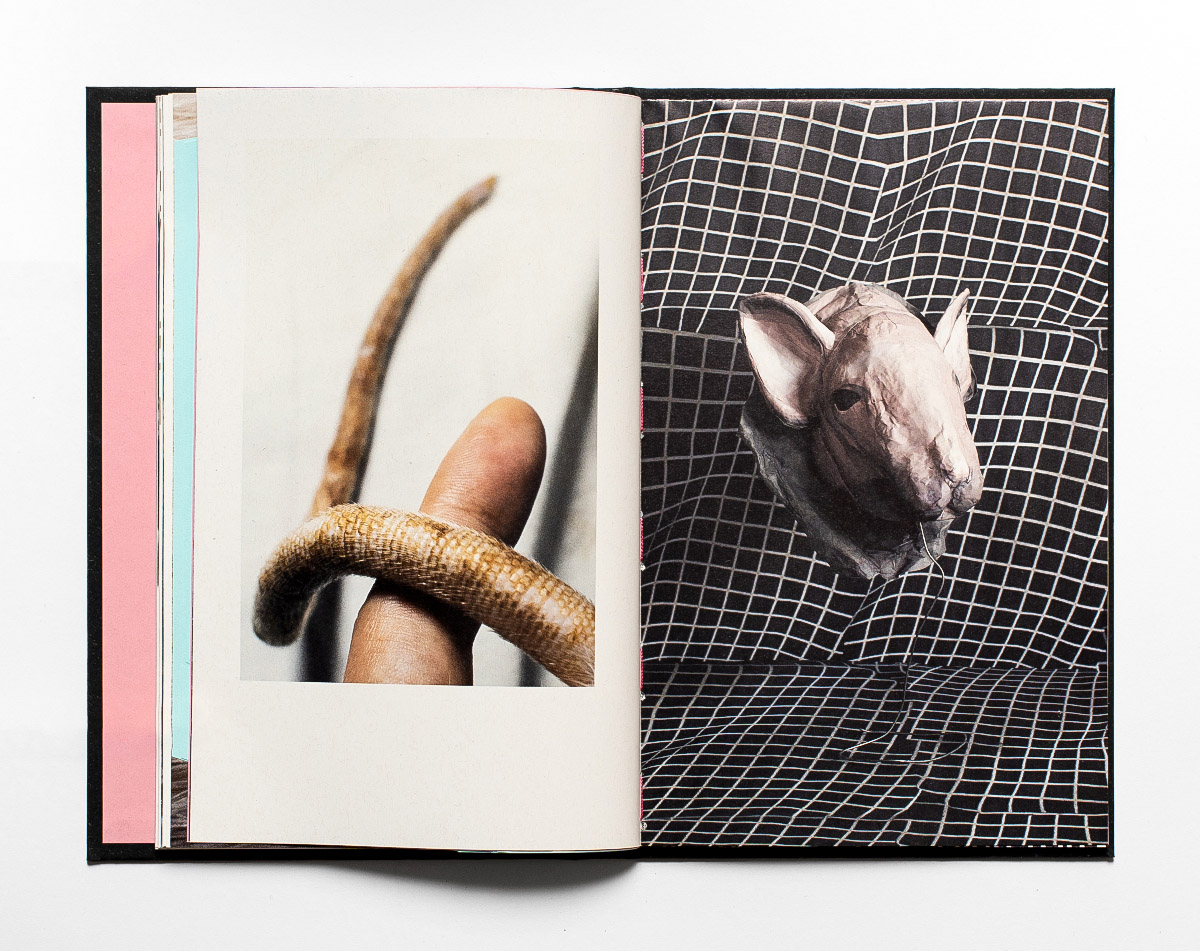
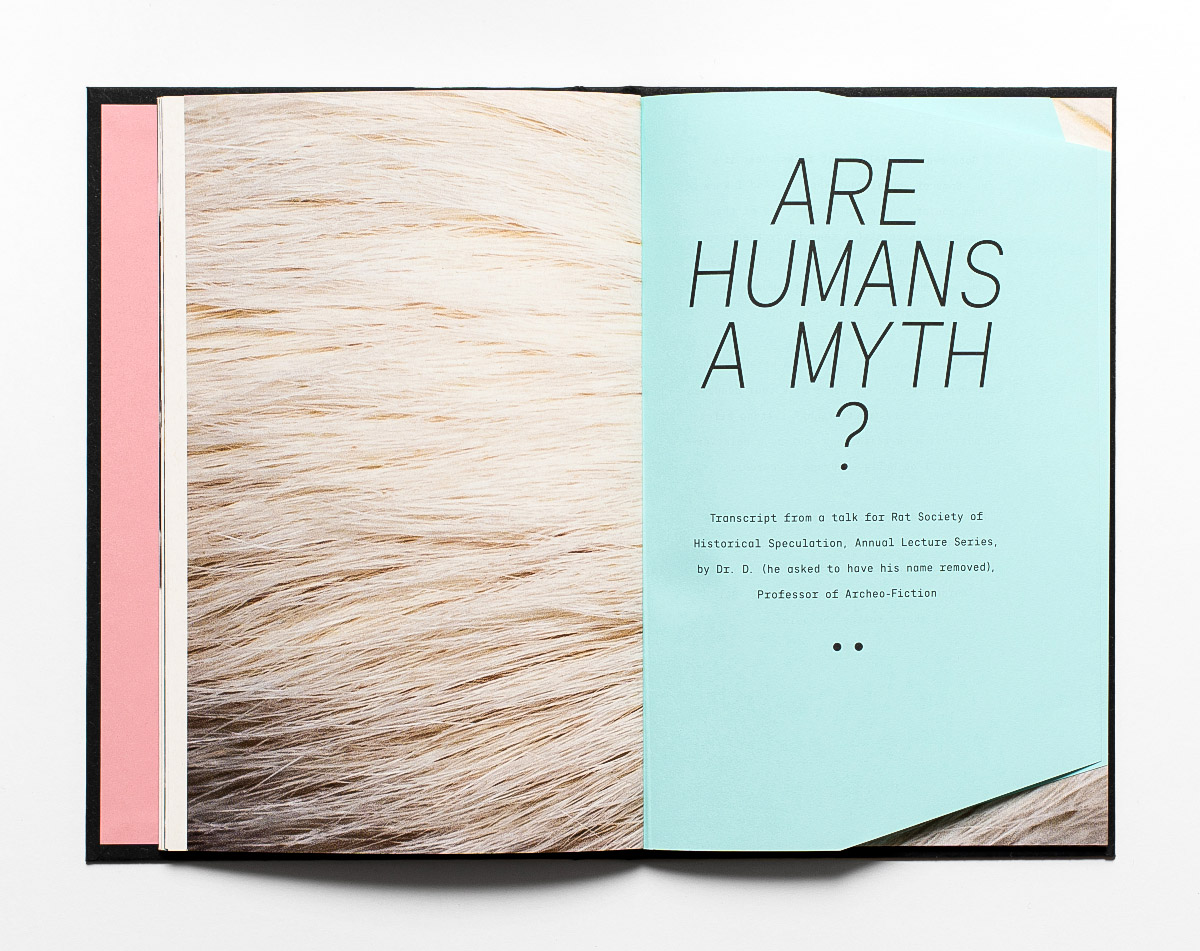
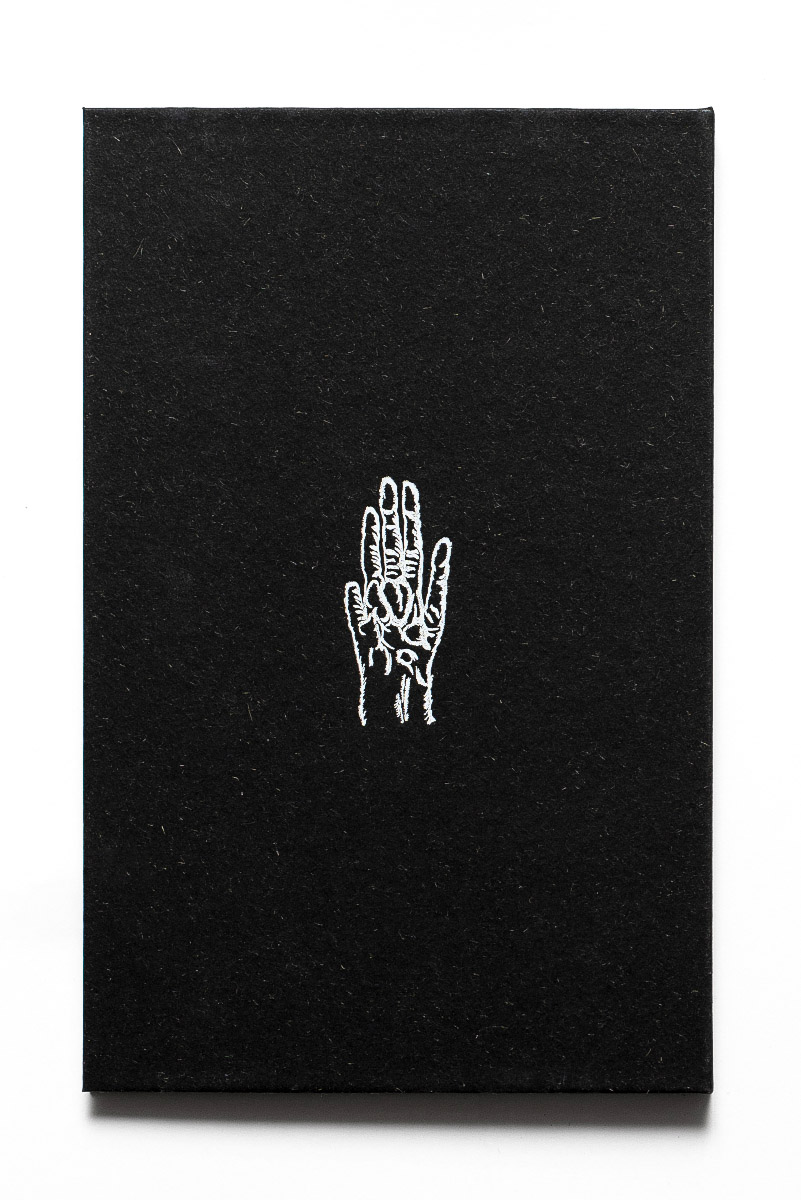
Design-wise, the book is indeed intricate. A system of folds, flaps, and textures with varying degrees of transparency is combined with mini-brochures containing two essays, one by New York–based writer Tatsiana Zamirovskaya (herself a self-proclaimed rat ambassador), the other by the enigmatic member of the Rat Society of Historical Speculation, Dr. D. Despite differences in genre and tone, both texts bring further dimensions to the project. Zamirovskaya approaches the subject through an intimate personal history of raising and burying her per rats, while the fictional Dr. D. offers a radically different perspective, proposing a speculative framework for understanding rats and their perception of the human species giving voice to the former – and actually talking on their behalf.
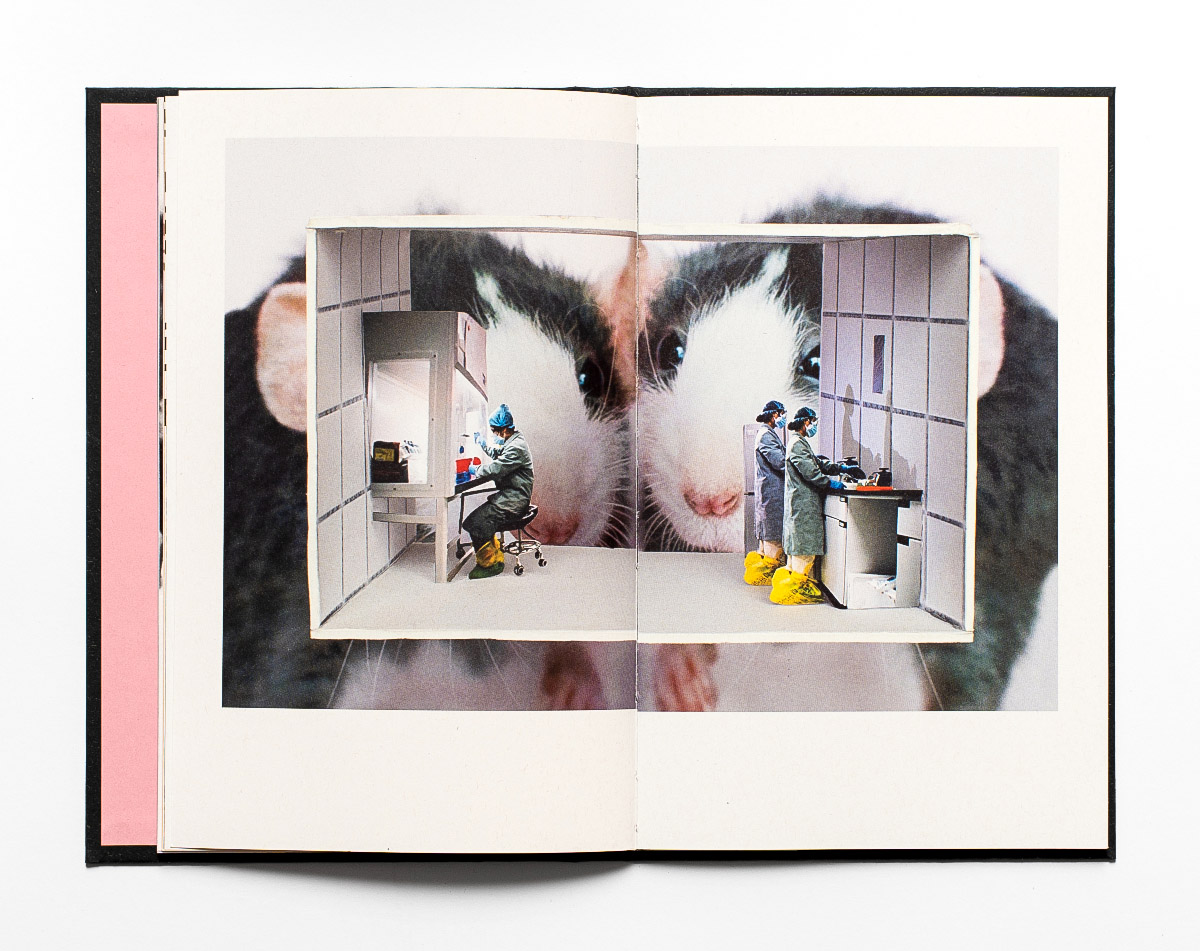
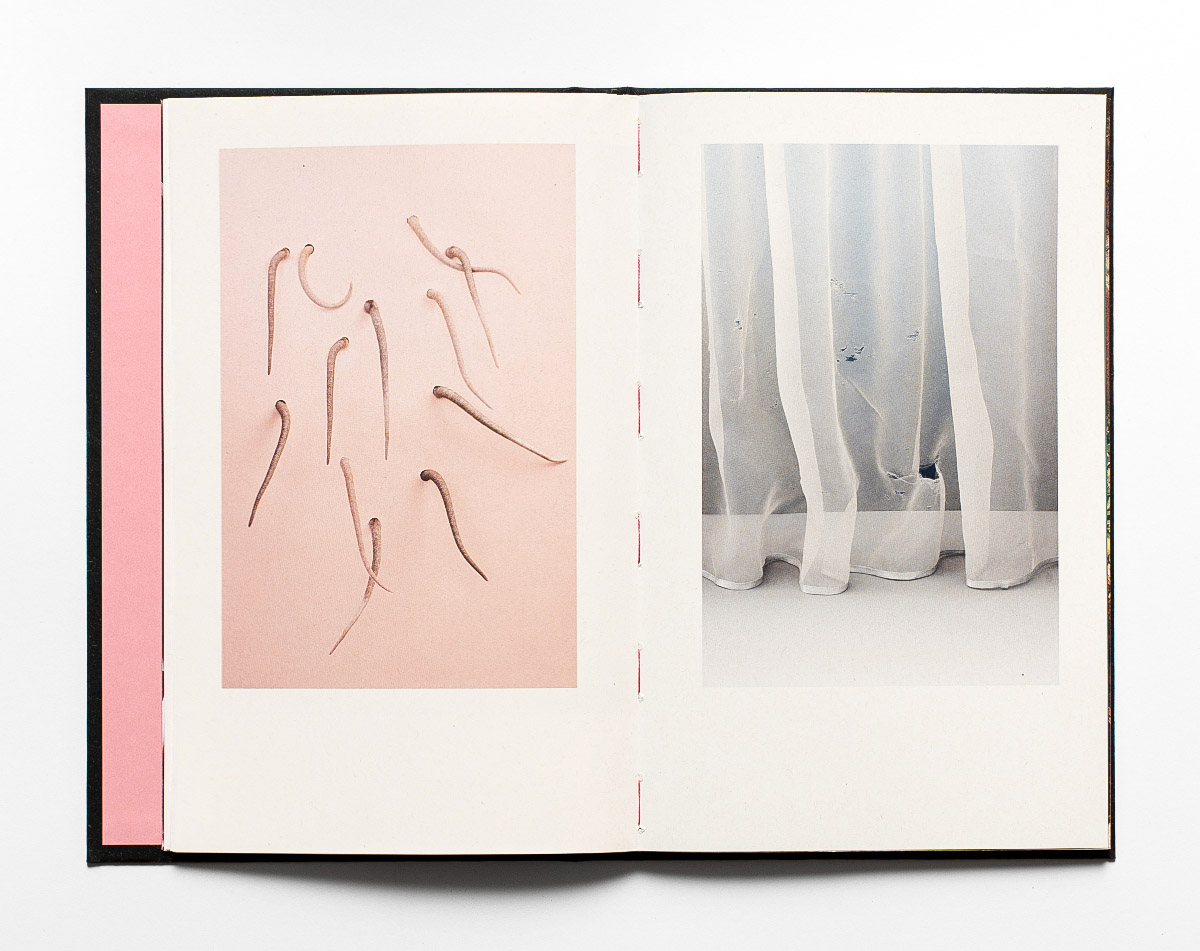
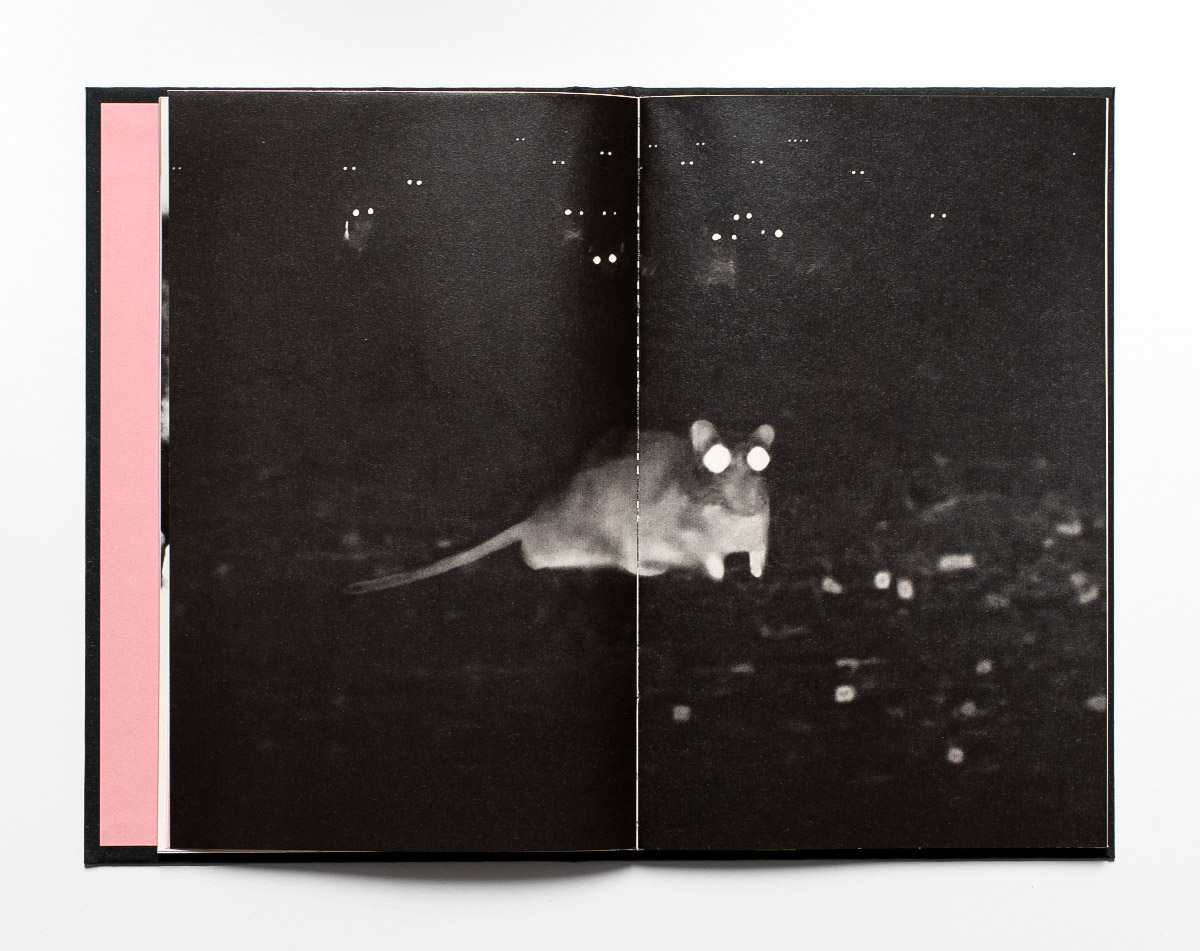
Set against a gentle pink background reminiscent of rat pups’ paws, Karneyenka’s visual narrative blurs the boundaries between research and fiction, evidence and speculation, questioning the mechanisms through which knowledge, authority, and species hierarchies are constructed. A significant portion of the images presented in the book resemble film stills from ambiguous laboratory experiments, ancient lithographs of rat-like androgynous creatures, and documentary-style recordings of unfamiliar installations and objects whose function remains deliberately unclear.
In this sense, Rattus Sapiens aligns itself with the tradition of mockumentary photobooks that deliberately destabilize the authority of the photographic image. Joan Fontcuberta’s landmark projects such as Fauna (1989) or Sputnik (1997) come to mind, where pseudo-scientific narratives and fabricated archives expose photography’s complicity in producing fast food truth. Similar strategies can also be found in works like Cristina De Middel’s The Afronauts or Natalya Reznik’s Looking for my Father, which, though different in form, likewise blur the line between documentation and construction and employ para-scientific imagery, collage, and fictional archives to undermine the assumed transparency of photographic evidence. Like these projects, Karneyenka’s book does not merely parody scientific discourse; instead, it uses fiction as a critical tool to question who is entitled to classify, narrate, and dominate – and to what ends. The mockumentary here becomes less a playful disguise than a method of epistemological inquiry, unsettling the visual regimes through which humans have long positioned themselves at the center of the world.
Contributing Editor Olga Bubich is a Belarusian essayist, visual artist, and memory researcher currently based in Berlin.
__________
Maryia Karneyenka – Rattus Sapiens
Artist: Maryia Karneyenka (born Belarus lives in Warsaw, Poland)
Essay: Tatsiana Zamirovskaya
Publisher: TAMAKA ©2025
Book design: Ania Nałęcka-Milach
Edition of: 400 copies in English / 100 copies in Belarusian
Language: English, Belarusian
Printing: Poligrafus, Warszawa, Poland
Hardcover, 132+4. 15 x 23,6 cm, ISBN: 978-3-00-083625-1 (EN) and ISBN: 978-3-00-083626-8 (BY)
__________
Articles and photographs published in the PhotoBook Journal may not be reproduced without the permission of the PhotoBook Journal staff and the photographer(s). All images, texts, and designs are copyright of the authors and publishers.
 PhotoBook Journal
Leave a comment