Review by Olga Bubich ·
Every artistic technique doesn’t enter the creatives’ practice by itself. Its emergence is usually determined by a few historical, social, and cultural factors, as well as by individual searches for a form capable of translating one’s inner and outer worlds. And collage is no exception. As a method, it was introduced into the visual world in the early 20th century at a moment of profound political upheaval and technological changes, manifested in rapid industrialization, the expansion of mass printing, the rise of urban consumer culture, and escalating geopolitical tensions that culminated in World War I. Around 1910–1912, artists associated with Cubism (most notably Pablo Picasso and Georges Braque) started incorporating into their compositions newspaper clippings, ads, wallpaper, and other everyday materials to show disillusionment, anxiety, and confusion in the face of change too fast and uncontrollable to grasp. “The world doesn’t make sense, so why should I paint pictures that do?” Picasso summarized his approach.
The method evolved further with Dada, an avant-garde art and literary movement born out of disgust with the war and the bourgeois socio-political order that led to global catastrophe. Cutting, pasting, distorting, and rearranging the images, Dada artists stressed the eroded trust in institutions and stated that the search for a different, new – although perhaps still not fully defined – language was a must. Driven by the same impulses, a century later, witnessing other devastating events in another part of the world, Belarus-born Masha Sviatahor also turns to collage.
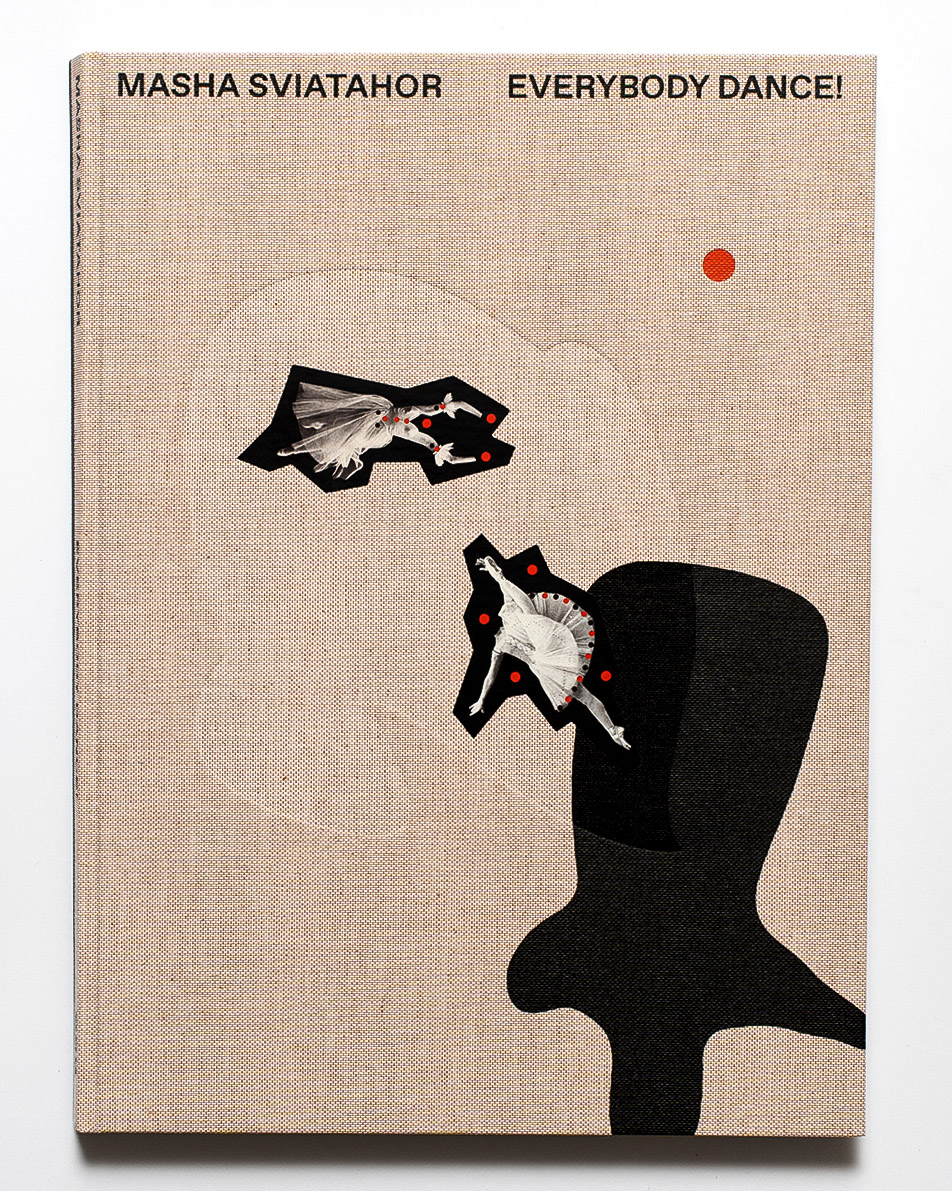
EVERYBODY DANCE! is Sviatahor’s debut book, published by Tamaka – a newly founded independent publishing initiative – and designed by Alexey Murashko. By choosing Sviatahor’s work as their first entry into the international photobook market, the team signals its commitment to the themes and values this photographer engages with: resistance to the growing restorative nostalgia and a call to confront the harsh realities of a present that increasingly feels like a civilizational dead-end. And though art might not be the only answer, it is clearly one of the tools for starting a critical dialogue.
At first sight, the large-format canvas-covered monograph feels like a volume one might accidentally discover in the rare-manuscript section of a provincial library that never fully left the communist era. Rough, heavy, and impossible to casually leaf through without placing it on the table, EVERYBODY DANCE! requires a special attitude – probably, as any book aspiring to address painful collective history does. In Sviatahor’s case, this history has long remained unexamined, passed silently from one generation to the next like an inherited Soviet dinnerware set no one ever used or really liked. Immediate reference to the last days of the USSR is reinforced by the customized look of the cover: every copy is unique due to ballet dancer stickers manually attached to it in various constellations by the artist.
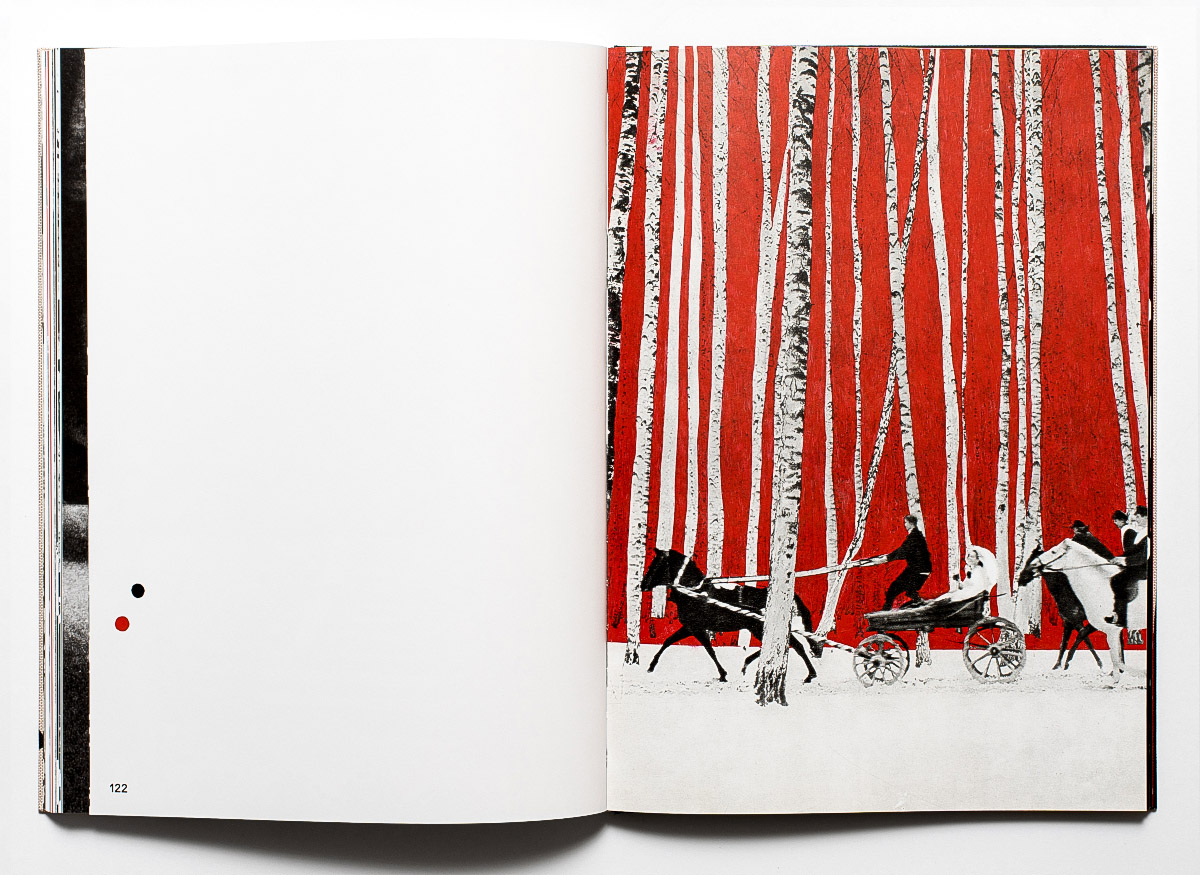
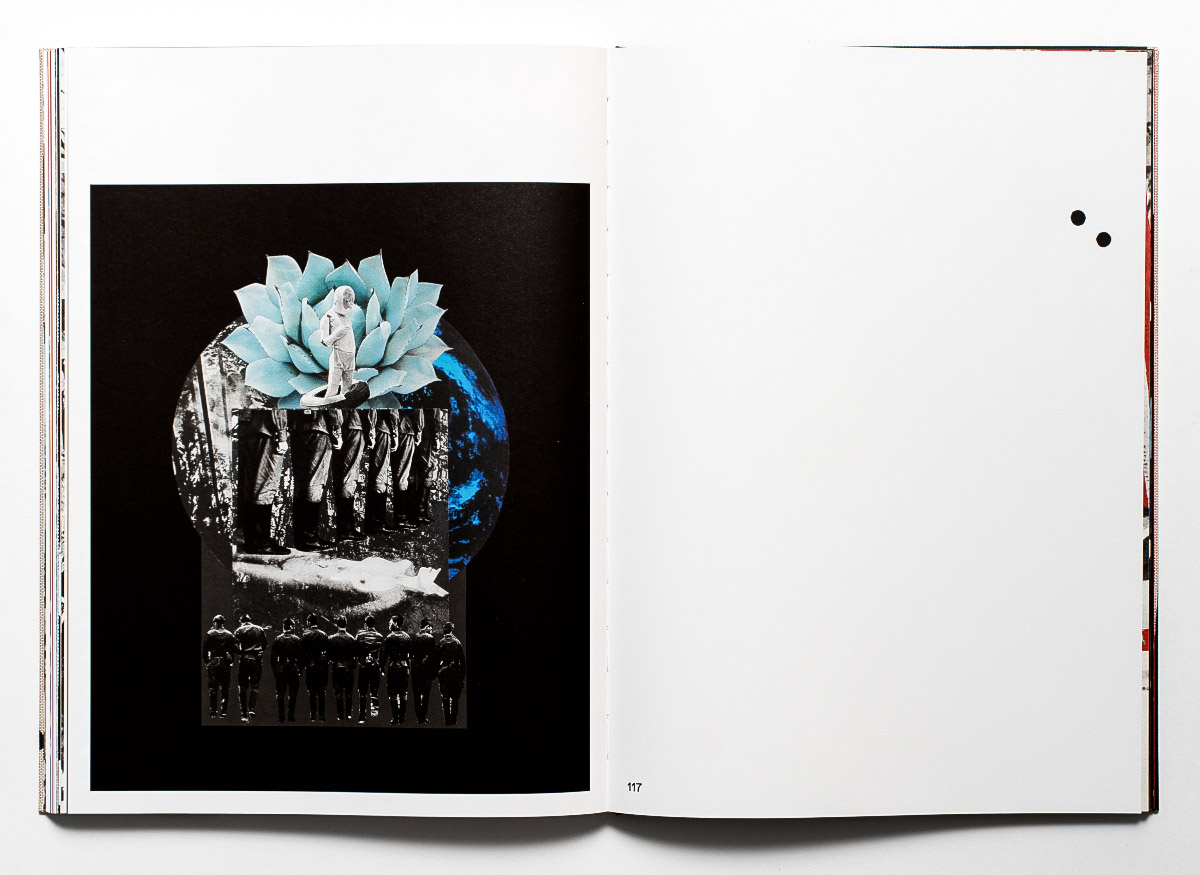
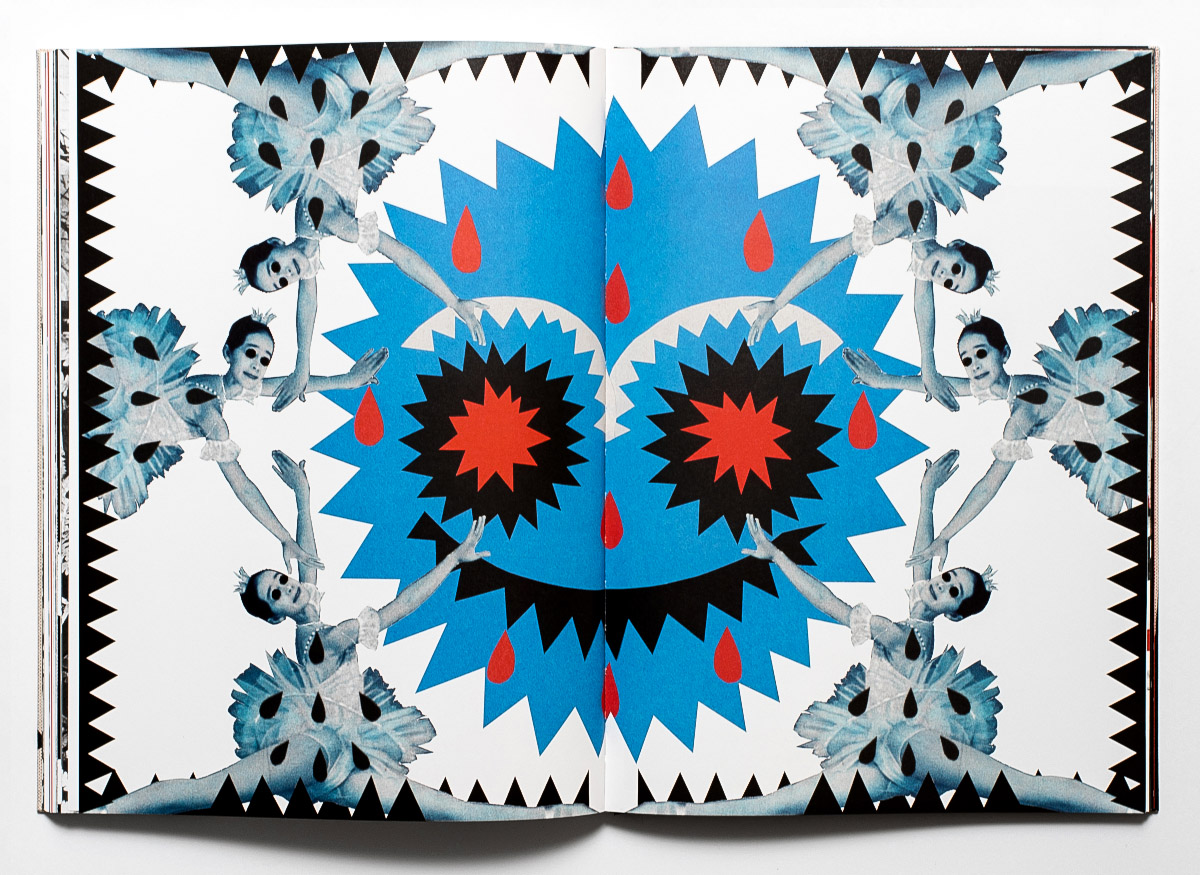
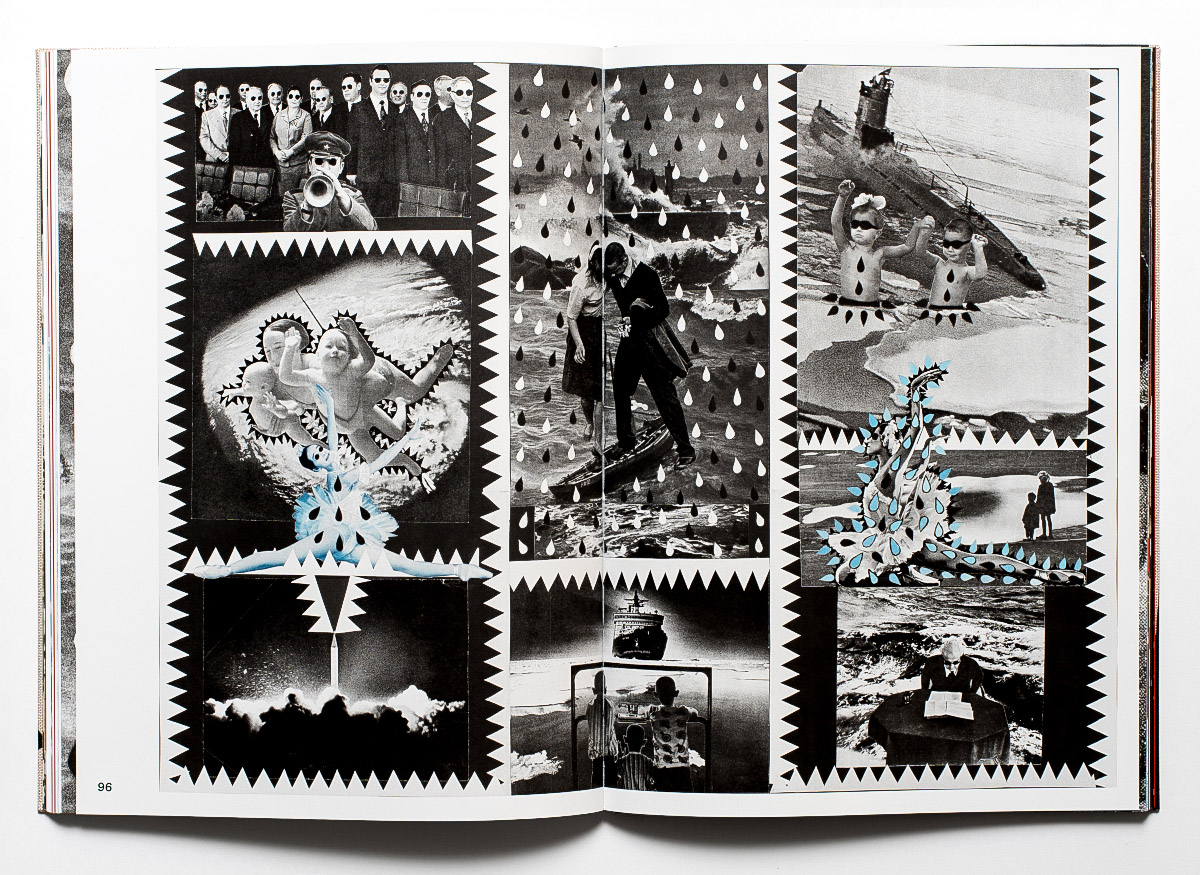
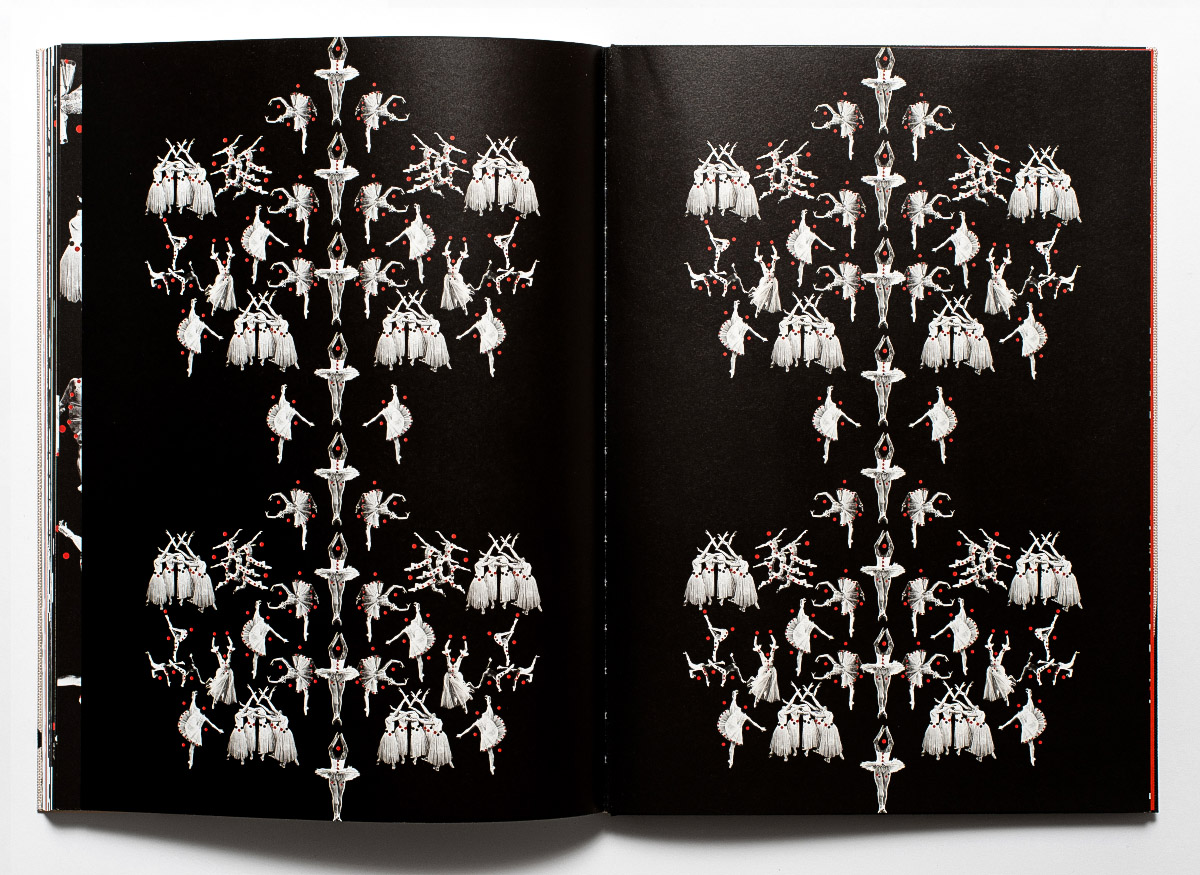
The book brings together five series created between 2018 and 2025, each introduced by a minimalist half-title designed specifically for this publication. Despite the time span, the works are united by the artist’s provocative visual language: clear geometric compositions, recurring motifs, and a minimal palette of four colors – white, black, gold, and, predictably, red. Another defining feature is Sviatahor’s choice of primary material for deconstruction.
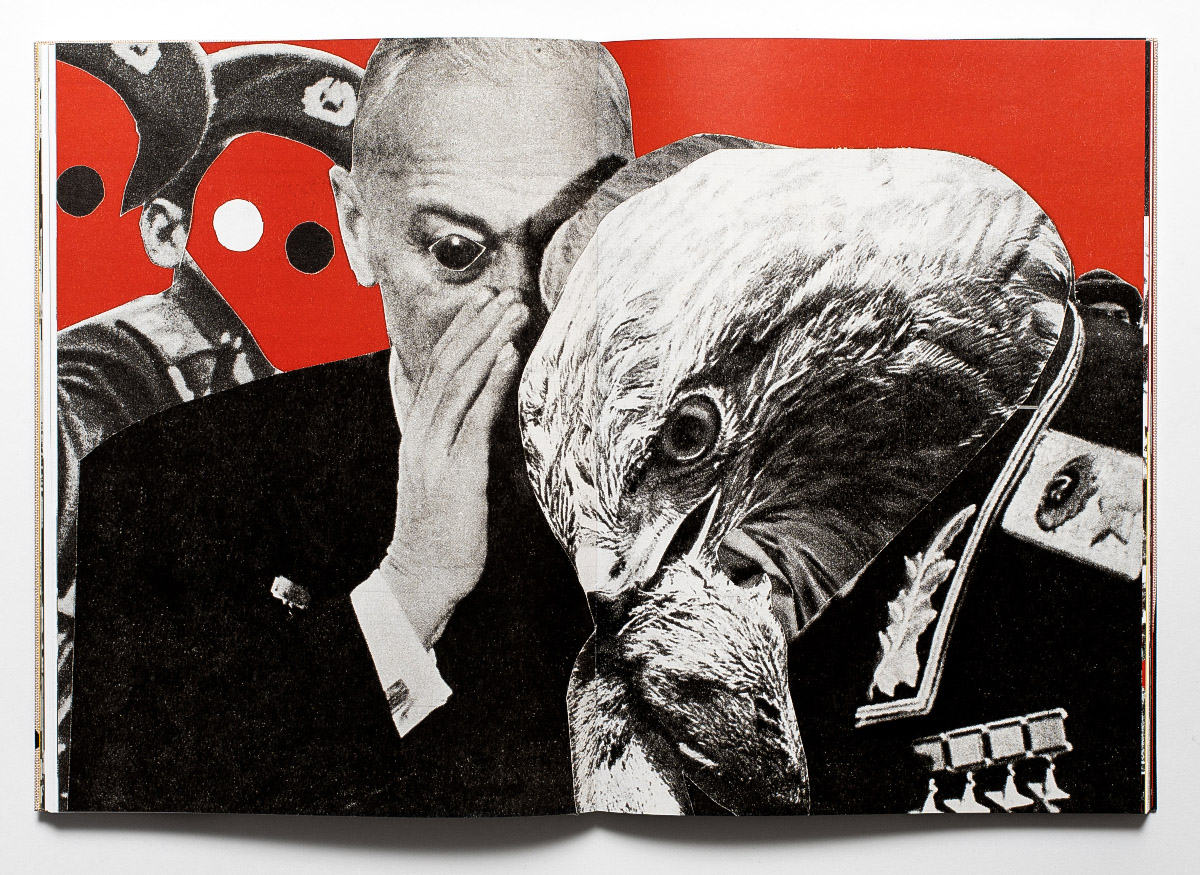
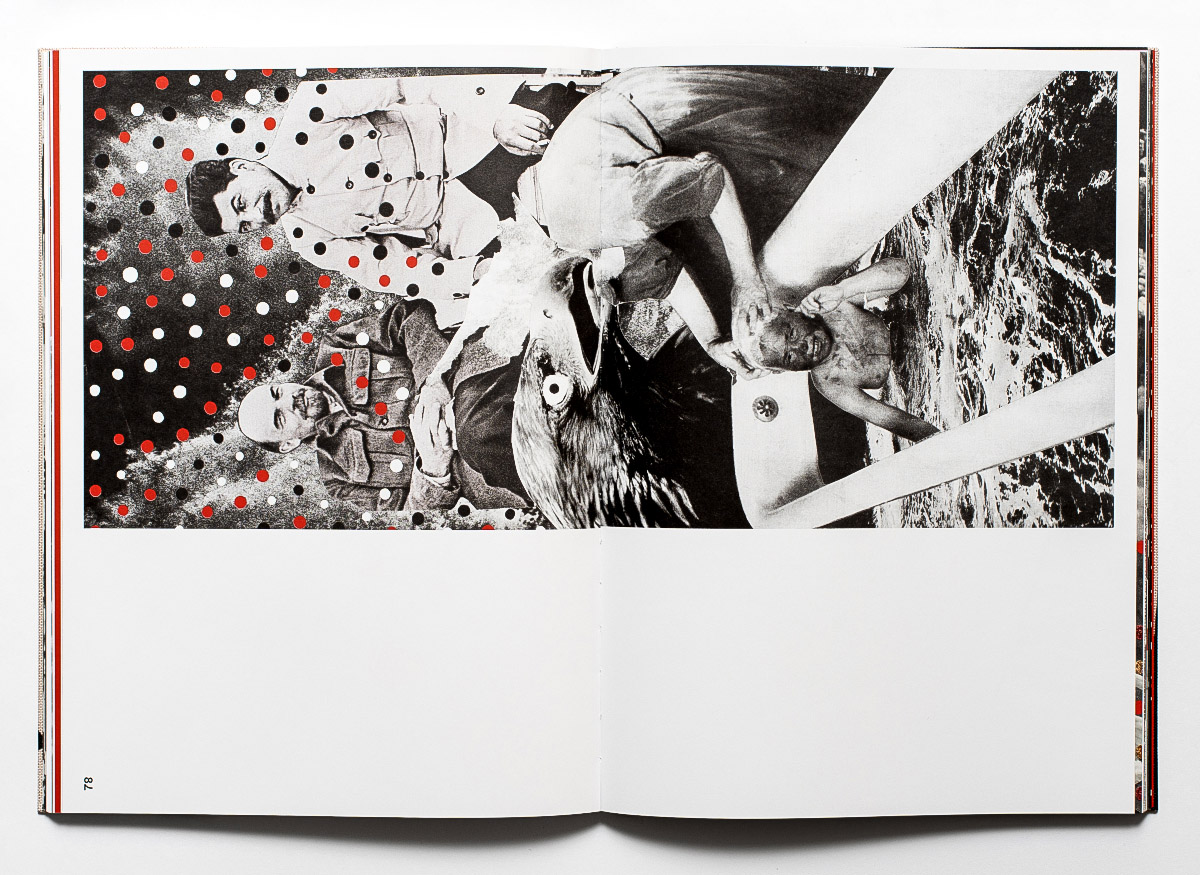
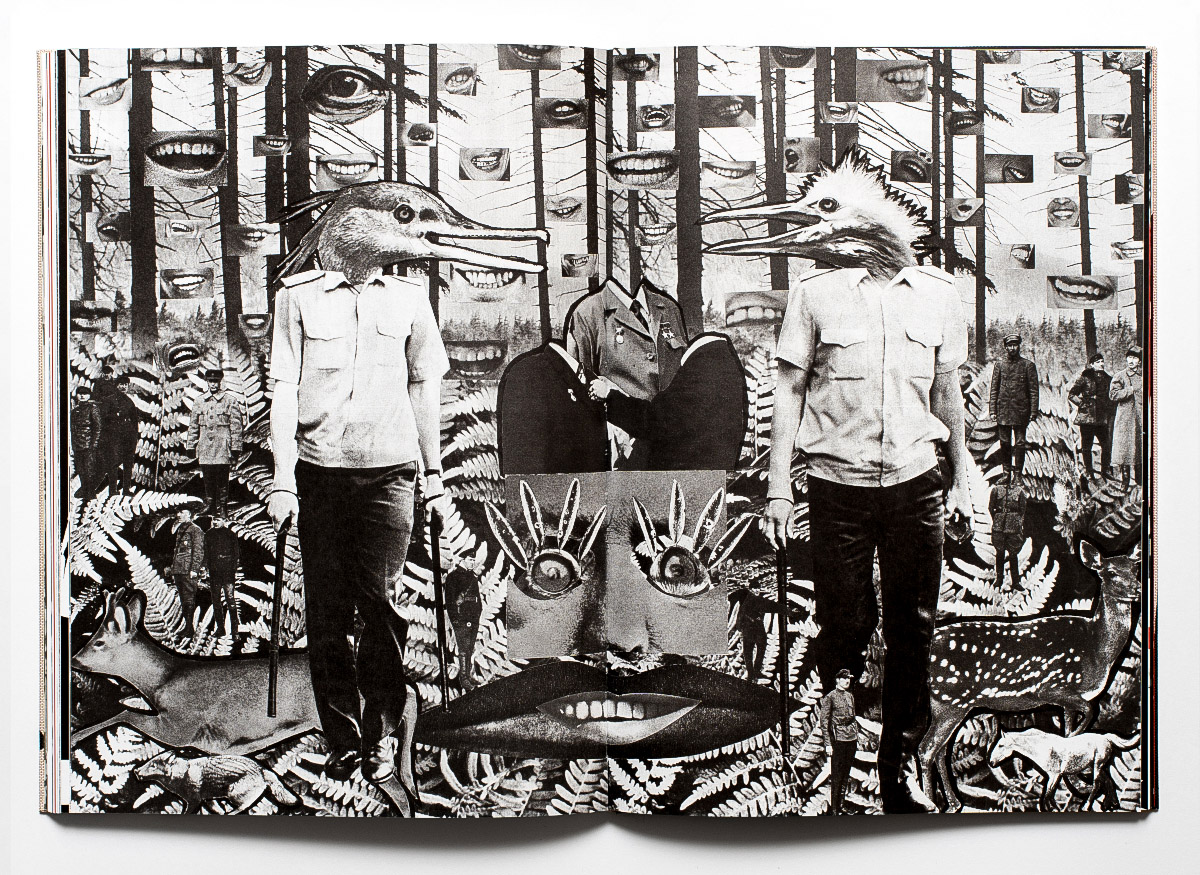
All the images in EVERYBODY DANCE! are assembled from Sovetskoe Foto, the sole specialist photography magazine published in the Soviet Union from 1926 to 1991, which appears as a perfect source of inspiration (or, actually, anti-inspiration?) for conceptual interventions. What was meant to convey unity, optimism, and the model citizen as imagined by the Soviet state, in the artist’s hands turns into an eerie crooked mirror that magnifies the absurdity and hypocrisy of Soviet ideology.
Yet when looking at these surreal, at times overtly disturbing images of the marching soldiers or Politburo leaders, one can sense not only anxiety, horror, or confusion at the past empire that succeeded in keeping several generations brainwashed by the state’s destructive ideology. These meticulously cut, punctured, and reassembled “documents” also reflect Sviatahor’s anger and fatigue at the historical loops currently unfolding across the region, at societies again choosing indifference to growing threats, and at entire nations sliding back into alienation, polarization, and fragmentation. These feelings appear to be so intense that the artist boldly invites each of us to join her in the transgressive act of deconstruction: a collage at the center of the book can be dismantled into dozens of separate stickers that repeat the contours of the ballet dancers. Not only can one destroy something obsolete but one can also form something new.
“Those that fail to learn from history are doomed to repeat it,” Winston Churchill famously said; but what should also be remembered is that when history repeats itself, it does so as a farce. Blindness to the obvious is not always a result of well-functioning propaganda – sometimes it is a deliberate refusal not to see. And the task of the critically minded artists here is to zoom out from the present and attempt to look both backward and forward. Are we really unable to learn? How long will we keep on dancing?
__________
Contributing Editor Olga Bubich is a Belarusian essayist, visual artist, and memory researcher currently based in Berlin.
__________
Masha Sviatahor – Everybody Dance!
Artist: Masha Sviatahor (born in 1989 in Belarus, lives in France)
Foreword: TAMAKA Team
Essay: Maya Hristova
Publisher: TAMAKA © 2025
Editors: Masha Sviatahor, Alexey Murashko
Book design: Alexey Murashko
Edition: 400 copies in English / 100 copies in Belarusian
Language: English, Belarusian
Printing: Jelgavas tipogrāfija, Latvia
Hardcover with section-sewn binding, 164 pages, 54 plates with a sewn-in set of stickers. 24 x 33 cm, ISBN: 978-3-00-082885-0 (EN) and ISBN: 978-3-00-083030-3 (BY)
__________

Articles and photographs published in the PhotoBook Journal may not be reproduced without the permission of the PhotoBook Journal staff and the photographer(s). All images, texts, and designs are copyright of the authors and publishers.
 PhotoBook Journal
Leave a comment