Review by Steve Harp ·
How to begin thinking about Johannes Groht’s 2025 monograph Insight Grindel? Two words which immediately come to mind are beautiful and enticing. I hope to be more substantive in my following comments, but there is no question that this is a captivating volume. Its size (app 7” x 9 ¼”) makes it almost pocket sized, almost a travel guide. However, the almost is not really accurate when considering this as a travel book. In the English translation of the text on p. 112 (the printed text in the book is in German, the translation has been graciously provided to me by the artist) we are told that
The Grindelviertel is a district in Hamburg characterized by small stores and international restaurants. As in the past, Jewish life pulsates here again today amidst university, cultural and religious diversity.
This is an area, the text goes on to tell us, where the artist has worked for many years.
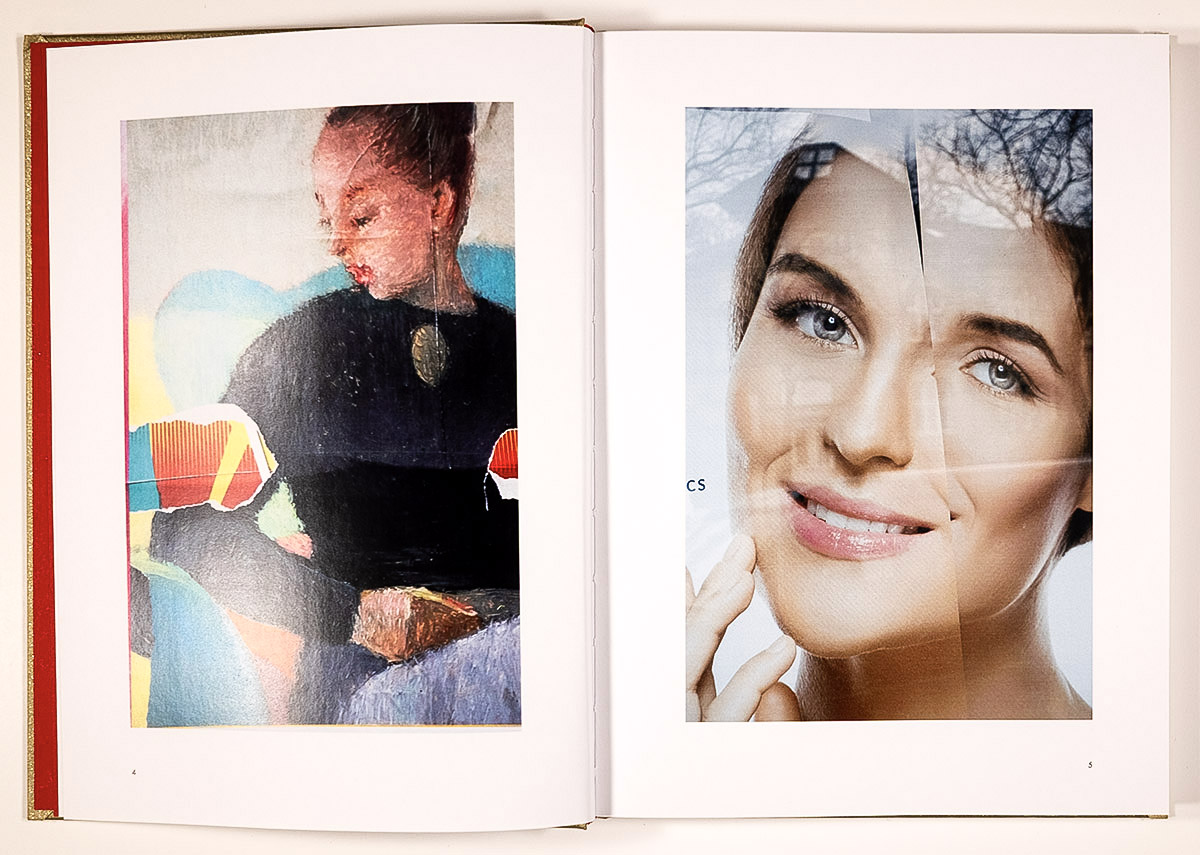
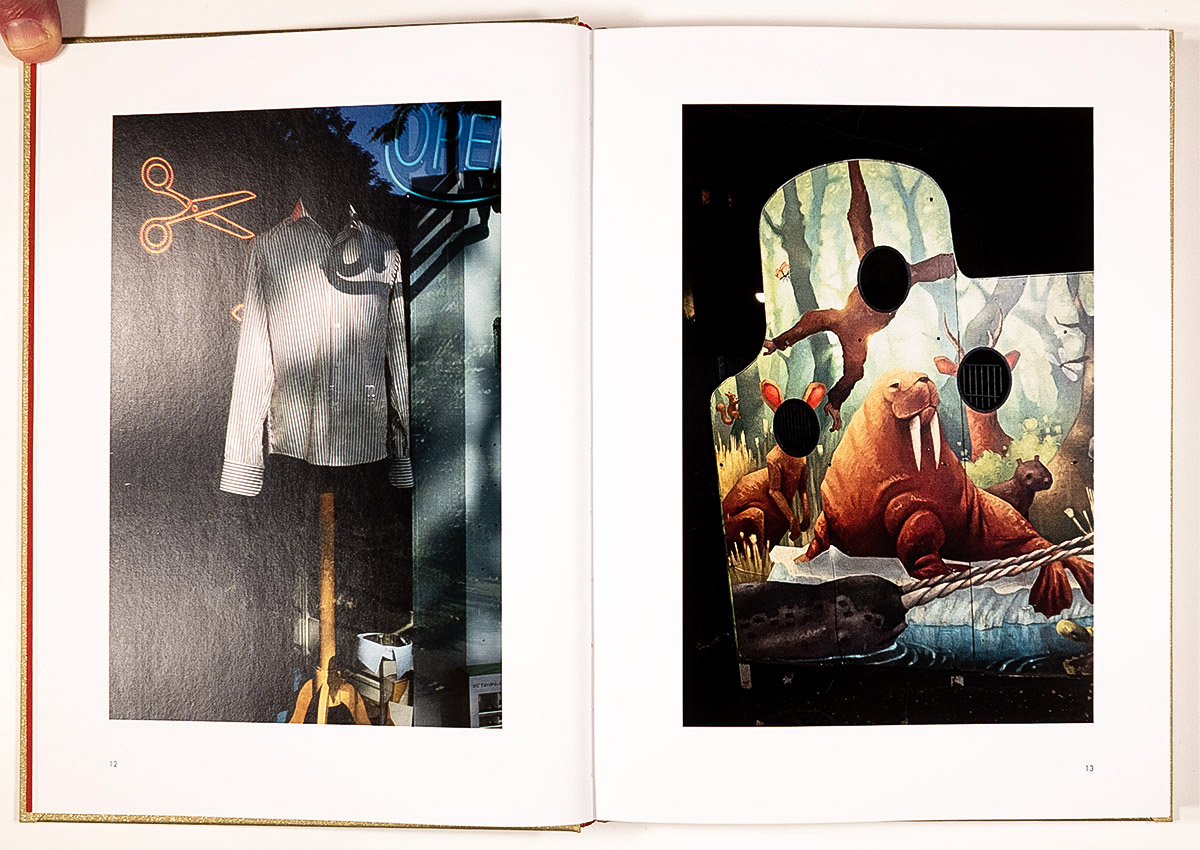
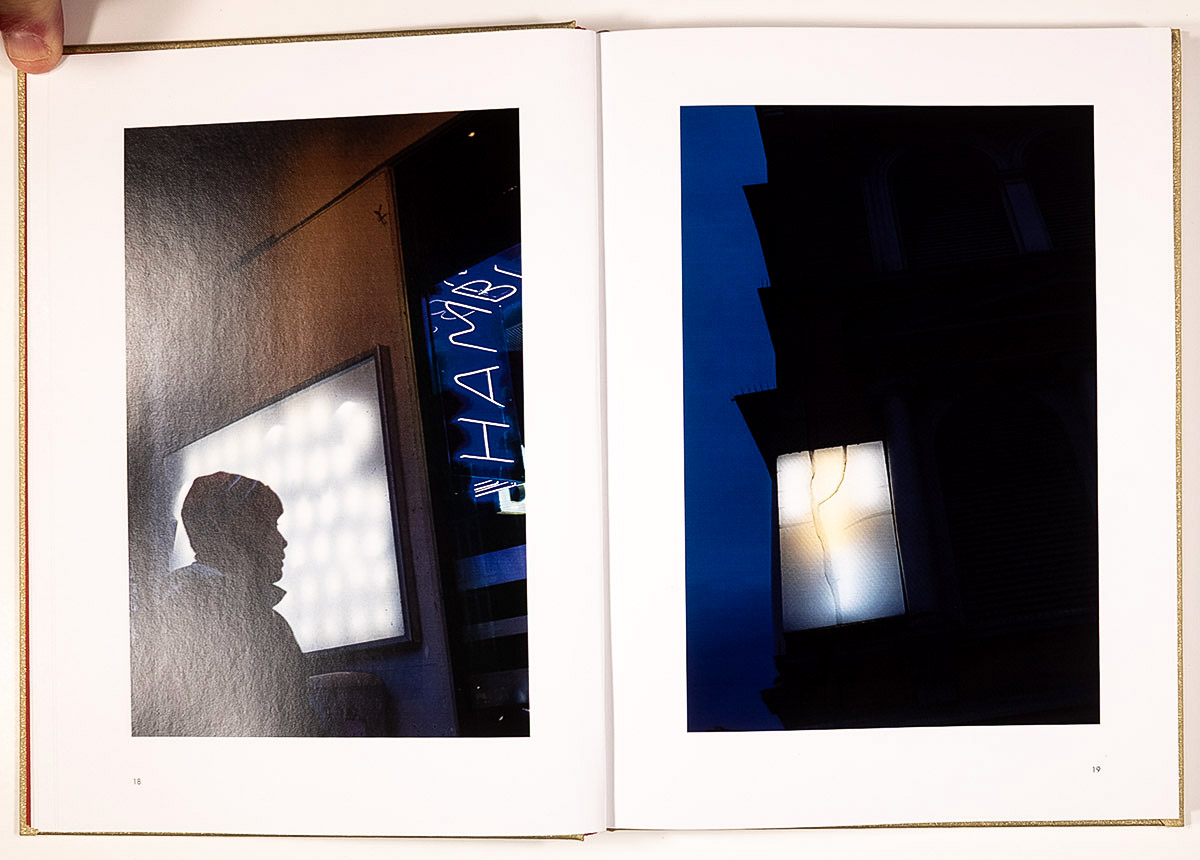
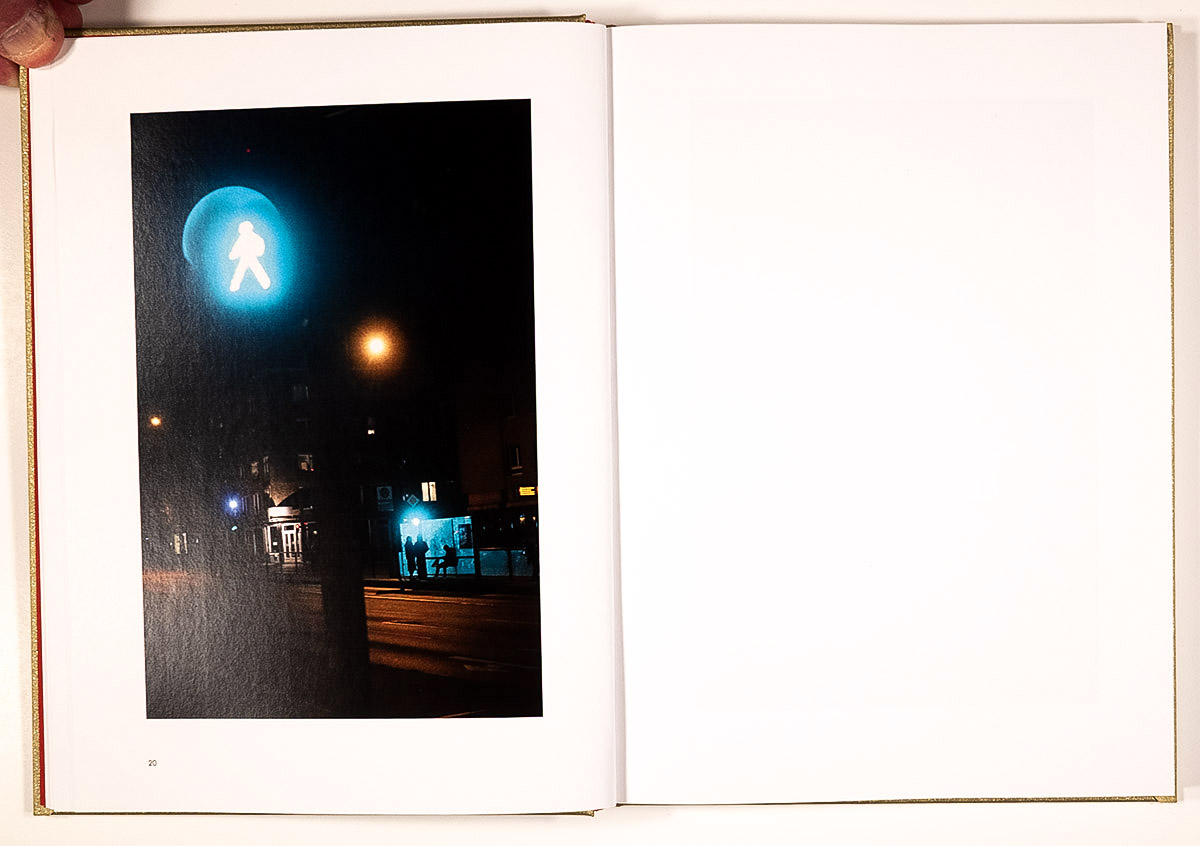
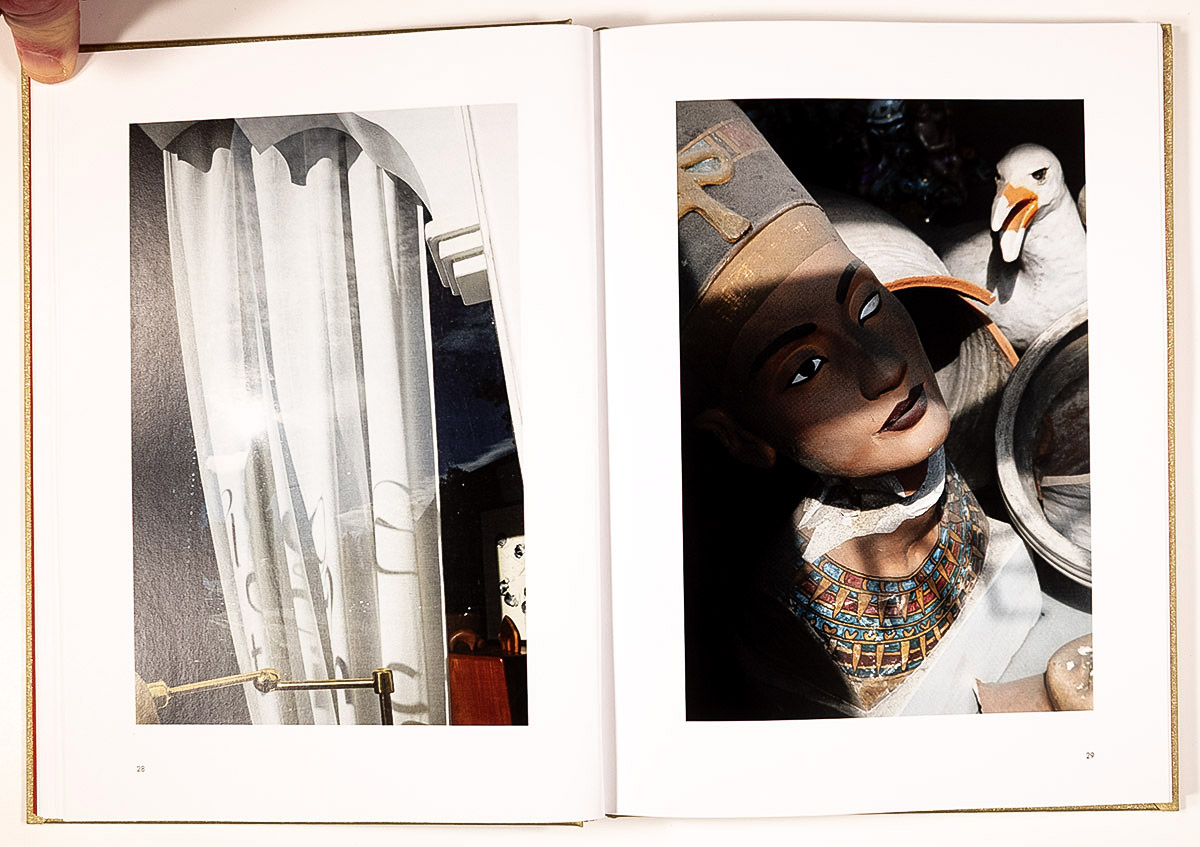
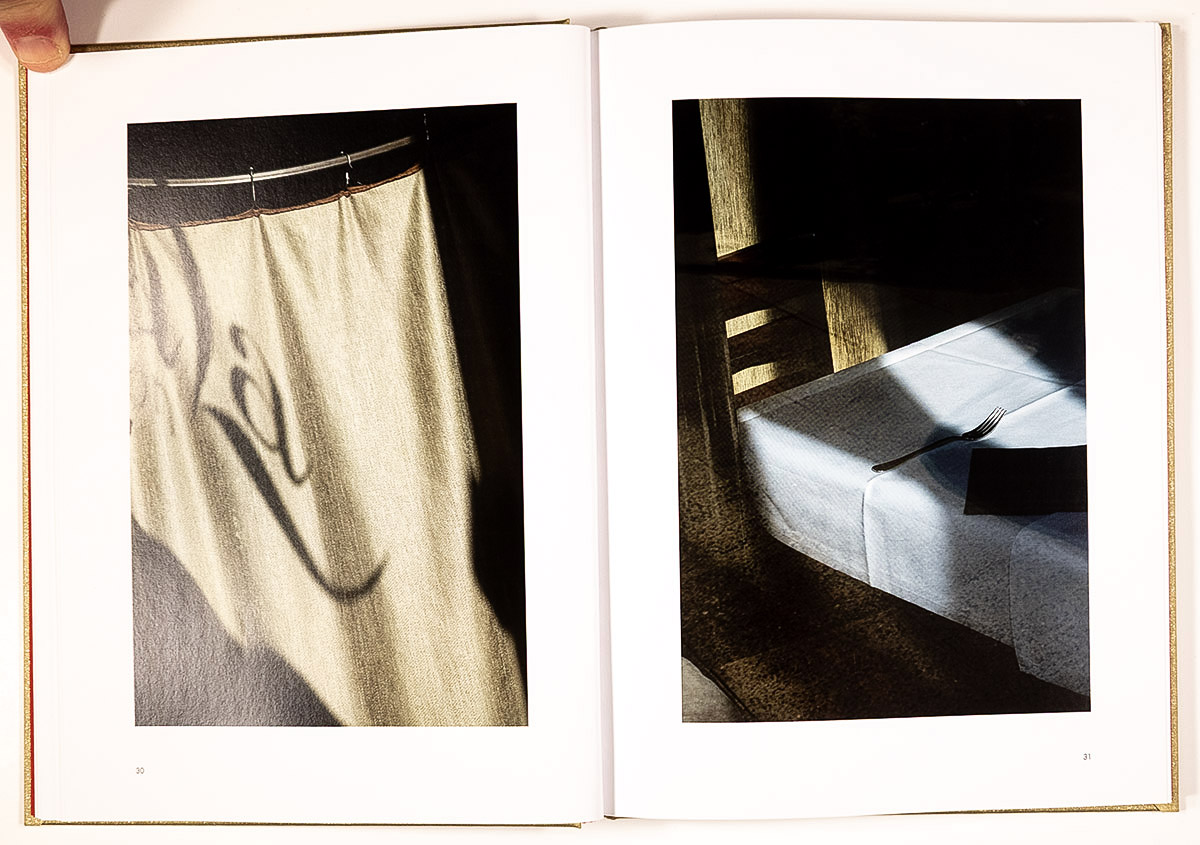
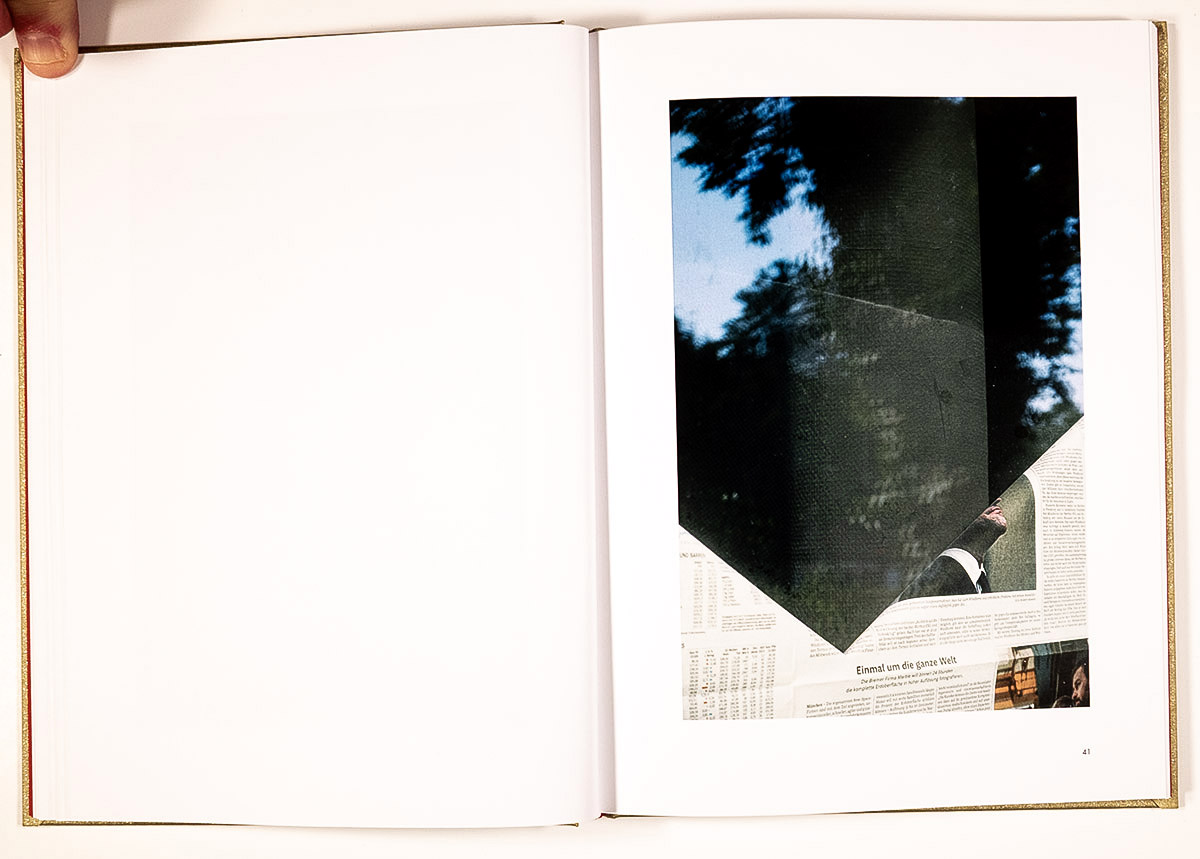
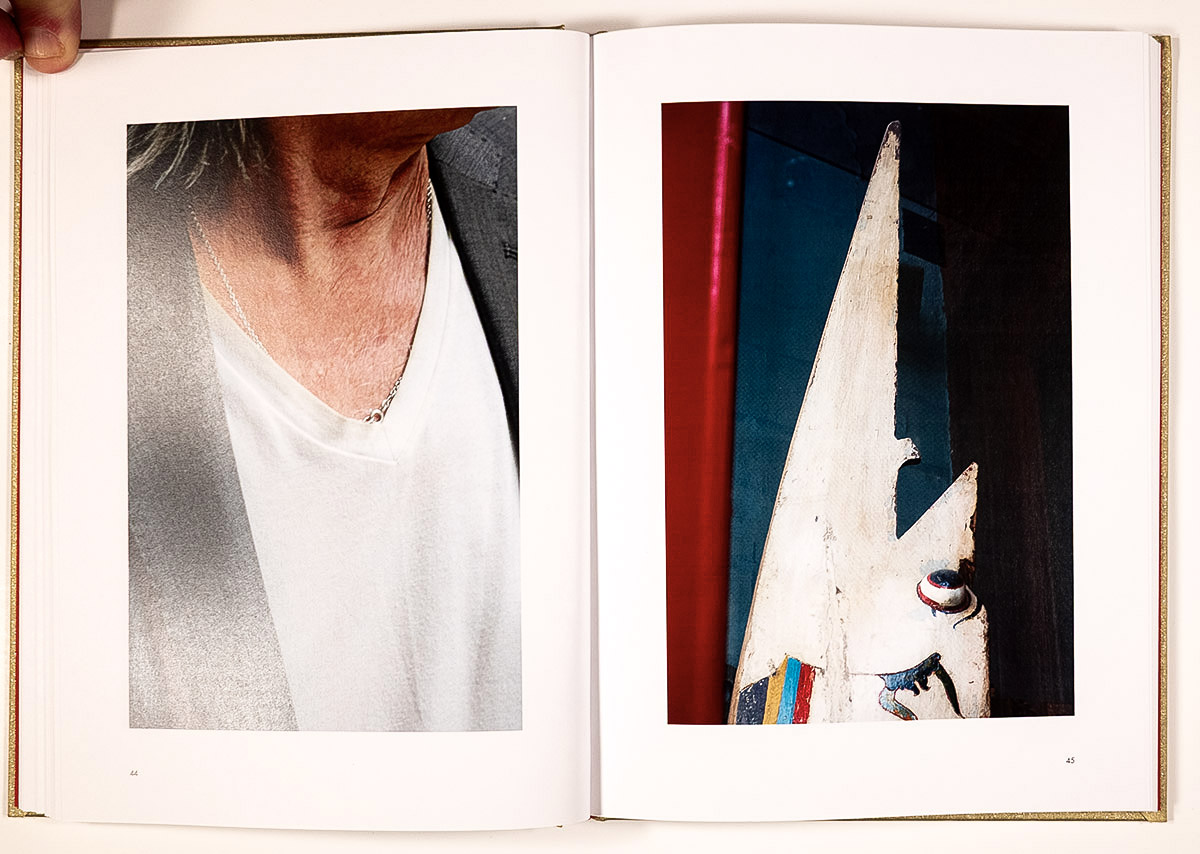
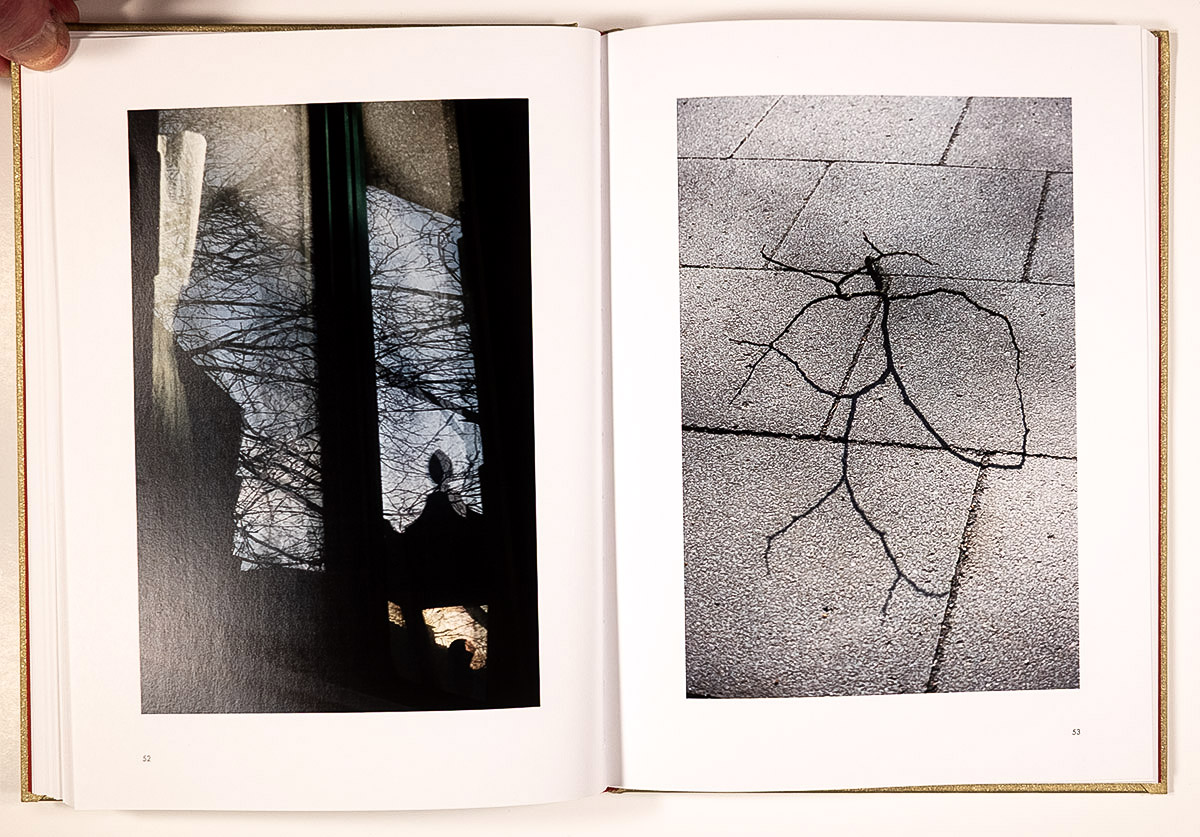
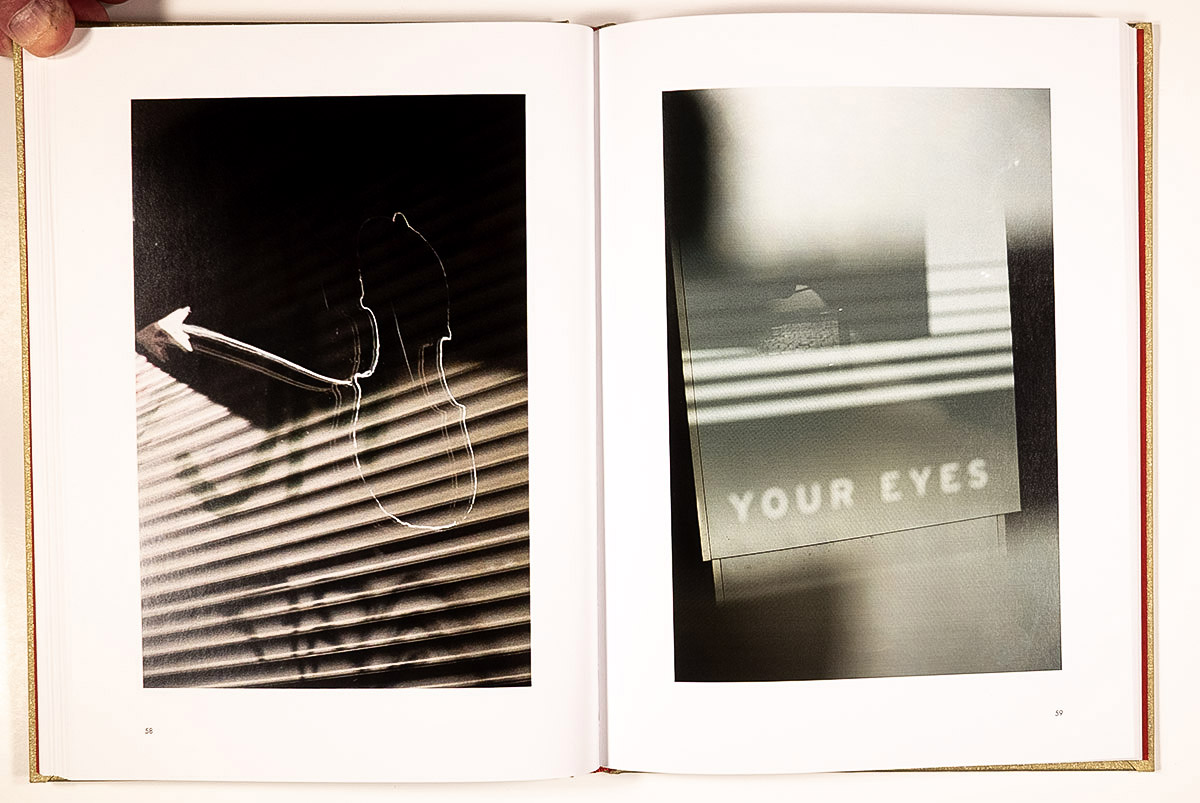
We might equate the “insights” of the title with seeing this book as a collection of details. The French verb apercevoir – to notice, to briefly catch a glimpse of – seems to perfectly describe what Groht offers here. We are presented with a series of small views or glimpses: advertising posters, interior views of restaurants, windows, mannequins and clothing displays, close-up views of sidewalks and walls. If we see a “street scene” (such as the one on page 20), it is mysteriously fragmented into a number of distinct pools of illumination which become almost separate worlds. And throughout, we are confronted with the ubiquity of written text as part of the urban visual environment.
When I started paging through this book, I was reminded of the classic American photography book, William Eggleston’s Guide (1976). Similar in size (Eggleston’s Guide is 9 ¼” x 9 ¼”) and also consisting entirely of color images, Eggleston’s photographs of the rural American South in a sense give the same feel as Groht’s of a travel guide (hence the title). The subject matter of Eggleston’s photographs generally offers wider or more distant views than Groht’s: landscapes, home interiors, full figure and group portraits. But what fundamentally links both books, is a sense of the familiarity of the scenes presented, the everyday, coupled with the uniqueness of the recognizable and the quotidian. Nothing seen in either book is out of the ordinary and yet both Eggleston and Groht bring an “insight” to their visions and renderings of space, details, objects, human (and animal) subjects and, by inference, culture and history. A kind of productive confusion is created in the melding of inside and outside, interior and exterior, familiar and unfamiliar.
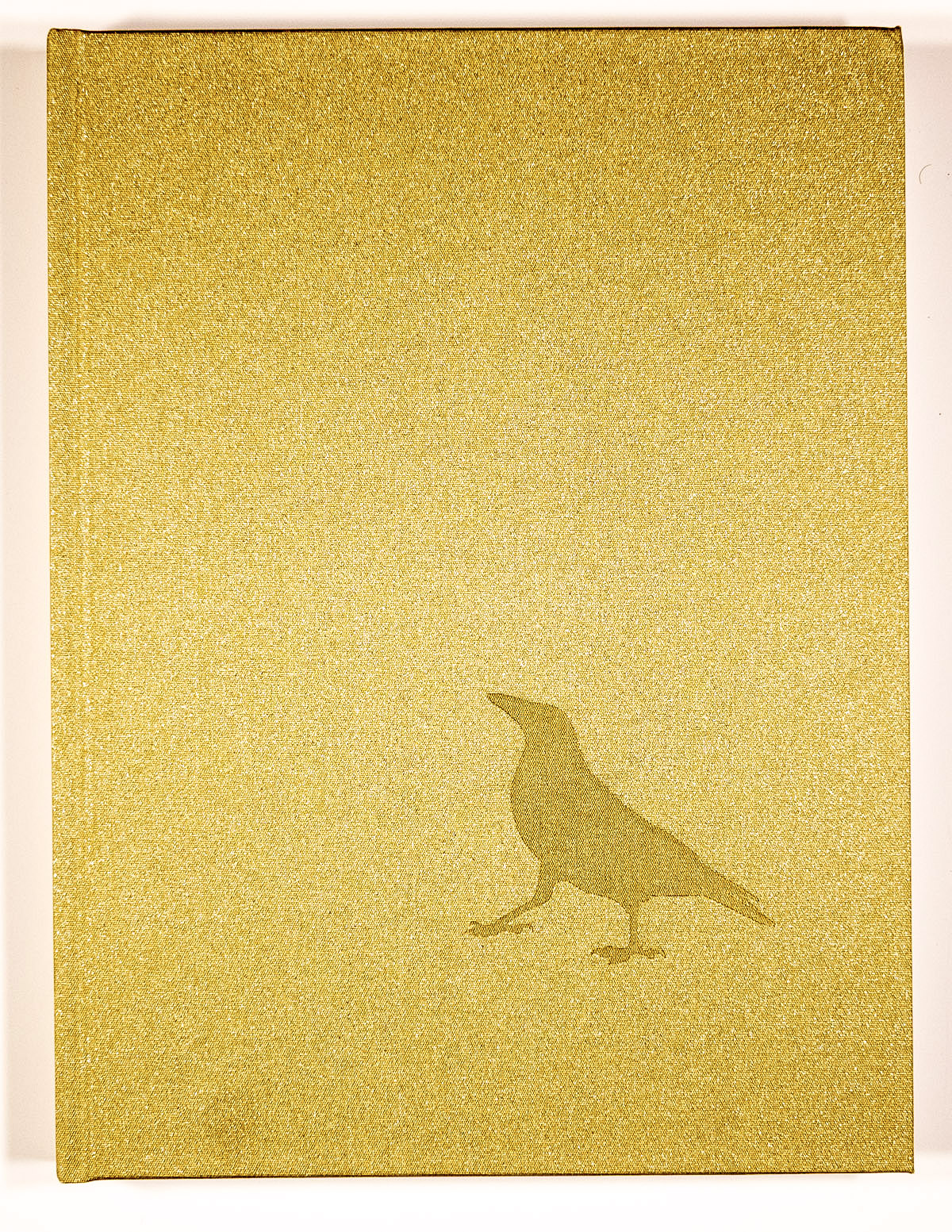
Running through Groht’s book is the image of the crow. It is embossed on the cover, it is the first visual seen in the book (on page 1, though not as a photograph but as a silhouette) and near the end of the book, a crow is seen obliquely through a window (page 107). Mythologically the crow or raven was considered a figure conveying cryptic messages between disparate worlds and Groht’s images themselves also seem to be conveying ambiguous messages between distinct worlds of different historical eras as well as the ubiquitous worlds of commerce and of individual vision and insight.
Having reviewed two previous monographs by Groht (Nice, Not Nice in 2021 and Due Occhi in 2024) which consisted of (primarily) black and white images, it was a joy to experience his use of color in the images of Insight Grindel. The hues are bright and saturated without being at all gaudy or overpowering. His presentation of color in darkness (the many night scenes and lights in darkened spaces such as shop windows) is beautiful. Along with the motif of the crow or raven, the recurring presence of gold adds a sense of vividness in the sights being depicted.
Johannes Groht’s Insight Grindel is a book of small, beautiful treasures, the treasures being glimpses, insights into an area of Hamburg familiar to Groht but – most likely – ambiguous to the viewer. He takes us inside, sharing his insights and familiarities with viewers while – delightfully – the images remain simultaneously familiar yet strange, just out of reach, yet ever compelling.
Contributing Editor Steve Harp is Associate Professor at The Art School, DePaul University
PhotoBook Journal has previously reviewed Groht’s Nice, Not Nice and Due Occhi.
____________
Johannes Groht – Insight Grindel
Photographer: Johannes Groht; born and resides in Hamburg Germany
Publisher: self-published, Hamburg Germany; 2025
Design: Johannes Groht
Text: Johannes Groht
Language: German
Printing and binding: Offsetdruckerei Grammlich, Pliezhausen, Germany
Hardcover with case (sewn) binding. Embossed cover, 116 pages, 17 x 23 cm
____________
Articles & photographs published on PhotoBook Journal may not be reproduced without the permission of the PhotoBook Journal staff and the photographer(s). All images, texts, and designs are under copyright by the authors and publishers.
 PhotoBook Journal
Leave a comment