Review by Steve Harp ·
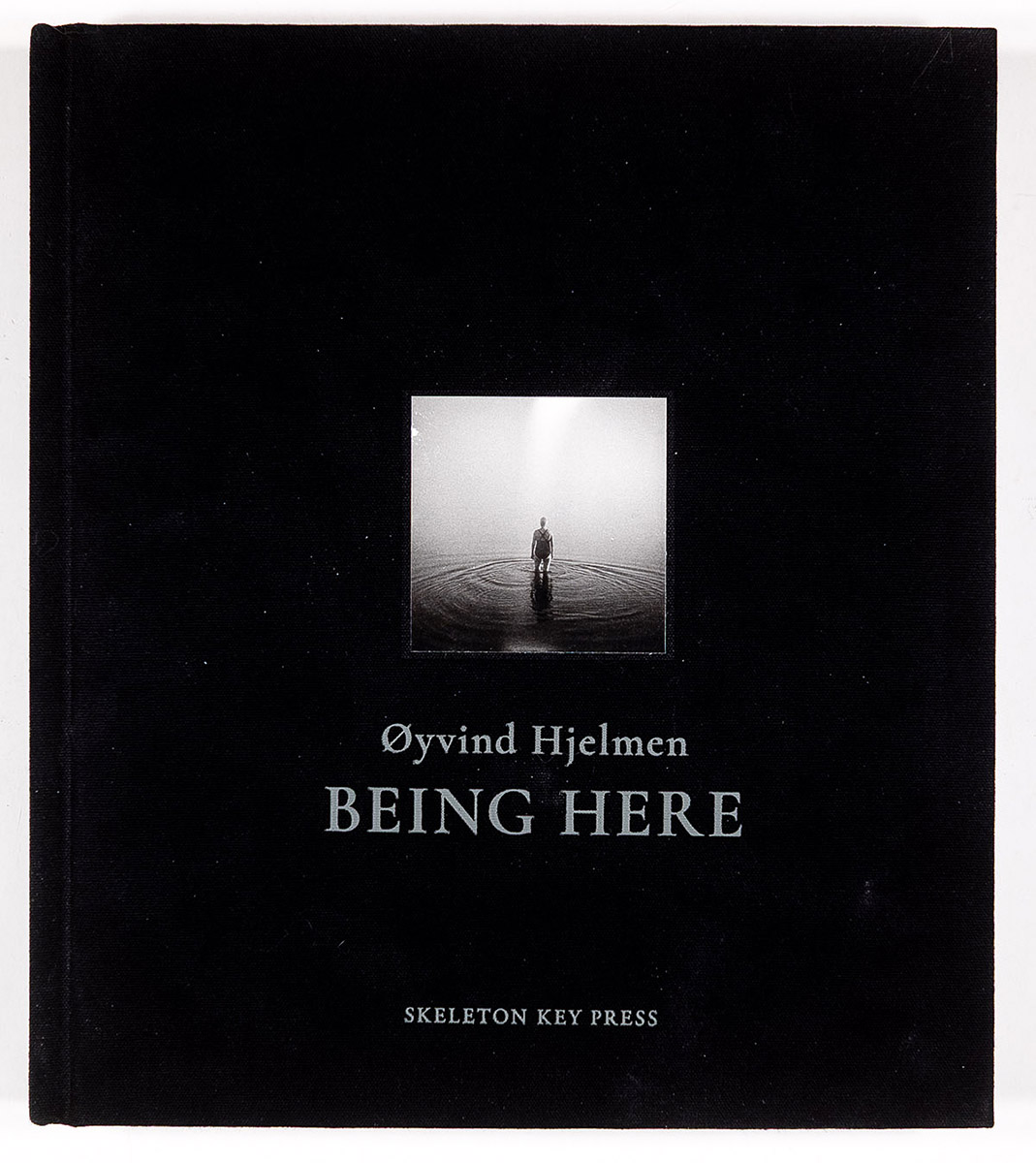
Oyvind Hjelmen’s 2024 monograph Being Here begins with a poem by the Norwegian Nobel laureate Jon Fosse. The poem, A Human Being is Here, begins:
A human being is here
and then disappears
in a wind
that vanishes
inward
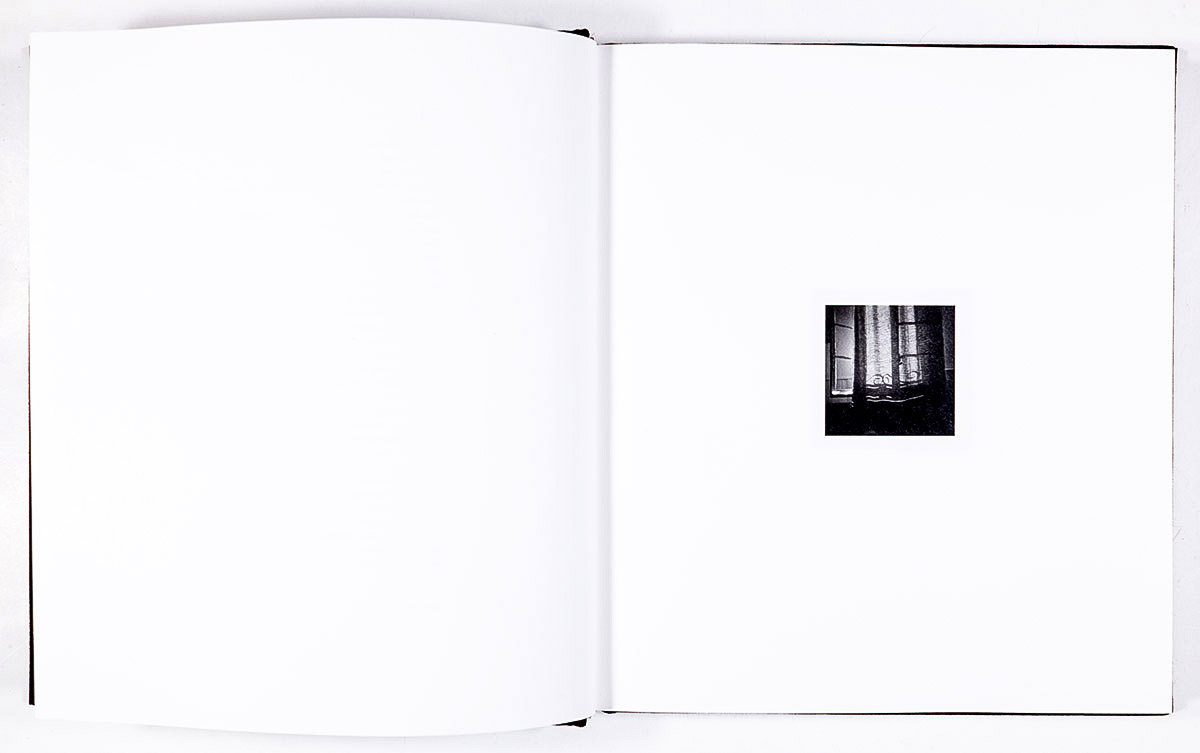
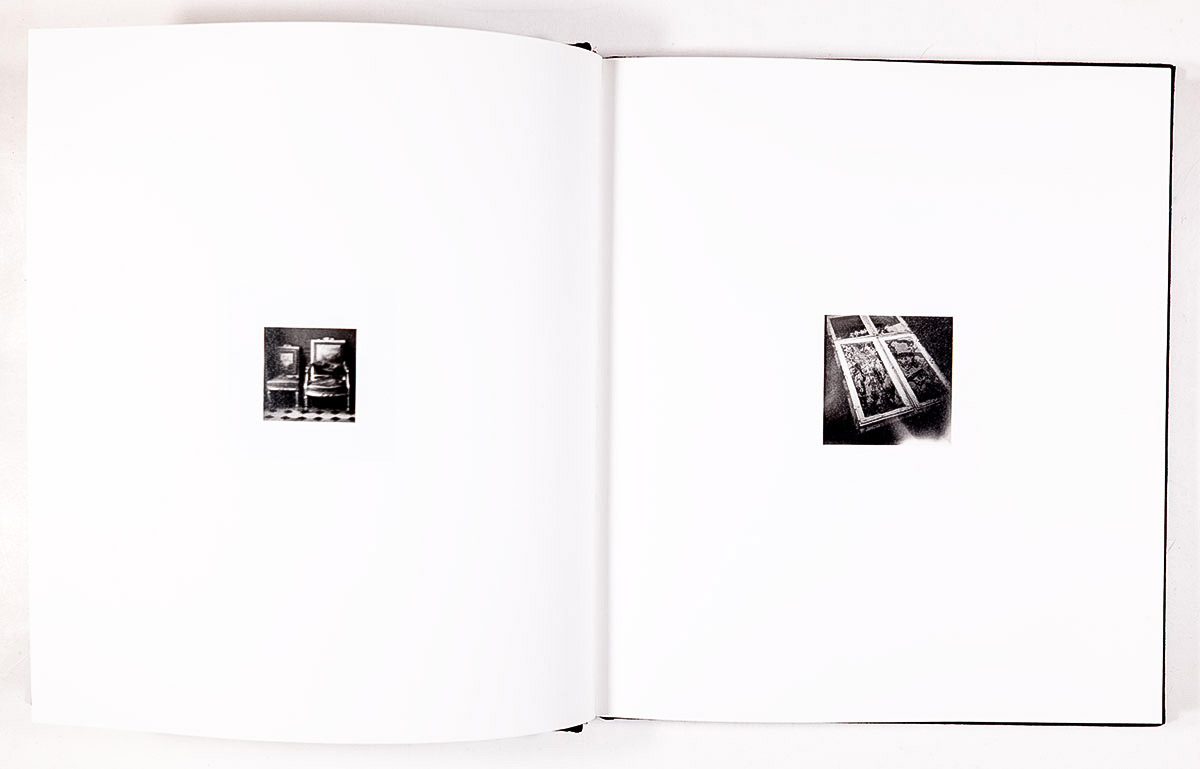
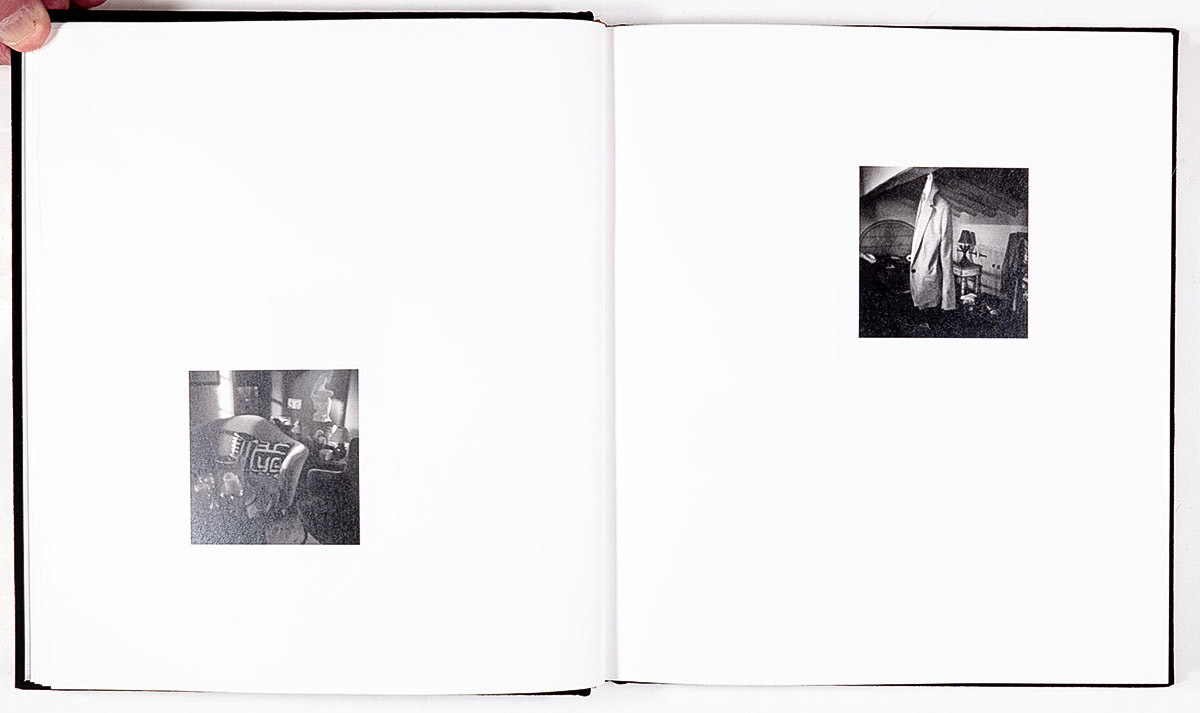
There is a sense of disappearing, of vanishing also in Hjelman’s elegant photographs contained within this monograph. The images depict those moments and scenes so familiar yet at the same time so ephemeral in lived and observed experience: curtains in a room, a lamp, a shore, a bicyclist, a building seen from afar, what appears to be a stray dog, domestic spaces filled with indistinctly glimpsed objects, a figure at a window . . . quotidian in the most powerful sense of the word; what the surrealists described as the Marvelous. In considering Hjelmen’s images I was reminded of the later work of Robert Frank, images taken in his homes in Nova Scotia and New York published in a series of books by Steidl between 1989 and 2019. In particular, I thought of Household Inventory Record (2013) which, as the title suggests, recalls a ledger book collecting and preserving bits of the past, ephemera of memory, pieces of times since departed. Hjelmen’s photographs, conversely, strike me as pieces of the now, present, here . . . moments fragilely preserved.
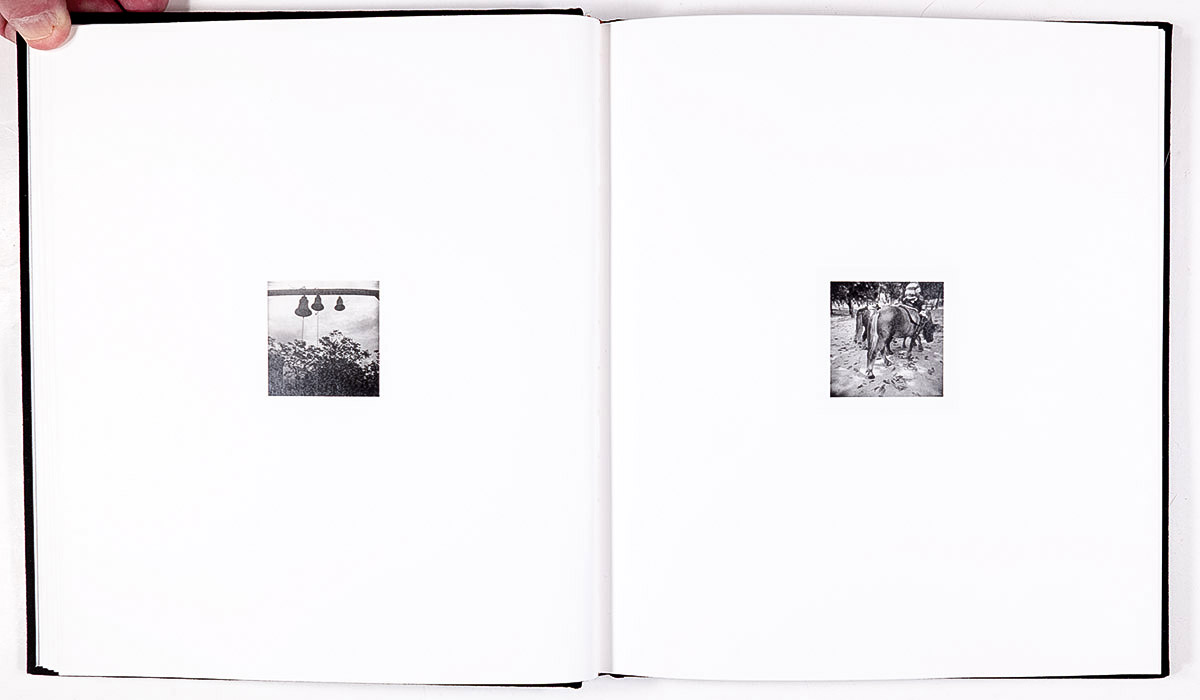
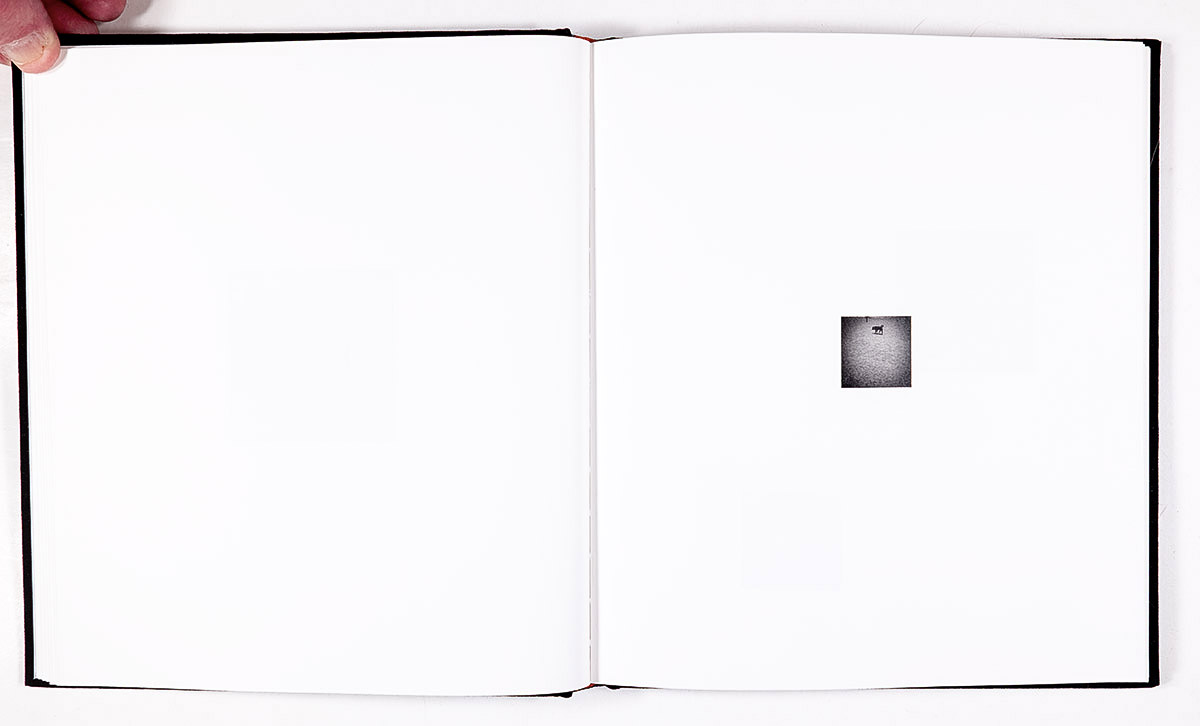
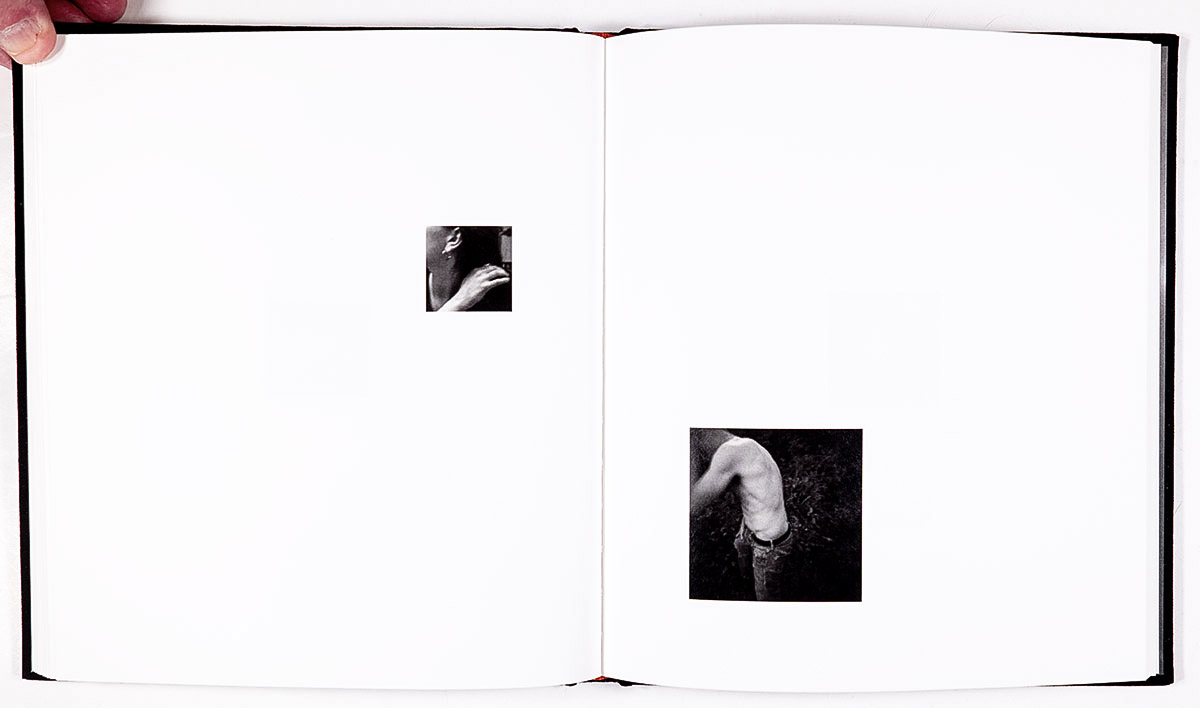
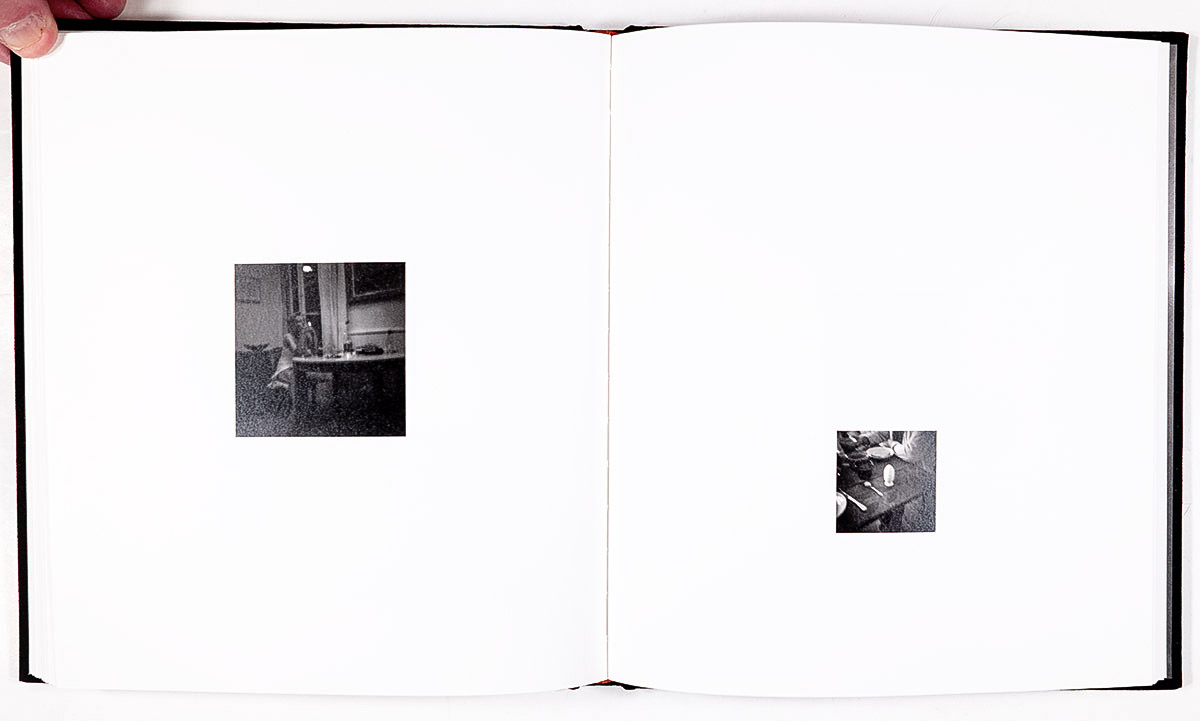
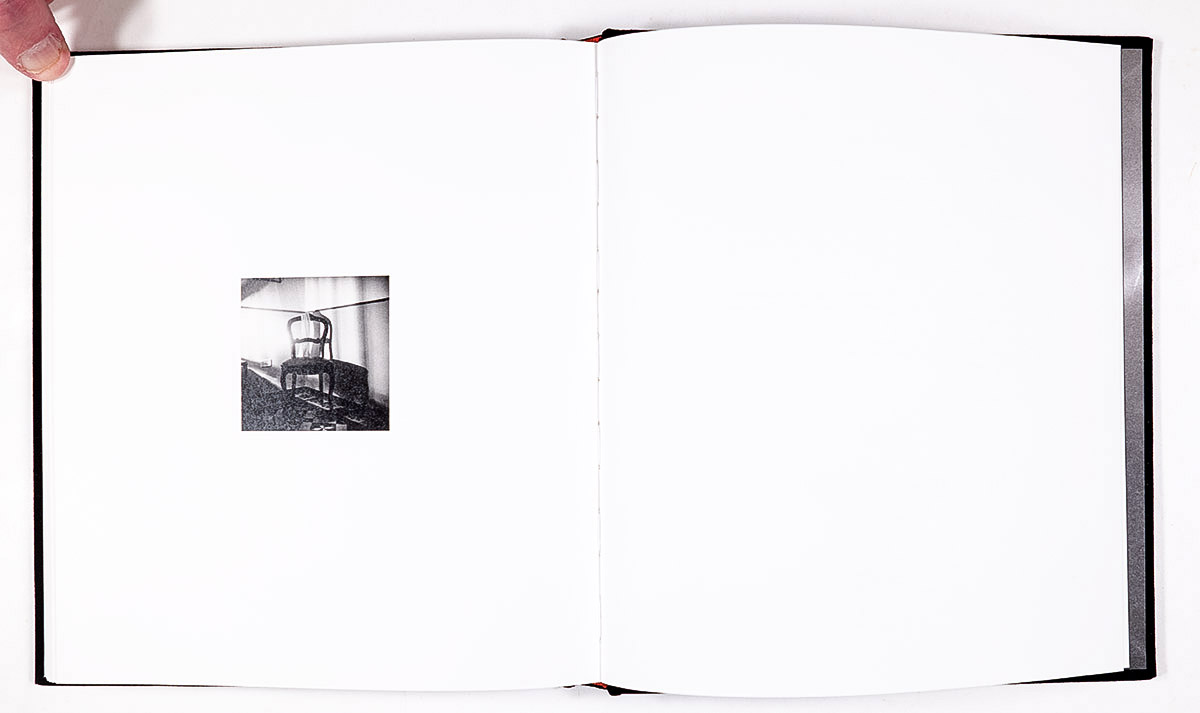
As beautiful and seductive as Hjelmen’s images are, I felt at the same time a kind of perversity in their presentation here. My use of “perverse” is not meant as pejorative or a denigration of the work, but simply as a description of their display; perverse in the sense of “proceeding from a determination or disposition determined to go counter to what is expected or desired, contrary, wayward” (paraphrased from Dictionary.com). The book object itself is hardcover, 8 1/8” x 9 ¼” (21cm x 24cm). A smallish, yet standard size for a photobook. However, when one opens the volume, the viewer encounters 69 duotone images ranging in size from 2 3/8 inches (6cm) square to 1 3/16 inches (3cm) square. (All the images are square.) My immediate reaction was one of some bafflement at the design choices made. Why is the viewer being denied the visual pleasure of these delicate, lovely images? Why are these images – even in these small sizes so visually compelling – made so inaccessible? Why make the viewer’s access so difficult? And why is the layout so uneven, the images seemingly haphazardly scattered across spreads – some images centered on a page, some bottom left, some top right? The placement initially seems not so much ill-considered as unconsidered. Despite their miniature size, it seems obvious (to this reviewer at least) that these images are subtle and captivating. The tonalities are delicate and compositionally the images are gracefully seen. Why is the viewer being denied a more full experience of these scenes? (See the book’s page on the publisher’s website, link below, for larger views of some of the photographs.). Is this not a kind of perversity (going counter to what is expected or desired) on display here? And to what end?
My initial frustration transformed as I spent more time with Fosse’s haunting poem, particularly the opening, quoted above. Hjelman’s images, so full of quiet humanity and beauty, ultimately speak to disappearance and passing, the inevitability that all photographs depict. A human being is here . . . then not. Objects and sights held dear are here . . . then gone. What Roland Barthes describes in Camera Lucida (1980) as “that-has-been.” I was reminded, also, of Susan Stewart’s book On Longing: Narratives of the Miniature, the Gigantic, the Souvenir, the Collection (1993) in which Stewart touches on these four cultural forms as tropes for seeing and narrating the world. The miniature she holds as a kind of metaphor for interiority and writes in reference to the microscope as “the mechanical eye that can detect significance in a world the human eye is blind to.” The miniature points to our blindness and inability to truly grasp what surrounds us. The design choices made in layout and image sizing reinforce this awareness of the fragility of being. These are moments tenuous and nebulous. Precious in their transience and impermanence.
We might think, then, of Hjelmen’s images in their presentation here as microscopic views, particles ever-present that make up our lives but all too often pass unnoticed and vanish. In our desire to see, to apprehend, we all too often are unable to simply experience being here.
Contributing Editor Steve Harp is Associate Professor at The Art School, DePaul University
____________
Oyvind Hjelmen – Being Here
Photographer: Oyvind Hjelmen; (born in Norway and currently lives on the island of Stord, off the west coast of Norway)
Publisher: Skeleton Key Press, Oslo; 2024
Text: Poem by Jon Fosse
Text: Norwegian and English
Editor: Oyvind Hjelmen and Russell Joslin
Designer: Russell Joslin
Printer: Ofset Yapimevi
Hardcover with case binding; 112 pages; 69 duotone plates; 21 x 24 cm (8.2 x 9.4 in); ISBN 978-82-692410-8-2
____________


____________
Articles & photographs published on PhotoBook Journal may not be reproduced without the permission of the PhotoBook Journal staff and the photographer(s).
 PhotoBook Journal
Leave a comment