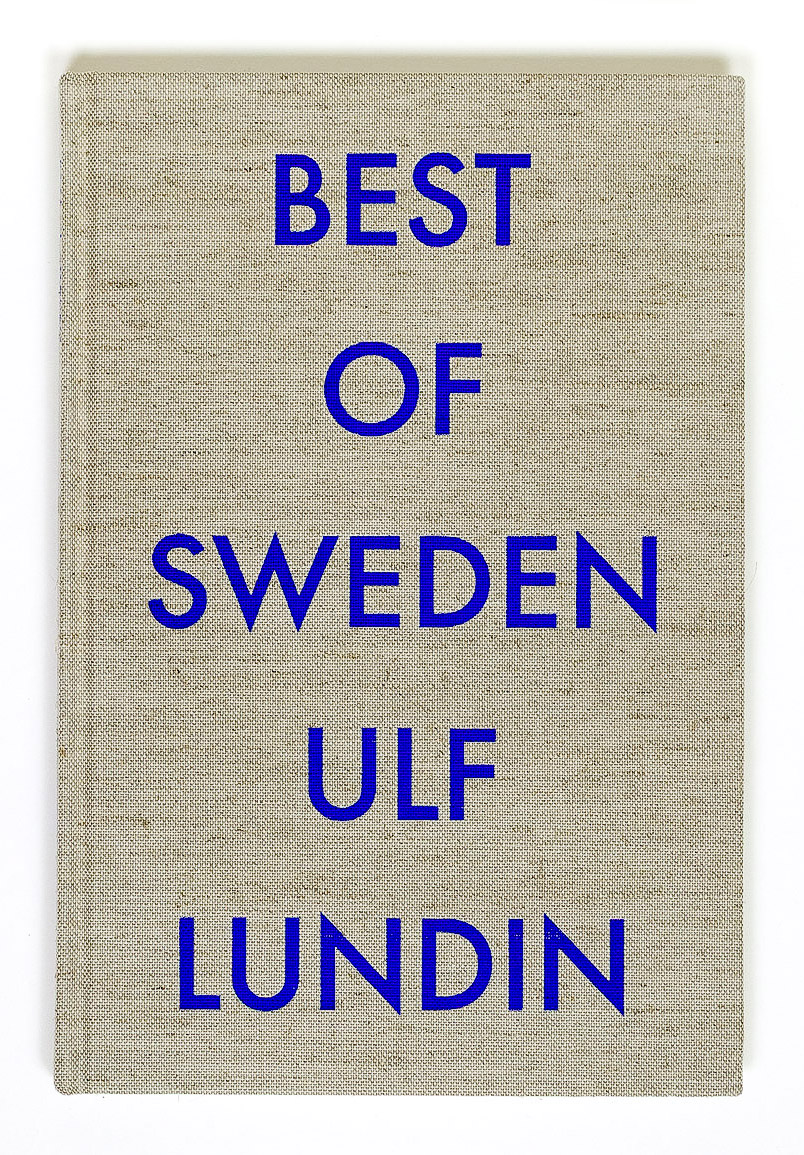
Review by Paul Anderson •
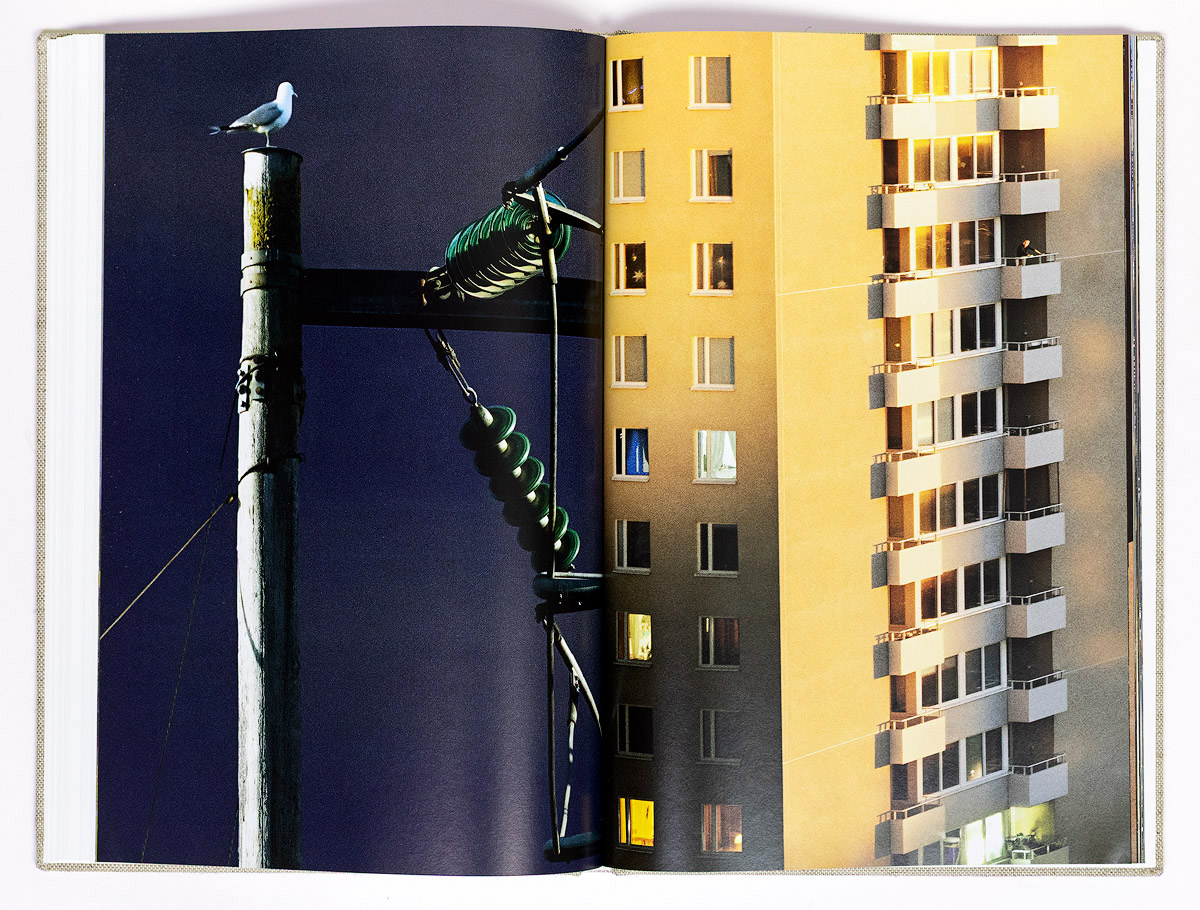
Photographers and painters have long grappled with the representation of time. Photographer Ulf Lundin, in his photo book Best of Sweden, cleverly incorporates time in his composited landscape images. He does so by capturing multiple events and changes in light across a single Swedish landscape over one day, working these into his final image. These fascinating composites provide a novel approach to the landscape genre, and his process offers a wide range of creative possibilities. He takes full advantage.
To begin his process, he sets up his camera before dawn at a location somewhere in Sweden, and takes exposures about every five minutes until after sunset. The camera is never moved, so all of these exposures are from a single vantage point.
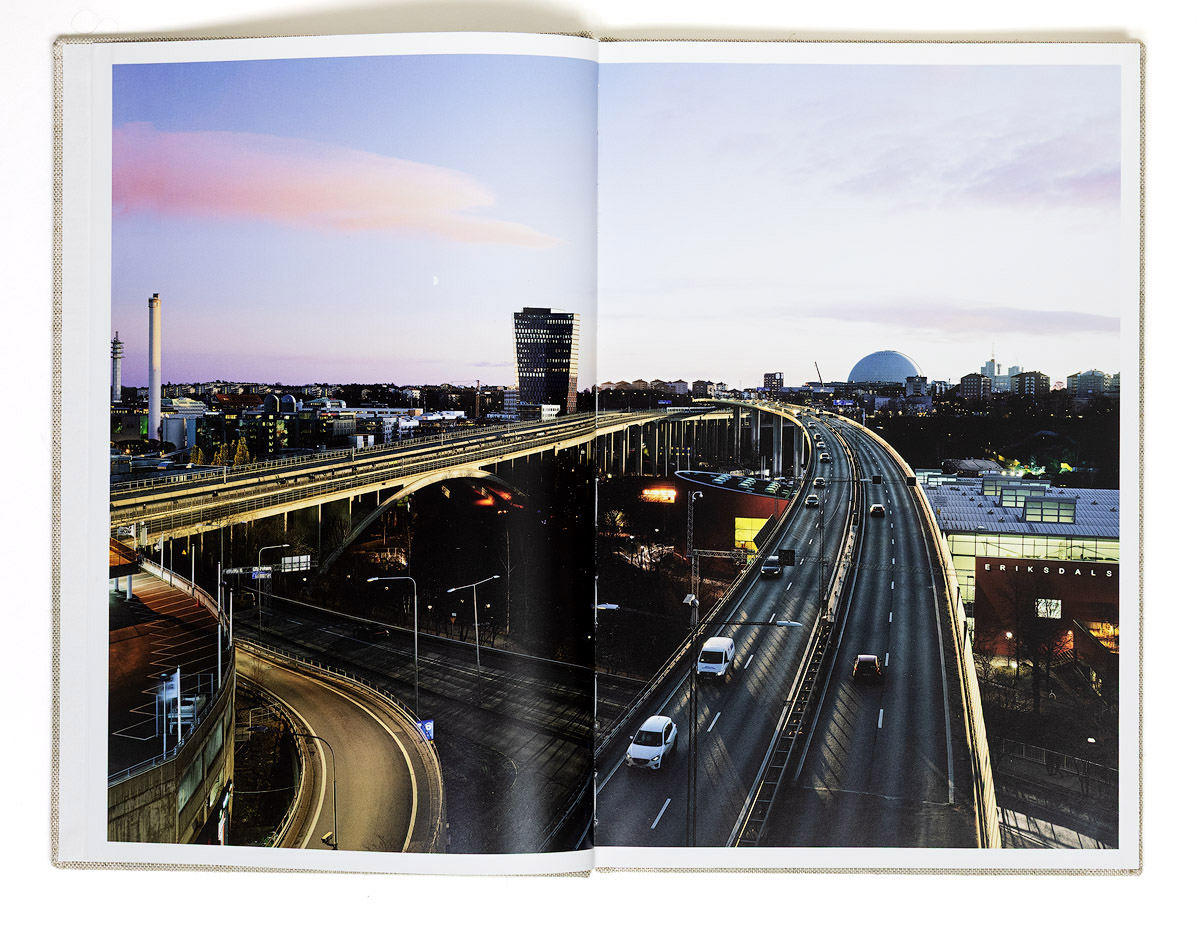
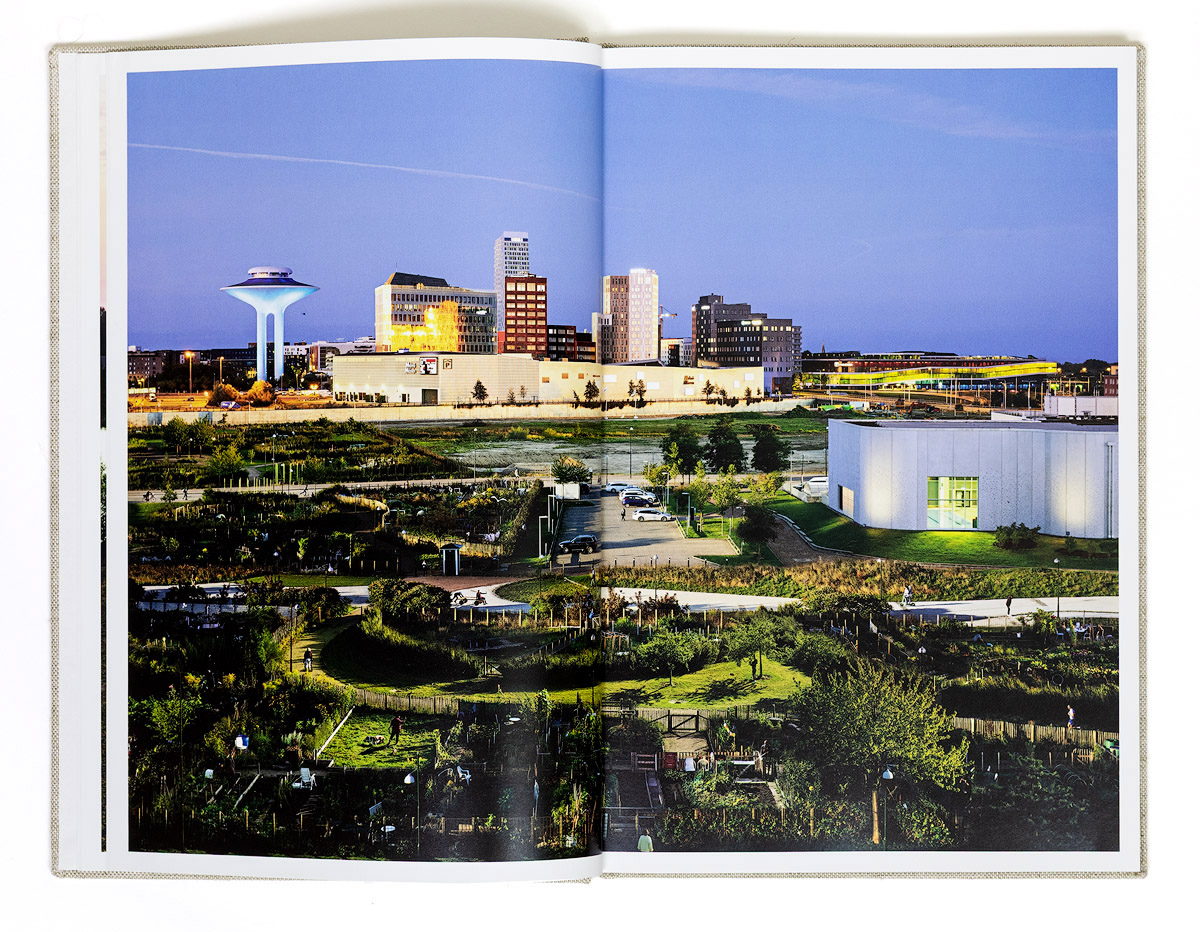
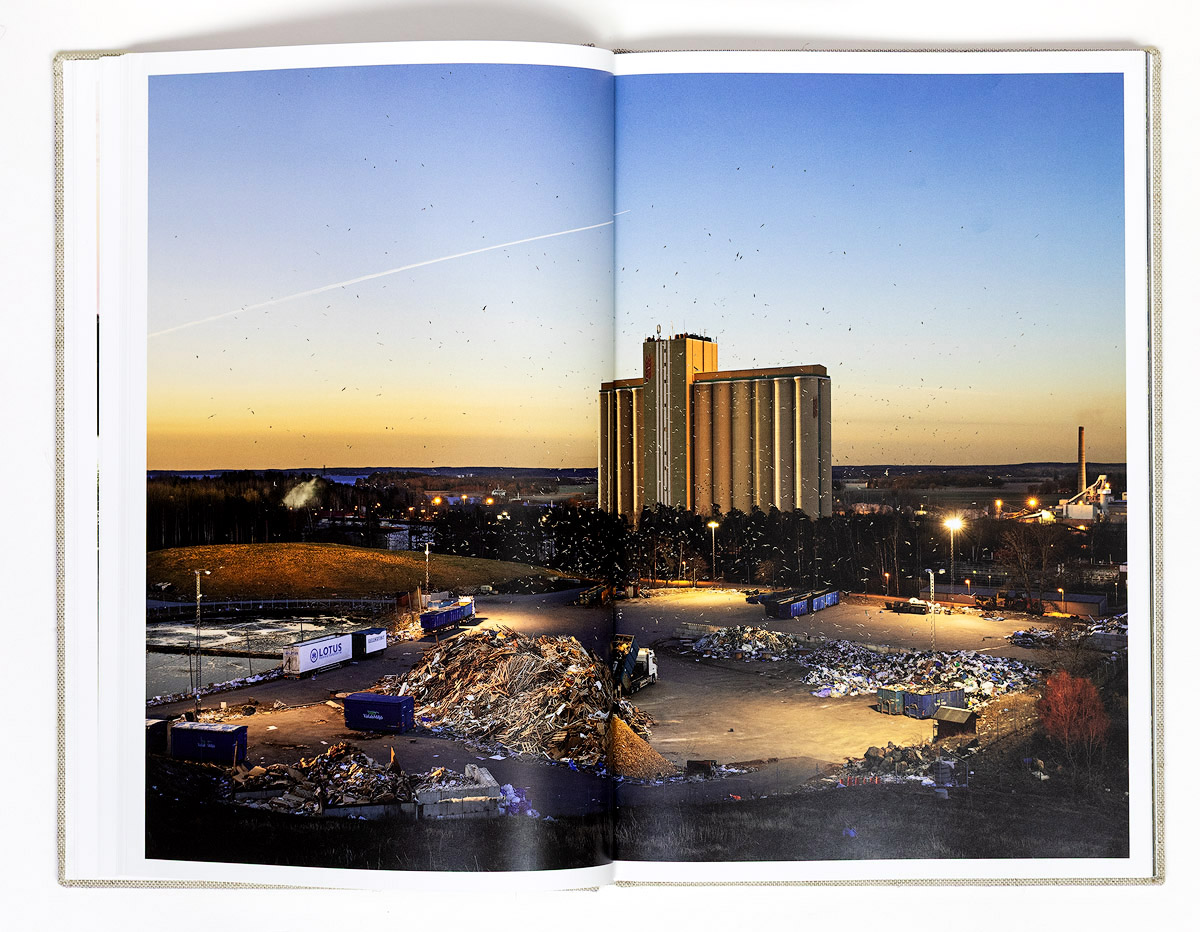
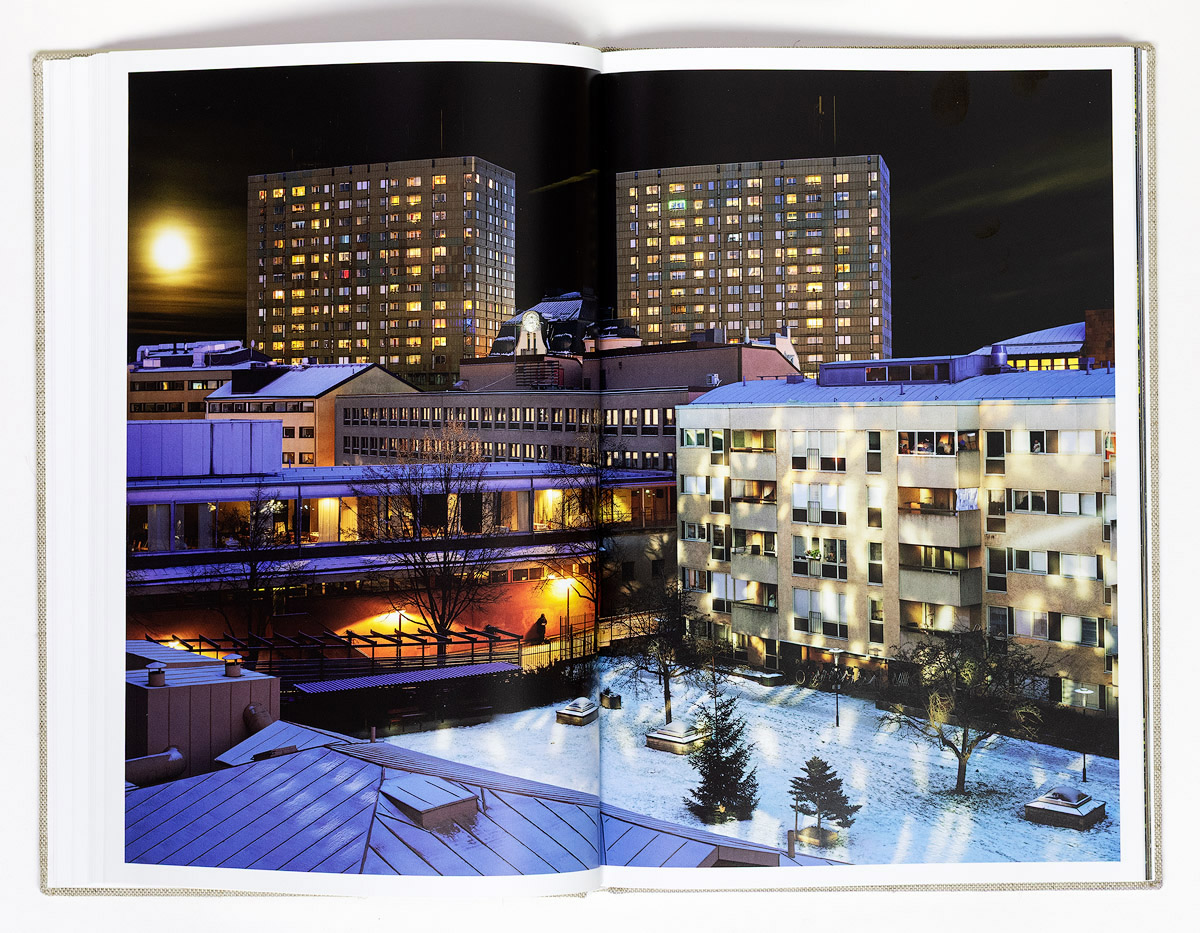
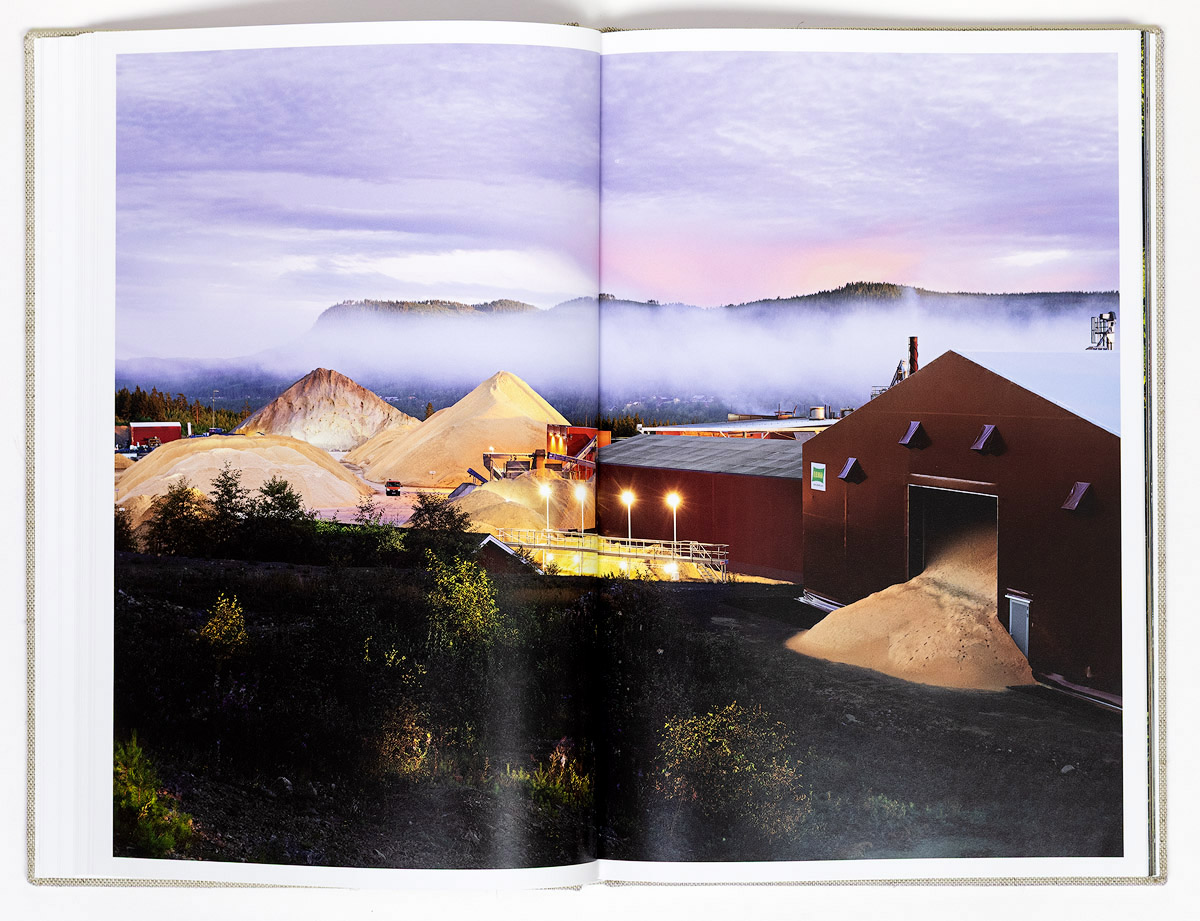
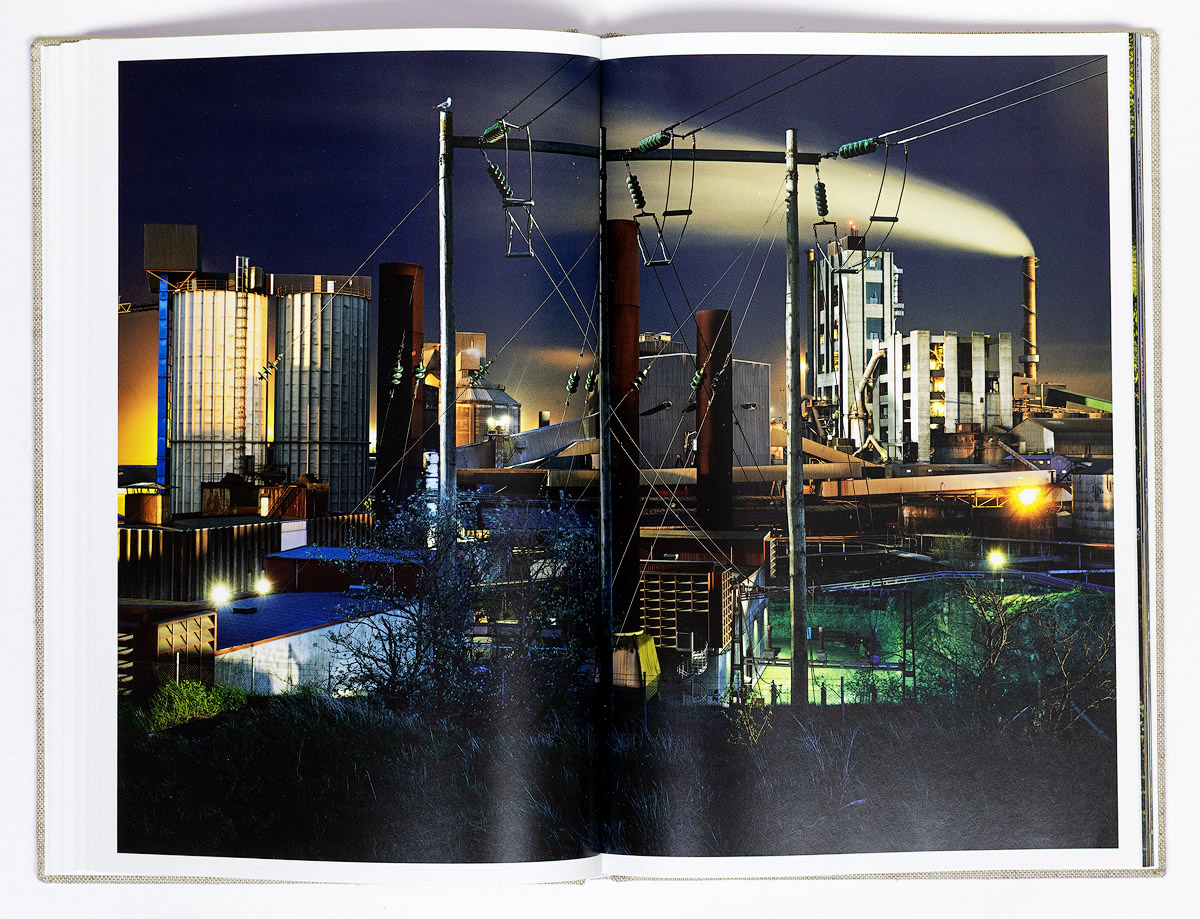
Back in his studio Lundin extracts about 50 to 200 fragments from these exposures and composites them into a single image, making sure that the geometry of the landscape remains fixed. Because lighting changes significantly throughout the day, the selection of these fragments is critical to the final composition – there can be daylight fragments, early morning fragments, late night fragments and so on, arranged throughout the composition. The change in lighting gives them a surreal look. His skies are usually rendered as having a uniform appearance, providing a sense of coherence. Many of the images have an overall sunrise or sunset look.
Transient objects are captured by the camera throughout the day. Many of these are included in the final composition, where they appear to be simultaneously present. This is a nice twist on the treatment of time, and an important ingredient in the success of these images.
Lundin makes many creative choices throughout his process, much like a painter does when creating a painting. These decisions add drama and tension to the final product. The results are both comforting and unsettling; they initially read as photographs, but as the eye moves about things become more interesting.
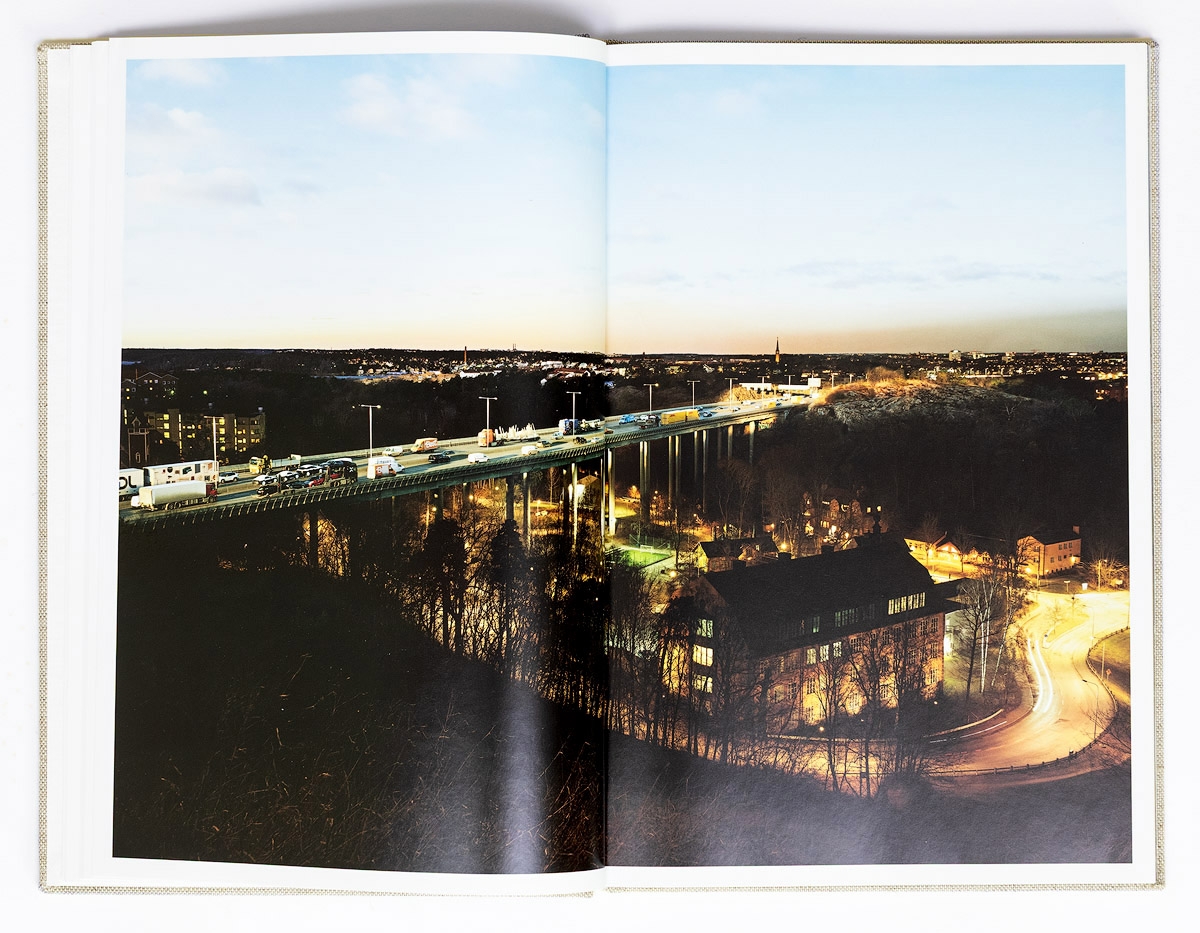
One of the better examples of the drama and tension in these images can be seen in Plate 8. This is an image taken on January 21, 2020 in Essingeleden, a nexus of rail lines and elevated highways within Stockholm. The foreground and background are presented in deep night, quiet and peaceful, whereas the sky above is a curious bright blue. A shadowy figure climbs the hill in the dark foreground, adding a sense of foreboding. Then, in direct contrast to the quiet and perhaps slightly spooky scene, a very crowded elevated highway streaks across the middle of the scene. It is illuminated by a full sun, and its noise and congestion clash with the quiet of the foreground and background – quite a thought-provoking composition.
As we have seen, Lundin emphasizes time in this work. David Hockney and Martin Gayford in their book A History of Pictures address the subject of time and space in photography and painting, and their thoughts are relevant here. Specifically, in Hockney’s opinion, photographs appear flat (i.e., lack space) because the camera only captures one instant in time from a single perspective. To quote Hockney:
When a human being is looking at a scene the questions are: What do I see first? What do I see second? What do I see third? A photograph sees it all at once – in one click of the lens from a single point of view – but we don’t. And it’s the fact that it takes us time to see it that makes the space.
To address this issue, Hockney emulates the human visual system by including multiple perspectives in some of his work. For example, see Mulholland Drive: The Road to the Studio, 1980. Hockney locally distorts geometry across a painting to enhance a sense of time and space. Although Lundin’s intent may or may not be to solve this particular problem, it is interesting to note that he takes the opposite approach by distorting time within a cohesive geometry. Do Lundin’s images create an enhanced view of time and space because of this? This author’s view is that, given their chosen processes, Lundin’s images enhance time more than space, and Hockney’s images enhance space more than time. It is fascinating to compare the two approaches.
The book is well made, and the images are of high quality. All 19 plates are 30 cm high by 40 cm wide, and are laid out as two-page spreads. At the back of the book are 64 images that are excerpts taken from the 19 main plates.
This book will be of interest to those interested in alternative approaches to digital processing of images, especially in the treatment of time, and those with an interest in Scandinavia.
Paul Anderson is a photographer/digital artist, working in Hermosa Beach, CA
“Pictures of a Family,” another Ulf Lundin book, has also been reviewed in PhotoBook Journal.
______
Ulf Lundin – Best of Sweden
Photographer: Ulf Lundin (born in Alingsås, Sweden, currently resides in Stockholm)
Publisher: Galleri Magnus Karlsson, 2023
Printer: Narayana Press, Denmark
Design: Greger Ulf Nilson
Prepress: Sven Westerlund
Essay: ‘Places, Days’ Lars-Erik Hjertström Lappalainen
Text: Swedish and English
Foil-stamped cloth hardcover; sewn binding; 32.5 x 22 cm; 124 pages; 83 color photographs; ISBN 979 91 984358 3 2
______
Articles and photographs published in the PhotoBook Journal may not be reproduced without the permission of the PhotoBook Journal staff and the photographer(s). All images, texts, and designs are under copyright by the authors and publishers.
 PhotoBook Journal
Leave a comment