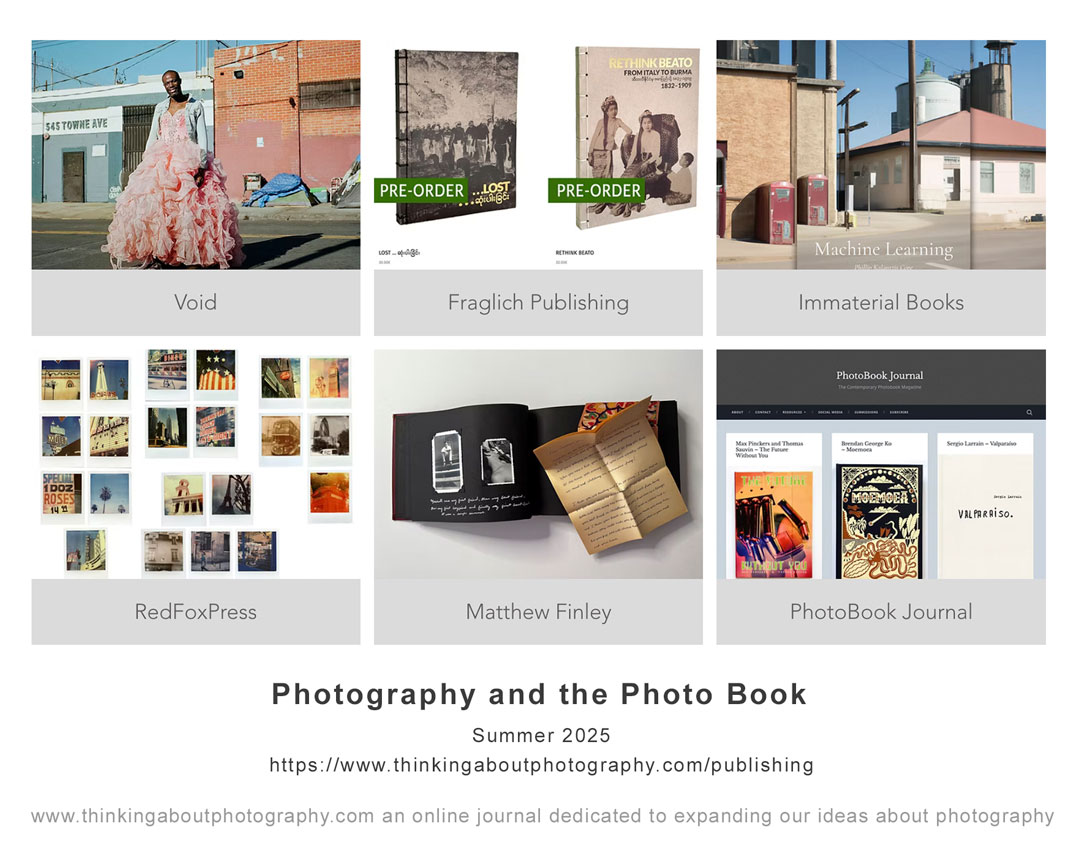
This Thinking About Photography showcase (publishing, Summer 2025) starts with three independent small presses, Void (Greece), Fraglich Publishing (Austria) and Immaterial Books (IL, USA) that have made the discovery of new talent an essential part of their missions – even helping to grow regional publishing. Then we have a hybrid, RedFoxPress (Ireland) – a partnership between a photographer and a designer, connected by their love of Polaroid and bold graphics. Next, a photographer, Matthew Finley, shares their journey from project inception through running a successful Kickstarter campaign. Finally, we peek behind the curtain at PhotoBook Journal to highlight their editors and team of contributors (Brian Arnold, Gerhard (Gerry) Clausing, Steve Harp, Hans Hickerson, Brian F. O’Neill, Matt Schneider, Douglas Stockdale), sharing their approach to reviewing, with links to their own work and a recent photobook review.
What is it about photo books that makes them so enticing? Whether the book is small and intimate—something you can curl up with on the couch—or monumental like the seventy-two pound Genesis by Sebastião Salgado, the photo book is a companion piece to how the photographer sees the world.
Like all good books, a photo book gives us hope and a sense of connection with a mentor at their best…and this sustains us, letting us know we’re not alone, that our “peeps” are out there. I also like the idea that our connection to photo books echos back to childhood – with our first picture books.
Ann Mitchell, Editor, Thinking About Photography
____
Void (Greece)
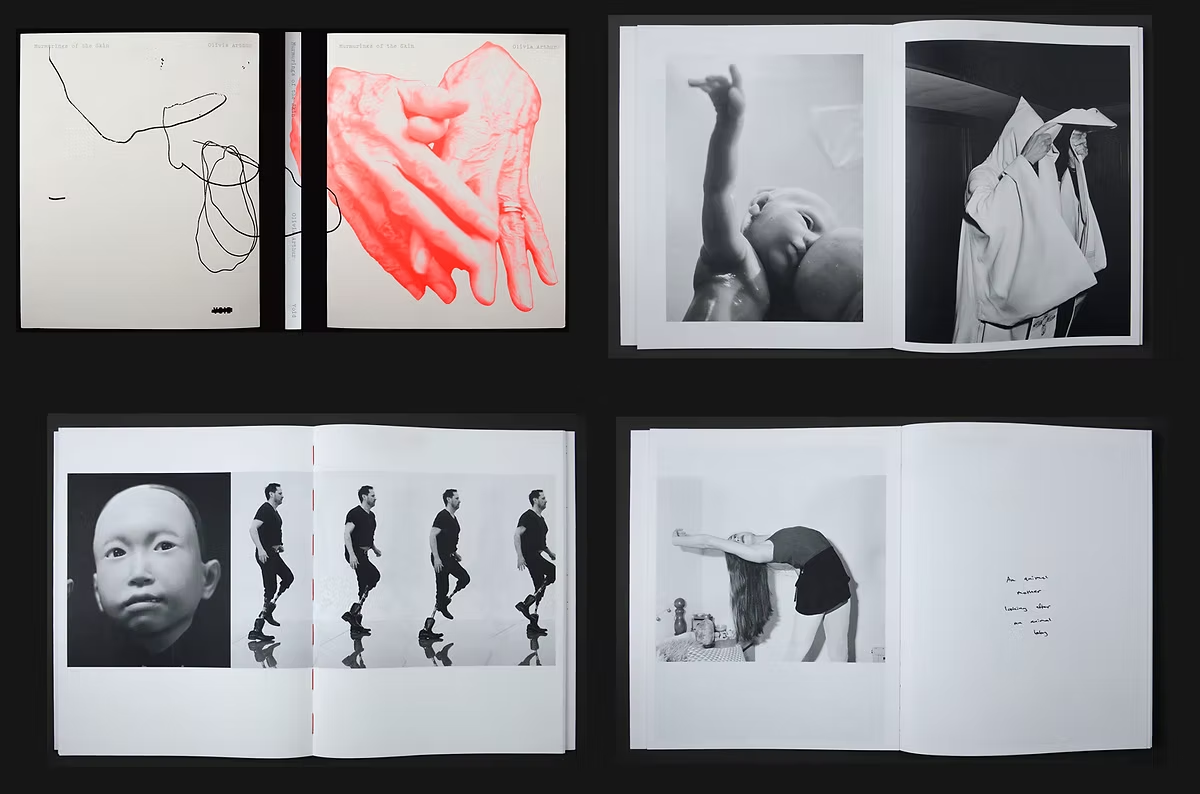
Void is continually drawn to stories that begin with the personal—where a single voice becomes the entry point to something vast and collective.
Recent titles include: Olivia Arthur’s Murmurings of the Skin (above), Yoshi Kametani’s I’ll Be Late, Tony Dočekal’s The Color of Money and Trees, and András Ladocsi’s There is a Big River, in Which There is a Big Island, in Which There is a Lake, in Which There Is an Island, in Which There Is a Small House, Where a Life Is Growing in a Womb.
____
Fraglich Publishing (Austria)
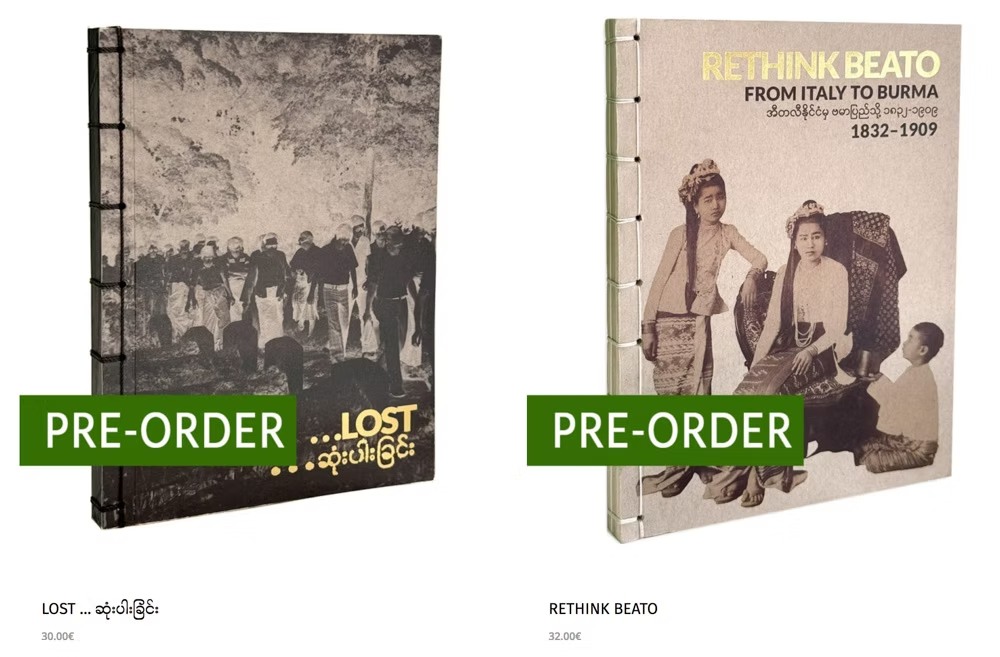
Fraglich Publishing was founded by Austrian photographer and researcher Lukas Birk in 2007 with the aim of producing zines and localized publications aligned with his research. It is an independent imprint dedicated to uncovering and sharing small yet resonant historical narratives from around the world, with a strong focus on South and Southeast Asia, as well as Central Asia.
Recent titles include: Yangon Fashion, 1979, and Twana’s Box, a collaboration with editor Rawsht Twana, as both a familial memorial and a visual testimony of a persecuted culture.
____
Immaterial Books (IL, USA)
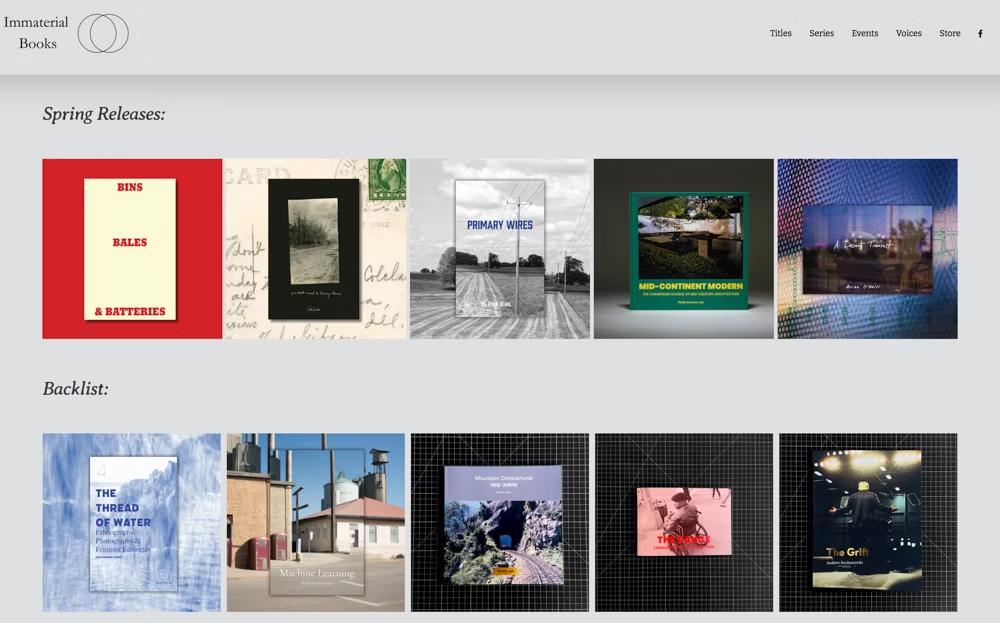
Immaterial Books is dedicated to publishing photo-media-based works that challenge the boundaries between image, text, and theory. We see a growing need for books that resist classification—projects that inhabit the space between visual culture, social theory, and experimental documentary. We publish works that are not only visually compelling but also intellectually rigorous as a medium of critical inquiry. We are also deeply engaged with our local community in Champaign, Illinois.
Recent titles include: Julie Patarin-Jossec’s The Thread of Water, Brian O’Neill’s A Desert Transect, Phillip Kalantzis Cope’s Machine Learning, and Nathan Pearce’s Bins, Bales & Batteries.
____
RedFoxPress (Ireland)

We are Francis Van Maele and Antic-Ham, a duo of book artists. Since 2005, we have been running Redfoxpress on Achill Island, off the west coast of Ireland. We hand-bind all of our books and do all the silkscreen printing ourselves in our studios. We travel widely, taking photographs, collecting local imagery and objects, which we use as themes in our books.
____
Matthew Finley, CA, USA
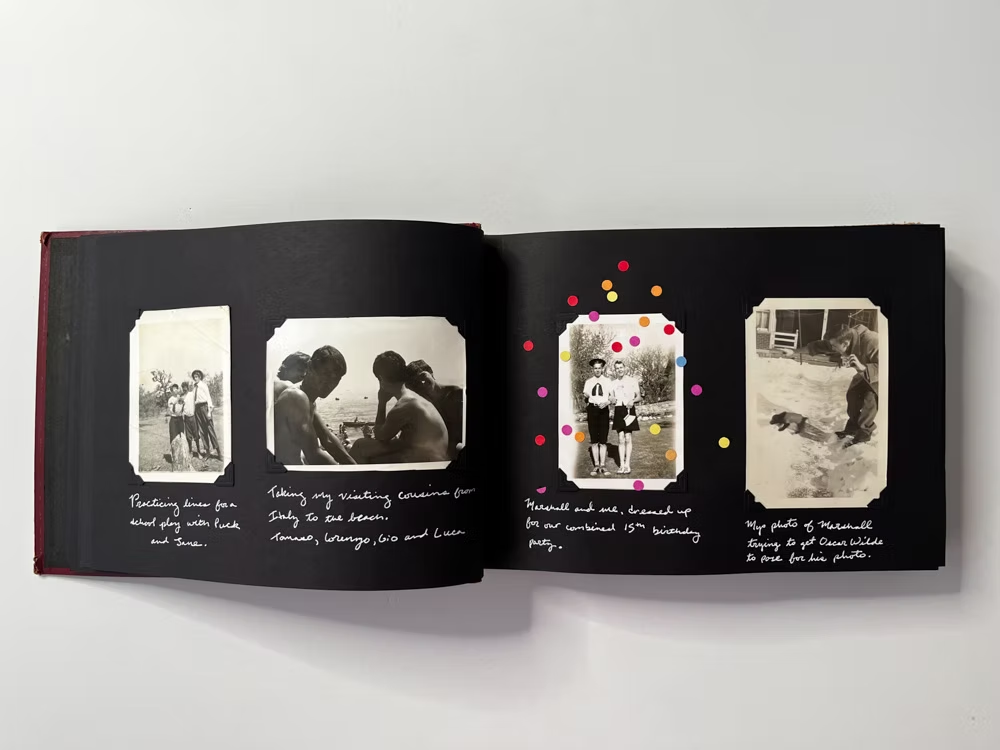
Book dummy, Kickstarter, An Impossibly Normal Life
Ann Mitchell interviews Matthew Finley about his successful kickstarter for his photobook, An Impossibly Normal Life. Anticipating an October 2025 release.
____
PhotoBook Journal staff:
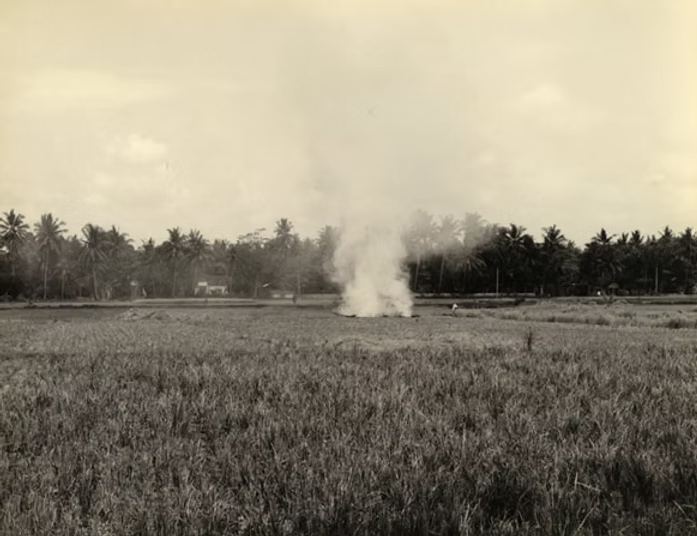
Brian Arnold, Contributing Editor (Ithaca, NY); I prefer books that are themselves the art object, not just a vehicle for disseminating the pictures – so books that use sequencing, narrative, or the physicality of the book as necessary for understanding the photographs. As a reviewer, generally I start by trying to find a context for interpreting the pictures and determining the photographer’s intentions, utilizing historical, personal, cultural, or aesthetic associations for reading the book.
A recent review of Chilean photographer Sergio Larrain’s Valparaíso
___
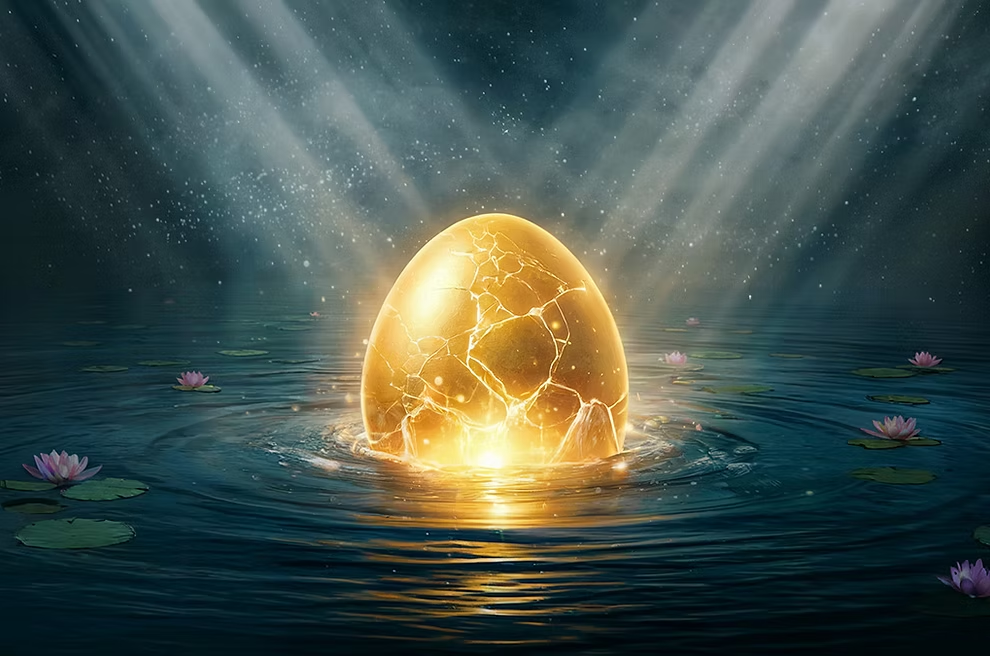
Gerhard (Gerry) Clausing, Editorial Consultant (Laguna Beach, CA); served as Associate Editor and Editor of the Photobook Journal from 2016 to 2025 and continues as Editorial Consultant. He has contributed more than 230 photobook reviews, drawing on a background that includes a Ph.D. from UC Berkeley, extensive studies in psychology and art, as well as many academic publications and several major textbooks. His reviews reflect a deep interest in visual narratives that challenge and engage: “I am particularly interested in projects that explore cultural identity, everyday experience, and emotional resonance through carefully constructed sequences. I value ambiguity, layered meaning, and the ‘indecisive moment’ as powerful elements in photobook storytelling.”
Widely exhibited and recognized for his work, he applies these same principles to his own photography and photorealistic illustration (two examples attached). Currently, he is focused on visualizing ancient myths and folktales, blending various techniques to reimagine timeless stories through compelling imagery.
A recent review of Birthe Piontek’s Zero Hour
___

Steve Harp, Contributing Editor (Evanston, IL); My approach as a reviewer has relatively little to do with taking an evaluative or judgmental approach to the works. I generally only agree to review books which in some way have already piqued my interest, that have aroused my curiosity or enticed me in some way(s). What I look for – and use writing as a way to explore – is a way to enter and navigate the book, a way to think about and consider how the artist is telling the story. This includes not only considerations of sequencing, layout, design, type(s) of imagery, use (if any) of text but, and perhaps most importantly, looking for those associations or connections that seem to best illuminate the work and let it speak.
A recent review of Gilbert McCarragher’s Prospect Cottage: Derek Jarman’s House.
____
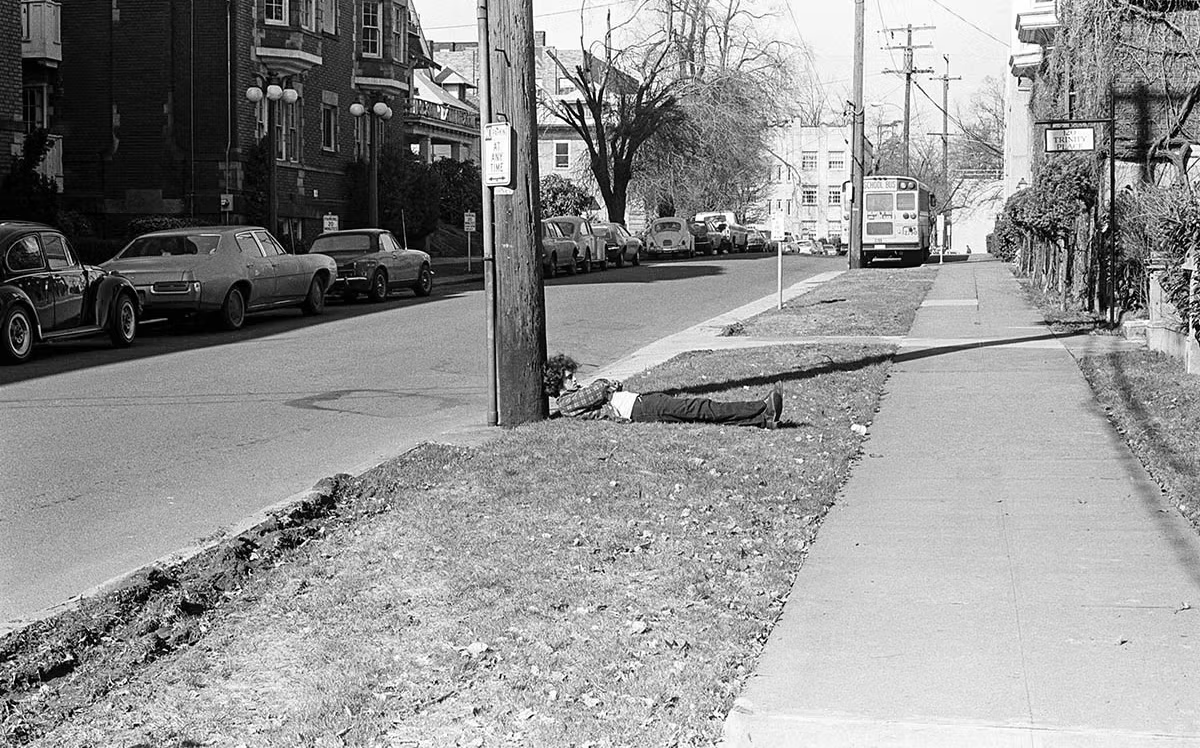
Hans Hickerson, Editor, (Portland, OR); has contributed some 30 articles and reviews since joining the magazine in September 2024. He attributes his enthusiasm to his curiosity to discover what holds the photos together in books and makes them work.
Hickerson has been a photographer since the late 1970s. He self-published his first photobook in 1982, made a few more books into dummies after that, and then worked with photocollages for several decades before returning to work on books during the pandemic. Since 2023 he has published six photobooks and two zines and currently has several more in various stages of completion.
A recent review of Kevin Cooley’s The Wizard of Awe
____
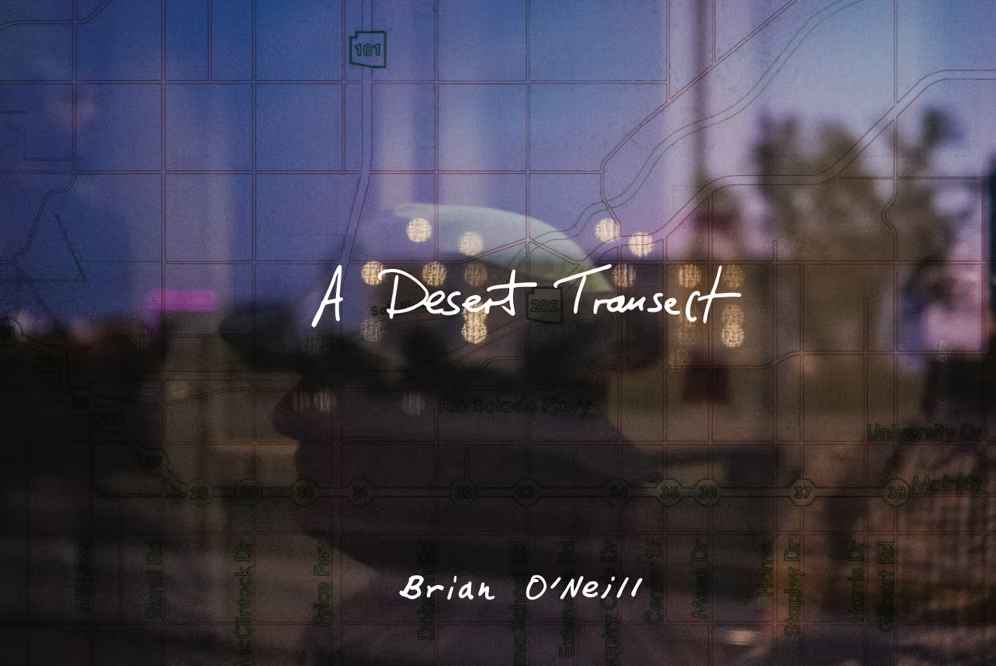
Brian F. O’Neill, Contributing Editor (Phoenix, AZ); he is Assistant Curator at Immaterial Books.
My relationship with photobooks began as I started collecting work that interested me as both a photographer, but also a sociologist (the field in which I am formally trained). As a result of these two dimensions of my work, I found myself reading criticism and theory. This became intriguing territory, because I begin to ask, not only why a project or a picture “works,” but how it figures in the larger field of photography and history, and even why an object like a photobook exists as it does. In The Pleasures of Good Photographs, Gerry Badger describes how he got into “criticism” – he needed to articulate for himself what an image or photobook meant, more than any external motivation. This is true for me too, and with great new work emerging all the time, I enjoy the process of interpreting people’s work, which I hope can be of interest to others of course, but it also informs my own projects. Furthermore, one of the most rewarding aspects of criticism is that I quite often am able to have calls and discuss the work with the authors. Reviews are a way to constantly be open to new worlds, ideas, and people.
A recent review of Nora Bibel’s Uncertain Homelands.
____
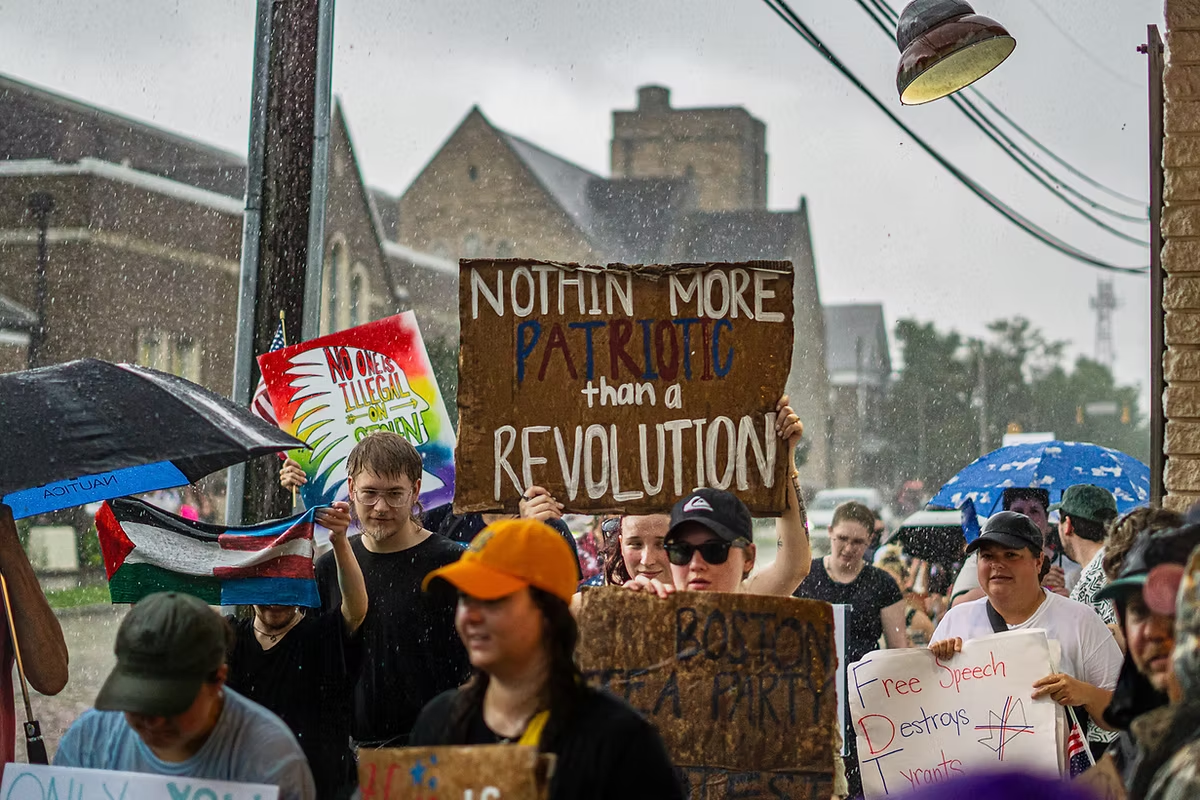
Matt Schneider, Contributing Editor, (Wilmington, NC); is a visual sociologist and professor at the University of North Carolina Wilmington. He has personal and academic interests in community and civic engagement, urbanism, environment, and racial and ethnic relations. In his own work, he sees photography as a tool for social commentary and a vehicle for social analysis. Likewise, when reviewing photobooks, he is typically drawn to works that go beyond personal reflection or apolitical documentation. Instead, he prefers photobooks that directly and intentionally contribute to ongoing public debate, often relating to built environments/infrastructure, practices of political engagement, and climate change.
Photo Caption: June 14, 2025. As a military parade timed for President Trump’s birthday takes place in Washington, D.C., protestors in Wilmington, NC gather for “No Kings Day,” braving the rain to rebuke President Trump’s nativist and authoritarian agenda. Wilmington Police estimate that 4,500-5,000 attended the event. Across the country, millions more participated in similar demonstrations.
A recent review of Kaushik Mukerjee’s Visible Voices: Graffiti Across Berlin.
____
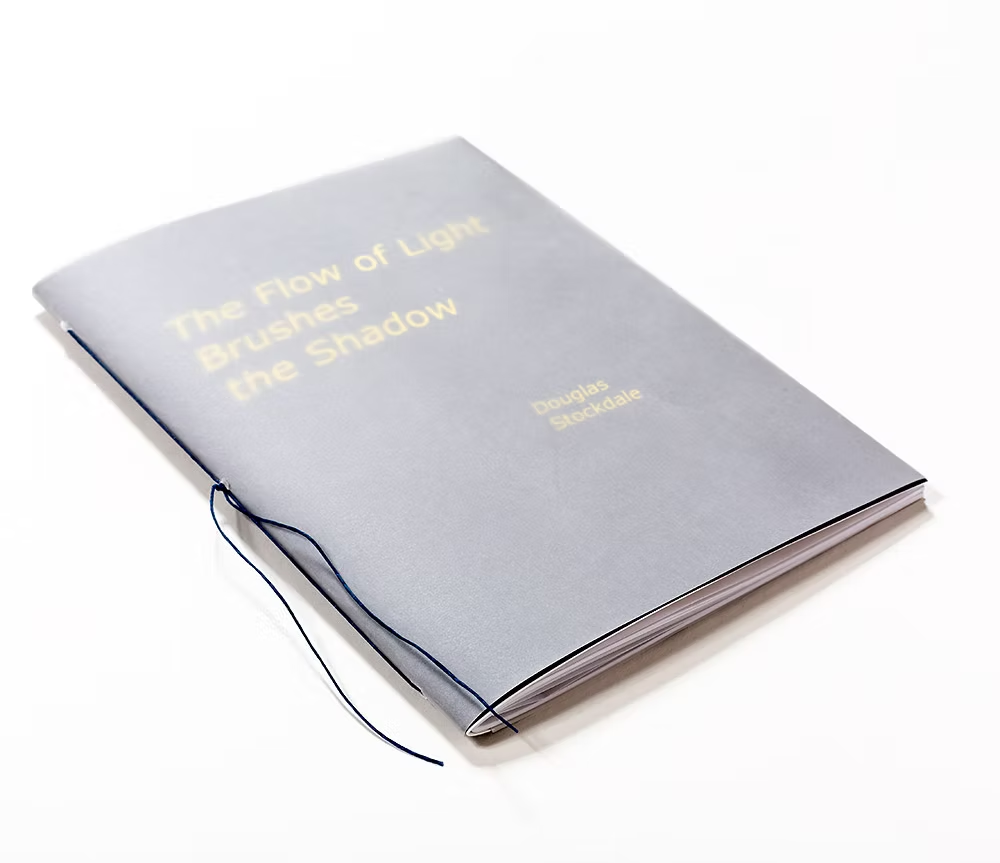
Douglas Stockdale, Senior Editor & Founder, (Orange County, CA); When I founded PhotoBook Journal (originally The PhotoBook), in 2008 as a photo-blogger I was interested in discussing the photobooks in my library: what were the books that I found intriguing. This was also a transitional period as small-press, self-publishing and digital lithography were becoming a reality. I began to broaden my review perspective to include the publishing attributes that I felt created a difference in the quality of a photobook.
I have now been published by Punctum Edizioni (Rome), self-published five artist books, a how-to book, started my own publishing imprint and have been teaching book development workshops across the country, most recently I am a Photolucida Critical Mass Finalist in 2023 and 2024 for my cyanotype (alternative photography) series about housing inequities in America.
A recent review is of Alan Gignoux’s Russian Rustbelt.
____
Articles and photographs published in the PhotoBook Journal may not be reproduced without the permission of the PhotoBook Journal staff and the photographer(s). All images, texts, and designs are under copyright by the authors and publishers.
 PhotoBook Journal
Leave a comment