Review by Hans Hickerson ·
A time, a place, and a point of view all meet in a photograph. The time and place can be obvious, but the point of view part can get complicated, as it involves technical, artistic, and personal considerations that are in turn themselves the product of times and places.
The photographs in Tall Socks offer an example of how this works. It was July of 1973 and photographer Mark Cohen was in New York City for a workshop. In his spare time he took pictures, most of which remained as negatives, dormant for decades, resurfacing only now as a book some fifty years later.
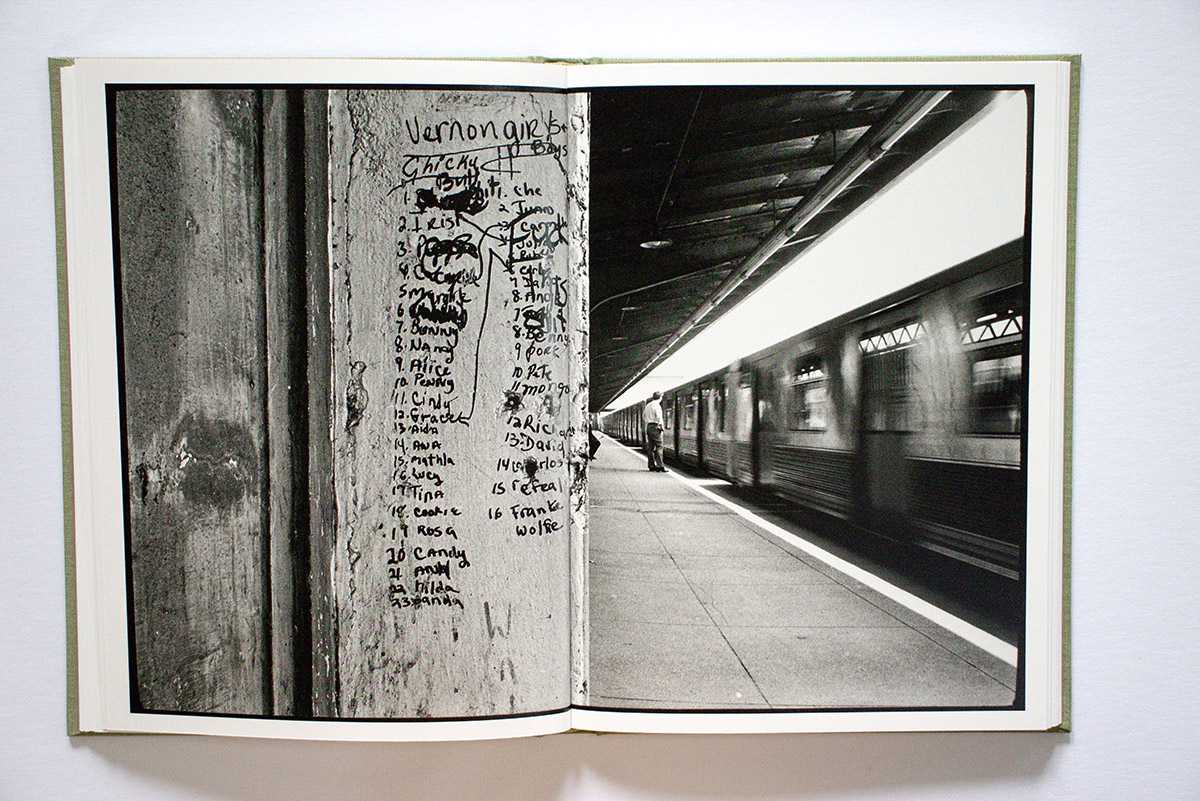
The 73 photographs in Tall Socks function as a portfolio rather than as an organized narrative. They are not a systematic survey of people or places, but you do get a feel for what things must have been like. You see vestiges of an older New York giving way to a new culture and style, and you see people and places that no longer exist, frozen there in pictures in rich blacks and whites.
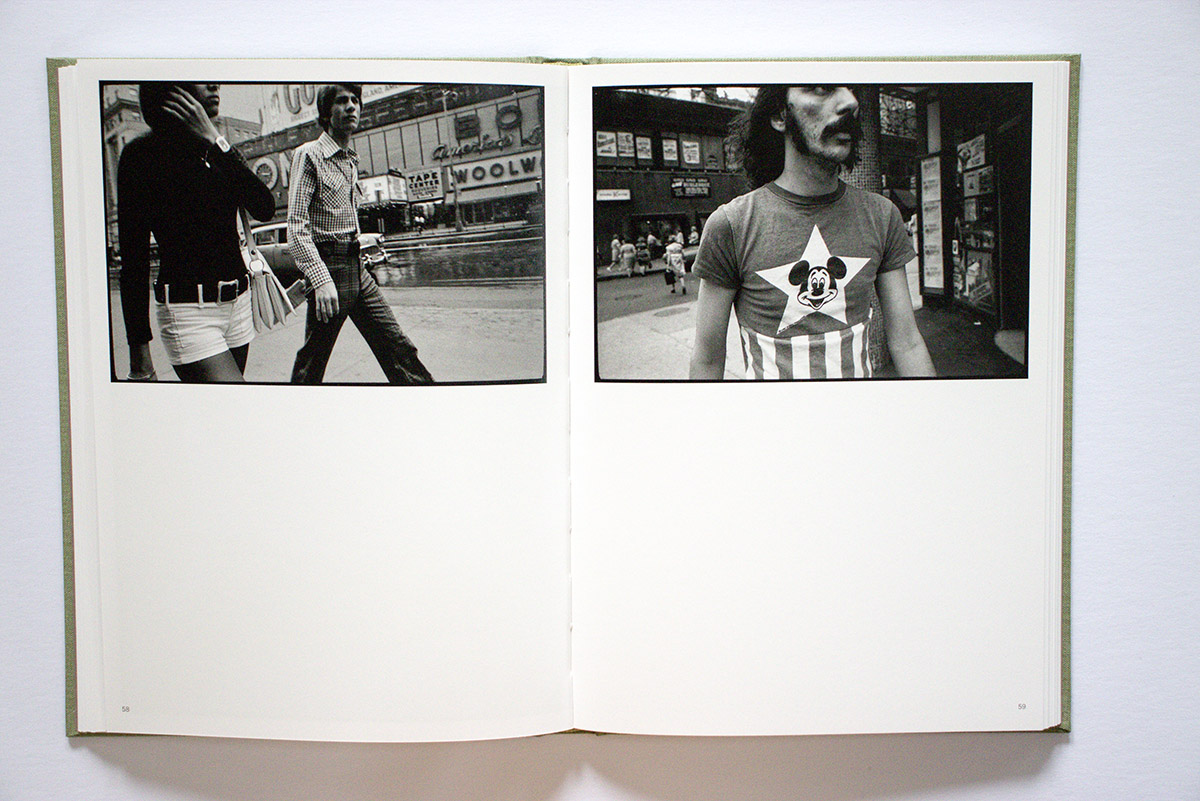
Cohen seems to have absorbed the influences of other contemporary photographers of the time. There are echoes of Lee Friedlander’s angles and visual puns, of Garry Winogrand’s energy and intensity of observation, and of Diane Arbus’ getting up close and using flash. Cohen does his own thing however.
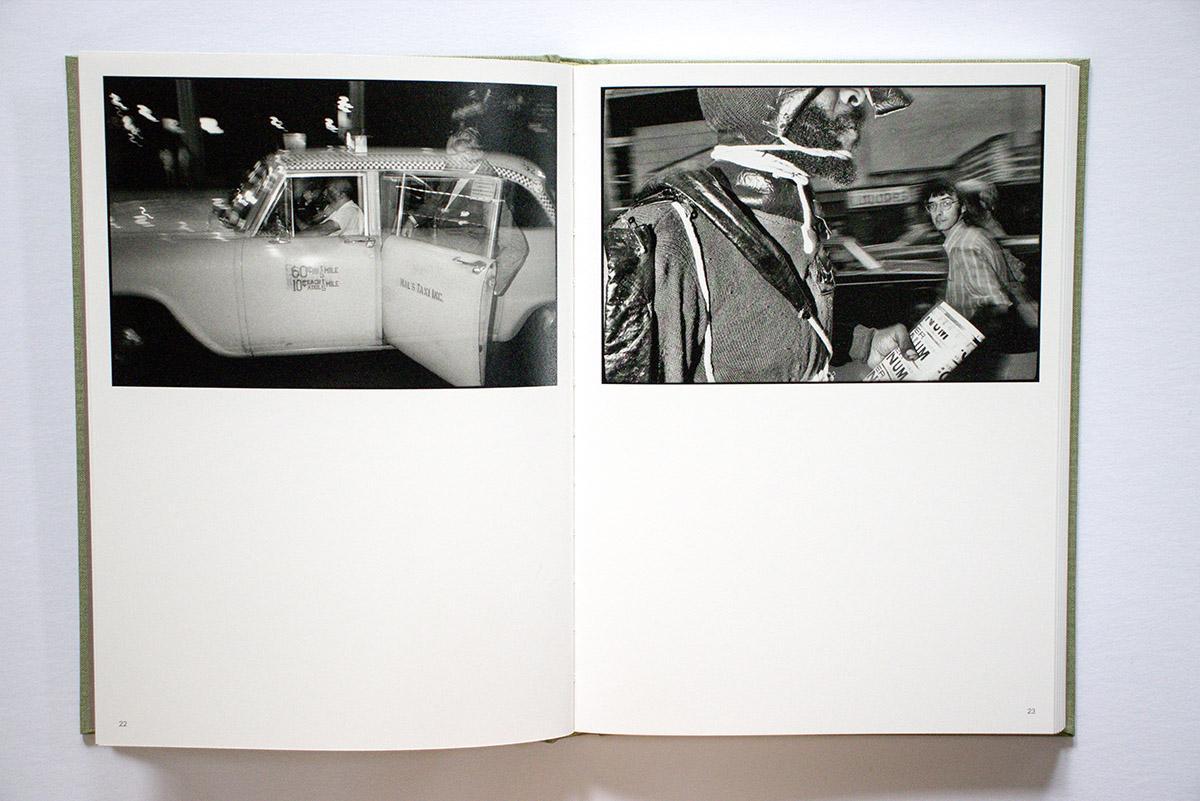
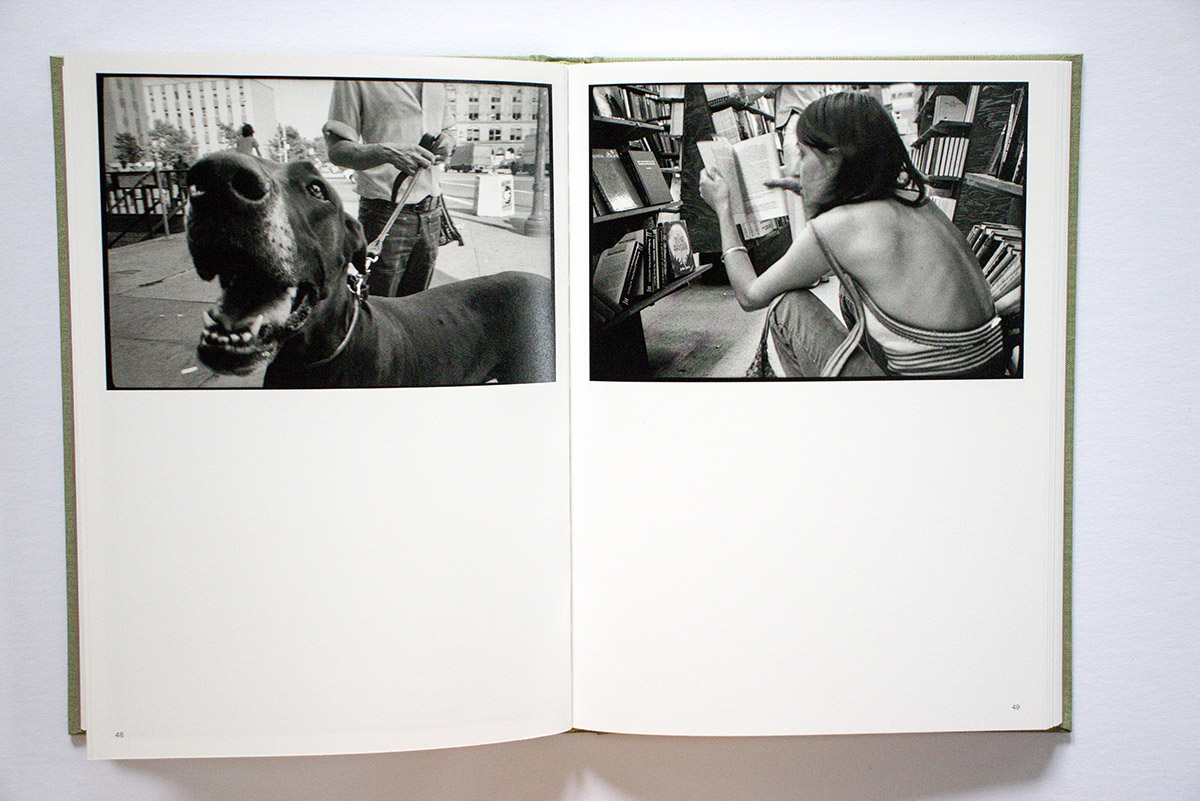
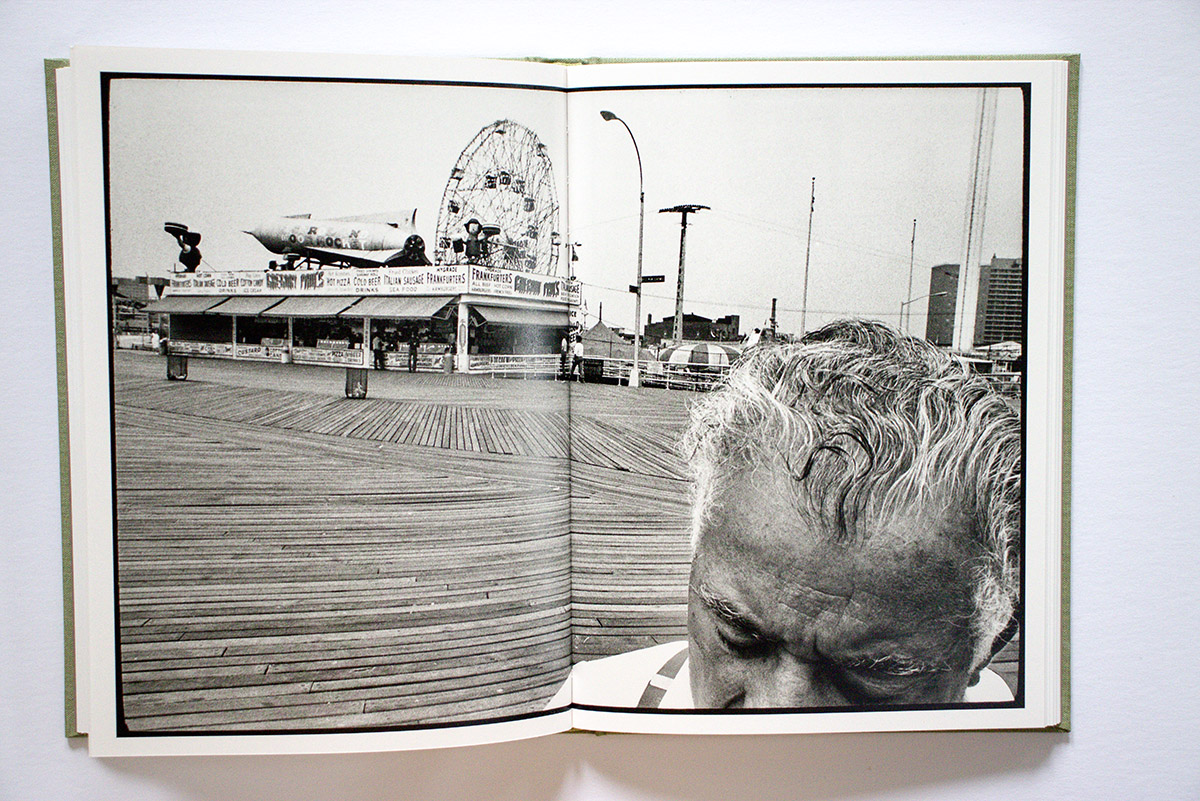
Some of his photographs seem to be about the subject itself (a pile of discarded metal columns, a man opening a door, two men in a park leaning close in conversation, one on a park bench, the other kneeling). Other photographs are interesting visual compositions resulting from Cohen’s photographic technique: lots of low-level shots and close-ups that crop the field of view, cutting off heads and tops of heads and isolating body parts – an arm, a hand holding a cigarette, a woman’s bare back, a man’s torso – plus flash at night and from close up as well as visual juxtapositions of foreground and background, all framed with a heavy black border.
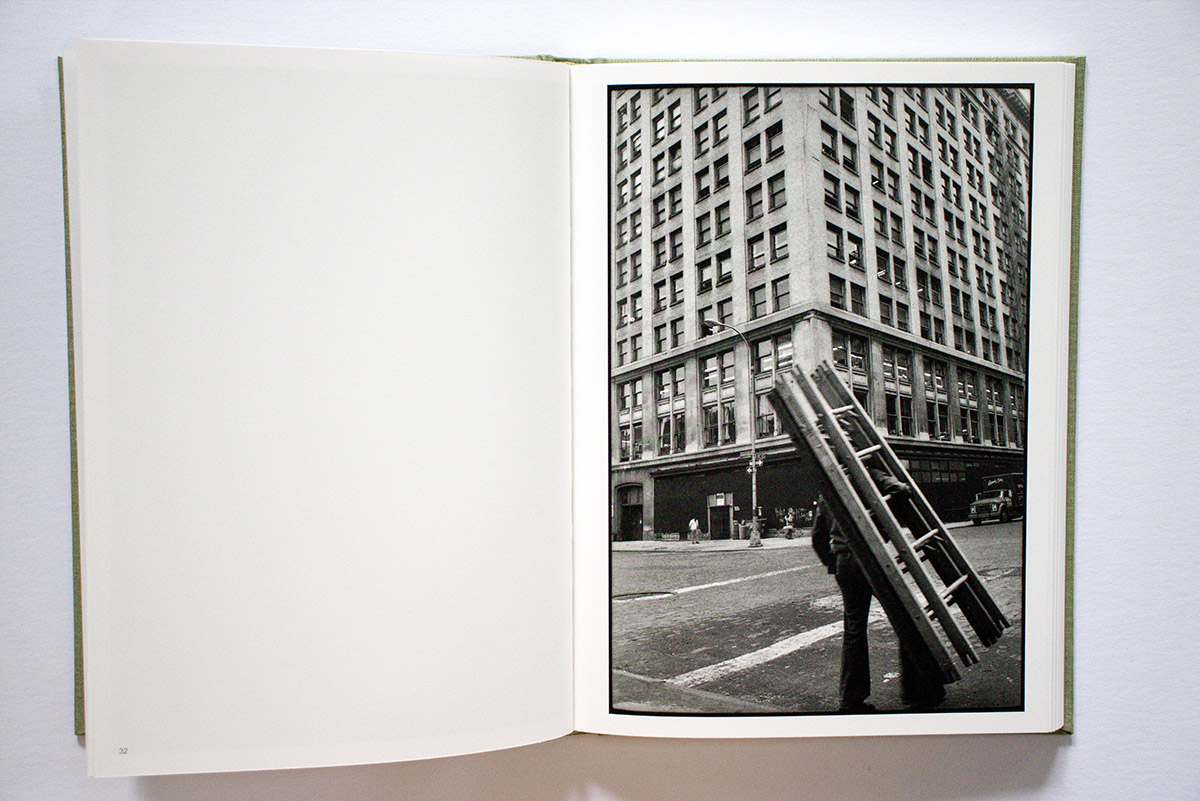
If you photograph enough and cultivate your eye as Cohen did, you are rewarded with photographs that stand out as memorable visual moments, in Tall Socks for example the image of a man carrying a ladder. The angles, lines, and rectangles of the ladder in the foreground are layered on top of the angles, lines, and rectangles of windows in a building in the background, setting up a dynamic of movement and tension as well as a visual pun comparing the two.
In another picture the back of the head of an elderly man is seen looking at a crowd of standing people facing away from him, inviting the interpretation that he is isolated and alone.
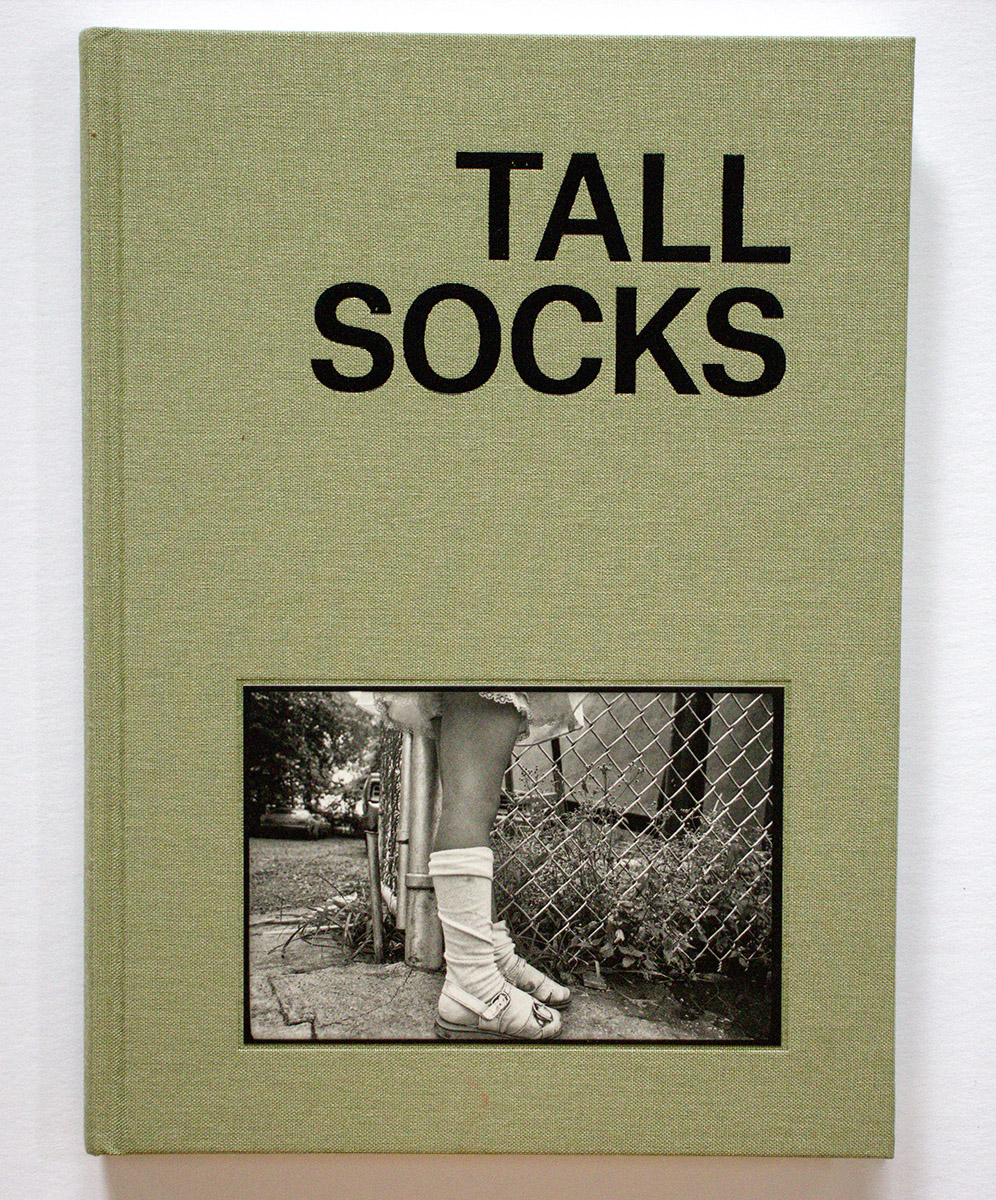
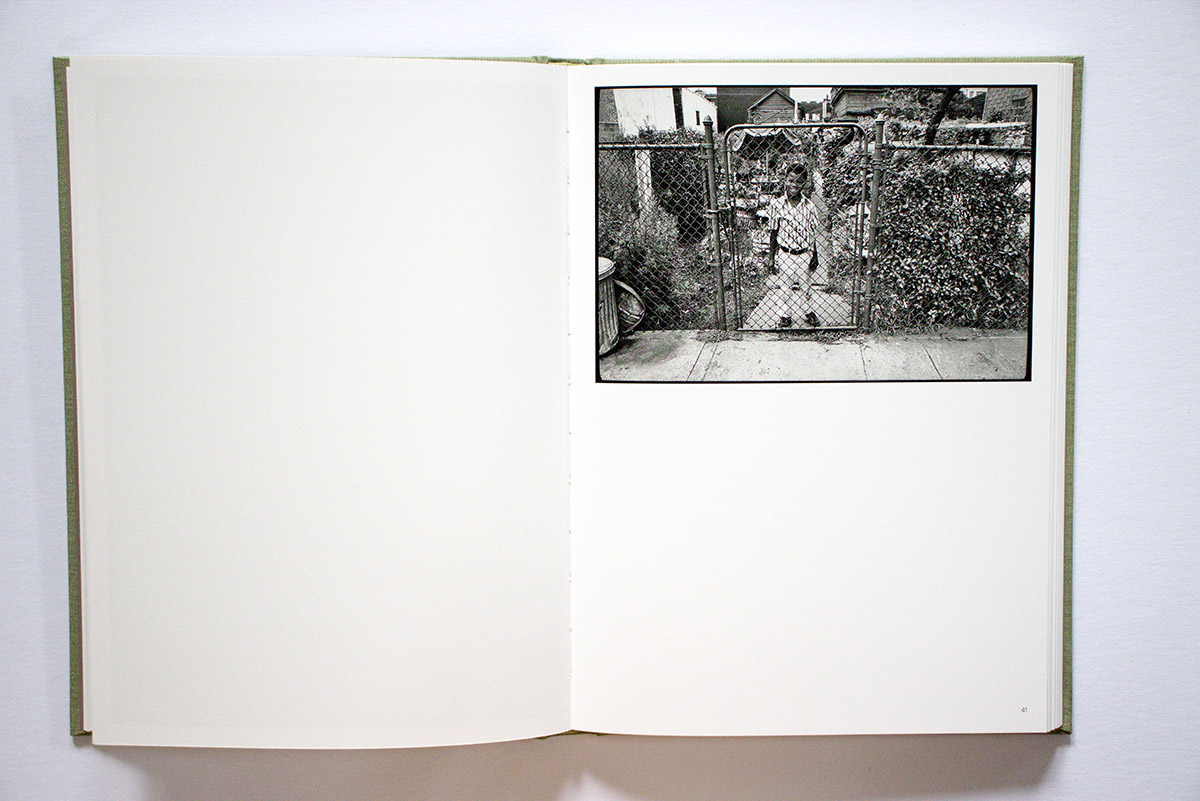
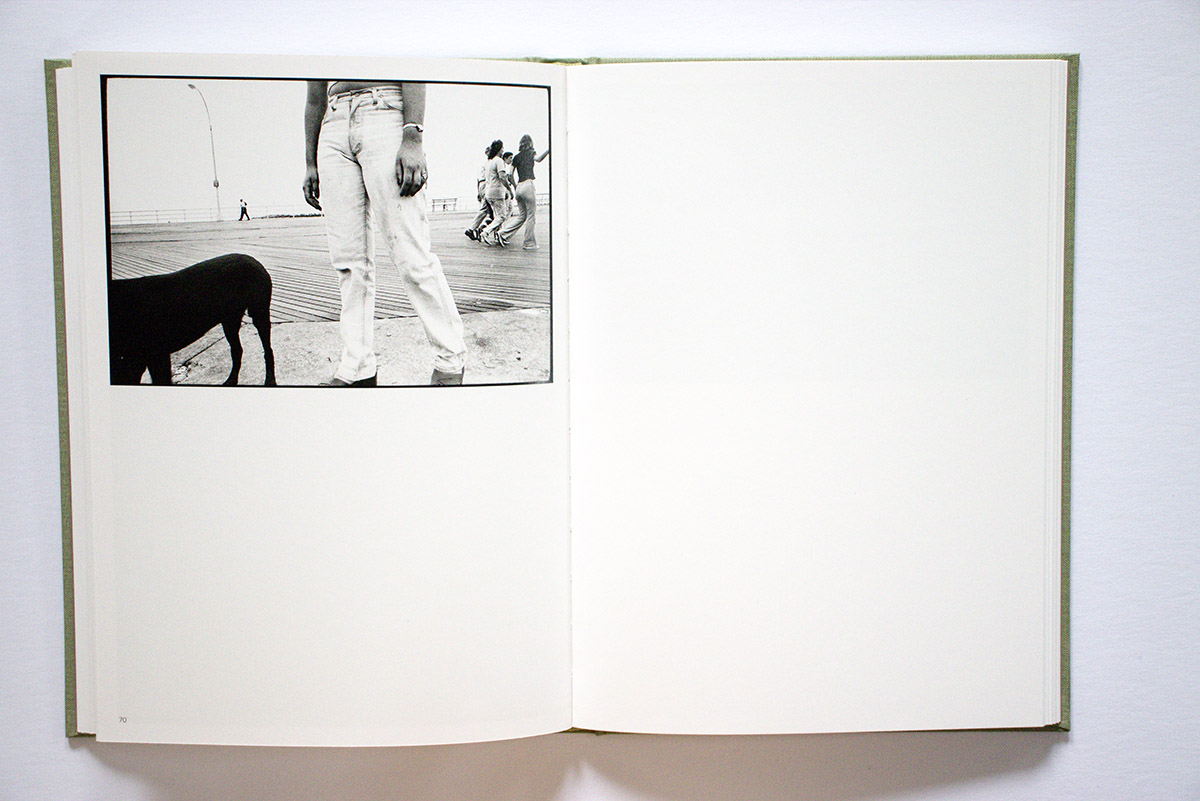
The image that gives its name to the book, “Tall socks,” also hits a sweet spot. It is definitely a memorable picture, but why? Is it the low viewpoint, the chain-link fence, the simple yet pleasing variety of objects, shapes, textures, and tones? Or is it how Cohen’s white socks function like poet William Carlos Williams’ white chickens? Whatever it is, it works. Layering on some additional visual dynamics, on the opposite page we see a white dog on a leash.
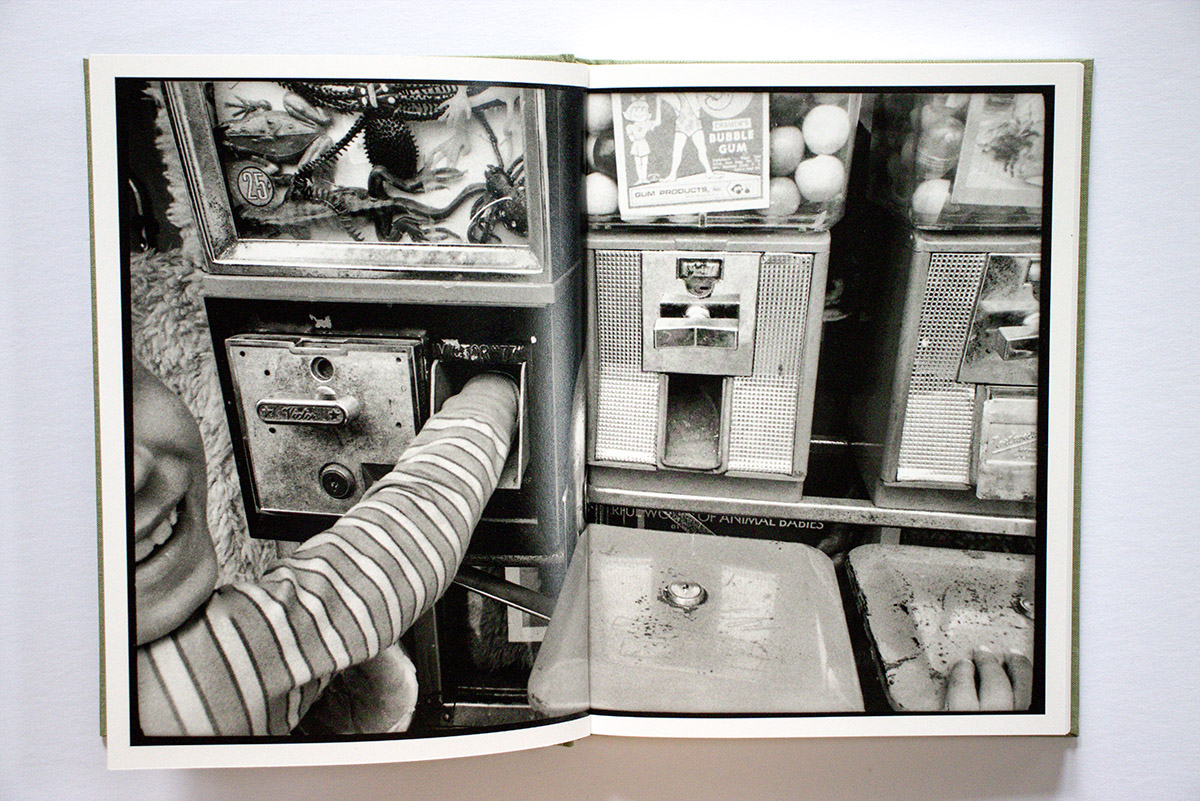
While certain images stand out, many seem simply to embody the bare-bones labels that serve as titles: “Newspapers,” “Man at gate,” “Long Flashed arm,” “Buy ticket,” “White outfit,” “Man and girl buy sausage,” “Arm in candy machine.”
The photographs in Mark Cohen’s Tall Socks were likely considered raw and edgy for their time. Today, as a deftly sequenced portfolio elegantly packaged in a high-end book, they remind us how long it can take for artists to finally get their due.
Hans Hickerson, Editor of the PhotoBook Journal, is a photographer and photobook artist from Portland, Oregon.
____________
Mark Cohen – Tall Socks
Photographer: Mark Cohen (born in 1943, lives in Philadelphia)
Publisher: GOST Books; © 2025
Language: English
Design: Rossella Castello, Katie Clifford, Gemma Gerhard, Justine Hucker, Allon Kaye, Eleanor Macnair, Claudia Paladini, Ana Rocha
Printing and Production: EBS, Italy
Hardbound with embossed cloth cover; 73 black and white photographs; sewn binding; 128 pages; 7.5 x 10.25 inches
____________

Articles and photographs published in the PhotoBook Journal may not be reproduced without the permission of the PhotoBook Journal staff and the photographer(s). All images, texts, and designs are under copyright by the authors and publishers.
 PhotoBook Journal
Leave a comment