Review by Lee Halvorsen ·
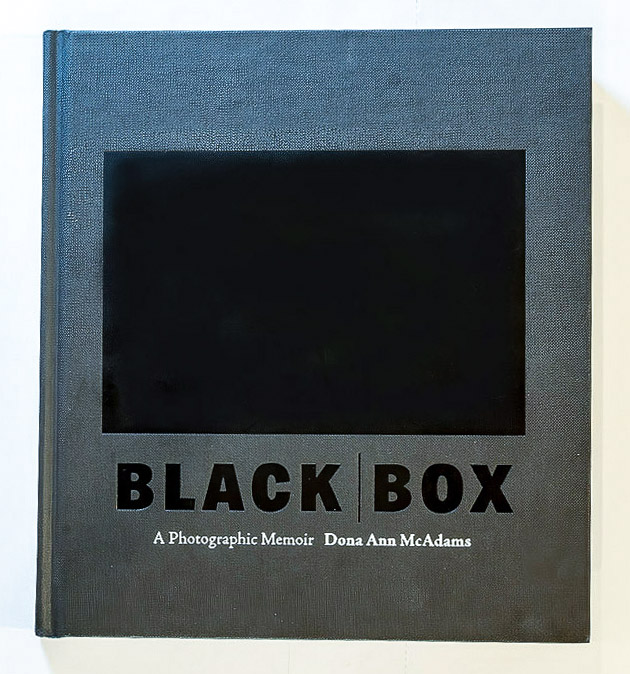
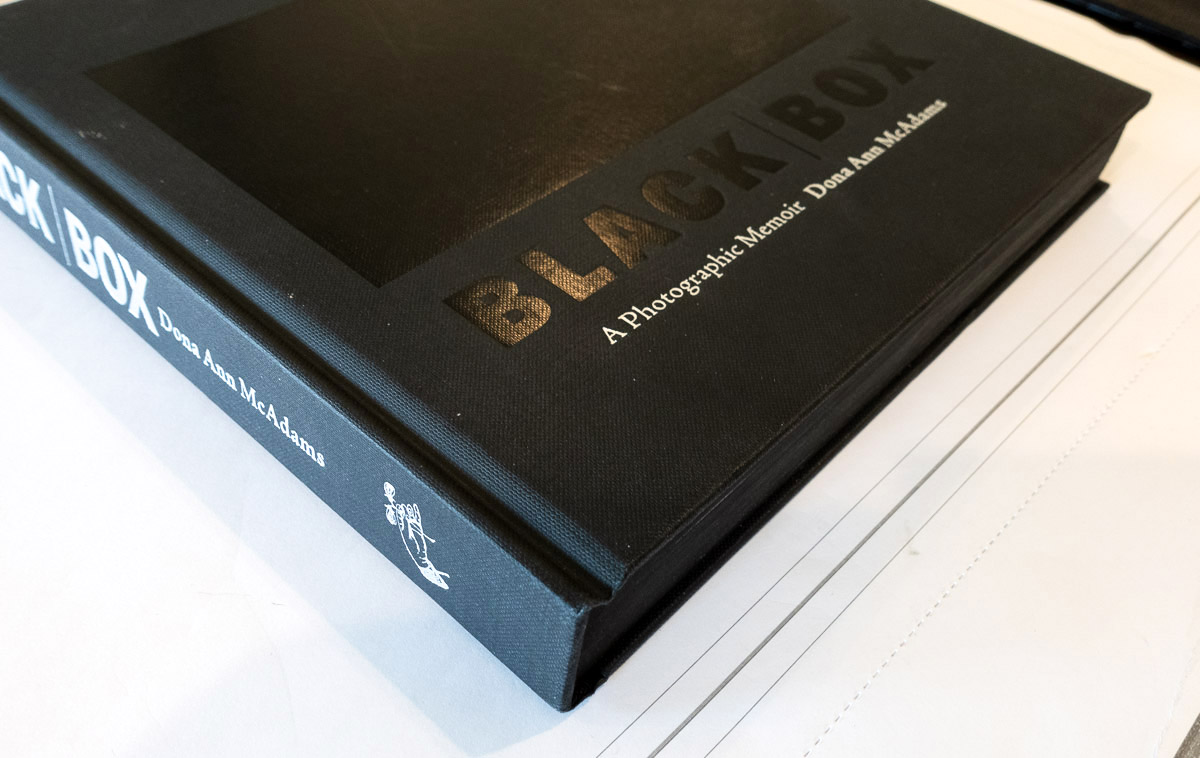
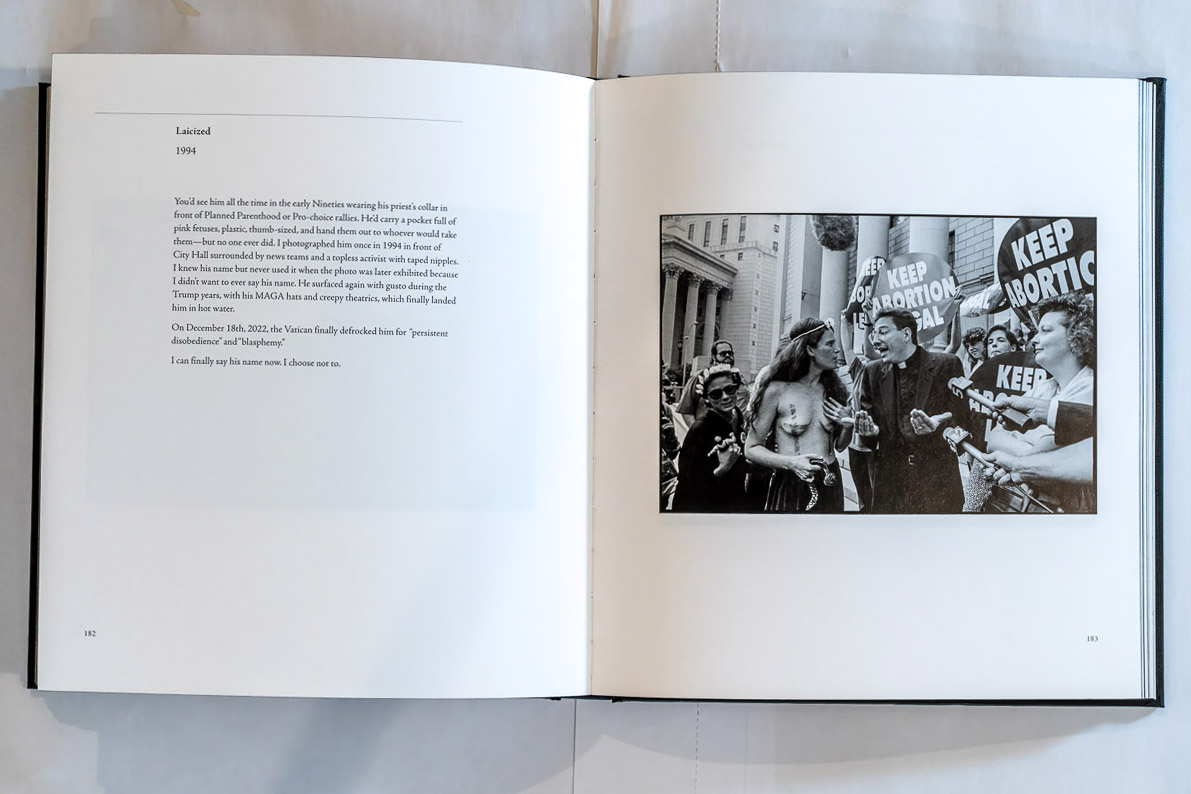
The Black Box book is multimedia art…the book itself, the images, and the text. In the Afterword, Joanna Howard writes, “Black Box marries personal memoir with artistic retrospective of such a rich career.” The style of the book, the intimacy of the images, and the reality of the storyteller’s words bring the reader directly into the story…as if seated in a small, very personal, black box theater.
Opening the book’s shipping package deserved a video, “The Unboxing of the Black Box.” As I lifted the paper padding, the book’s form called out its title …a black box…promising intimacy and message, and wow, was that promise realized.
Imagine sitting in the front row of a small theater, McAdams just a few feet away looking directly into your eyes. She begins talking, her enthralling words are a sense of familiarity and warmth but edged with a wry melancholy. She pops an image into her narrative; at first, it doesn’t seem to quite belong but as the story continues and you connect with the words, the image becomes relative and significant.
McAdams’ images are personal, gritty, elegant and provocative. Her life began on Long Island where her father’s mantra became “never go west, only east” which was limiting and personally constraining. She attended a Catholic school with conservative, restrictive values further compressing her life view, well, until she was asked to leave the school. Her stories begin when in 1954 she was born and continue through 2023. She had her first camera when she was 11, a Polaroid Swinger, but the high cost of film discouraged taking many images.
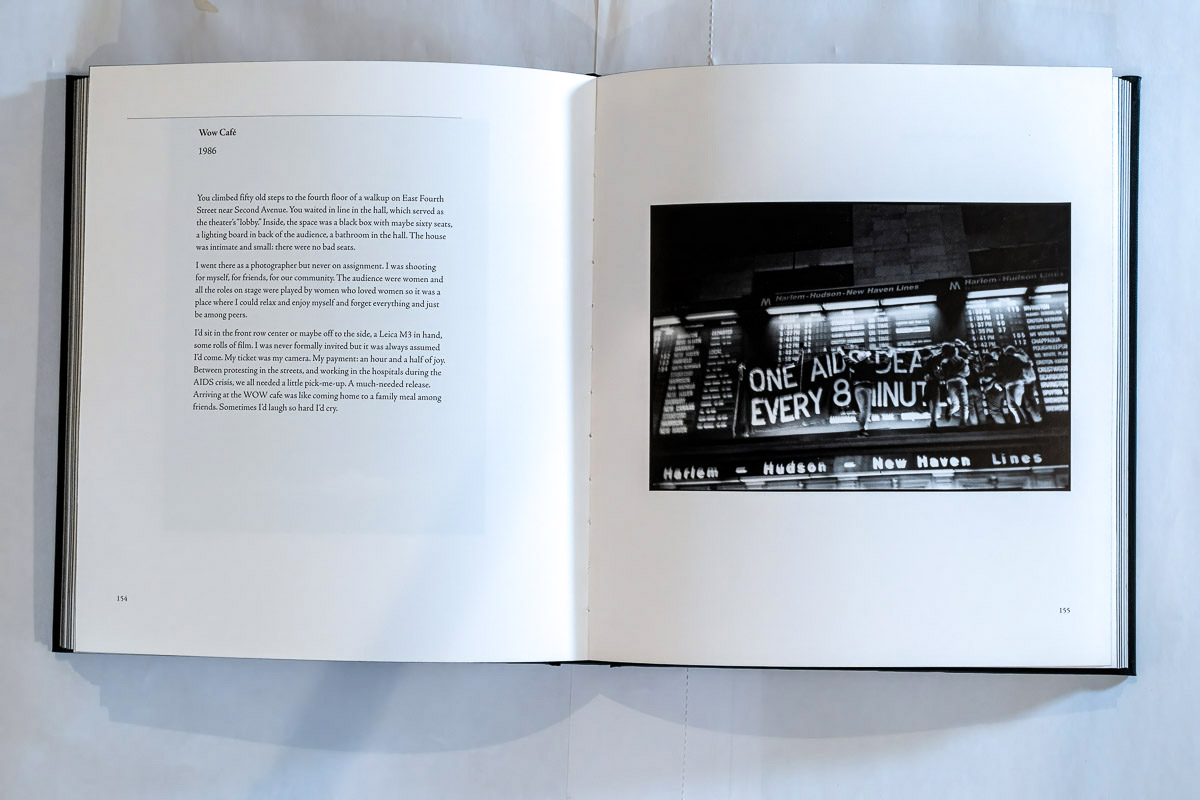
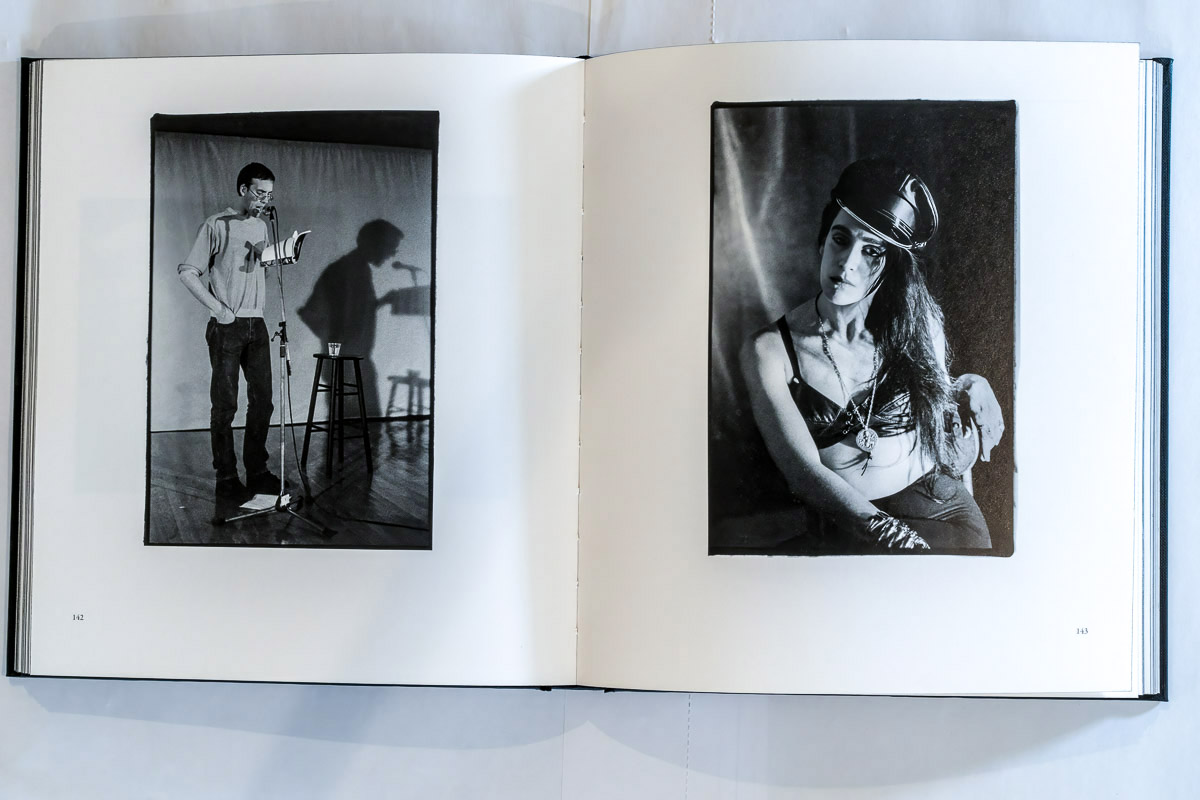
Her stories are chronological but not necessarily the images; they are sequenced with one another which sometimes matches the timing of the text and sometimes does not. However, the images around the individual stories match the story…they go together even if not chronologically matched. For instance, the story of “The Boyfriend” in 1972 relates how she left New York for California with the boyfriend in 1972. The story has a supporting image of a man and woman embracing on its facing page and is followed by a spread from the cab of a truck on the highway, both supporting the story but neither contemporaneous (1980 and 1981). But, the three pages naturally flow and go together.
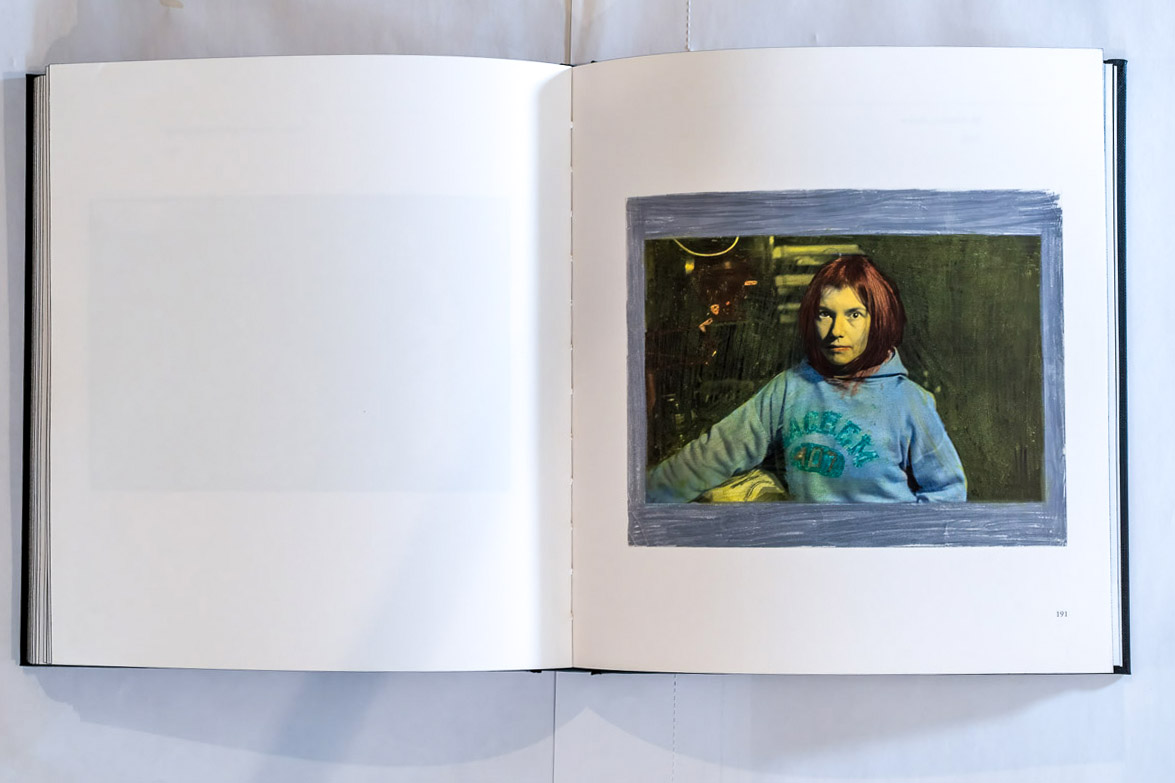
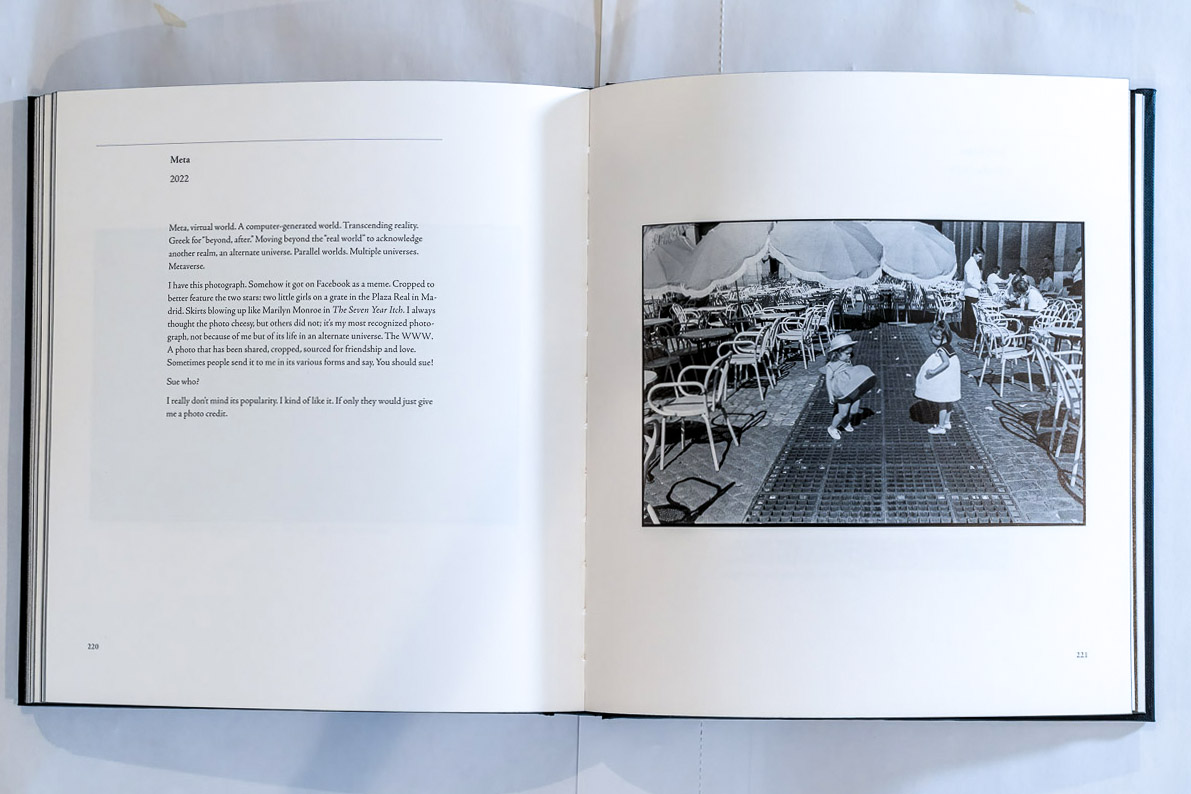
The images are subtly and wonderfully sequenced, the tone and geometric harmony on each page turn is rhythmic, melodic. All the images are black and white apart from a self-portrait of the author which was taken in black and white but colored by Jane Smith. We see McAdams’ everyday pictures and we see some of her well-known images such as the two little girls standing on a grate, skirts billowing up a la Marilyn Monroe.
McAdams’ life/photo journey has been extraordinary, finding herself and her camera in places with people and in times that are historic and memorable. She brings those bits of life to the reader in theatric intimacy, drama, and matter-of-fact reality. Hilton Braithwaite introduced her to Leica. Harvey Milk sold her film in San Francisco. She encountered Angela Davis, David Wojnarowicz, Maurice Sendak, and Meredith Monk. She was house photographer for Performance Space 122 for twenty-two years. She spent years documenting the Queer Liberation Movement. Every Friday morning for 13 years she taught a class of people struggling with mental illness, and one of the class’s favorite activities was coloring black and white images McAdams had taken. Jane Smith was one of those in the class. All of that in this book.
McAdams calls her stories “little ditties” and tells us she started writing them when her brother died in 2013. She believes photos don’t speak, that the viewer supplies the story for the photo and that her ditties are meant to be melodies for her images. Images which are compelling, filled with metaphor, dripping with emotion. McAdams stopped writing ditties saying they all live now in the “Black Box.”
This is truly an extraordinary book with images that talk to each other and the reader. Black Box will look fabulous sitting on a table in your home or office and visitors will feel compelled to reach out, hold it and begin reading. And once they start reading, they will be hard pressed to stop.
____________
Lee Halvorsen, Assistant Editor of the PhotoBook Journal, is a writer and visual artist.
____________
Dona Ann McAdams – Black Box
Photographer: Dona Ann McAdams (born in Long Island, NY, currently working and living in Vermont on a goat farm)
Publisher: Saint Lucy Books ©2024,
Text: Dona Ann McAdams
Afterword: Joanna Howard ©2024
Language: English
Book and Cover Design: Guenet Abraham
Editor: Mark Alice Durant
Printed in Italy by ABC Tipografia, Firenze
Clothbound hardcover, 256 pages, thread sewn binding, 107 photographs, 10 x 9 inches, ISBN 979-8-218-48684-6
____________


Articles and photographs published in the PhotoBook Journal may not be reproduced without the permission of the PhotoBook Journal staff and the photographer(s). All images, texts, and designs are copyright of the authors and publishers.
 PhotoBook Journal
Leave a comment