Review by Hans Hickerson ∙
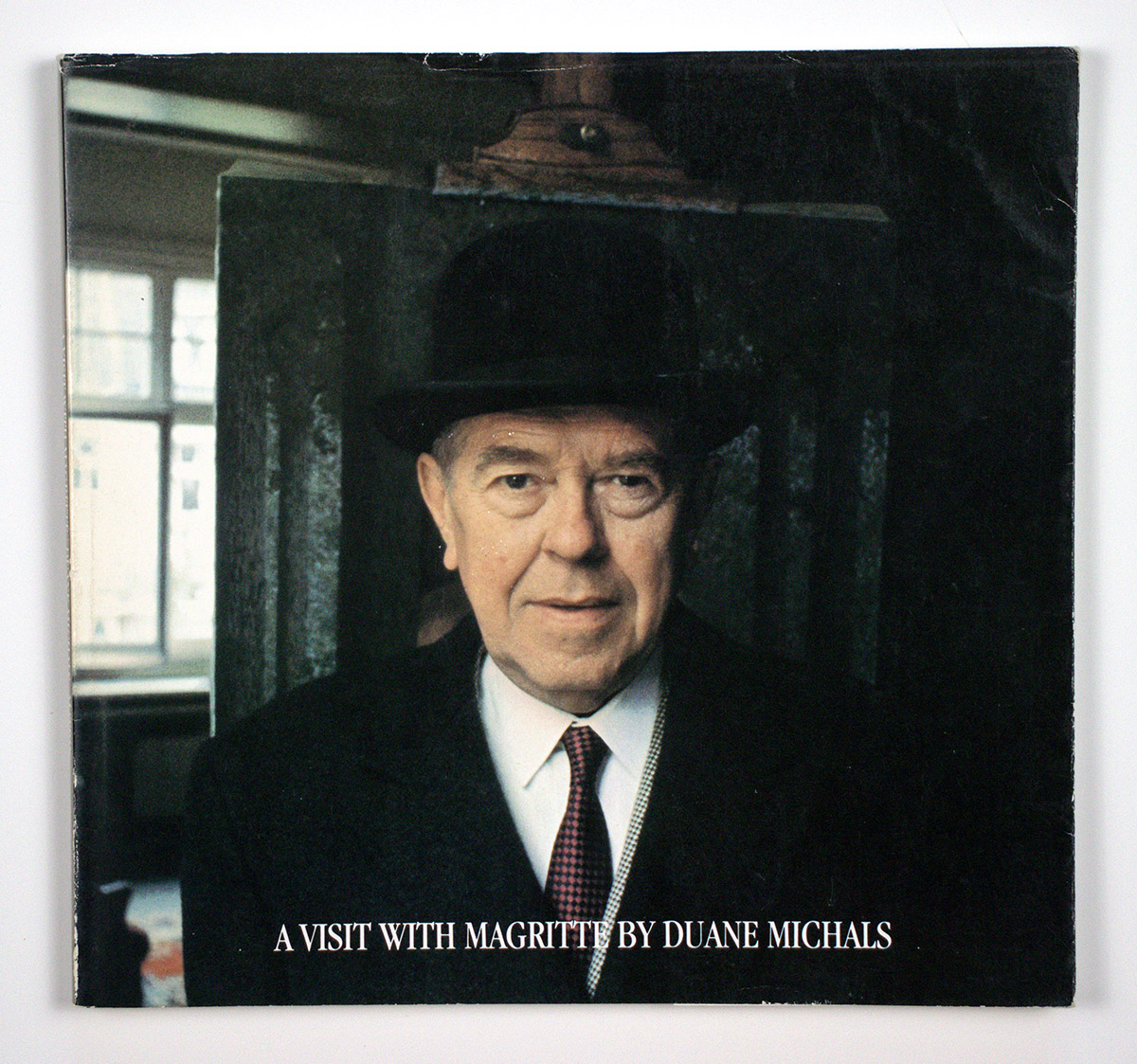
No, A Visit With Magritte has not been re-released. It was last published in 2010 by Steidl and my copy is the Matrix edition from 1981. I wanted to review it because I wondered if other photobook fans are aware of it and because it was such a revelation to me when I first saw it in the early 1980s. Though it isn’t mentioned in Parr and Badger’s The Photobook: A History, it is a classic example of how photographs can be used to tell a story and of how photobooks are distinct from books that are simple collections of photographs.
What Michals is re-creating and sharing in the book is the experience of his visit to Surrealist painter Rene Magritte’s house in Brussels in August of 1965. Magritte was one of his artistic heroes and for Michals his brief visit was a momentous event.
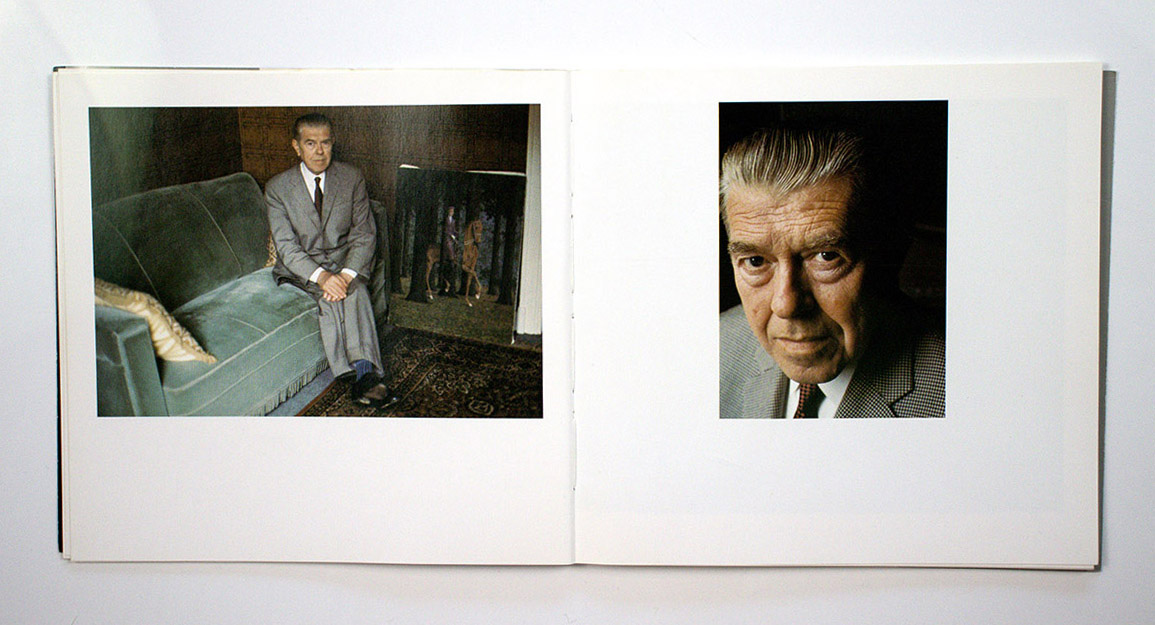
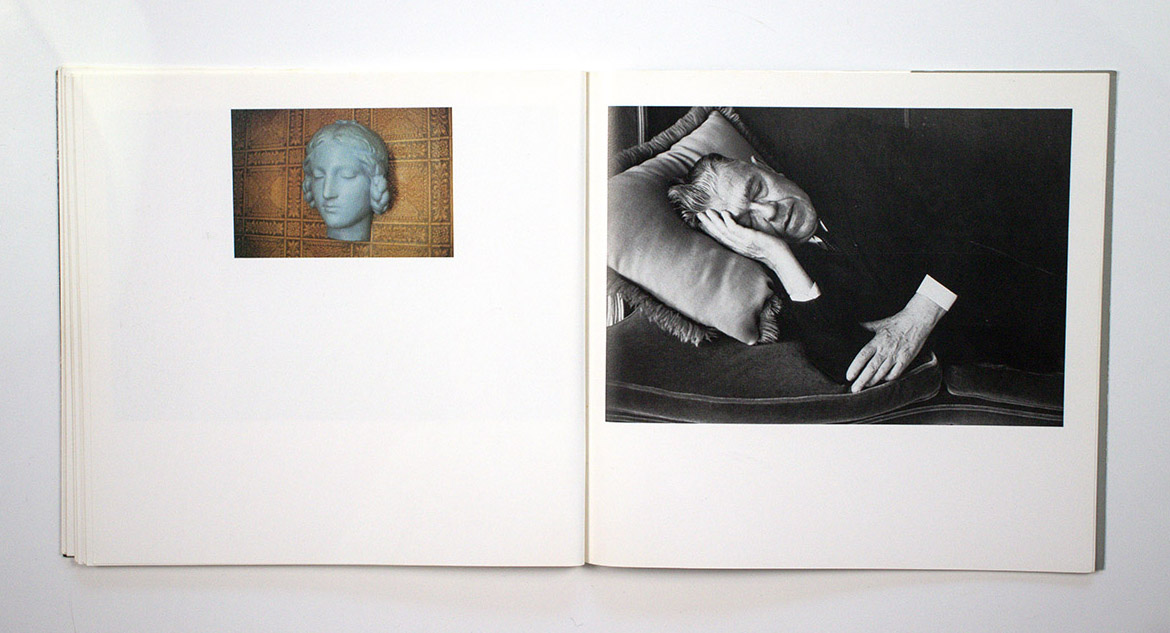
Michals doesn’t simply document his visit but rather uses the book form to create a visual representation of it for the viewer to experience. Only a few of the photos in A Visit With Magritte could be considered worthy of consideration as stand-alone images. Most are unremarkable shots of Magritte and his house from outside and inside. In fact, it seems that Michal’s visit was a formal one and he visited only Magritte’s sitting room, studio, and garden. Roughly half of the images are in color. They are mostly unmannered straight-on pictures that could be used as mug shots or catalogue illustrations; nothing about them suggests art.
Magritte smiles a couple of times in the book, but mostly his expression is serious and unexpressive. We see him at the front door, then his face close up, and then he is in a playful series of photographs. He holds his hand in front of his face. He doffs his hat. He puts his hat upside down on his head. Michals then uses double exposures to extend the theme through repetition and variation. In the next page spread the photographs transition to color and then we move inside Magritte’s house. In his sitting room we see Magritte posing with a painting and with his dog, and we see details – his paint brushes and paint, his chair and easel.
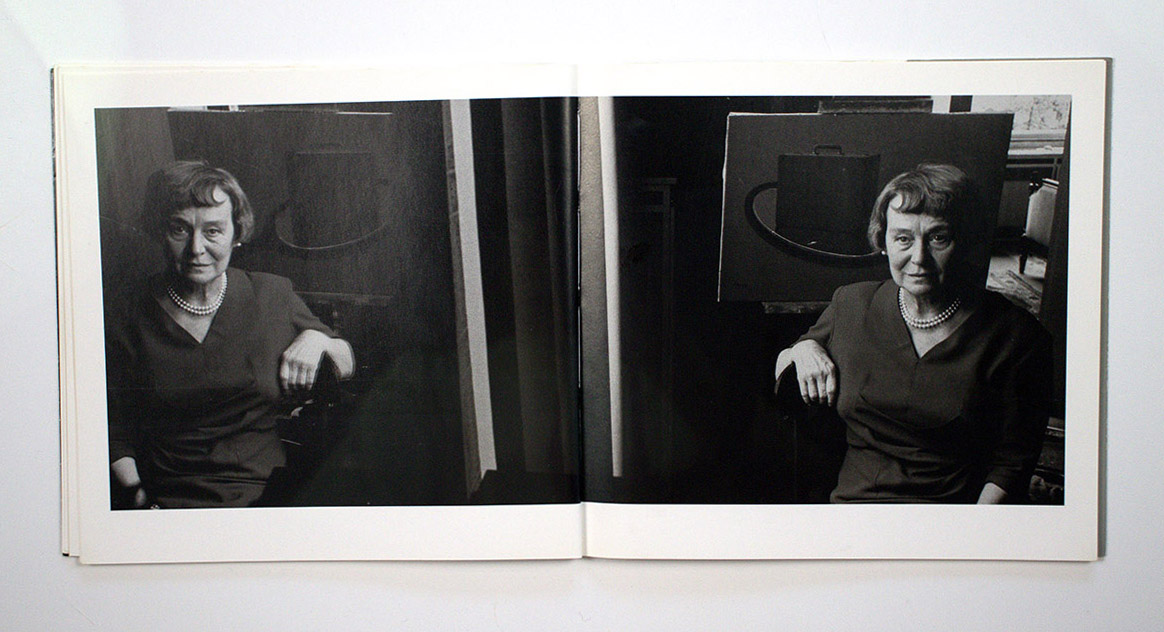
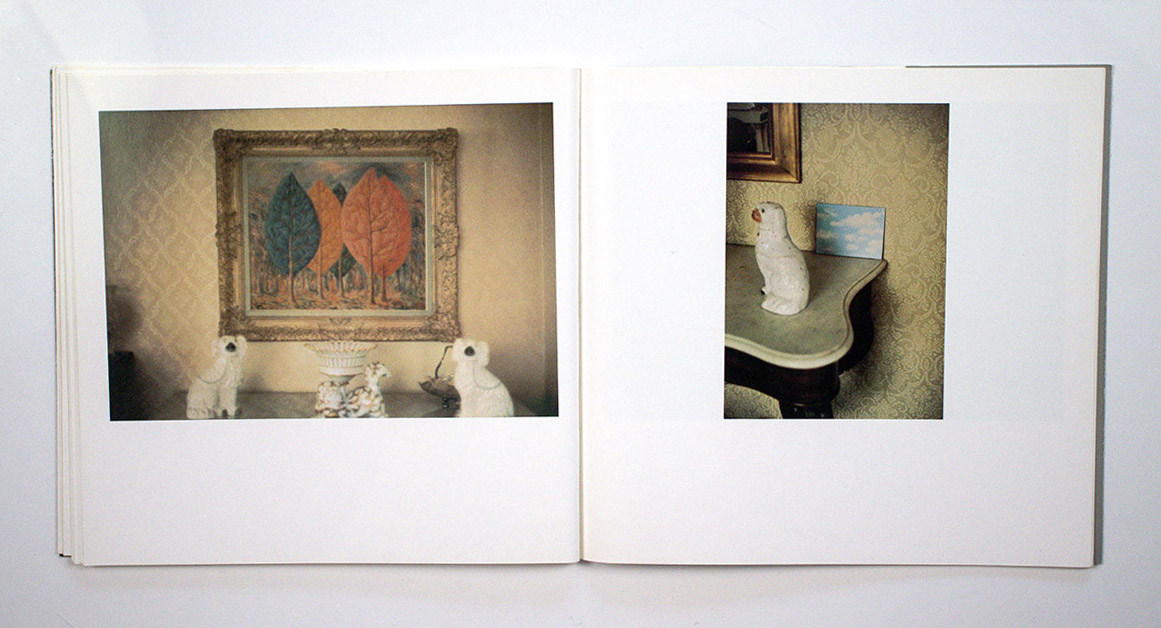
The images transition back to black and white with a closeup of a bookcase. After a couple more page spreads with more variations of Magritte – front and back, plus double exposures of him and his easel – Magritte’s wife Georgette appears, sitting behind him. Next we see two almost identical photographs of her, then two spreads with details of paintings and bibelots.
You get the idea. This is purposeful editing and sequencing. A narrative, but a visual narrative, telling a story. Using typical narrative techniques, Michals introduces and develops themes and variations. He presents new elements and adds to previous material, and then he moves on. There is a clear beginning and end and there are clearly developed events or chapters.
After meeting Magritte’s wife, we move outside and into color again. Then back inside, Magritte at his desk, images of his paintings. Back to black and white and a picture of Magritte lying on the sofa in his studio, his eyes closed. Then, as if to suggest that the end is near, several pages repeating the interior views but without Magritte. Then a last shot of Magritte outside his front door. Then Magritte’s house, getting smaller and smaller in three final pictures, disappearing into the distance of space and time.
Written text plays a key role in developing the story of Michal’s visit. At the beginning it sets the scene, relating his admiration for Magritte’s work and his thoughts and feelings at the time. Partway through the sequenced photos, another text offers commentary on the visit and presages its end, establishing an elegiac tone for the viewer’s experience through the remainder of the pages. And at the end of the book, below a photograph of himself wearing a bowler hat like Magritte, Michals writes, “I am writing this sixteen years after going to Brussels, still elated by the memory of my visit with Magritte. What a fortunate man I am.”
I am still in awe of this book. I love its deft, light-hearted playfulness and how it uses ordinary photos to share an experience. I am amazed at Michal’s self-granted artistic freedom and at his ignoring of boundaries and conventions. In the early 1980s I was grappling with how to present photos in a book, and A Visit With Magritte offered a shining example of successful form. What a gift. Thank you, Duane Michals.
____________
The PhotoBook Journal also featured reviews of Duane Michals’ previous books, Portraits, 50, and The Idiots Delight.
____________
Hans Hickerson, Associate Editor of the PhotoBook Journal, is a photographer and photobook artist from Portland, Oregon.
____________
Duane Michals – A Visit With Magritte (out of print)
Photographer: Duane Michals (lives in New York, born in 1932 in Pittsburgh)
Publisher: Matrix 1981 (& Steidl 2010)
Language: English
Edited by Charles Traub
Designed by Arne Lewis
Softcover with printed dustjacket; 61 B / W and color photographs; sewn binding; ISBN 09365540503; 60 pages; 21 X 20 cm.
____________





____________
Articles and photographs published in the PhotoBook Journal may not be reproduced without the permission of the PhotoBook Journal staff and the photographer(s). All images, texts, and designs are under copyright by the authors and publishers.
 PhotoBook Journal
Leave a comment