Review by Gerhard Clausing •
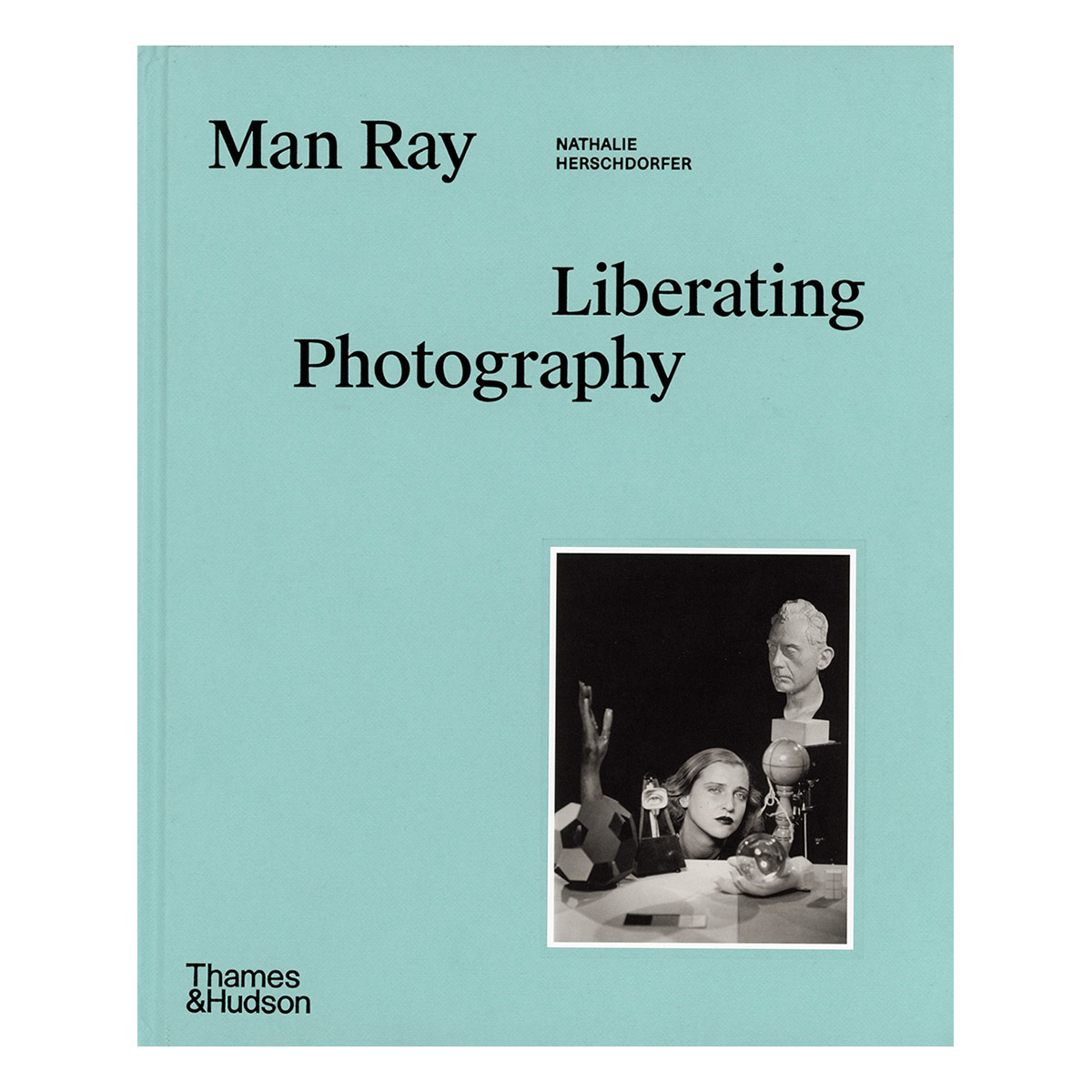
This photobook provides us with a refreshing new look at the photographic creations and experiments of Man Ray, especially those from the 1920s and 1930s. It presents interestingly juxtaposed examples of the artist’s work that allow us to compare his style, his excellence in combining light and shadow, as well as his new approaches to form as it enhanced content, both real and imagined, especially regarding ambiguity and sojourns into surrealism. With a reputation as a painter as well, Man Ray led photography toward new ways of thinking for most of the 20th century. As Wendy A. Grossman says in her essay, he was “a man both of and ahead of his time.”
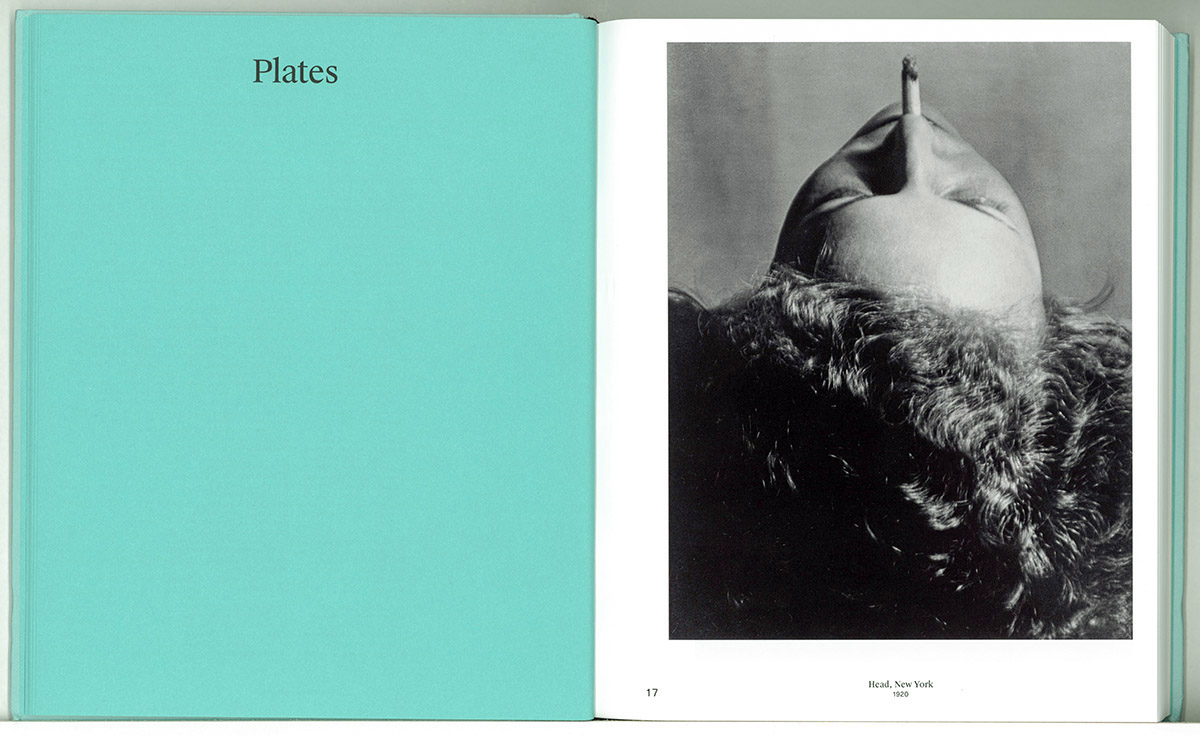
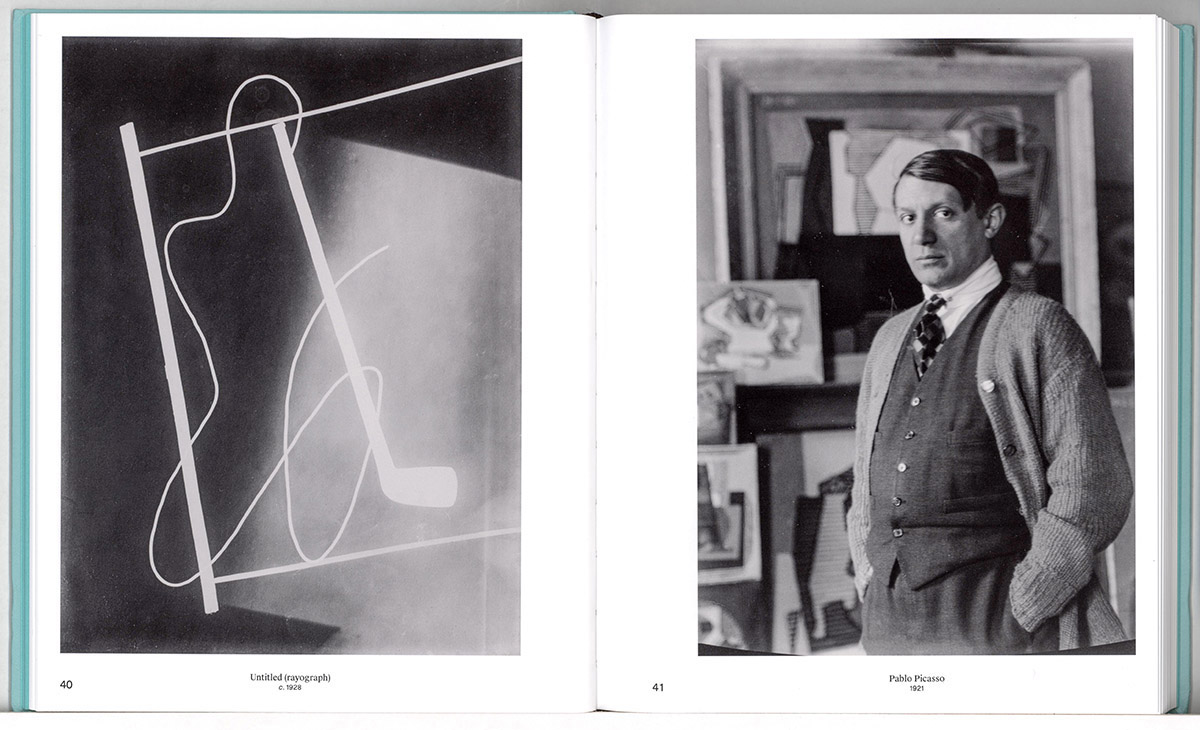
I will discuss some of the examples from the book, as excerpted in the double-page spreads shown below. First of all, he rediscovered photograms, which he called “rayographs,” created by placing objects on photosensitive paper that is subsequently processed in the conventional ways of the pre-digital era. He put a mysterious slant on them, which supported his surrealistic interests and added the desired ambiguity (especially seen on pages 40 and 66, shown below).
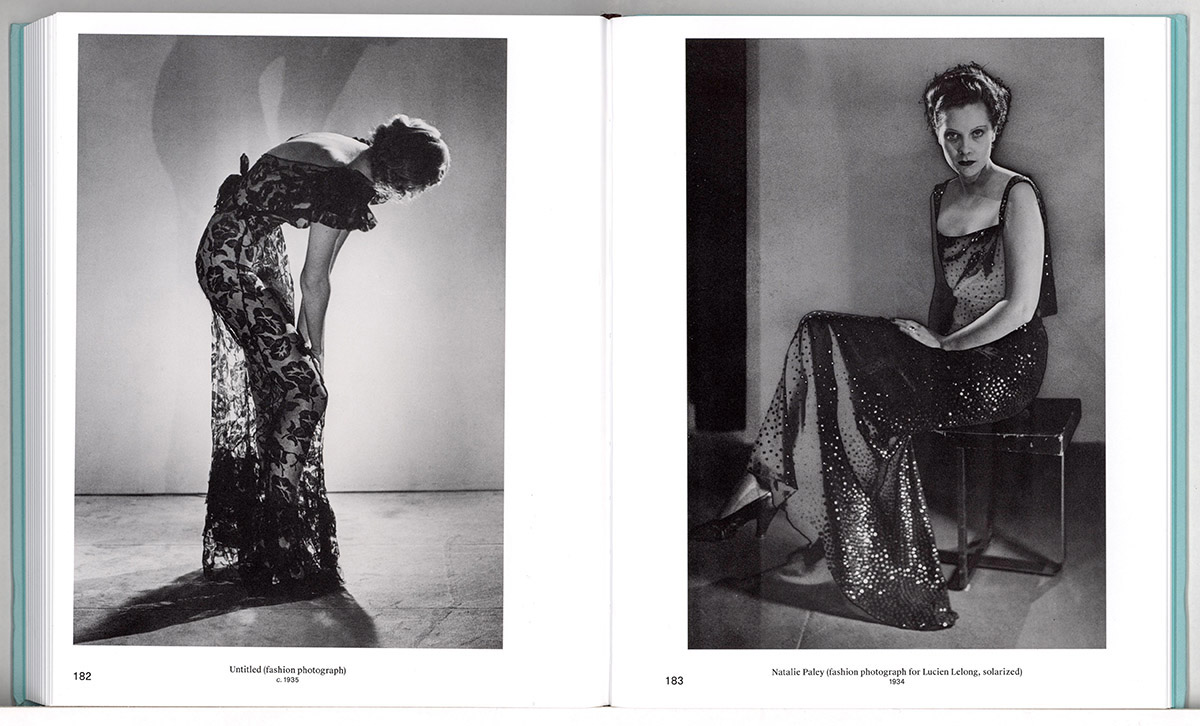
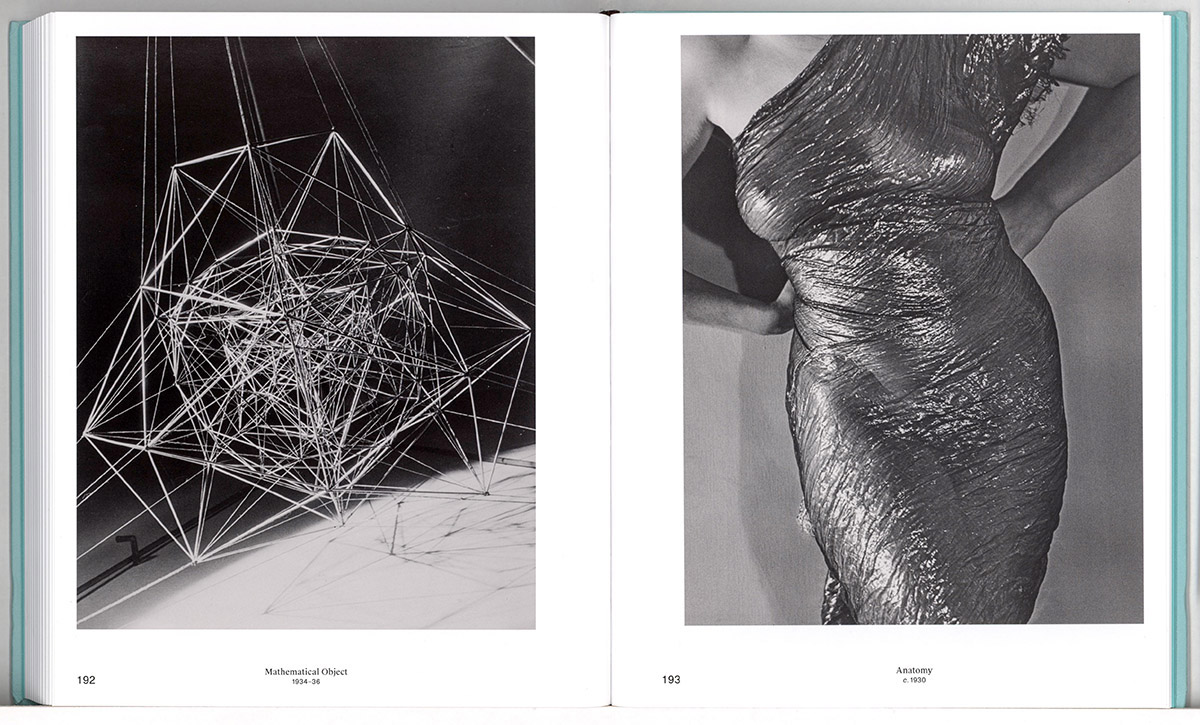
As a painter who was a member of the Dada movement, he also got to photograph other elite artists, such as Picasso (page 41), Dalí, and many others, although some of those portraits seem somewhat more conventional. On the other hand, when it came to women who were either his partners or whom he photographed for fashion projects, his portraits are astoundingly innovative and inventive. Thus he used unusual angles for portraits (for instance, page 17, and Lee Miller, page 93) and made interesting use of light, shadow, and solarization effects (images on pages 141 and 183 below). Similar to others of his era, such as Kertesz and Fellig (“Weegee”), Man Ray also employed distortions to great effect, as shown in the self-portrait with an unknown lady on page 206. The inversion of black and white (“The Kiss,” p. 140) should also be noted, as should his special interest in shapes and surfaces, especially fabrics, the latter perhaps in part due to his family background in the clothing industry (pp. 192-193). He also had surrealistic approaches to nudity, as you can see in two other images — forerunners of the era of collages and digital manipulation? The images are printed well and sequenced in an interesting manner, allowing room for contemplation and use of the imagination on the part of the readers and viewers.
As Natalie Herschdorfer states in her essay, Man Ray was one of the most influential artists of the 20th century. Her editing of this volume brings together both the studio work which he created for commercial purposes as well as his experimental artistic side: “Man Ray strove towards abstraction yet also shot relatively traditional portraits of the artists who surrounded him.” Thus he struck a balance between the requirements of a career that paid the bills and the experimentation that gave joy and meaning to the artistic soul, which latter effort, in retrospect, was his key contribution to opening the minds and the imagination of other artists to be more courageous in their photographic experiments.
There are many additional useful details about Man Ray and his time, as well as about his techniques and his progress, in the essays by Herschendorfer and Grossman. In the appendix there are short bios of many of the individuals of note who are depicted in the photographs and/or who played important roles in his life. There is also a timeline of Man Ray’s career as well as a short bibliography. This photobook is a very useful project and a valuable experience for the reader/viewer in numerous respects.
____________
The PhotoBook Journal previously featured Man Ray (Taschen).
____________
Gerhard Clausing, Editor of the PhotoBook Journal, is an author and artist from Southern California.
____________
Natalie Herschdorfer – Man Ray: Liberating Photography
Photographer: Man Ray (born 1890 in Philadelphia; died 1976 in Paris)
Editor: Natalie Herschdorfer, Director, Photo Elysée, Lausanne, Switzerland
Publisher: Thames & Hudson, New York and London; © 2024
Texts: Natalie Herschdorfer, Wendy A. Grossman
Language: English
Hardbound with tipped-in cover image; 224 pages, paginated, with 153 images; 8 x 9.7 inches (20 x 24.5 cm); printed and bound in Italy by Printer Trento Srl.; ISBN 978-0-500-02811-7
____________




Articles and photographs published in the PhotoBook Journal may not be reproduced without the permission of the PhotoBook Journal staff and the photographer(s). All images, texts, and designs are under copyright by the authors and publishers.
 PhotoBook Journal
Leave a comment