
Review by Rudy Vega •
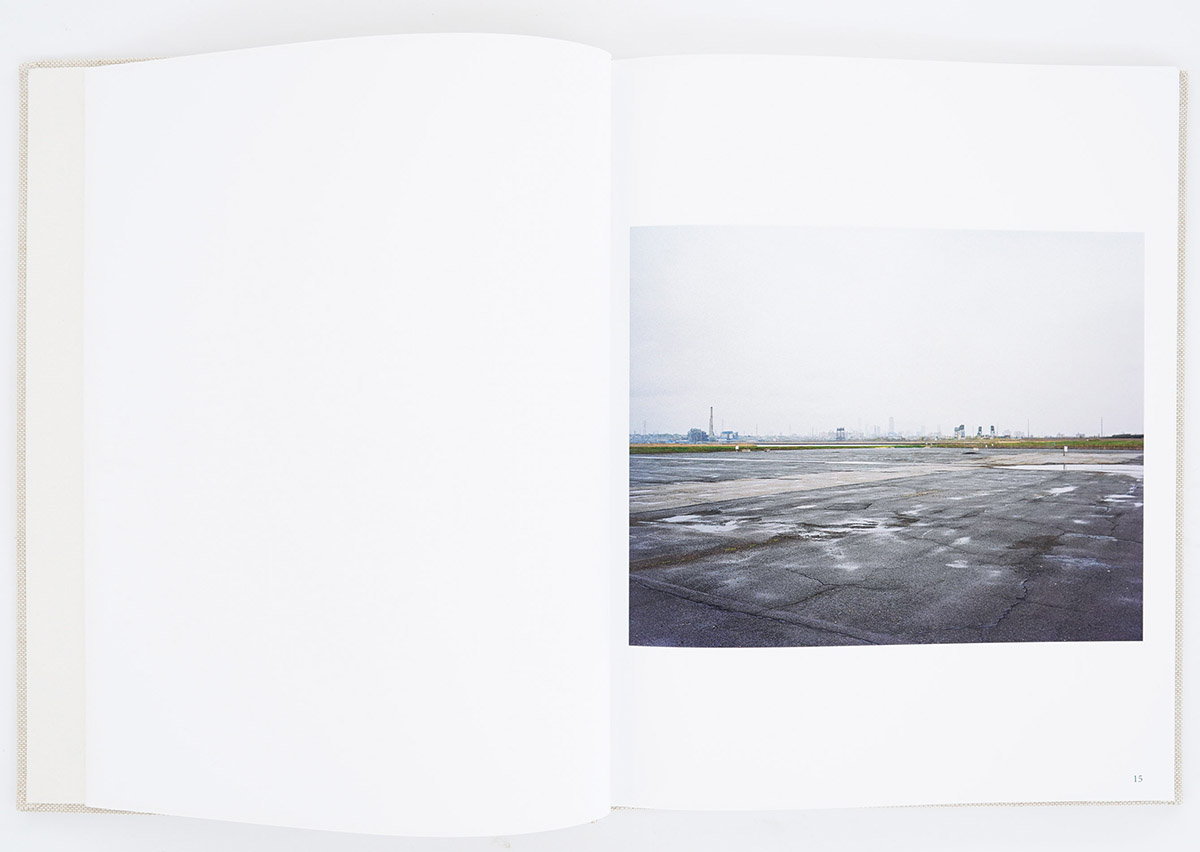
The first photograph in Nicholas Pollack’s book, Meadow, is captioned “Empty lot, Kearny, New Jersey, 2017.” Although it displays an ostensibly vacant lot devoid of people or cars, it brims with subtle content. This photograph serves as a fitting prelude to Pollack’s overarching theme: there’s always more than meets the eye. Throughout the book, Pollack’s images grapple with the paradoxes and nuances of places that belie their superficial appearances. His lens unearths hidden truths, which, although omnipresent, often remain unnoticed. In this endeavor, Meadow transforms into a fusion of exploration, reflection, and appreciation of place.
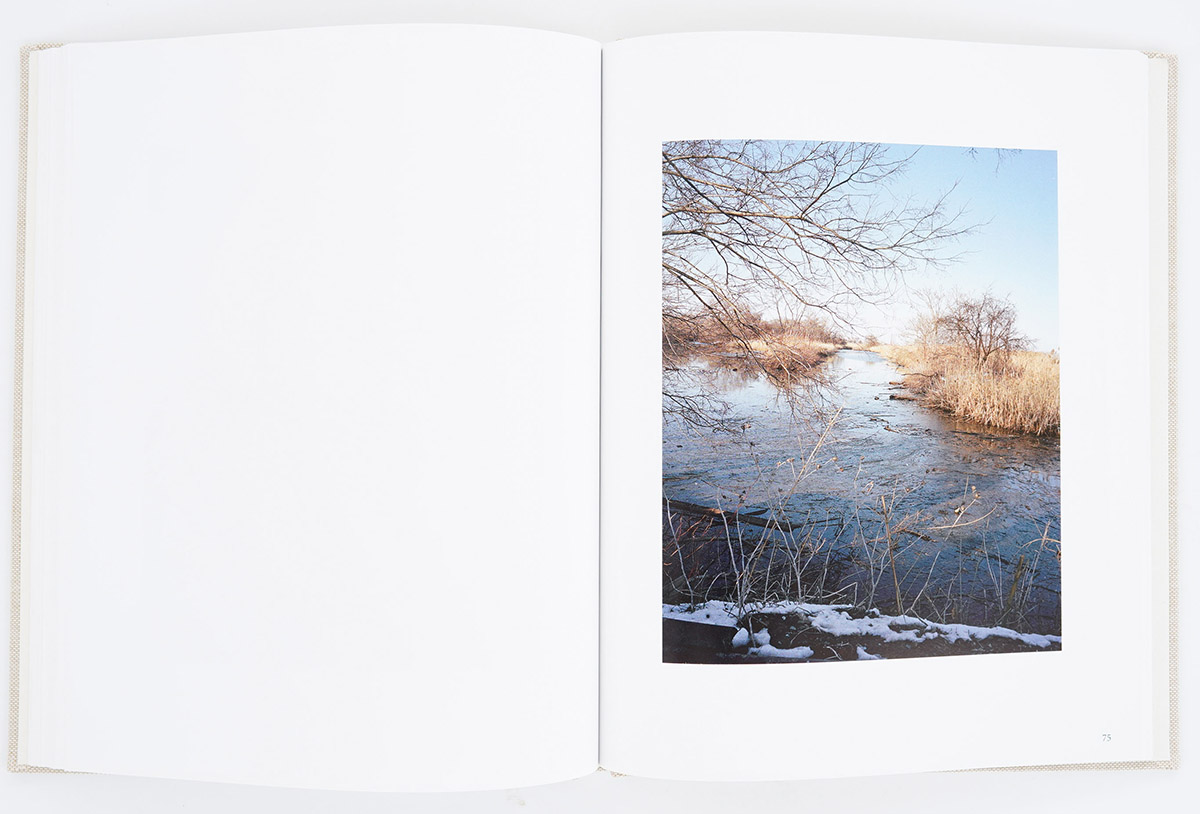
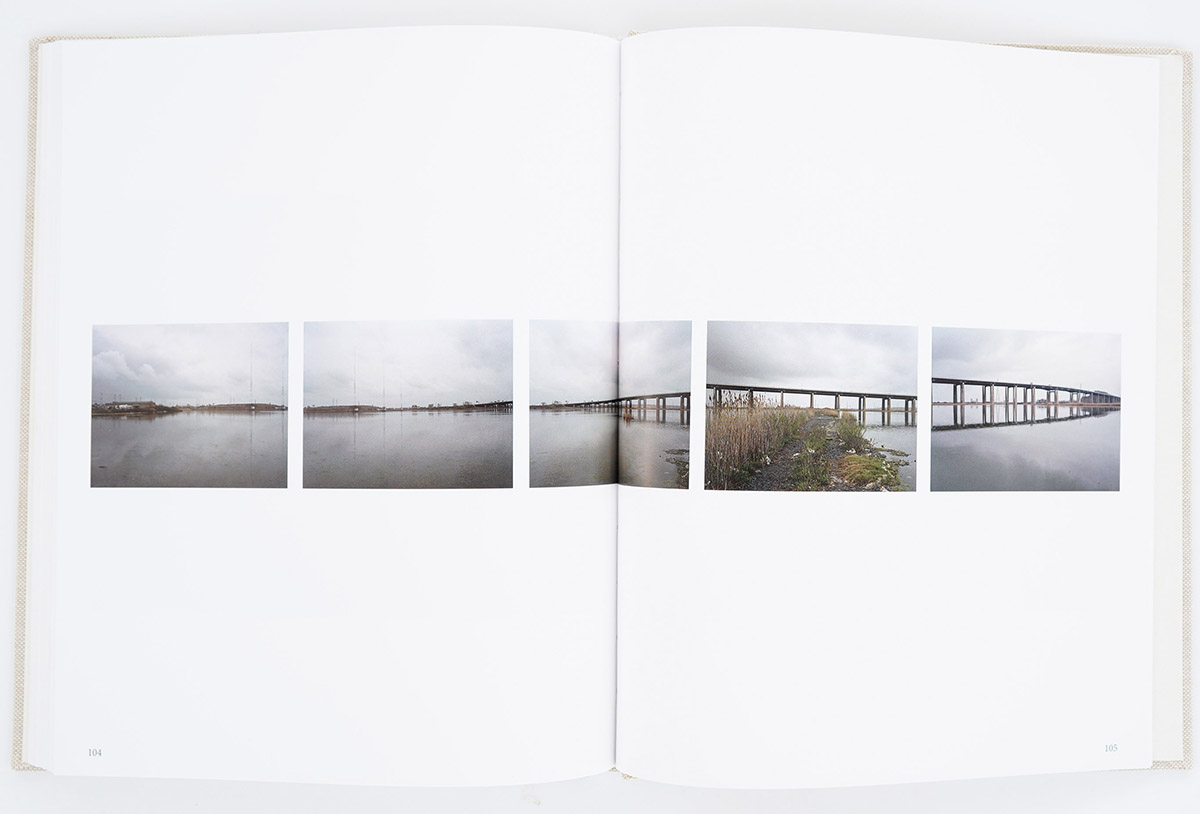
This “place” refers to the Meadowlands of New Jersey, where freshwater rivers merge with the Atlantic’s saline waters. By juxtaposing portrait with landscape photography and shooting at various times—day, night, across seasons—Pollack skillfully maximizes the potential of his fifty-two images.
The collection resonates with an undercurrent of tranquility. Each shot, meticulously framed, reflects the dedication spanning the project’s timeline (2015-2020). The photographs exude a fervent advocacy without ever coming across as didactic. They gracefully tread the line between documentary and art, with a poetic undertone, subtly yet persuasively conveying their messages.
Central to Meadow is the celebration of community in a locale often overlooked by its neighbors. Pollack’s intimate portraits bear testimony to the deep connection he fostered with the community. Specific portraits, such as those on pages 29 and 31, epitomize this connection. Group images further portray the community’s warm embrace of Pollack’s presence. It’s easy to envision Pollack sharing leisurely moments with them post-shoot—perhaps savoring a cold beer or partaking in a domino game.
Although the portraits underscore the book’s emphasis on communal bonds, Pollack’s landscape shots are equally noteworthy. Without the advantage of grand vistas, he expertly harnesses visual elements to craft images of remarkable aesthetic caliber. In his hands, everyday scenes receive a sophisticated visual interpretation. Each photograph in Meadow is a thoughtful testament. Readers depart with a heightened appreciation for Pollack’s craft and commitment, and a newfound realization of the vibrancy teeming on the fringes of obscurity.
Interestingly, “Empty lot,” despite being the book’s opening photograph, is placed on page fifteen, preceded by three essays. These essays, diverse in their scope and depth, enrich Meadow with added context and dimension. Concluding the book, Pollack shares a personal anecdote, encapsulating his profound engagement with the Meadow community.
Spanning half a decade, Meadow is, among other things, a testament to Pollack’s passion. Seamlessly interweaving portraiture with landscapes and the commonplace, he offers an incisive portrayal of a place that might otherwise fade into oblivion. Nicholas Pollack’s Meadow is not just a photographic journey—it’s an eloquent narrative that enhances our understanding and appreciation of the world around us.
_______
Rudy Vega is a Contributing Editor and resides in Irvine, CA. He is a fine art photographer and writer.
_______
Nicholas Pollack – Meadow
Photographer: Nicholas Pollack (based in Brooklyn, NY)
Publisher: Hirmer Verlag GmbH, Munich, Germany; Copyright 2022
Essays/Texts: Nicholas Pollack, Robert Sullivan, John Stilgoe, William Shullenberger, Yi-Fu Tuan, Bill McKibben
Language: English
Hardcover book, Offset printing, 112 pages; printed in Italy by Trento s.r.l., Paper: gardamatt art 150g/m, 10.25 x 8.25 inches; ISBN 3777439940, 9783777439945
Editor: Nicholas Pollack
Book design: Nicholas Pollack
_______




Articles and photographs published in the PhotoBook Journal may not be reproduced without the permission of the PhotoBook Journal staff and the photographer(s). All images, texts, and designs are copyright of the authors and publishers.
 PhotoBook Journal