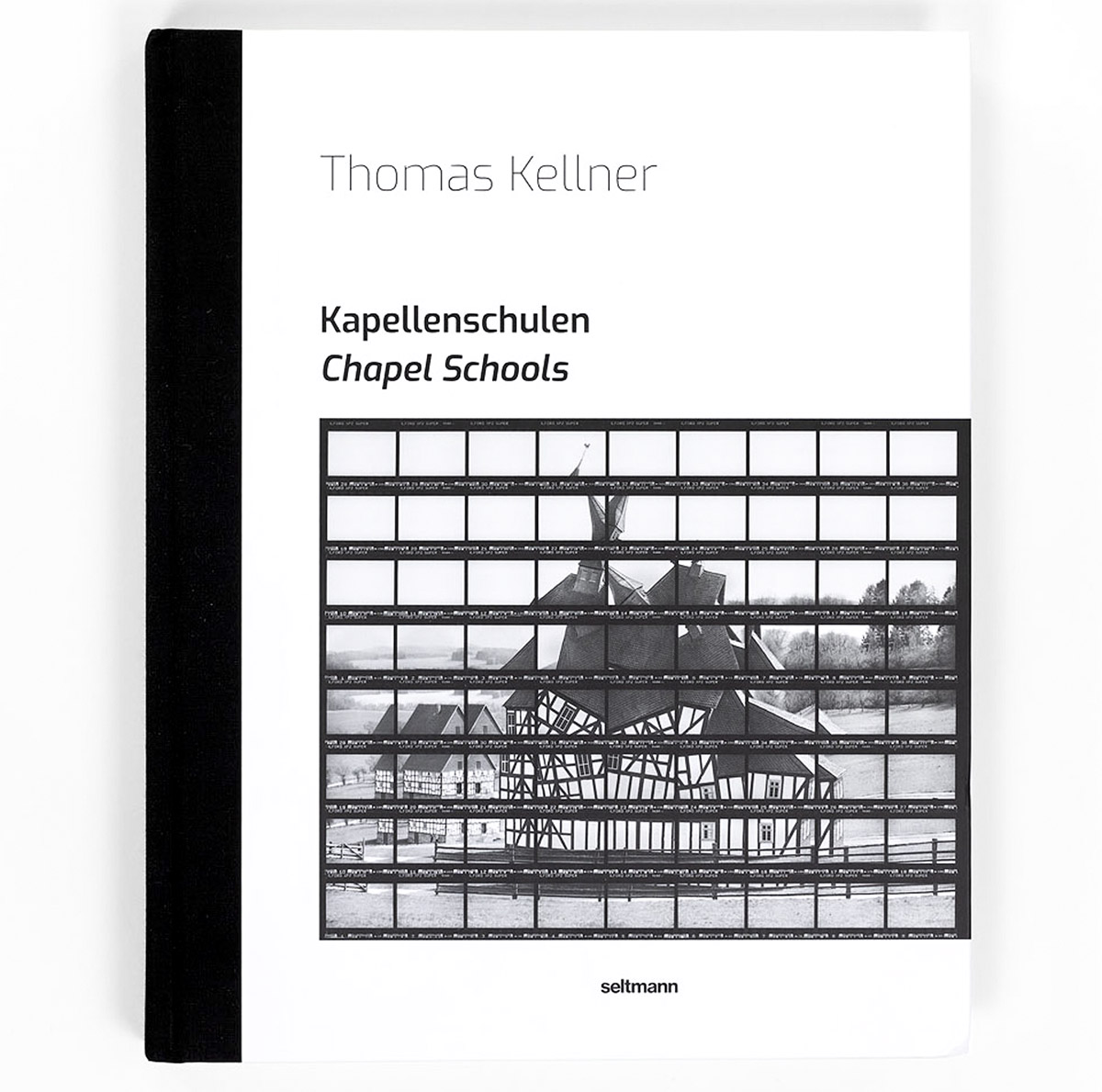
Review by Paul Anderson •
Since 1997 Thomas Kellner has been exploring the artistic possibilities of the photographic film contact sheet, turning the grid structure of the sheet into his artistic playground. He designs and sequences the contact sheet frames in order to build dancing deconstructions of a larger scene. His prior deconstructions have included the Grand Canyon, the Tower of London, and other iconic places.
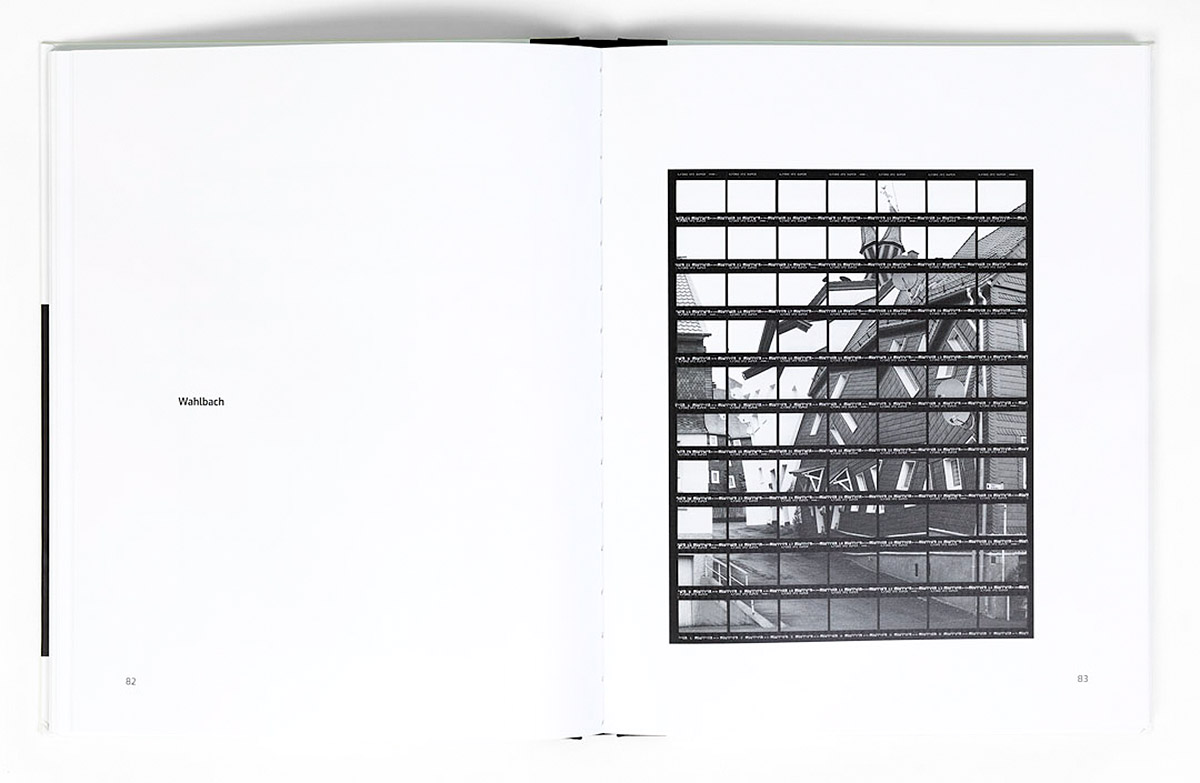
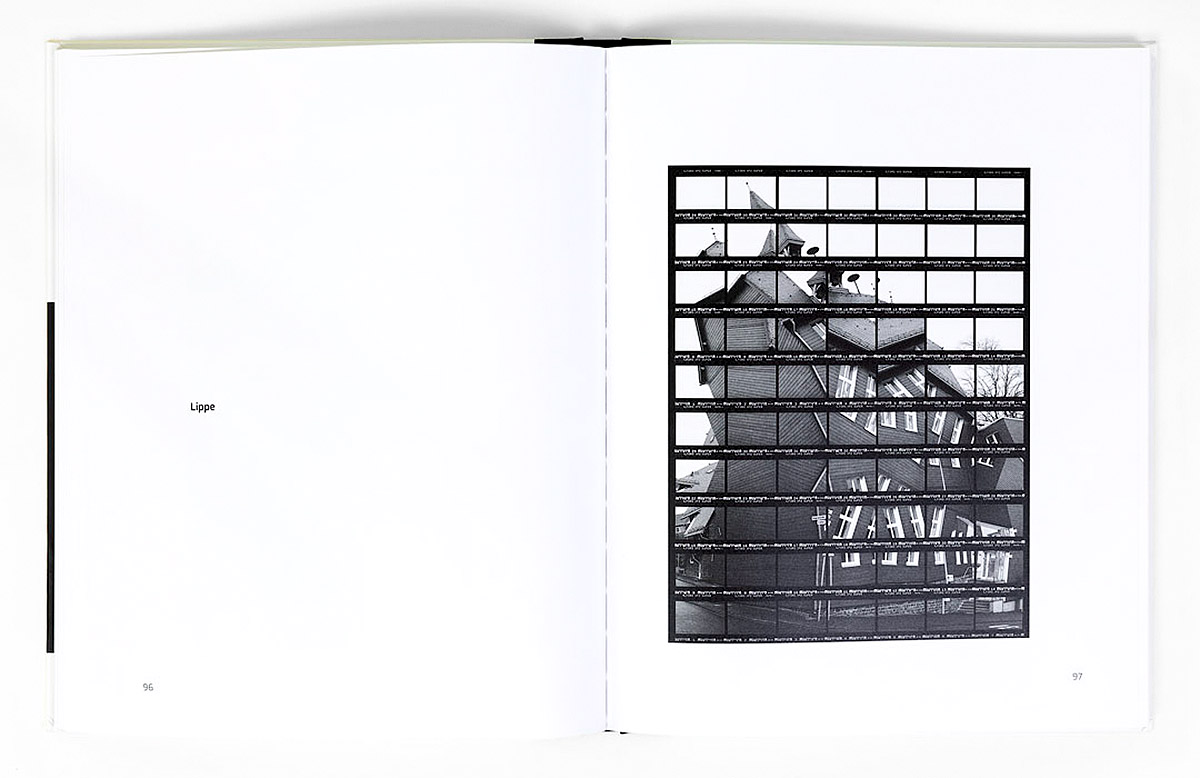
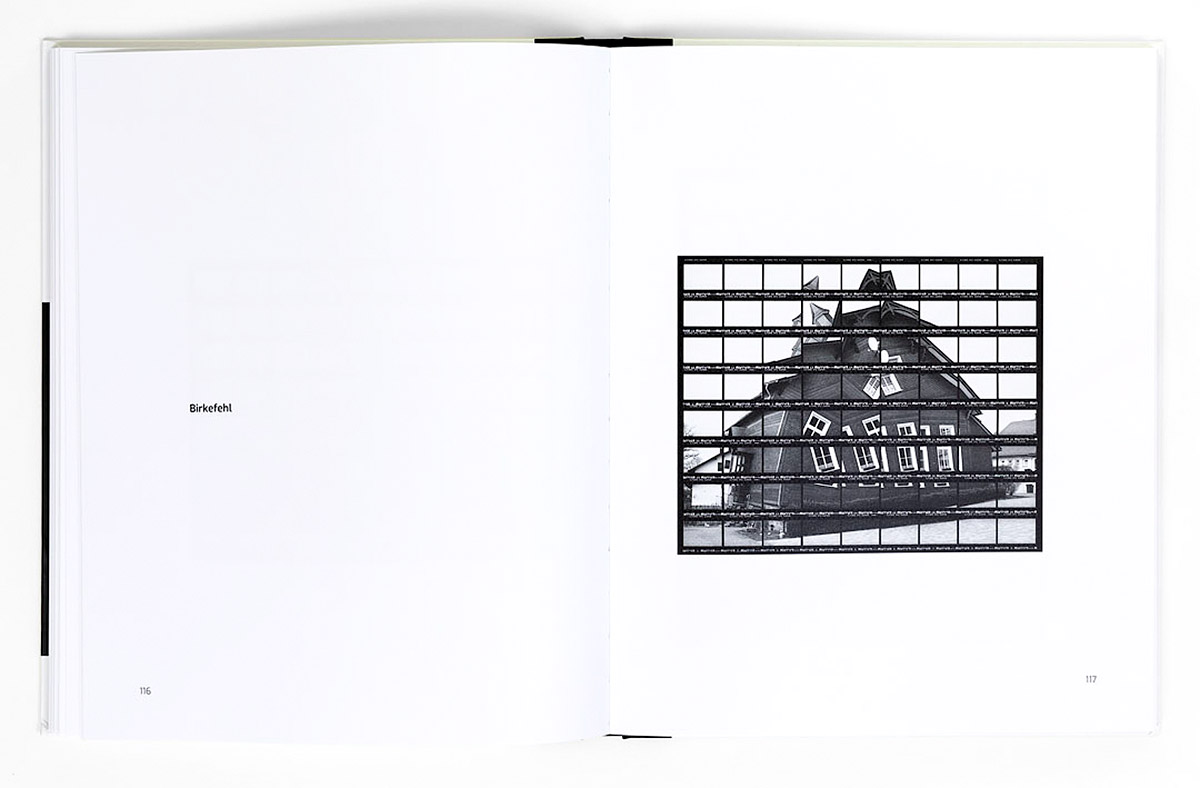
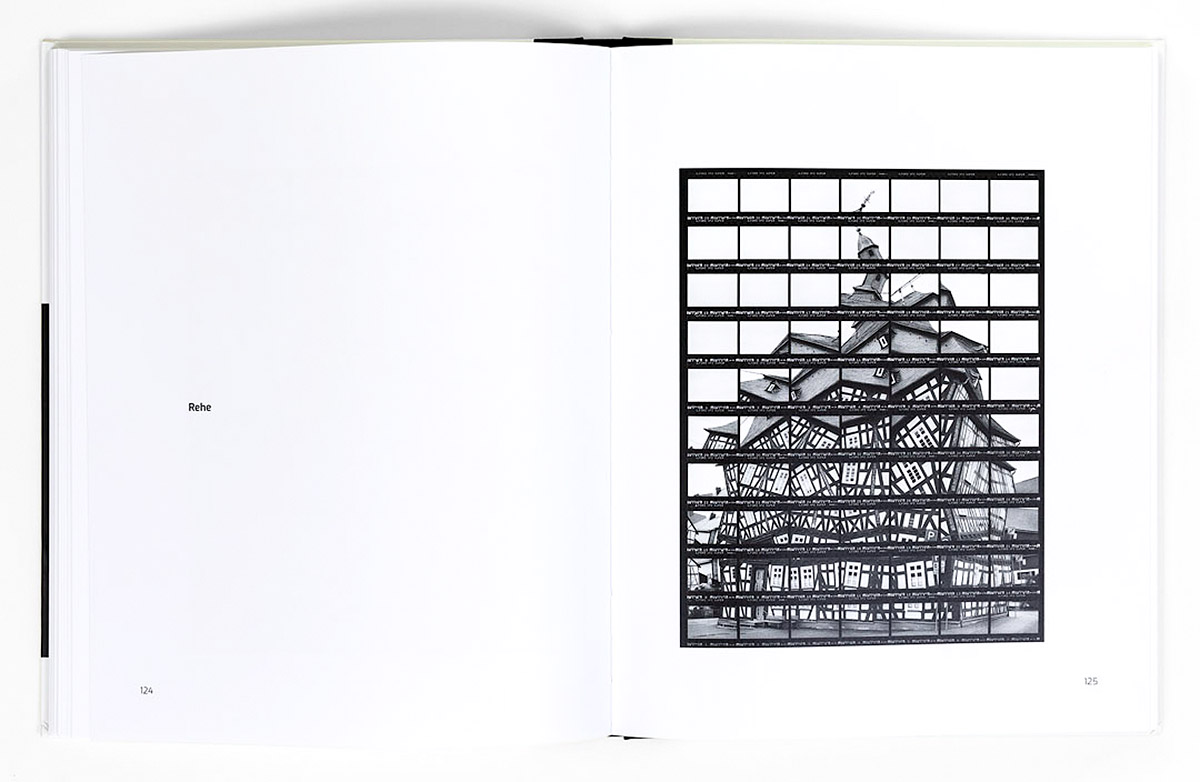
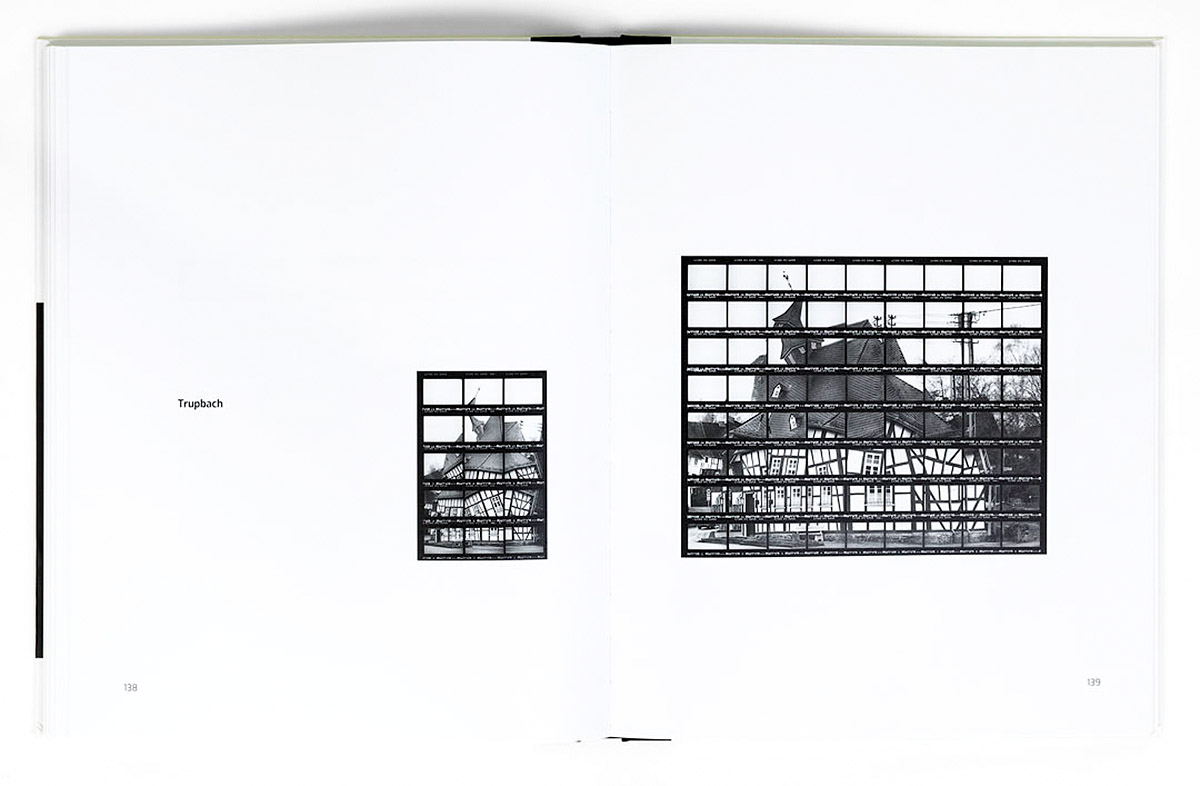
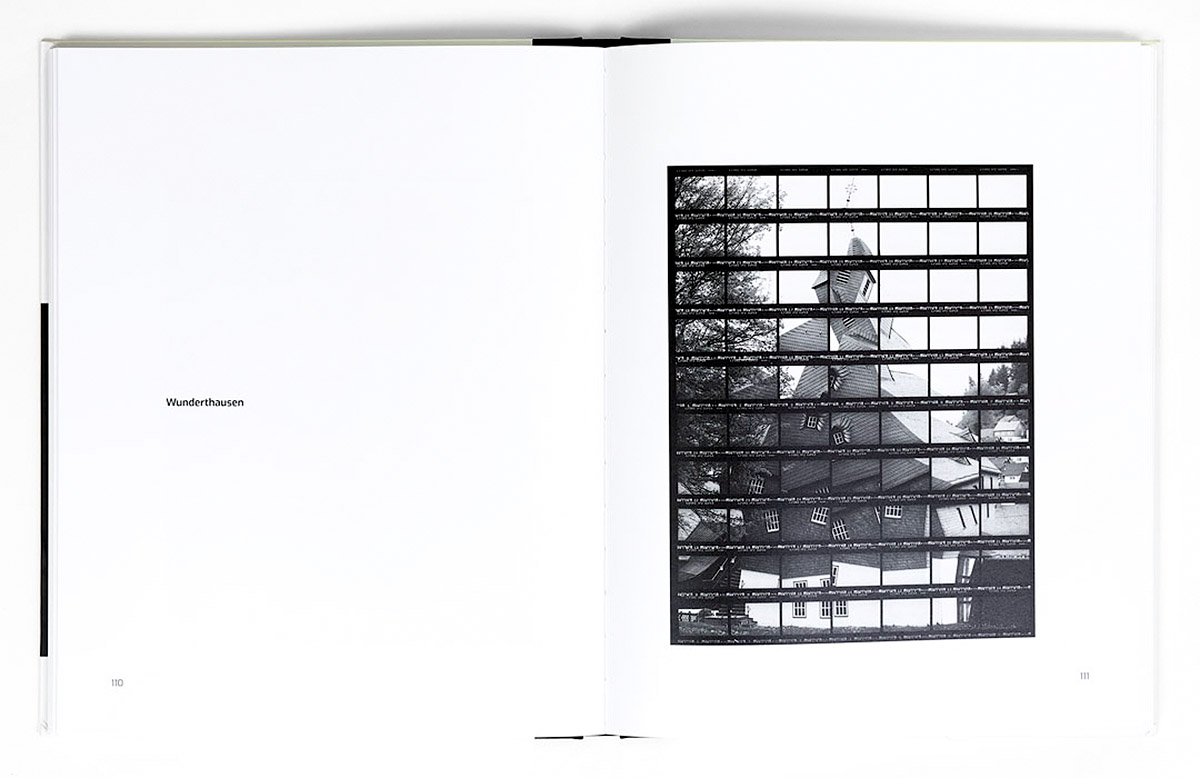
In this 2022 photobook Kapellenshulen (Chapel Schools), Kellner turns his attention to 49 chapel schools in the Siegerland area of Germany, where he lives. Chapel schools originated in the late 1500’s as a way to improve the literacy of the local population. This movement was a precursor to today’s basic elementary school education. Under an education mandate set by the regional ruler, religious buildings of that time came to be used for both church services and for teaching. The schoolroom of these chapel schools was usually separated in some way from the sanctuary. The buildings were typically of half-timber construction with slate roofs, offering Kellner a photogenic structure for his black-and-white contact sheet aesthetic.
Throughout Europe, but especially in the north and west, there was a general trend toward improving the literacy of the populace beginning in the late 1500’s and extending into the 1800’s[1]. This was an important initiative that enabled subsequent advances in wealth, social structure, culture, technology, and general well-being. Many of these chapel schools have been preserved as historically significant structures, and they continue to serve their communities in a variety of ways today. Introductory essays in the book provide historical and cultural background information about the chapel schools. A section at the back provides reference photos of each of the 49 chapel schools in the book, along with a brief description of their history.
First, I look strictly at the artistic treatment of the chapel schools. Later I comment on the book as a fanciful survey of Siegerland chapel schools.
In her included essay, Dr. Andrea Gnam makes a very insightful comment about Kellner’s artistic work:
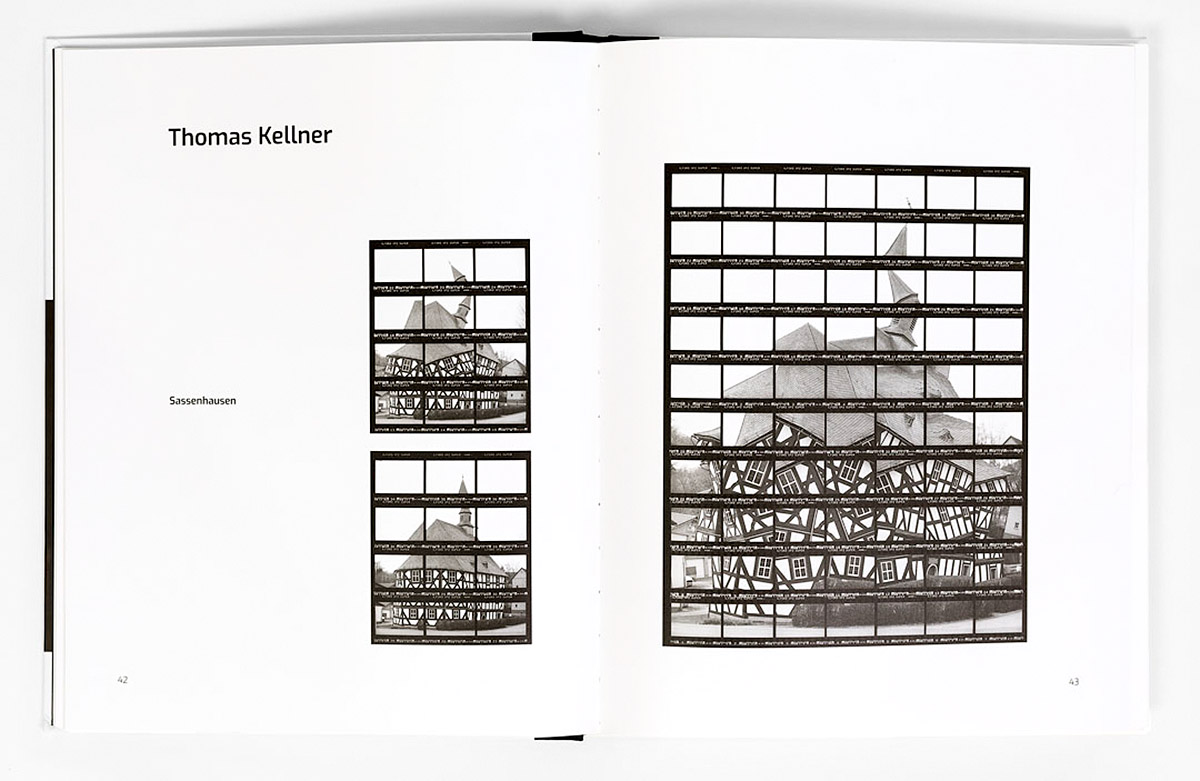
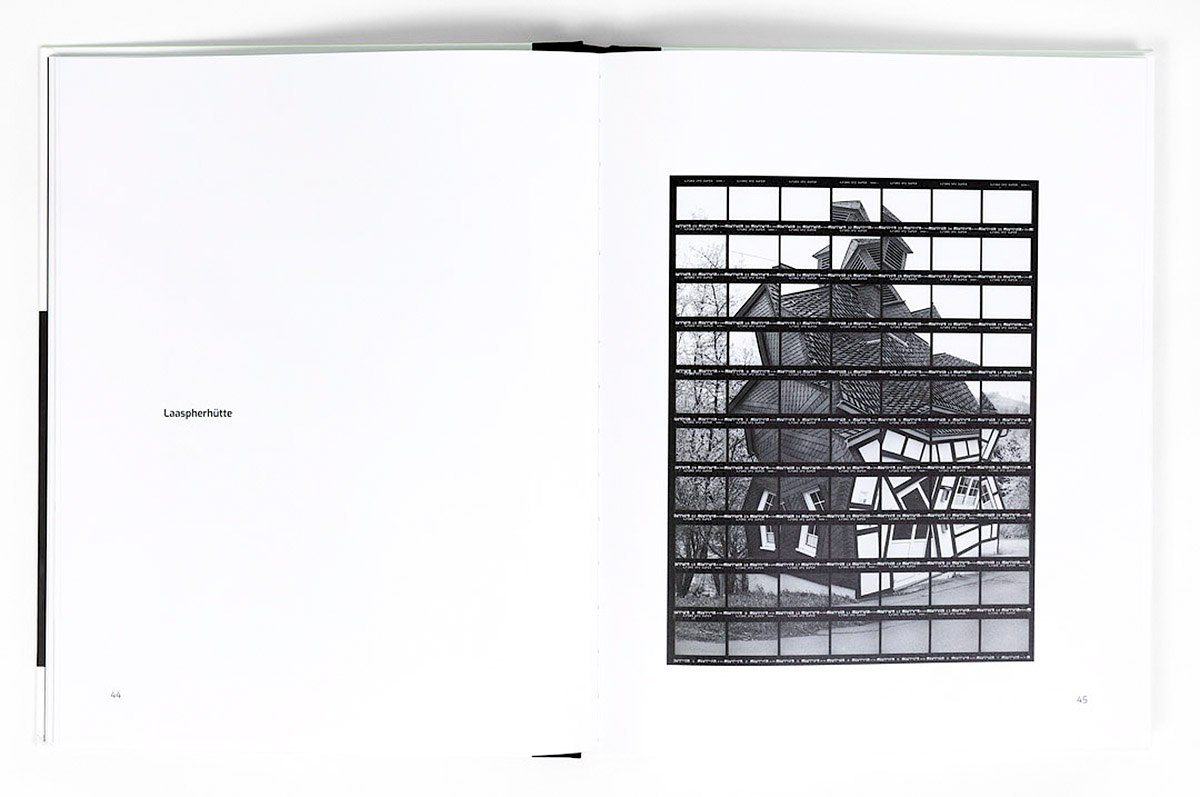
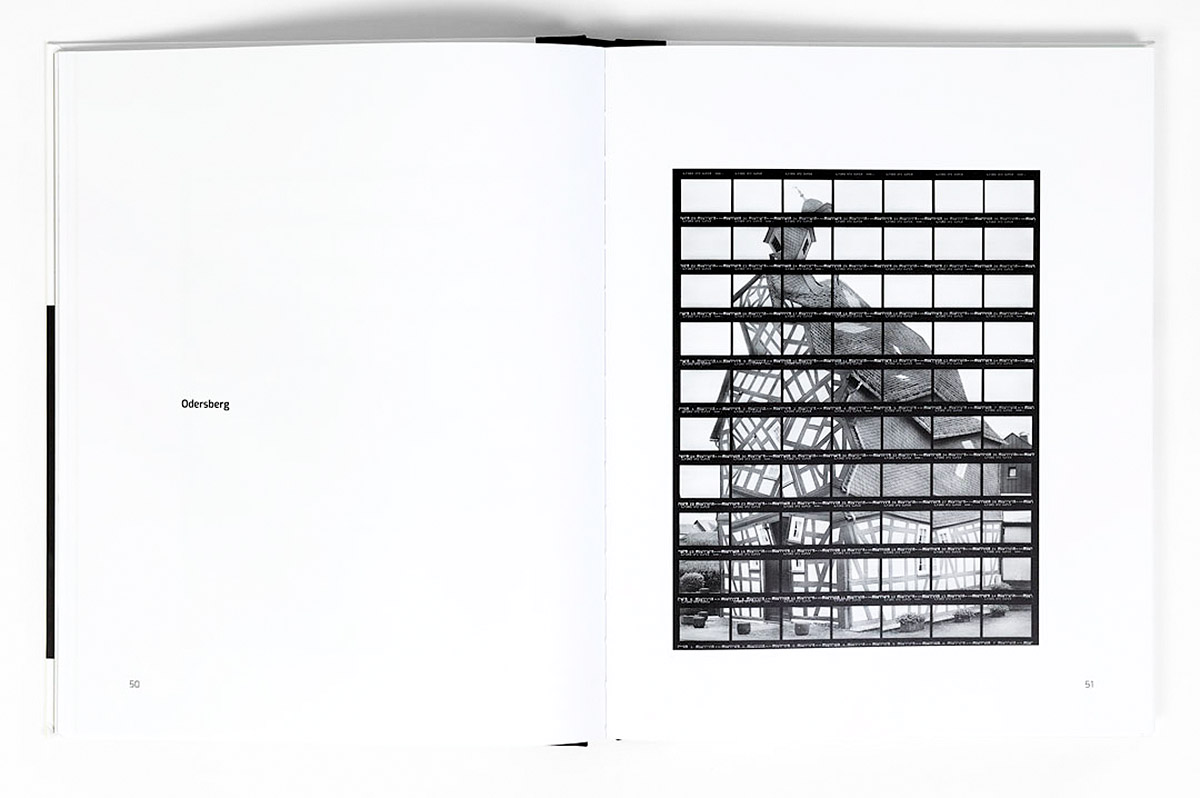
“The 70 individual frames (i.e. negatives), whose uniform grid is only arranged differently for the portrait and landscape formats, form a separate design element in all the images, and literally become building blocks for new structures. They grow out of the old buildings – bold, playful, modern, with a baroque swing …”
Baroque ‘swing’ indeed! When Thomas Kellner applies his process to the half-timbered walls, slate roofs, and steeples of these buildings, they do swing with a lively sense of motion. The amount is carefully controlled by the artist. The lower parts of a building are almost static in their presentation, with the swing increasing as one’s eye moves up the grid structure. The tilt of each exposure typically reverses direction from frame to frame, both horizontally and vertically, adding to the helter-skelter sense of motion. As Dr. Gnam also points out, the steeple becomes a very important design element of the overall composition. A single steeple in the original often becomes multiple steeples in the grid, its segments wildly tipping back and forth. Kellner also has a way of squaring up the deconstruction of a chapel school, removing keystone effects and presenting us with a geometrically adjusted image. He makes minimal changes to buildings and trees that might be in the background, restricting his imaginative treatment to the chapel school itself. Some of his deconstructed chapel schools even seem to be sliding sideways off the page, which is a very nice effect.
There are more than enough images in the book to showcase the artist’s intricate and creative process, perhaps too many. Although there is variety, the images can become repetitious, and a few of the treatments are too static. It may be that some of the chapel schools do not have enough of the necessary elements – half-timbered walls, slate roofs, windows, etc. – to make a fully successful and dynamic deconstruction of them all.
This book could also be considered as an imaginative survey of Siegerland chapel schools and their societal function. The book draws attention to them as historically important buildings. The spread of literacy to the masses, even if initially done for religious purposes, is a serious and important subject. This treatment of chapel schools is arguably too whimsical to make this the book’s major point, but the inclusion of informative essays, chapel school reference pictures, and historical text does make it a useful and even entertaining reference. In this context, the number of chapel schools presented in the book is appropriate.
Clearly a significant amount of careful thought and work went into the production of this book. It is beautifully made, and the prints are remarkably uniform in style and tone. Ample background material is provided to inform the reader about the main subject.
This book will be of interest to those who enjoy architectural photography and those who are interested in unusual artistic processes. This book will also be of interest to residents of Germany and especially the Siegerland region who are curious about its local cultural and history.
[1] https://brewminate.com/the-growth-of-literacy-in-western-europe-from-1500-to-1800/
____
Other reviews of Thomas Kellner’s books in the PhotoBook Journal: Fachwerkhäuser des Siegener Industriegebietes heute, The Big Picture, Tango Metropolis
____
Paul Anderson is a photographer/digital artist, working in Hermosa Beach, CA
____
Kapellenschulen (Chapel Schools) – Thomas Kellner
Photographer: Thomas Kellner (born in Bonn, Germany; currently resides in Siegen, Germany)
Publisher: Seltmann Publishers, Berlin, Germany, Copyright 2022
Written essays: Dr. Andrea Gnam, Dr. Stefanie Siedek-Strunk, Isabell Eberling, Chiara Manon Bohn
Text: German, English
Hardcover, 24 x 30 cm, 208 pages, 49 plates; index, author and photographer biographies, references, chapel school reference photographs and historical descriptions, acknowledgements, printed by Seltmann Printart, edition of 500, ISBN 978-3-949070-39-6
Editor: Oliver Seltmann
Design: Peter Büdenbender
____
Articles and photographs published on PhotoBook Journal may not be reproduced without the permission of the PhotoBook Journal staff and the photographer(s).
 PhotoBook Journal
Leave a comment