Review by Paul Anderson •
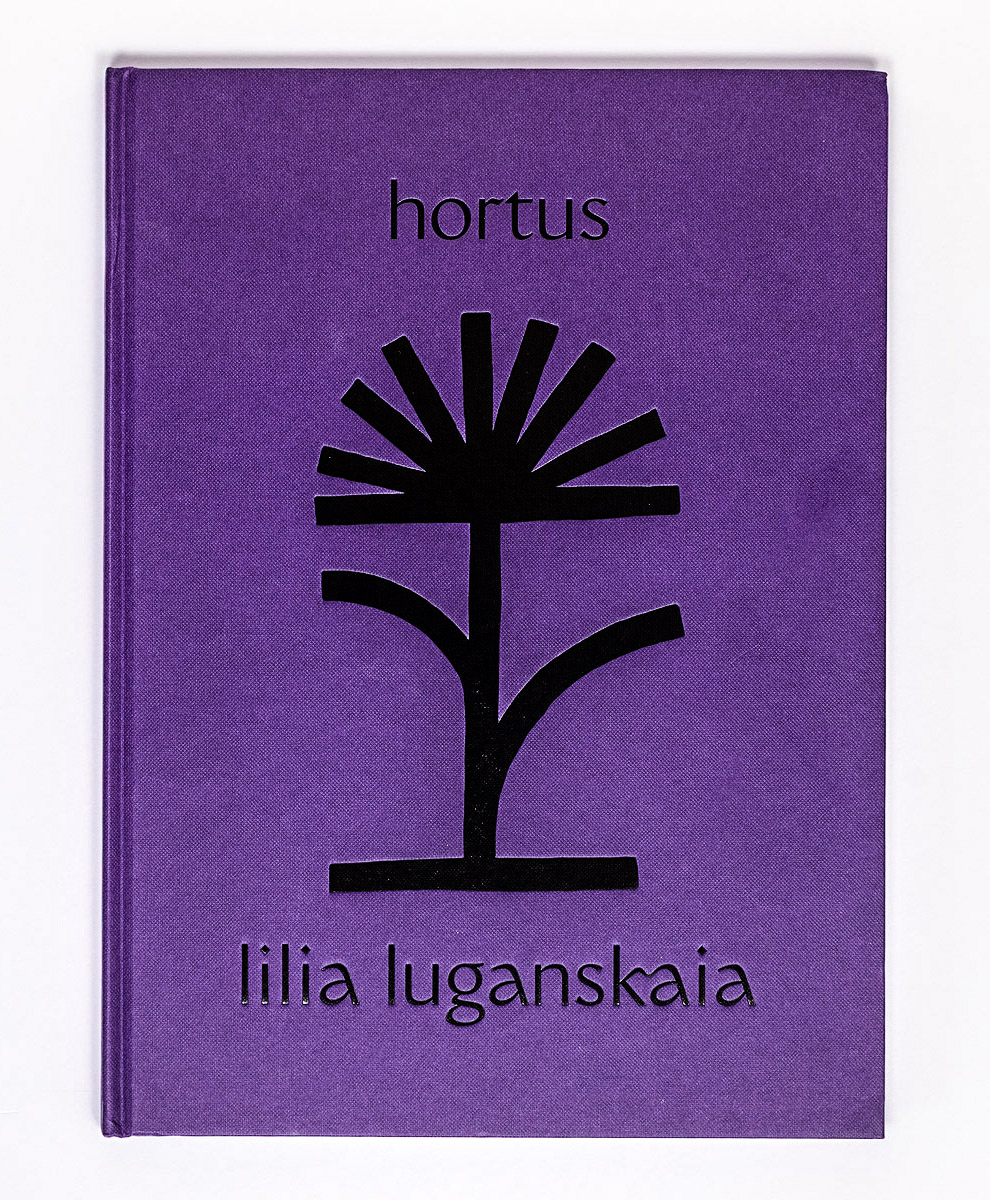
In the nineteenth century “sentimental flower books” were popular among Victorian-era women. Besides being entertaining, these books served to advance their education and standing in society. These books included information on types of flowers, their romantic meanings, associated them with poetry, and provided stylized illustrations. Using these books as inspiration, Lilia Luganskaia created a modern photobook variation called Hortus. She designed sparse still life floral arrangements and photographed them for the book. The arrangements incorporate mirrors as the primary sculptural element, and these act as a scaffold to hold flowers and other botanic elements.
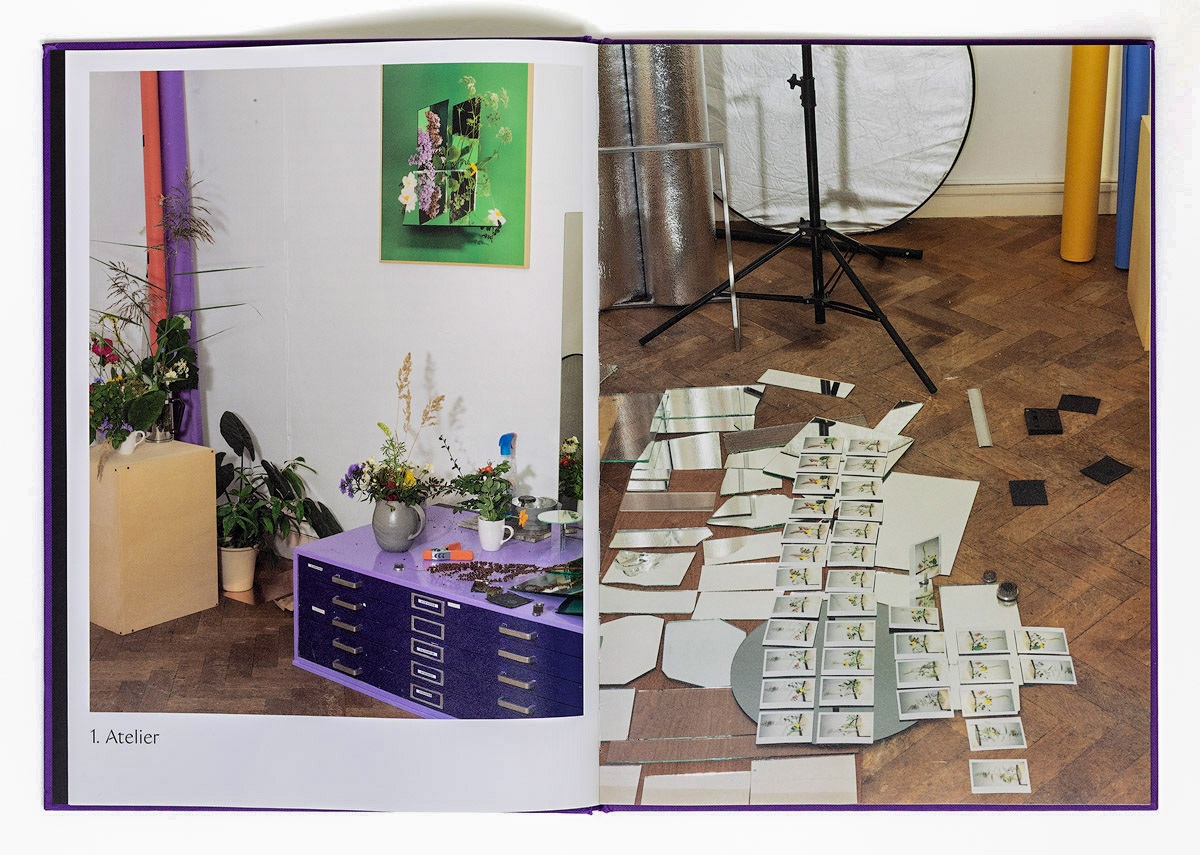
The book opens with an essay by Joanna Cresswell which provides useful background information on sentimental flower books and how these relate to Hortus. The remainder of the book is divided into four sections. The first, “Atelier,” provides a brief look at the photographer’s studio space and a glimpse into her process. The second and main section is called “Rustic Oracle,” and features one large still life image for every month of the year. Besides thought-provoking titles, each of these images has an accompanying list of suggestive adjectives and poetic phrases that echo the poems and text found in the older sentimental flower books. The third section, “Temporary Mirror Sculptures,” consists of six mirror sculpture photographs. The fourth section is called “Twenty-four October Plants,” and is a set of 12 polaroid studies of table-top floral arrangements.
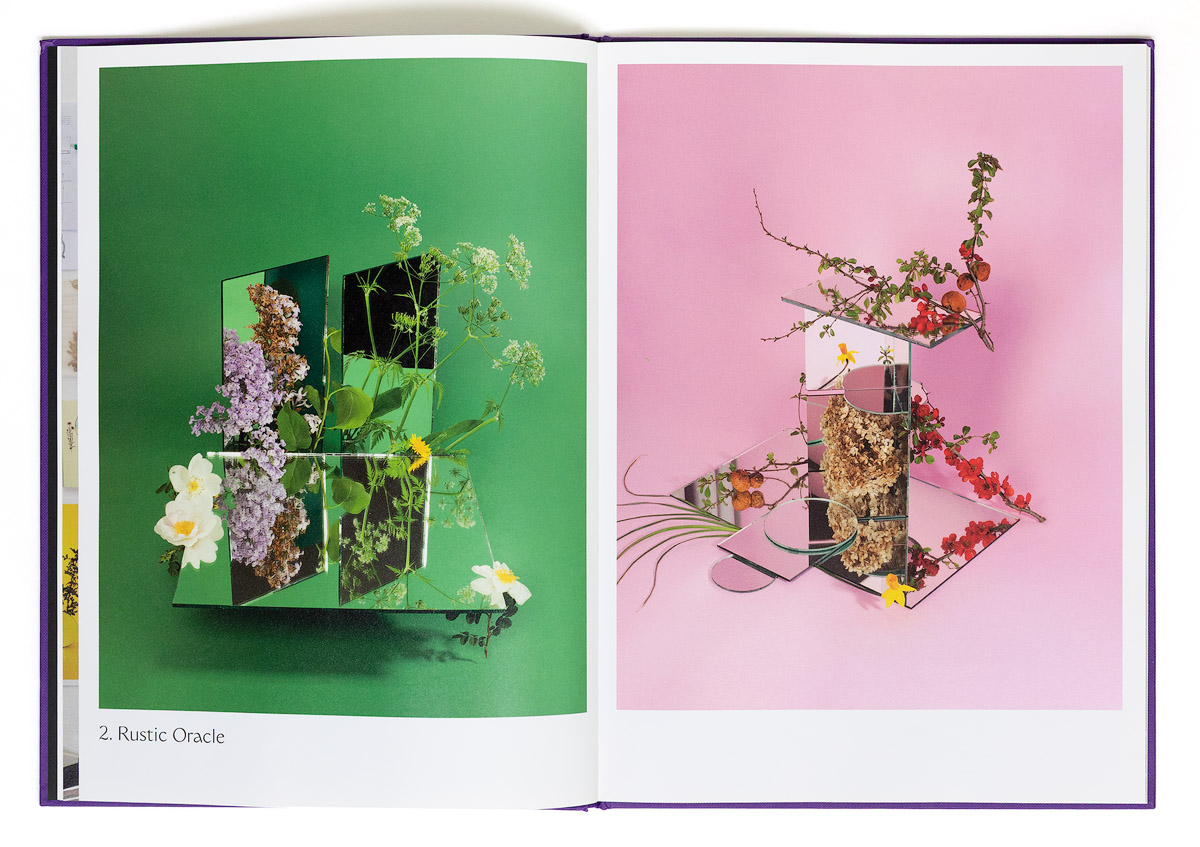
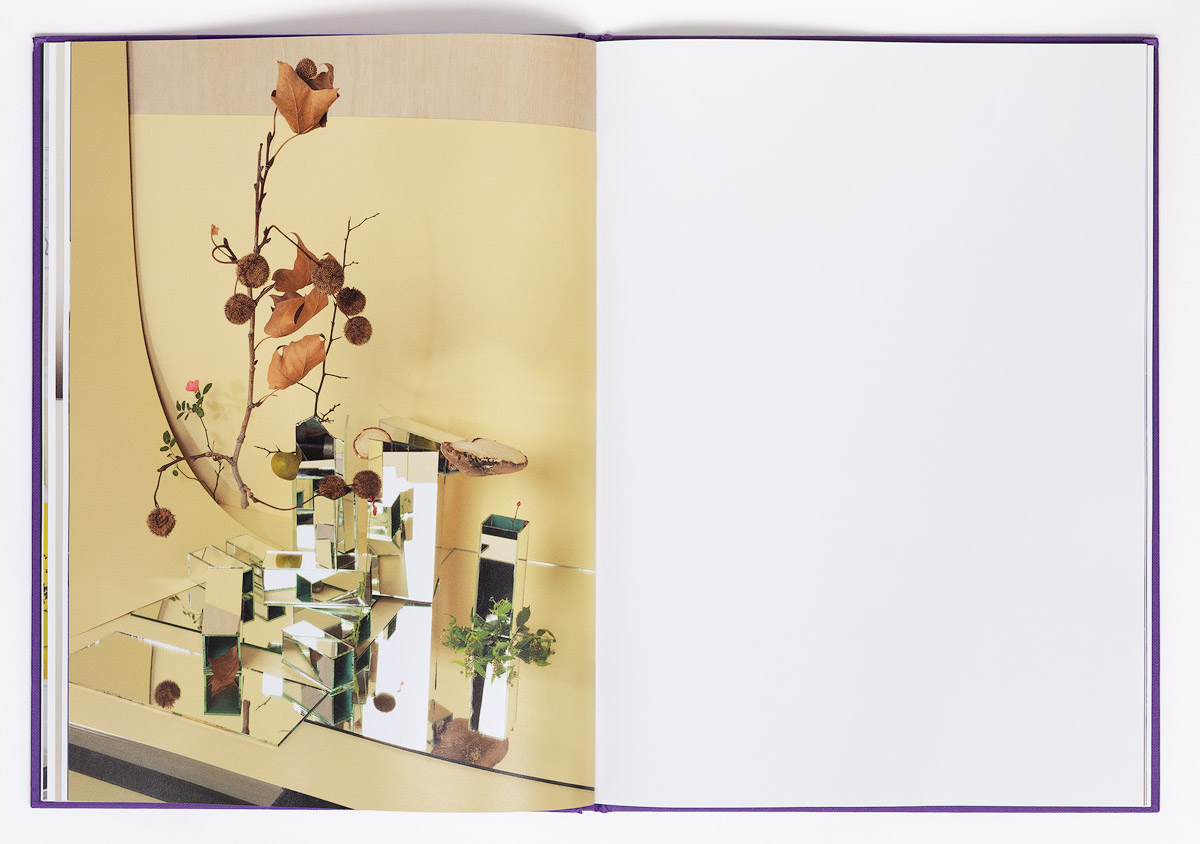
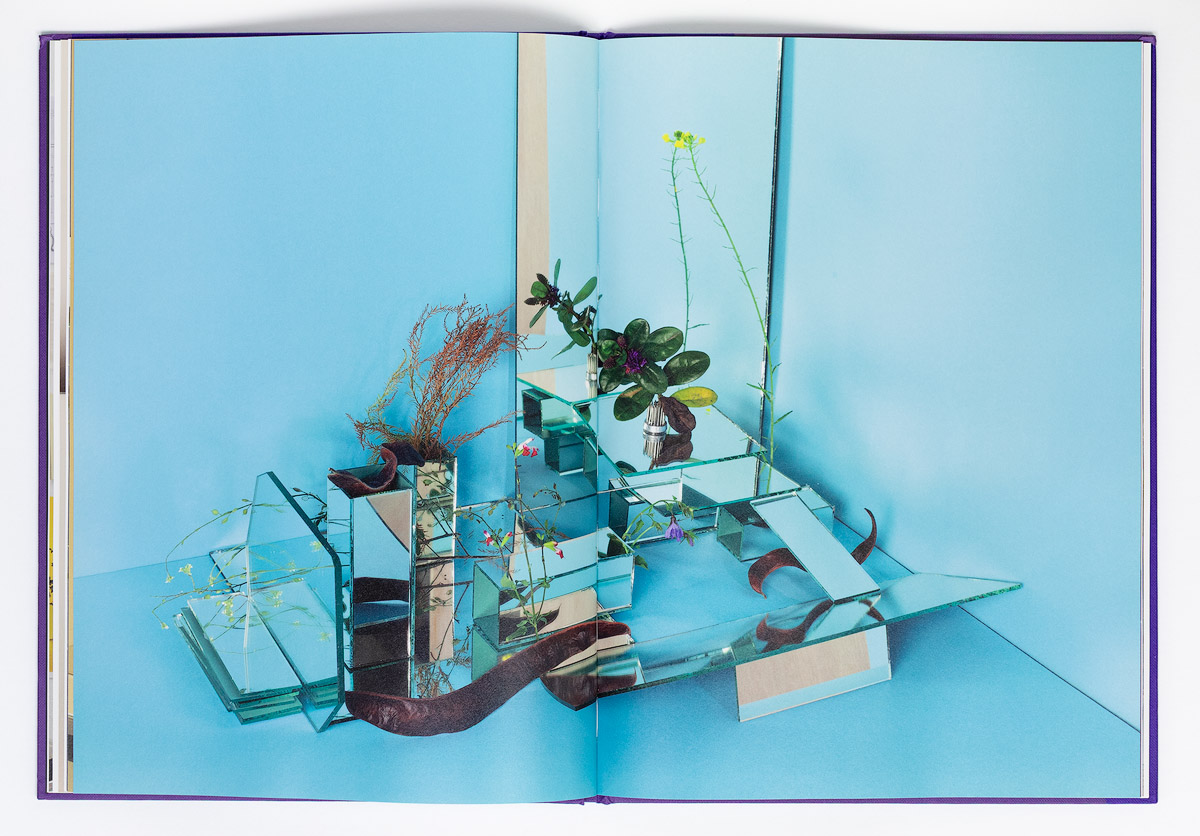
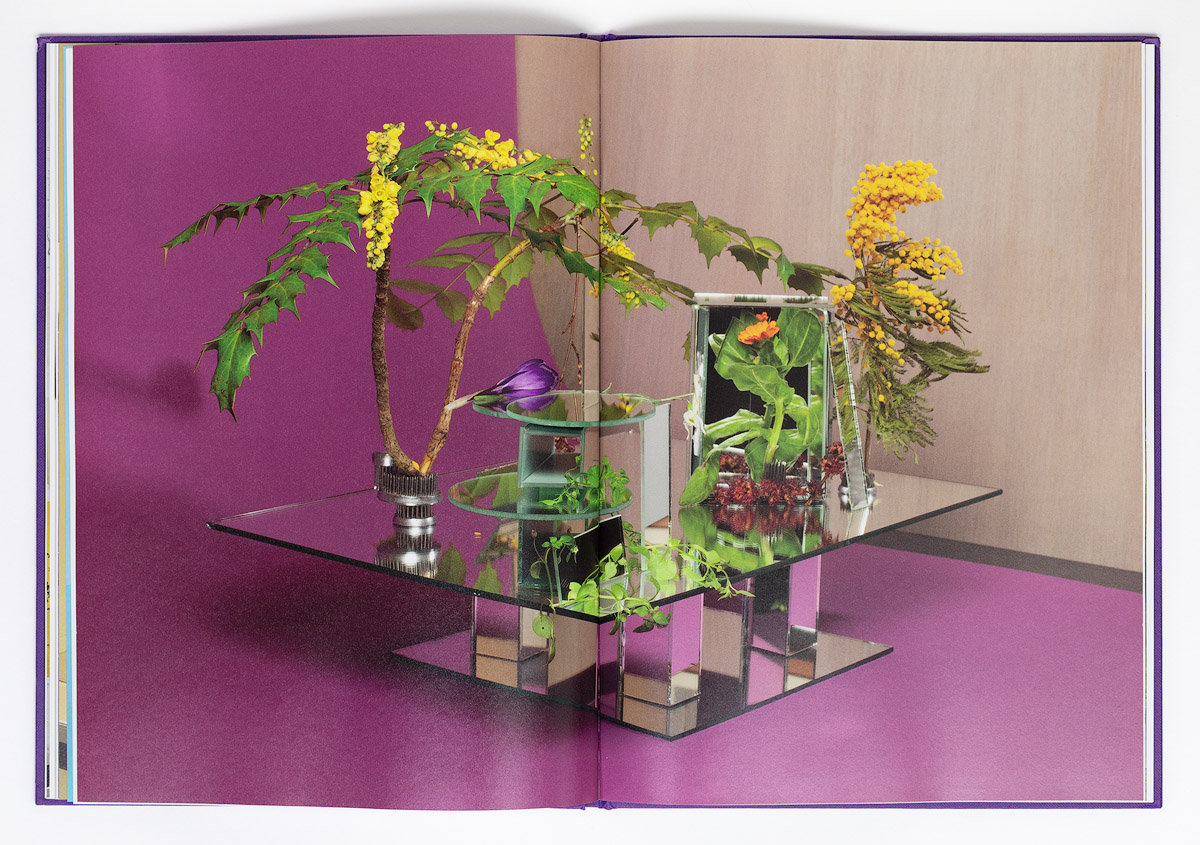
The “Rustic Oracle” section is the most engaging, and will be the focus of this review. As noted earlier, there are 12 plates in this section, one for every month of the year. Each month Luganskaia collected plants that were naturally occurring in her West Amsterdam neighborhood, and these were used to build the compositions for that month. This section gets its name from the title of the first plate, which represents April. It is an image formed with mirrors that reflect lavender, white and yellow flowers, all against a green backdrop. The mirrors cause the image space to open up towards the viewer, giving it a dramatic multi-dimensional feel. Since an oracle can be “any person or thing serving as an agency of divine communication,“[1] one could easily view this still life as a divine spirit inviting the viewer to provide a question for its consideration.
All of the still life images in this section are studies in structural space, botanic form and color. The presence of the glass mirrors lend a metallic lightness to the overall compositions. The presence of flowers, branches, seed pods, and tree bark provide a contrasting organic element that adds subtle tension. Color selection is a key design element in any floral arrangement, as is the selection of a backdrop color. Here, colors are used sparsely and are nicely balanced.
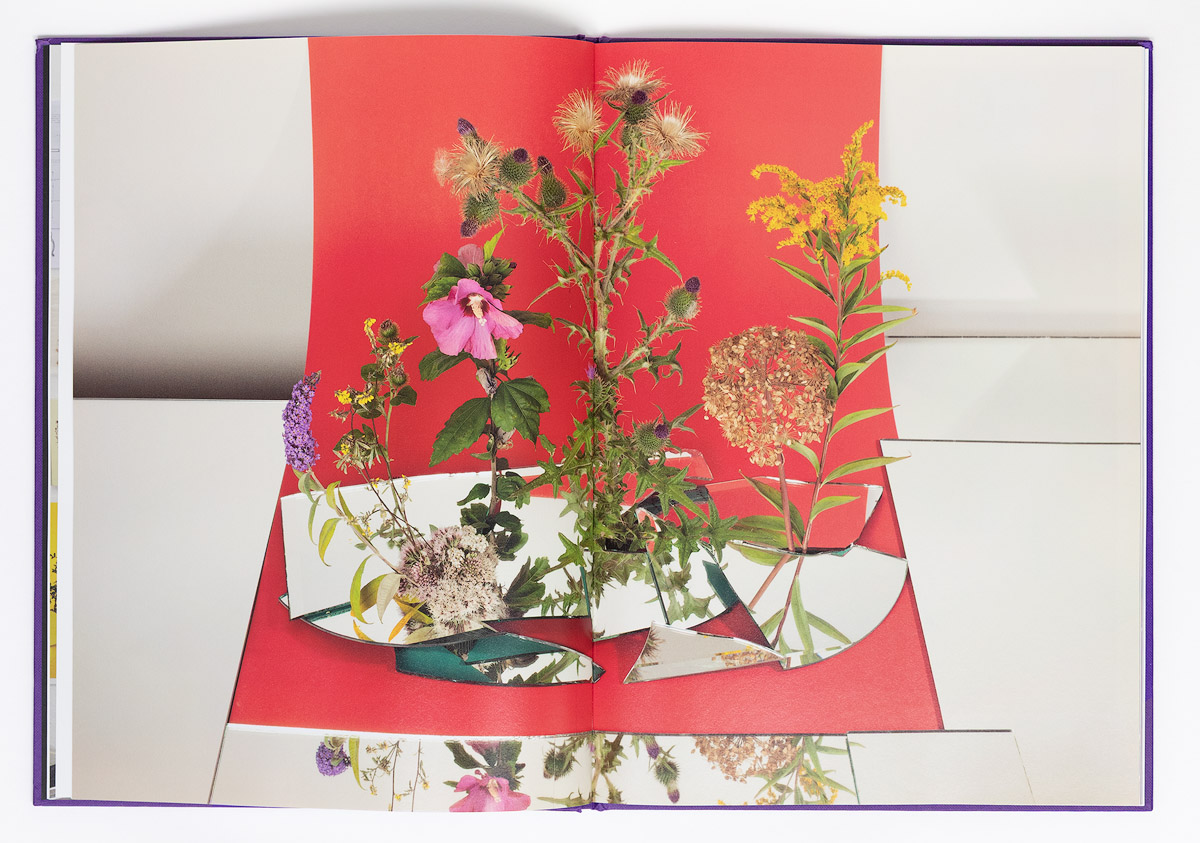
The compositions are very open and have visually interesting characteristics. In some of the images, the chosen mirror placement, camera angle and/or lens choice significantly flattens the image and creates a disorienting effect. One example is the plate for the July image, “War,” which is an arrangement on a red background. This image appears quite flat, much as the illustrations did in the older sentimental flower books. In the image for December, “Affection Beyond the Grave,” an arrangement on a blue background has a nice sense of vertical movement. Its triangular composition leads the eye up from a visually complex center to a single yellow flower at the top, which happens to be looking at its own reflection in an adjacent mirror. The image for January, “Endless Love,” is an image on a black background that looks very much like a modern glass and steel building complex complete with its own landscaping. There is a visual coherence across all the images, yet there is enough variety to hold the viewer’s attention.
These are well considered photographic studies of structural and botanic forms that echo sentiments found in earlier Victorian publications. This book would be of interest to those attracted to still life photography and those seeking photographic studies with historical connections.
Paul Anderson is a photographer/digital artist, working in Hermosa Beach, CA.
[1] The Random House College Dictionary, “oracle,” definition 6.
____________
Lilia Luganskaia – Hortus
Photographer: Lilia Luganskaia (born in Russia, currently resides in Amsterdam)
Design and cover illustration: Timo Kuilder
Text: Forward by Joanna Cresswell
Language: English
Self published, Printed by NPN Drukkers, Brreda © 2021
Hardcover binding, 33.7 x 24.7 cm; 38 pages, 41 images, index at back
Edition of 365 plus a special edition; both are numbered and signed; copies were still available in February 2026.
____________
Articles and photographs published in the PhotoBook Journal may not be reproduced without the permission of the PhotoBook Journal staff and the photographer(s). All images, texts, and designs are under copyright by the authors and publishers.
 PhotoBook Journal
Leave a comment