
Review by Gerhard Clausing •
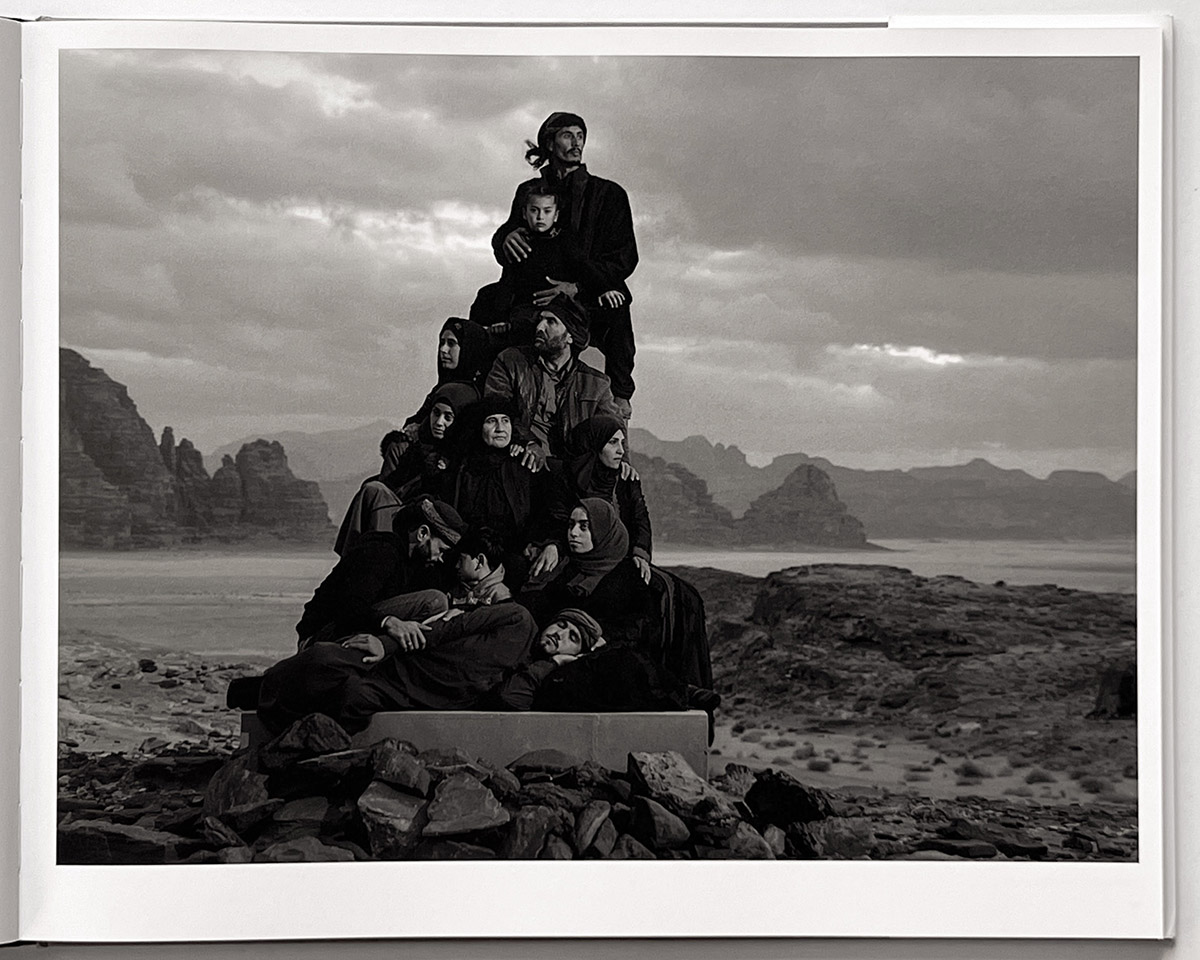
This photobook is the fourth volume of Nick Brandt’s epic series The Day May Break, and presents its most urgent and intimate chapter yet. Brandt turns his focus toward one of the most extreme settings of climate and humanitarian crisis: the arid deserts of Jordan, where displaced Syrian families navigate a landscape stripped of its water, history and security. This volume departs subtly from his earlier work; here groups of humans pose on stacked boxes in a stark desert terrain; these survivors of war and climate breakdown are also beacons of resilience. Human fragility and defiance are both evident in these magnificent arrangements.
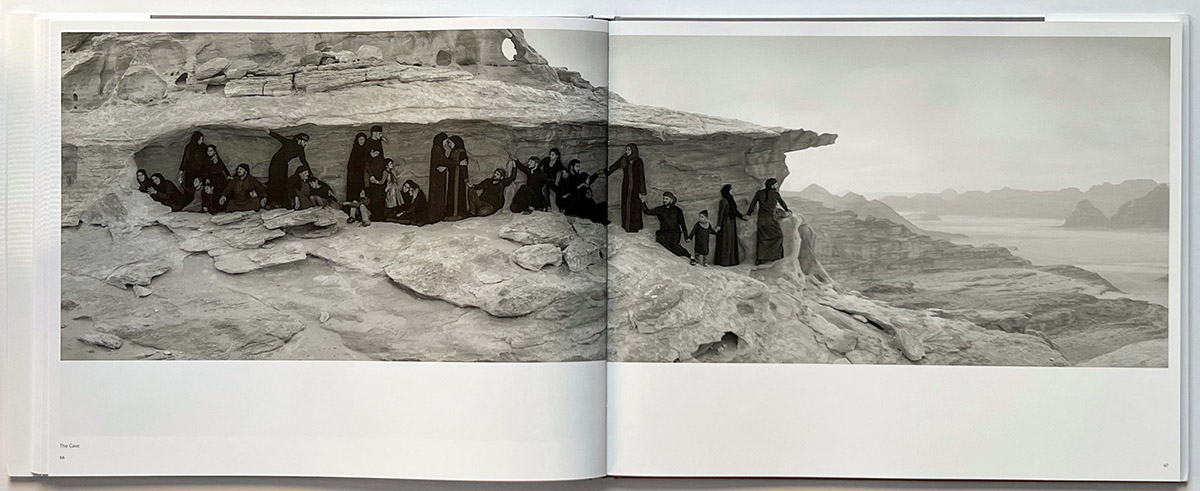
The monochrome photographs present deliberate and sculptural compositions. The tone is more collaborative, as Brandt invited his subjects into shared authorship of the image-making process, underscoring their agency rather than reducing them to victims. The book is exemplary in its production: generous trim size, fine tonal gradations, and an edited sequence that takes the viewer from family clusters in the desert to more solitary, reflective moments of gaze and place. There is a spatial stillness that seems haunting and real, often letting us observe the scenes in near-total darkness. The emotional tempo is more reflective, less theatrical than some of his earlier panoramas. The viewer senses not only collapse and loss but also continuity and connection. In one of the introductory essays Brandt himself notes that for this chapter he “wanted a show of connection and resilience – that in the face of adversity, when all else is lost, you still have each other.”
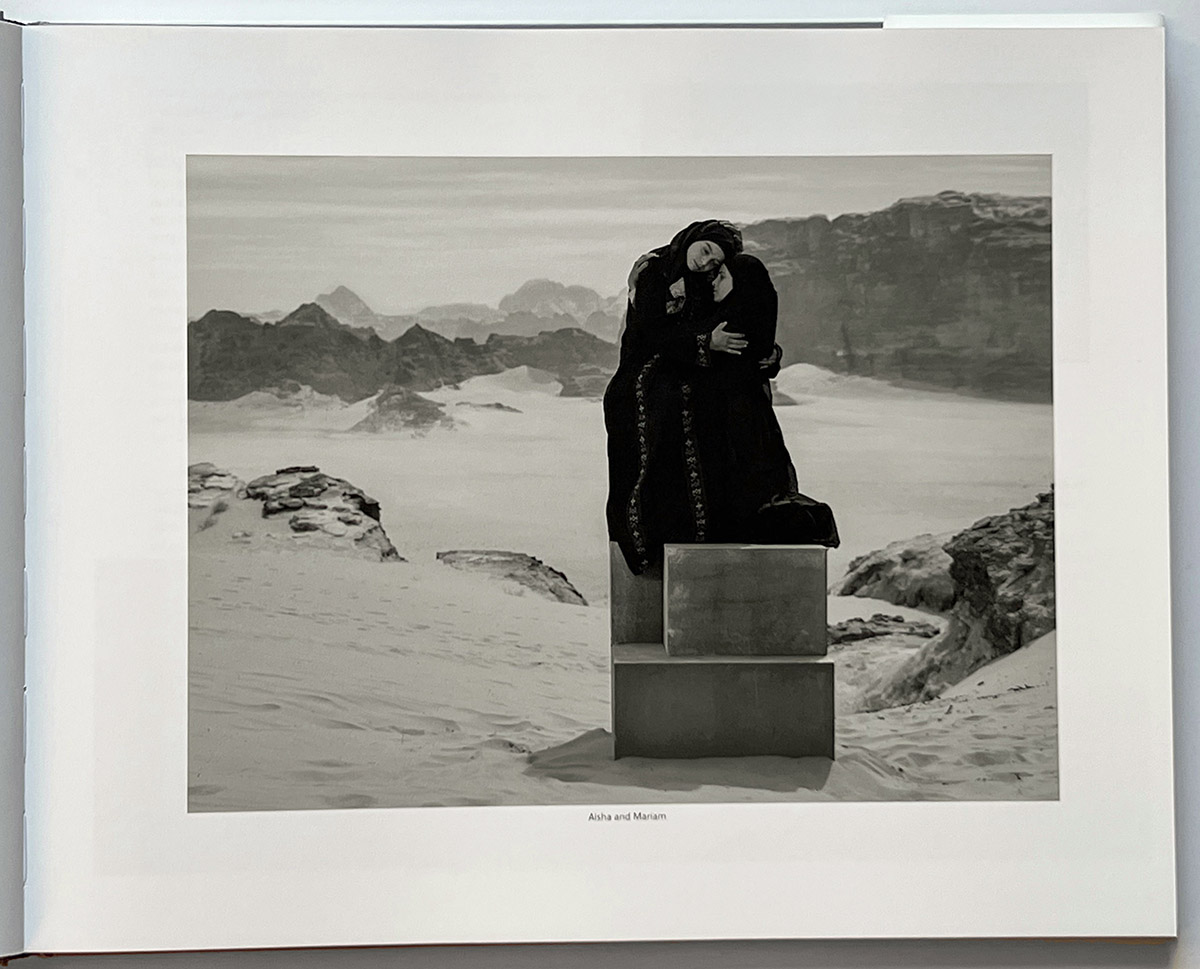
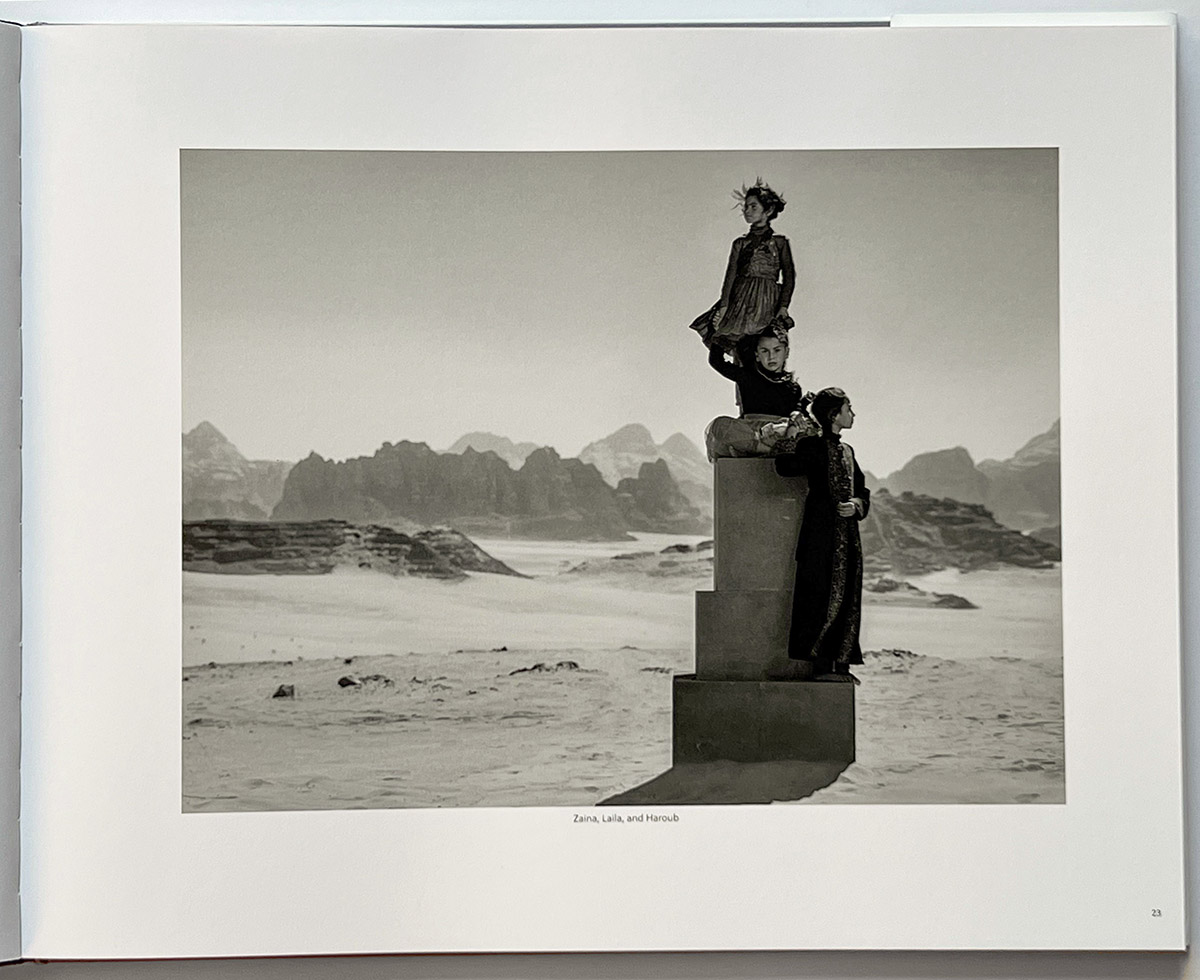
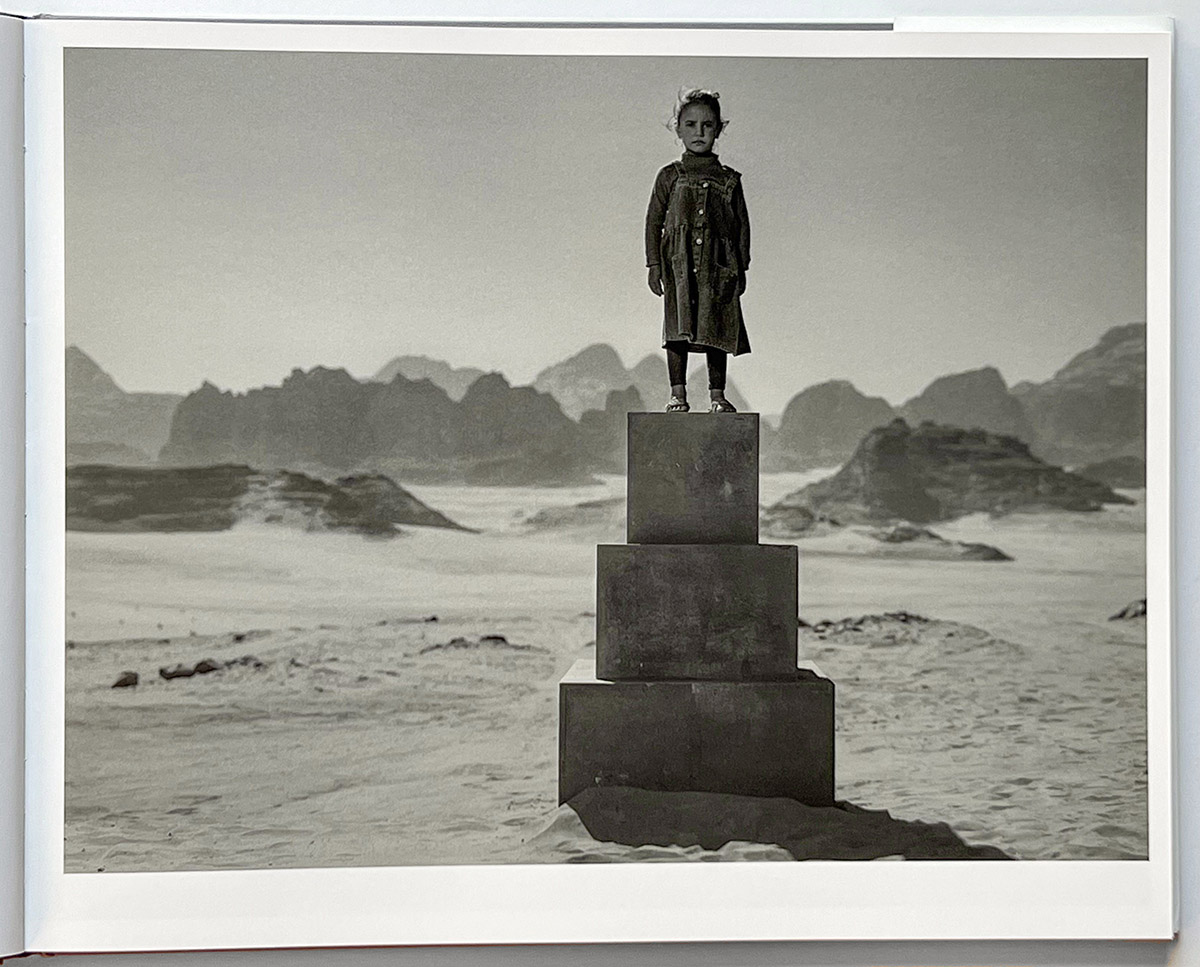
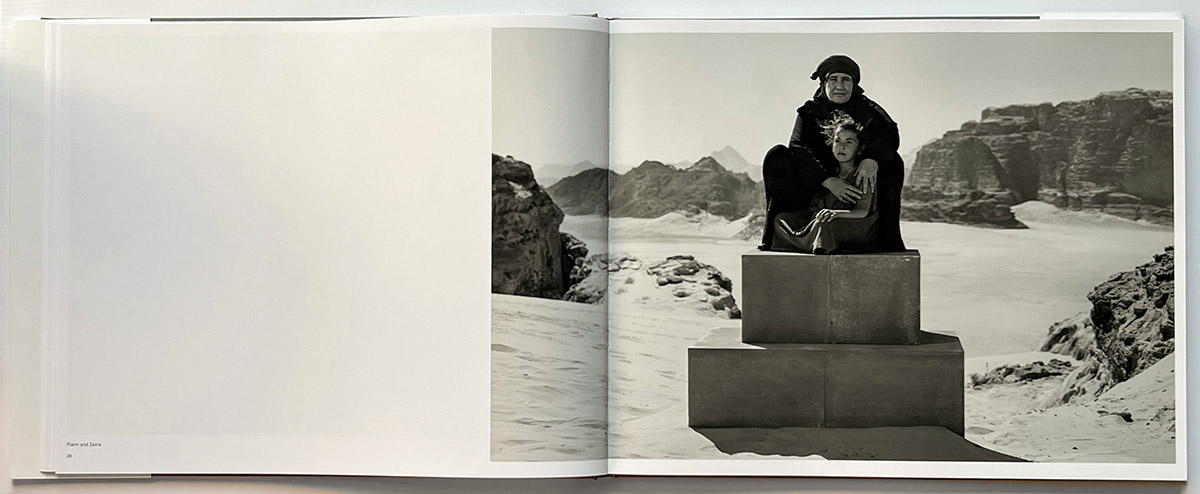
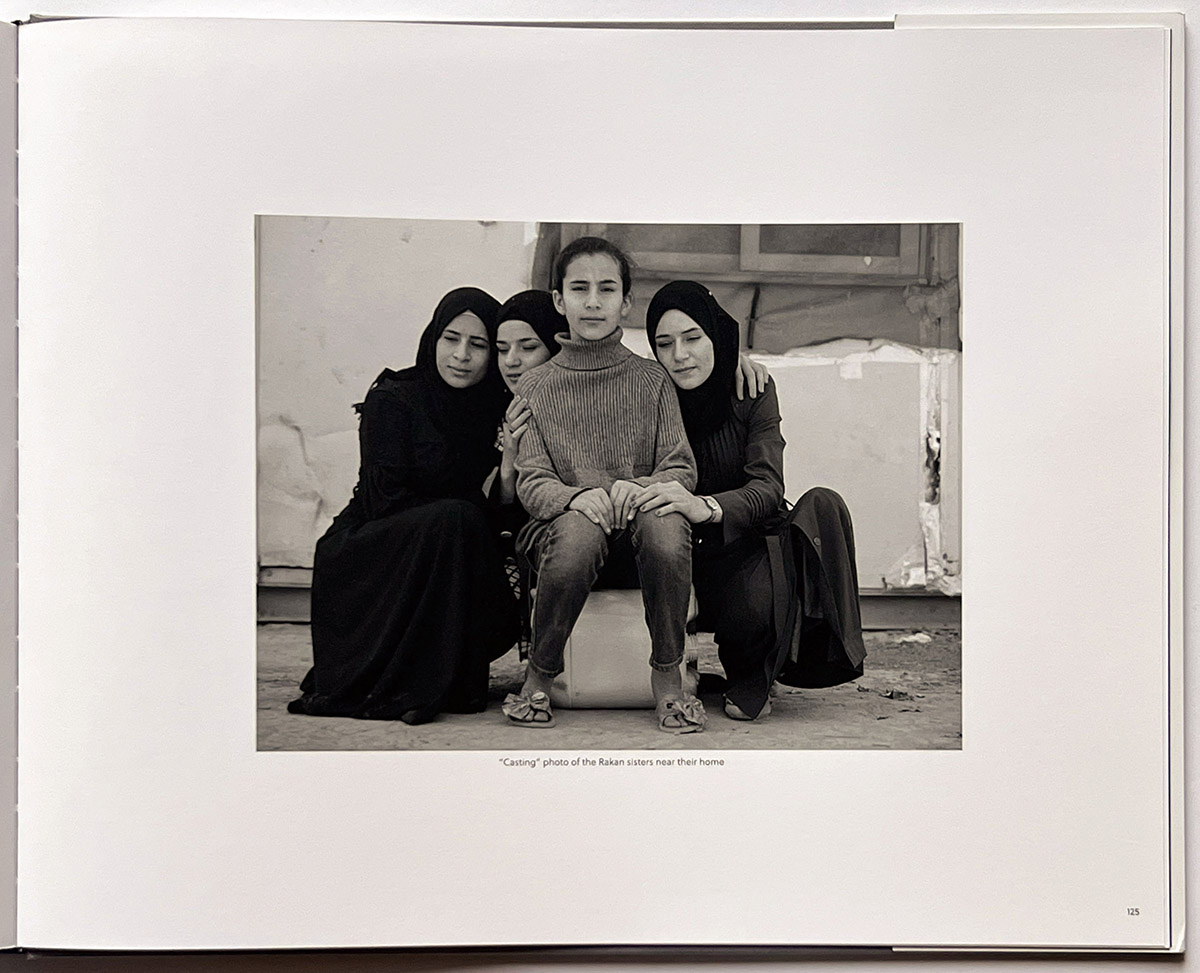
The sequence moves with a kind of quiet logic. The early spreads include families posed against the harsh desert light; the middle section shows moments and gestures of support; the concluding plates suggest a fragile optimism. A careful reader will note Brandt’s refusal to close the book with redemption; instead he leaves us with presence. Skira offers a size and a print quality that allow these images — many reminiscent of exhibition prints — to breathe on the page. I might also add that the printing quality is so outstanding, especially in the shots approaching night, that it is nearly impossible to reproduce the effect here. The brief reflective essays by Samar Yazbek, Arianna Rinaldo, and Nick Brandt strongly support the presentation without over-explaining, as do the concise captions. The “making of” section and some background by Elyse Blennerhassett and portraits of family members (such as the last two images below) are additional attractive features.
A closer look at Brandt’s style might be helpful. The Echo of Our Voices is one of his most formally and conceptually refined works, and its staging and motifs deserve a closer reading. The photographs, made in Jordan in 2023–24, bring together displaced Syrian families and the parched desert landscape in a series of meticulously composed tableaux. Each element – the figures, the boxes, the ground, the air – functions as both physical presence and metaphorical proposition.
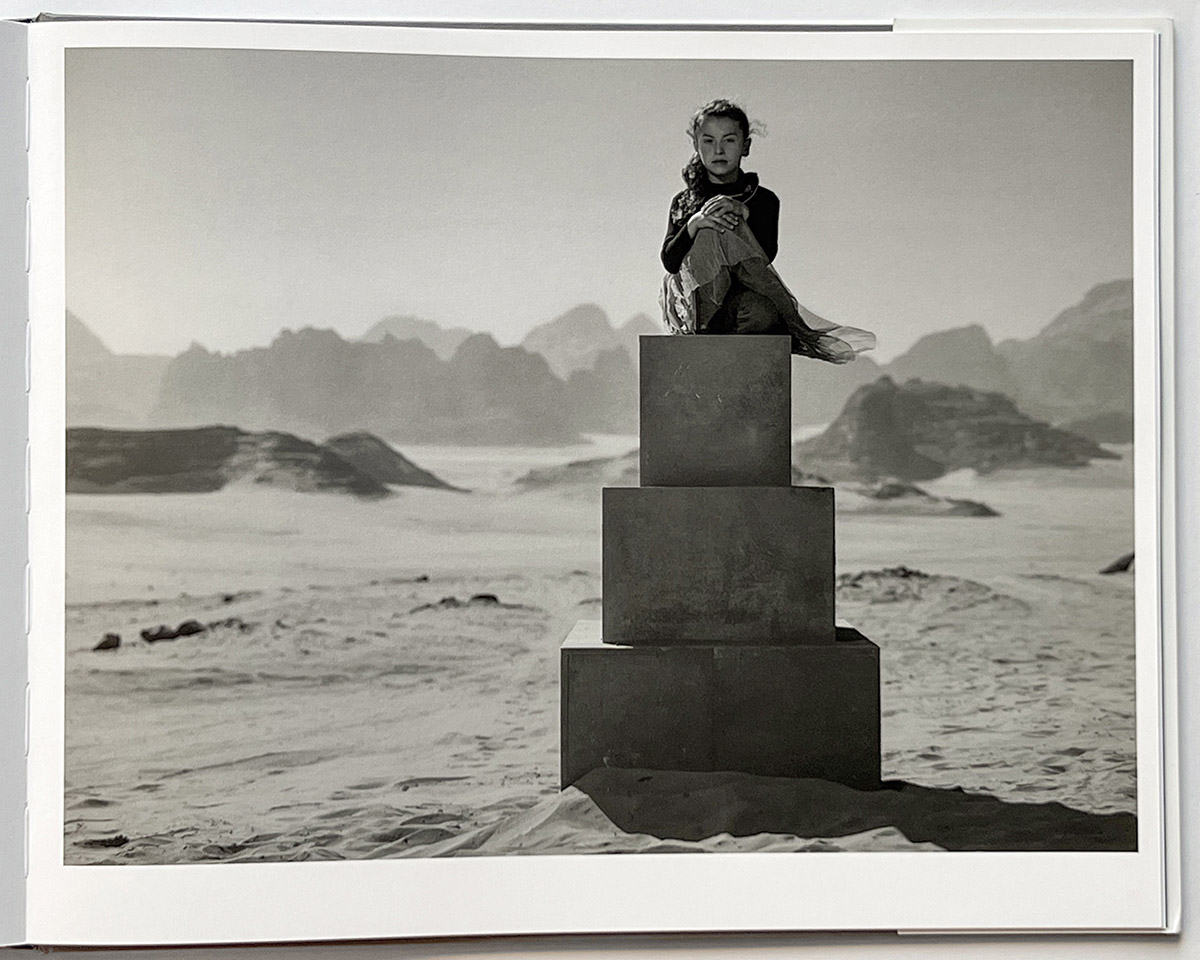
The stacked wooden boxes on which the subjects stand, sit, or gather are both literal and symbolic structures: platforms of visibility. In interviews, Brandt has explained that he wanted to “raise those who are unseen.” Rather than being looked down upon — as refugees, as the displaced — the figures are elevated, commanding our gaze on equal footing with the viewer. The act of elevation also transforms the desert floor into a kind of stage. The figures, often grouped as families, form micro-ensembles of solidarity. Their postures of the groups are calm yet resolute; they do not perform suffering, they inhabit presence and show solidarity. The boxes connect to classical sculptural tradition, but here they are fragile, improvised, signaling the precariousness of their situation.
A defining motif across Brandt’s series has been the relationship between humans and animals, but in this volume the relationships are entirely human — intergenerational, familial, communal. Brandt composes each group as a constellation: arms intertwining, glances crossing diagonally through the frame, one figure slightly elevated or turned toward the horizon. These gestures, subtle but deliberate, construct a visual rhythm of support and continuity. Where earlier works often placed solitary figures in confrontation with ruin, The Echo of Our Voices emphasizes plurality. The eye travels from face to face, tracing invisible lines of care and endurance. The stillness is deceptive; within it, the viewer senses motion – an invisible dialogue among those pictured. Brandt achieves this through spacing: the intervals between figures create visual breath, allowing each person individuality within the collective whole. This vertical energy resonates with Brandt’s broader thematic project: to lift the unseen, to let the dispossessed occupy the symbolic high ground of attention. Yet the same compositions often include shadows extending downward into the sand – a visual reminder that hope and despair are intertwined, that every echo requires a ground from which to resound.
Unlike many documentary projects, Brandt deliberately suspends temporal markers. Clothing and boxes are contemporary yet not anchored in a particular way. The black-and-white tonal scheme contributes to this temporal ambiguity, evoking both the archival and the eternal. His intention appears to universalize, to speak of the now as if it were always. This approach invites contemplation: these could be our ancestors, our descendants, or ourselves in some near future. The echo of the title thus reverberates not just across space but across time.
Finally, the concept of “echo” defines the book’s visual rhythm. Some of the images mirror one another – a family on one page reappears later in slightly altered formation, a gesture repeated, a stance reversed. This visual echo deepens our sense of continuity amid change. On an emotional level, the echo manifests as resonance rather than repetition. Each image feels like the reverberation of a previous one, carrying traces of memory and persistence. In this way, the metaphor becomes a kind of visual syntax: photography itself becomes an echo — the reverberation of light, the afterimage of an encounter. In The Echo of Our Voices, staging is not theatricality but ritual; motif is not decoration but moral structure. Brandt refines his art of controlled empathy – every compositional decision is an act of witnessing. His photographs remind us that form and compassion are not opposites but allies.
The Echo of Our Voices is more than a photographic document of displacement; it is a visual meditation on voice, visibility and the echoes we leave in consequence-bearing landscapes. Nick Brandt achieves a rare balance of beauty and urgency, making this one of his most humanistic statements to date. The Echo of Our Voices is ultimately a book about voice — the small yet persistent tremor of agency in a world reordered by climate and conflict. Brandt’s imagery insists that we listen, that we behold, that we reckon with what remains and what follows. Even with all the climate disasters, we humans persist, along with the echo of all our voices.
____________
The PhotoBook Journal previously featured reviews of the following books by Nick Brandt: SINK / RISE, The Day May Break – Chapter Two, The Day May Break, This Empty World, and On This Earth, A Shadow Falls.
____________
Gerhard (Gerry) Clausing, Editor Emeritus of The PhotoBook Journal, is an author, visual artist, and educator who explores perception, transformation, and memory.
____________
Nick Brandt – The Echo of Our Voices: The Day May Break. Chapter Four
Photographer: Nick Brandt (born in London, England; lives in Southern California, USA)
Texts: Samar Yazbek, Arianna Rinaldo, and Nick Brandt
Language: English
Publisher: Skira editore; © 2025
Design: Anna Cattaneo
Hardcover with illustrated jacket; 132 pages; 15.25 x 12.3 inches (39 x 31 cm); ISBN 978-88-572-5394-7
____________

Articles and photographs published in the PhotoBook Journal may not be reproduced without the permission of the PhotoBook Journal staff and the photographer(s). All images, texts, and designs are under copyright by the authors and publishers.
 PhotoBook Journal
Leave a comment