Review by Steve Harp ·
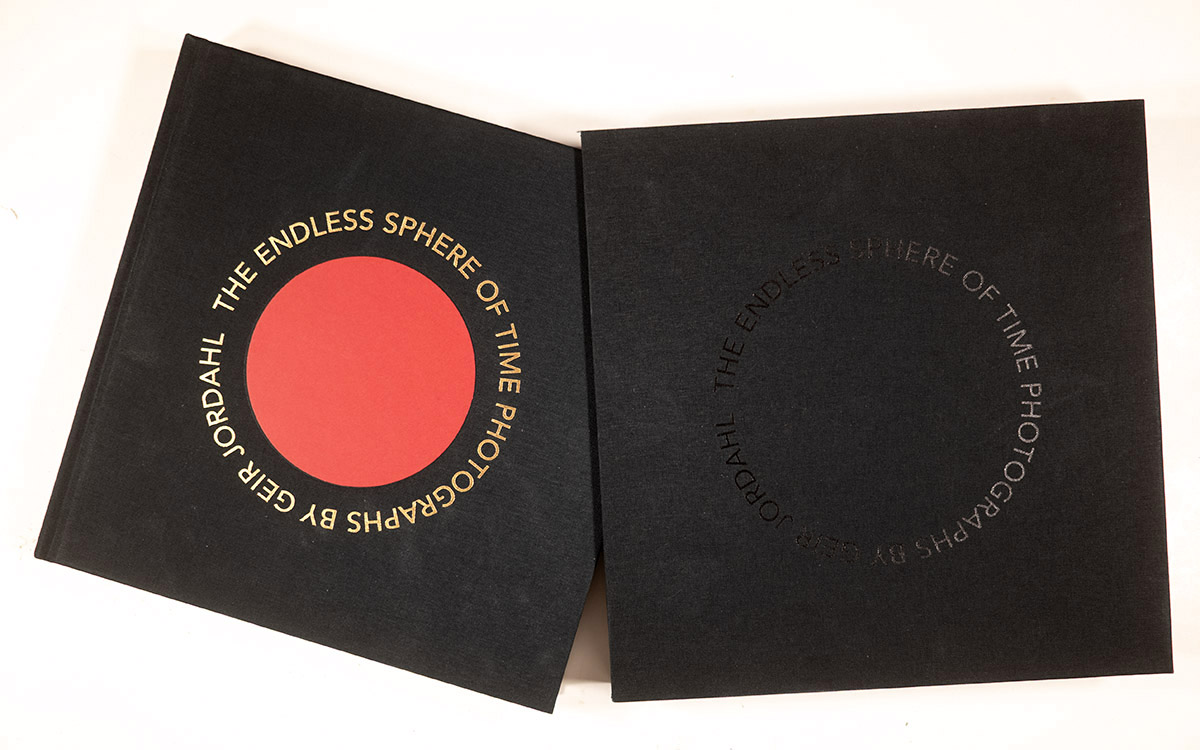
Geir Jordahl’s 2025 monograph The Endless Sphere of Time is an imposing volume, ten inches square and an inch and a half thick in its hard, cloth-covered slipcase. Even before looking inside, the book reminds me of nothing so much as an atlas, a bound collection of maps. In particular, I’m led to think of a ship’s atlas, a compendium of maps and charts used for navigation recalling an era in which to take to the seas was to venture into the unknown, the atlas being the only guide to location or orientation available to early seafaring explorers. A definition of “atlas,” summarized from Dictionary.com refers to “a bound volume of plates, or tables illustrating any subject” (emphasis mine) as well as “a Titan, son of Iapetus and brother of Prometheus and Epimetheus, condemned to bear the sky on his shoulders.” Atlas has become known as the “father of Geography,” condemned to bear up the heavens or sky for eternity. “Atlas and the Hesperides,” a painting by John Singer Sargent (1925), depicts Atlas holding aloft the entire world – the globe, the earth and the painting itself depicted in circular format.
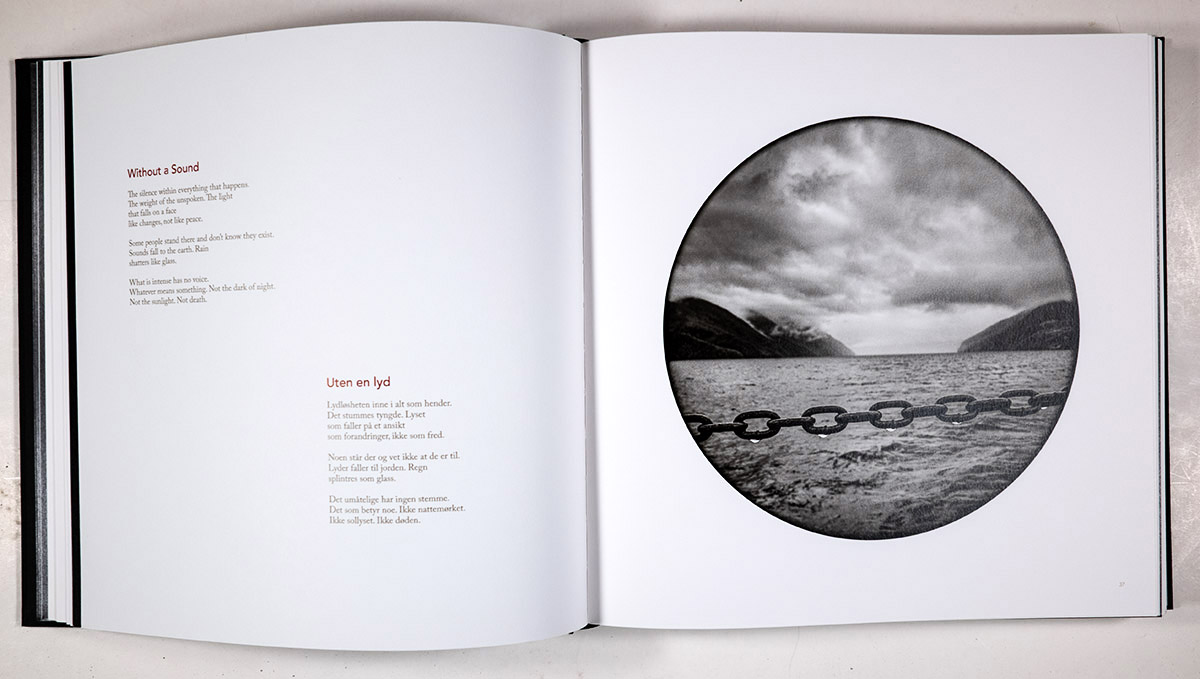
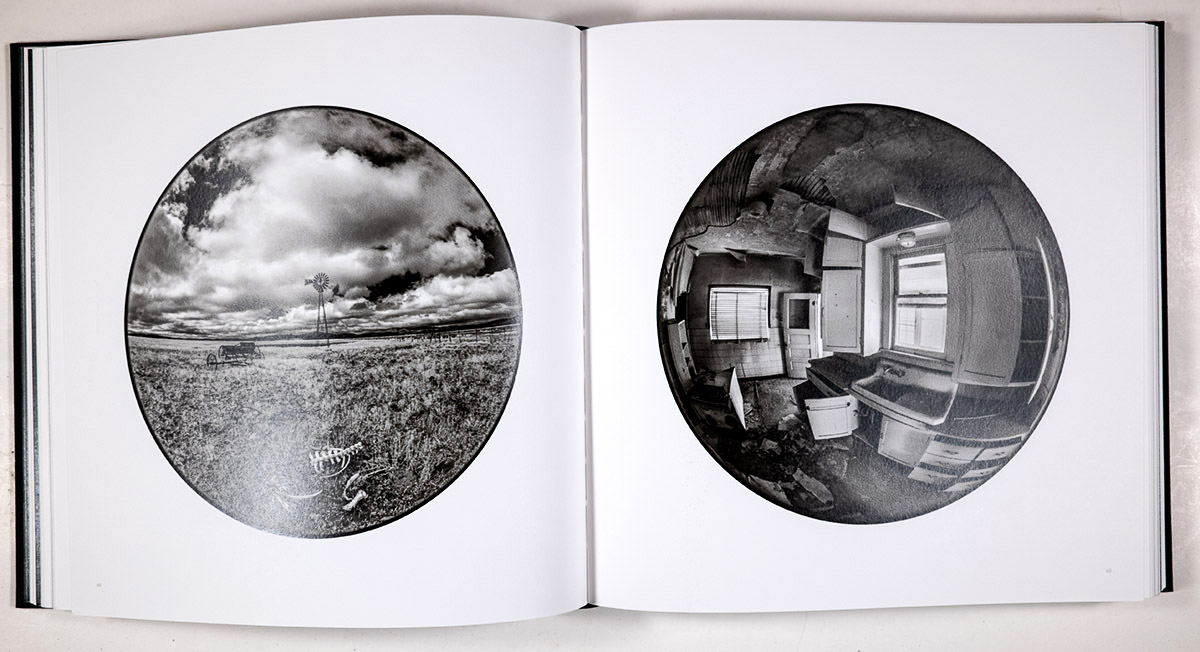
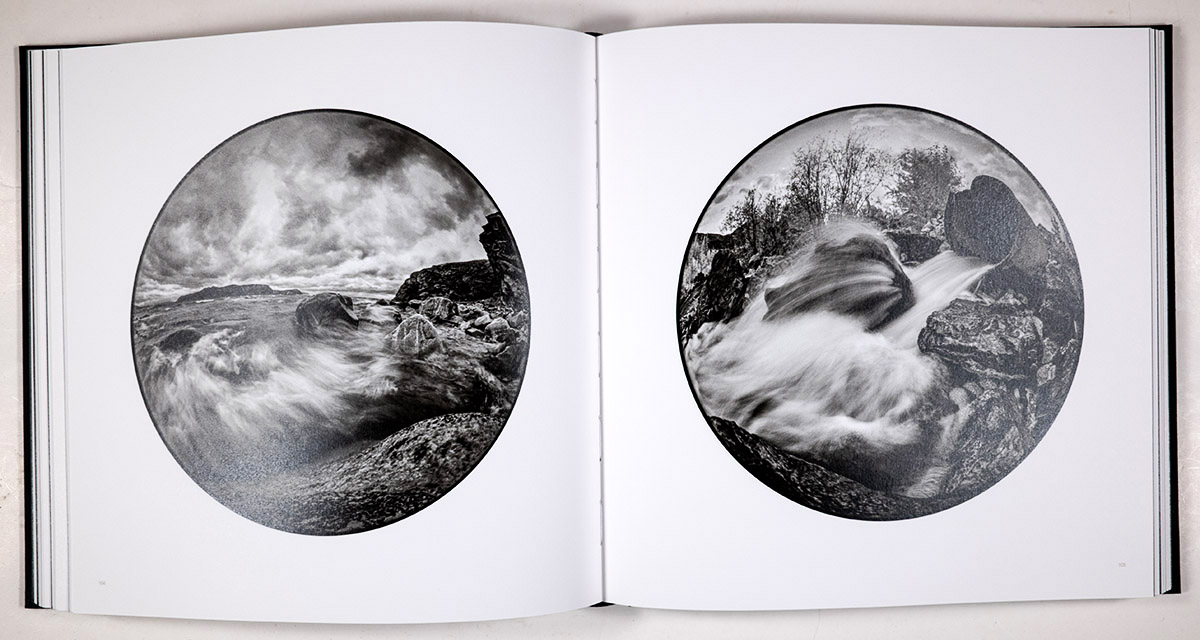
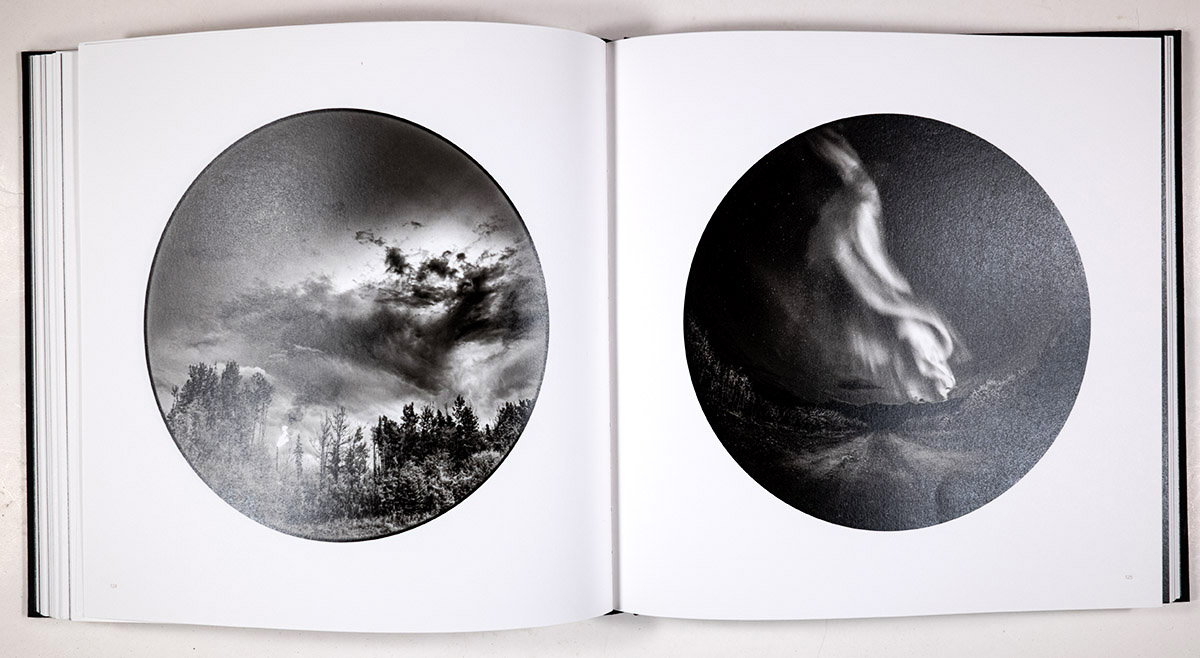
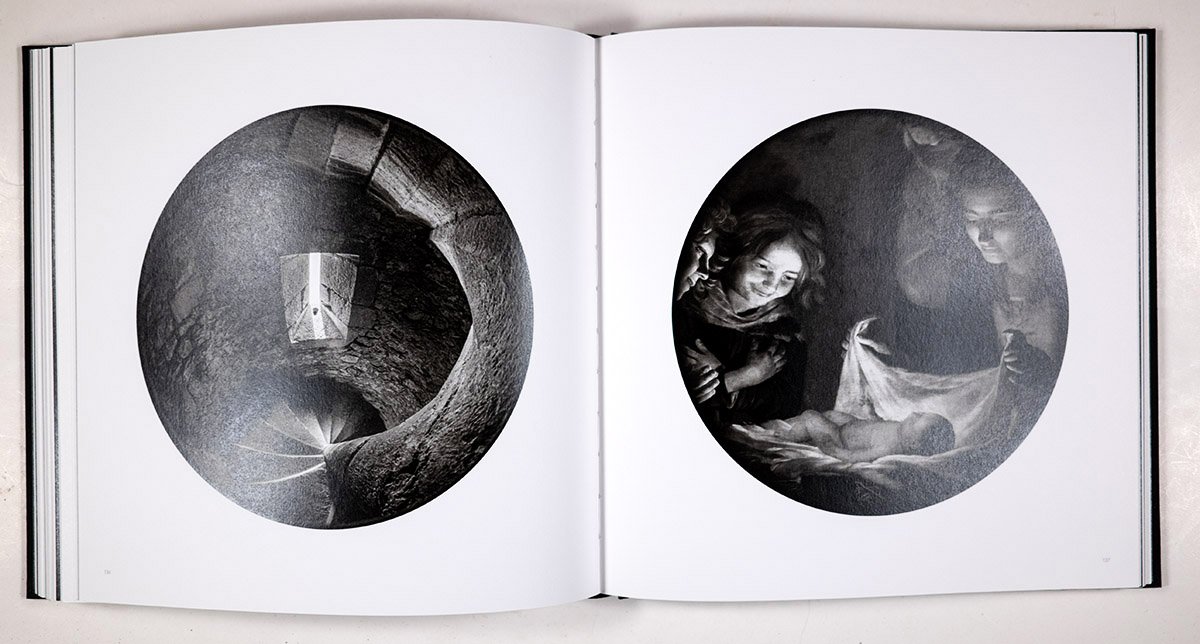
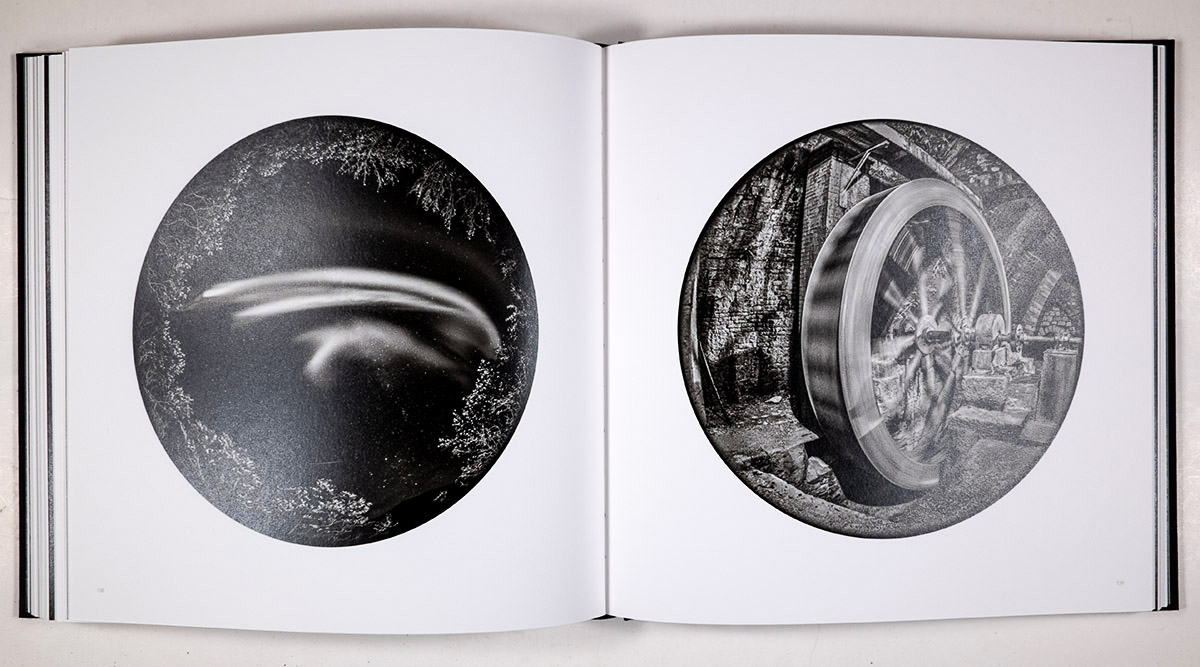
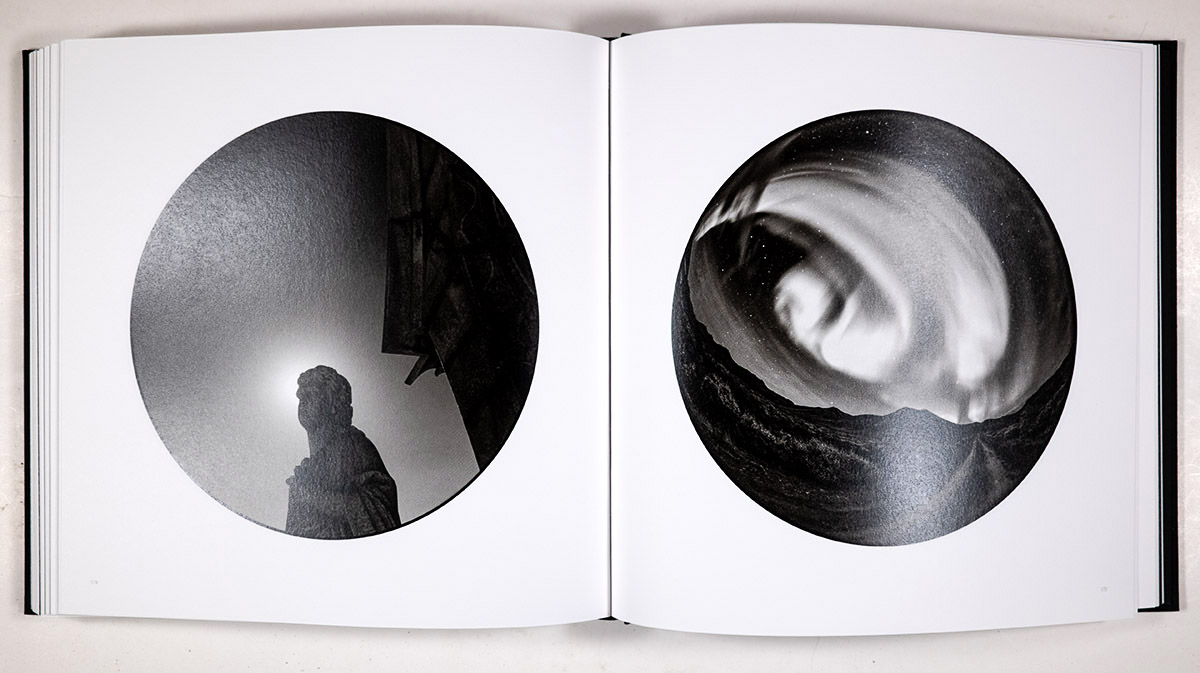
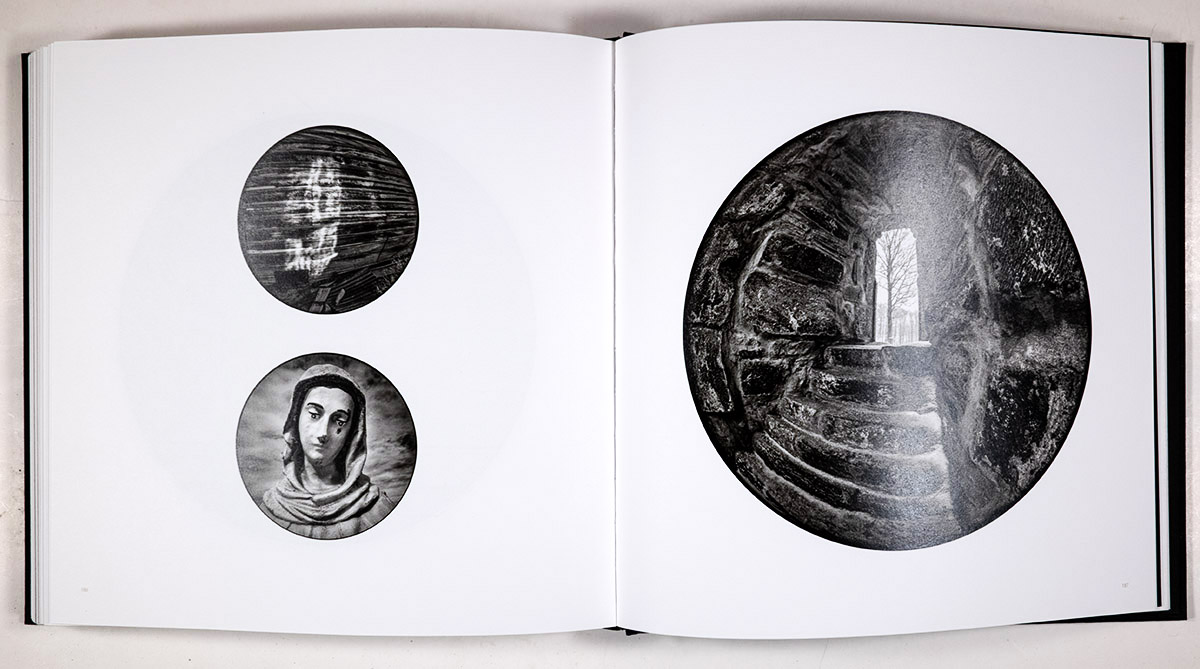
There is more than a passing sense of the epic, as well, in Jordahl’s book. The nearly 150 images included are all presented in circular format. One cannot escape the sense of the global. Not only because, we are told in the accompanying “List of Titles” card, the locations of the photographs range across North America and Europe and into China. But the images as well convey a sense of the globular. This centrifugal force is on display in the strongest of these images, images in which the fisheye lens used causes details to seem to “wrap around” the edges of the (circular) frame, in a sense resetting or restaging our familiar patterns of photographic looking or seeing. We see things strangely in these views, in unfamiliar ways, whether looking at massive, distant landscapes, wooded or forest scenes, interiors, or views that are pure close up, details that in essence stop the viewer and recast vision in a new way, in a shifted context.
The atlas is conventionally thought of as a form that presents or depicts spatial relationships and seeks to aid in the process of navigation through space. Jordahl’s monograph though – given the reference to time in the title – is attempting something else. In this quest to portray the temporal or suggest movement through time, I was reminded of another atlas, Gerhard Richter’s collection of photographs, newspaper and magazine clippings, drawings and other ephemera. Covering some four decades as something of a visual diary or scrapbook of his life, Richter comments, “In the beginning I tried to accommodate everything…“ According to Ann Jastrab, writing in the Afterward to The Endless Sphere of Time, Jordahl’s work and travels to collect these images spans a similar time frame: “For forty years the photographer has traversed the globe… It seems he might need that Viking ship to travel the vast distances covered in this project.” But the photographs Jordahl offers here do not try “to accommodate everything” in the manner of Richter, but instead offer something of a sampling of views of our surrounding world in ways not usually seen or appreciated. These images do more than cover immense spatial distances, they also, as the title suggests, imply covering – or conveying the presence of – vast movements of time. At their most powerful these are images that that confound our relations to moments, to time itself and its passing. Those photographs that present the blur of moving water and clouds, or offer spaces as circular distortions, close ups which dramatically emphasize the extremity of foreground/background relationships conjure to this viewer nothing less than a maelstrom of creation, the creation of a talented visual artist, and offer an engagement with that vision.
As suggested at the opening of this review, The Endless Sphere of Time is a large, imposing volume measuring 10” x 10”, 205 hardbound pages in a clothbound slipcase. There is a pocket inside the back cover to hold a card listing the titles (and locations) of all 148 plates which are divided into 11 sections. Each section opens with a title page and introductory poem by Norwegian poet Rolf Jacobsen. Everything about the volume presents as epic, imposing, spectacular. Sublime in the way that the most powerful of the images herein convey an overwhelming sense of awe to the viewer. For this reason, I feel a need to point out that for this reviewer, from a design and editing standpoint, less effective were those pages that contained two images on a page (3 on a spread). This seemed unnecessary and, in a sense, dilutes the strength and power of these magnificent views.
Contributing Editor Steve Harp is Associate Professor at The Art School, DePaul University
____________
Geir Jordahl – The Endless Sphere of Time
Photographer: Geir Jordahl (born Kristiansund, Norway and lives in Bellingham WA)
Publisher: True North Editions, Bellingham WA; © 2025
Texts: Introduction – Scott Lankford; Afterward – Ann Jastrab; Poems – Rolf Jacobsen
Texts: Norwegian and English
Printing: Longo AG SpA
Book editing and design: Kate Jordahl
Cloth covered, case-bound hardcover in hard, cloth-bound slipcase; sewn binding; 10 X 10 inches; 205 pages; 148 black and white photographs; ISBN 978-1-943013-28-9
____________


Articles & photographs published on PhotoBook Journal may not be reproduced without the permission of the PhotoBook Journal staff and the photographer(s).
 PhotoBook Journal
Leave a comment