Review by Rudy Vega ·
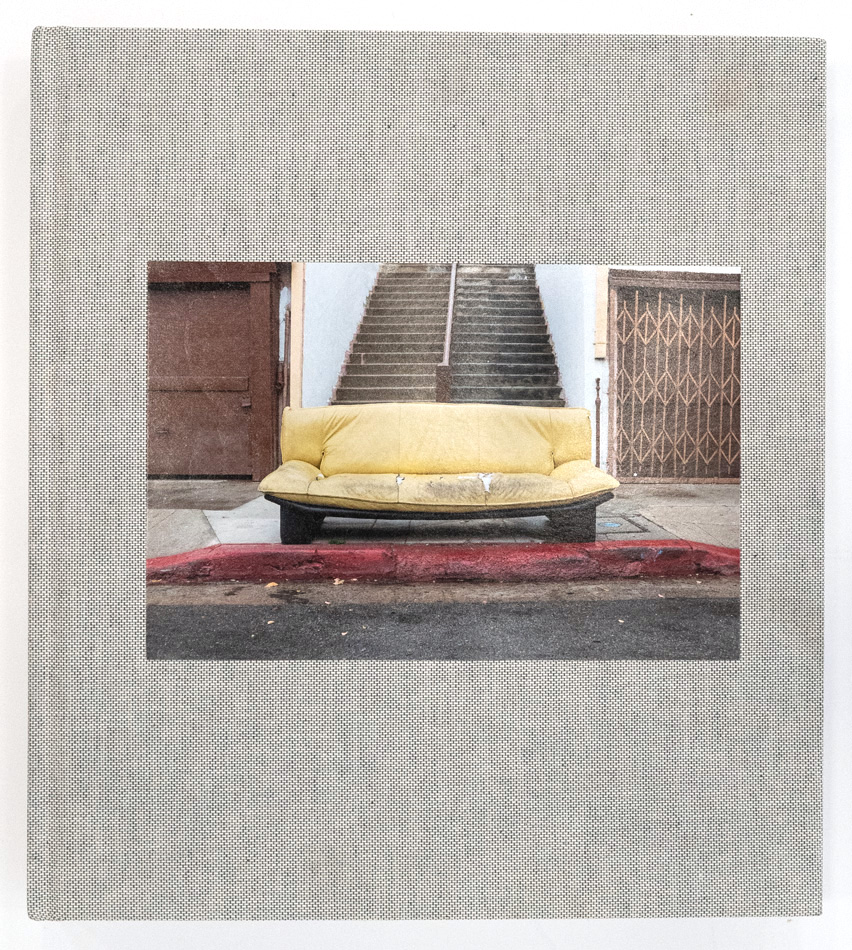
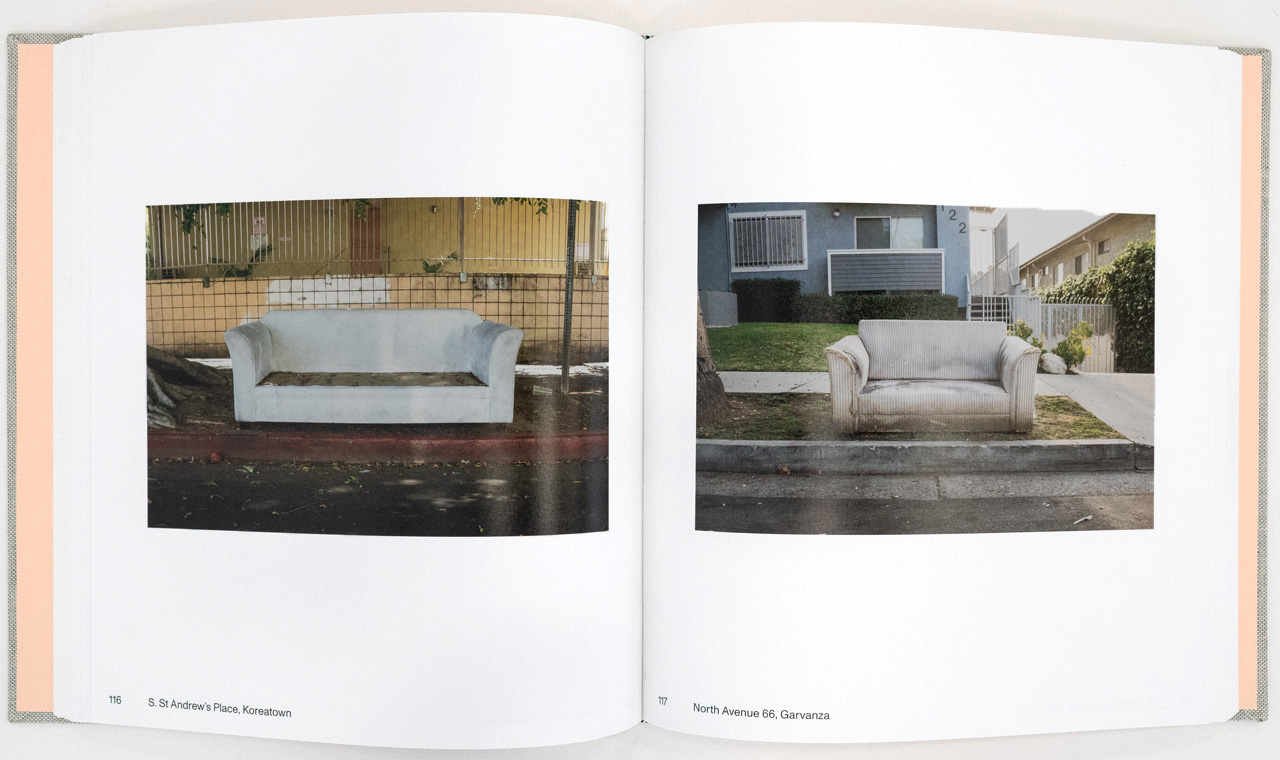
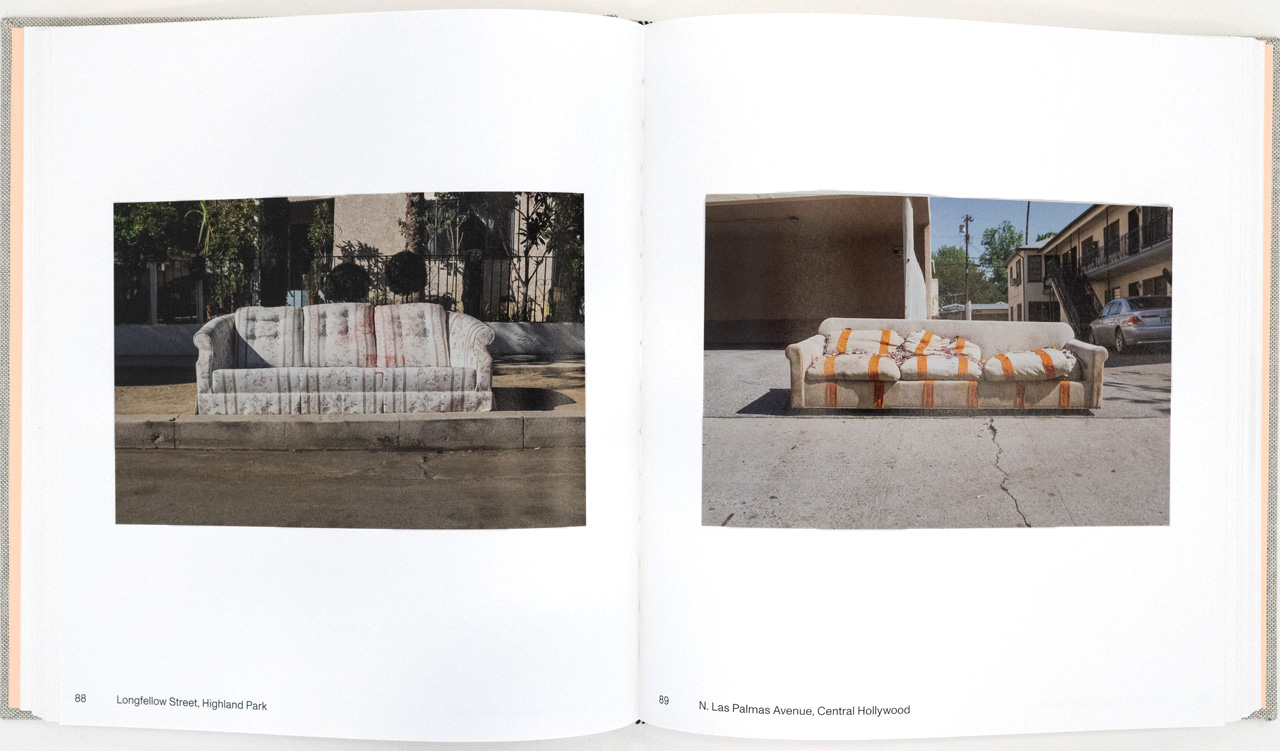
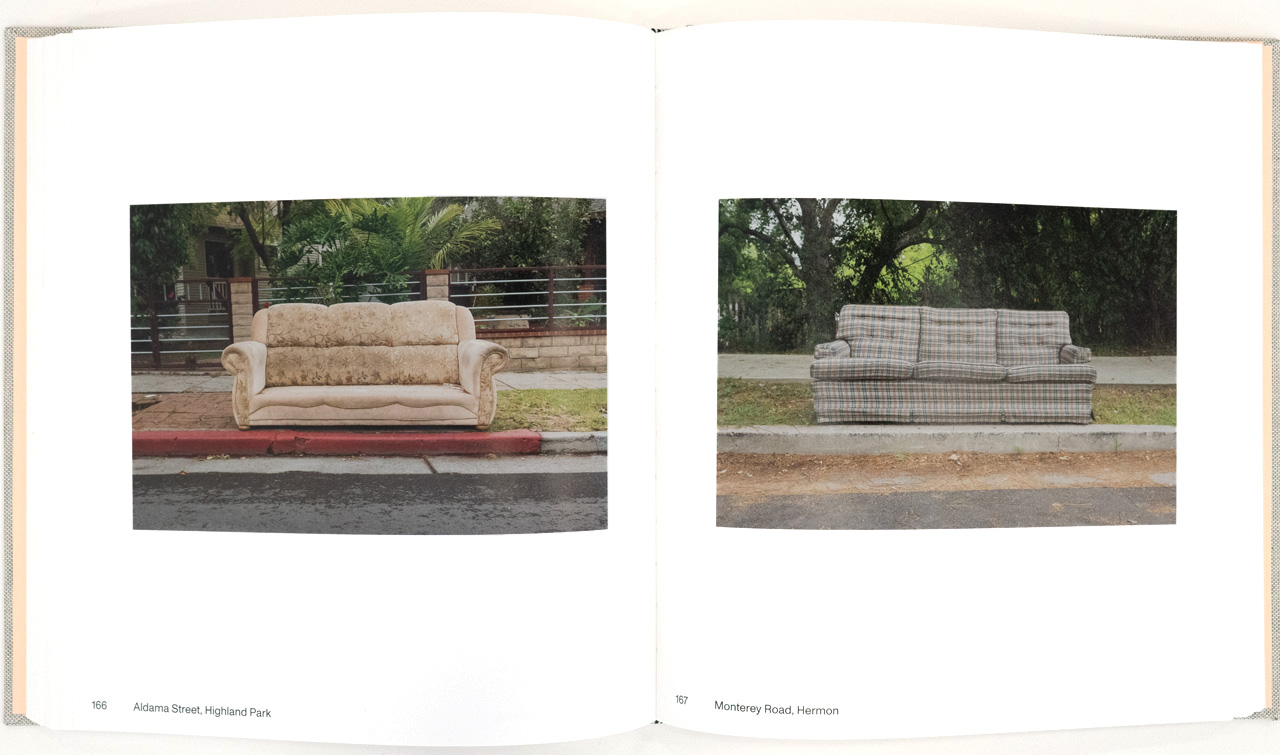
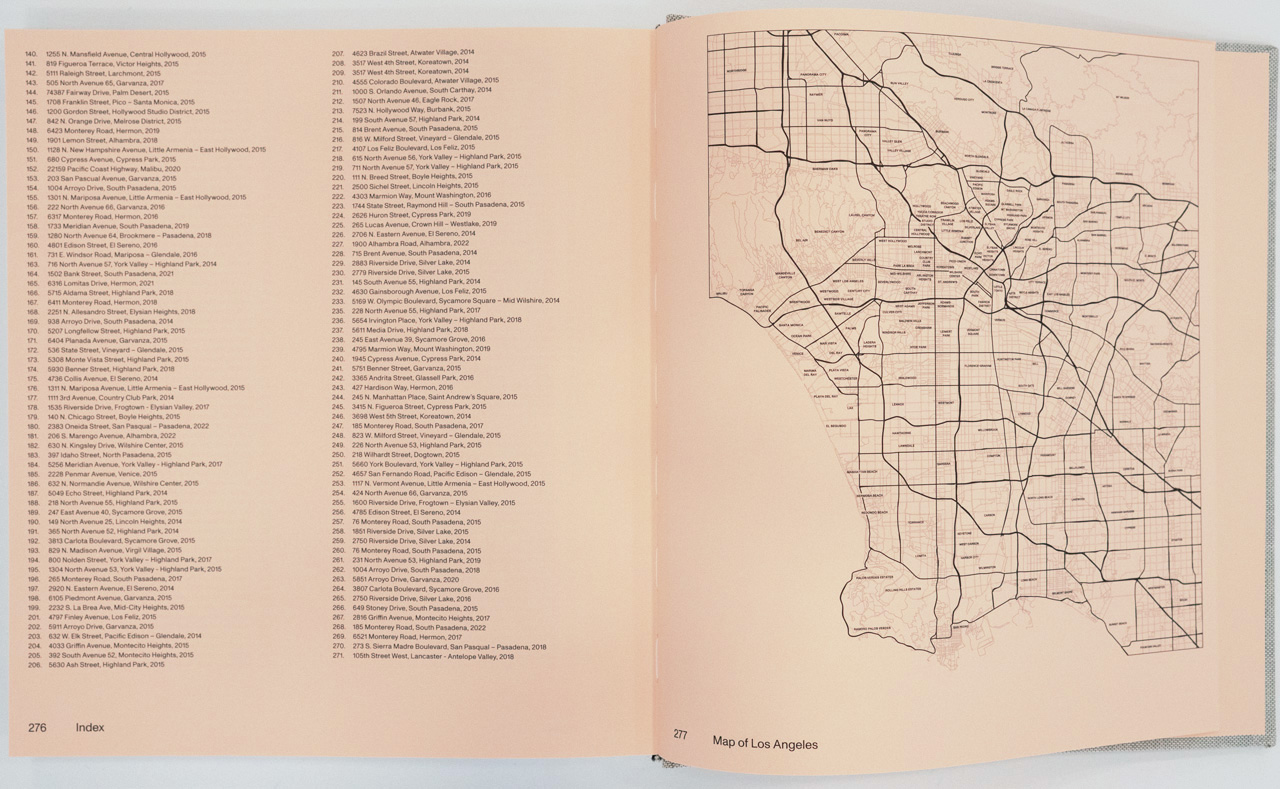
Andrew Ward’s Sofas, Los Angeles is more than just a photobook—it’s a witty, poignant, and visually rich love letter to Los Angeles, told through the discarded sofas that populate its streets. This cloth-bound volume spans 280 pages, of which 260 are devoted to lush, color photographs, and with each plate their location is listed. While the concept may seem simple—photographing sofas abandoned on curbs—it’s in this simplicity that Ward crafts a compelling narrative about the city and, more broadly, about the consumerist tendencies that shape our collective culture.
The project aligns itself firmly within the photographic tradition of typology. Like Bernd and Hilla Becher, who famously documented industrial structures with an almost scientific rigor, Ward takes a methodical approach. Each sofa is given equal treatment: framed frontally and centered in the composition, devoid of dramatic lighting or editorial flourishes. This consistency creates a sense of equality among the sofas, no matter their condition or location. Whether upholstered in faded floral patterns or garish vinyl, these sofas are united in their shared fate—banished to the curb, stripped of their once-central role in domestic life.
What makes Sofas, Los Angeles so engaging is the tension between its humor and its social critique. There’s an undeniable absurdity to seeing sofa after sofa marooned on the street, often in incongruous settings: perched against graffiti-tagged walls, basking in the California sun, or sagging under the weight of years. These images invite a chuckle, but they also prod deeper questions. How did these sofas get here? What stories do they carry from the homes they once inhabited? And what does their abandonment say about our culture’s obsession with the new and our willingness to discard the old?
Ward doesn’t spoon-feed answers. Instead, he allows his camera to serve as a neutral chronicler, leaving space for viewers to construct their own narratives. This restraint is key to the project’s power. By refraining from overt judgment, Ward elevates the sofas to something more profound—they become symbols of the transient nature of urban life, the impermanence of material goods, and the unspoken stories of the people who once sat, slept, and lived on them.
The book also hints at a broader commentary on waste and environmental responsibility. These sofas, now stripped of their value, represent the dark side of consumer culture: the ease with which we discard rather than repair, and the challenges cities face in managing this endless stream of waste. Readers may find themselves pondering whether these sofas could have been donated or recycled—whether there’s a better way to manage our collective cast-offs.
Where Sofas, Los Angeles stands apart from its typological predecessors is in its use of color. Unlike the austere black-and-white imagery of the Bechers, Ward’s vibrant palette brings out the quirky, often kitschy personality of these sofas. The faded florals, bold stripes, and sometimes outright garish patterns create a visual delight, contrasting sharply with the urban decay around them. In this interplay of color and texture, Ward mines a certain charm that makes the book as much a celebration of design as it is a critique of disposability.
But beyond its cultural critique and artistic lineage, Sofas, Los Angeles is, at its heart, a love letter to the city itself. Los Angeles is a city of contradictions—at once glamorous and gritty, sprawling and intimate—and Ward captures this duality beautifully. The sofas act as placeholders, markers of the city’s endless churn, hinting at the human stories that are just out of frame. In this way, the book is as much about absence as it is about presence.
Ward’s work reminds us that beauty, humor, and meaning can be found in the most unlikely places—even in the cast-off detritus of a city. Sofas, Los Angeles is a valuable addition to the visual lexicon of Los Angeles, a city that has long fascinated photographers for its unique blend of the mundane and the surreal. It’s a book that invites us to look closer, to question more, and to find joy in the curious, discarded details of urban life.
If Los Angeles is, as some have claimed, a city that reveals its truths on the margins, then Sofas, Los Angeles is a masterful investigation of those edges. With this book, Andrew Ward not only cements his place within the tradition of typological photography but also stakes his claim as a chronicler of the unexpected beauty that makes Los Angeles endlessly intriguing.
____________
Rudy Vega is a Contributing Editor and resides in Irvine, Ca. He is a fine art photographer and writer.
____________
Andrew Ward – Sofas, Los Angeles
Photographer: Andrew Ward (Dublin, Ireland; lives in Los Angeles, CA.)
Publisher: Setantabooks UK/IRE/EU © 2024
Essays: Andrew Ward
Language: English
Clothbound Hardcover book, offset printing, 280 pages, 260 color images. 9×12 inches; ISBN 978-8-218-43990-3
Editor: Andrew Ward
Book Design: Duncan Whyte
____________





Articles and photographs published in the PhotoBook Journal may not be reproduced without the permission of the PhotoBook Journal staff and the photographer(s). All images, texts, and designs are under copyright by the authors and publishers.
 PhotoBook Journal
Leave a comment