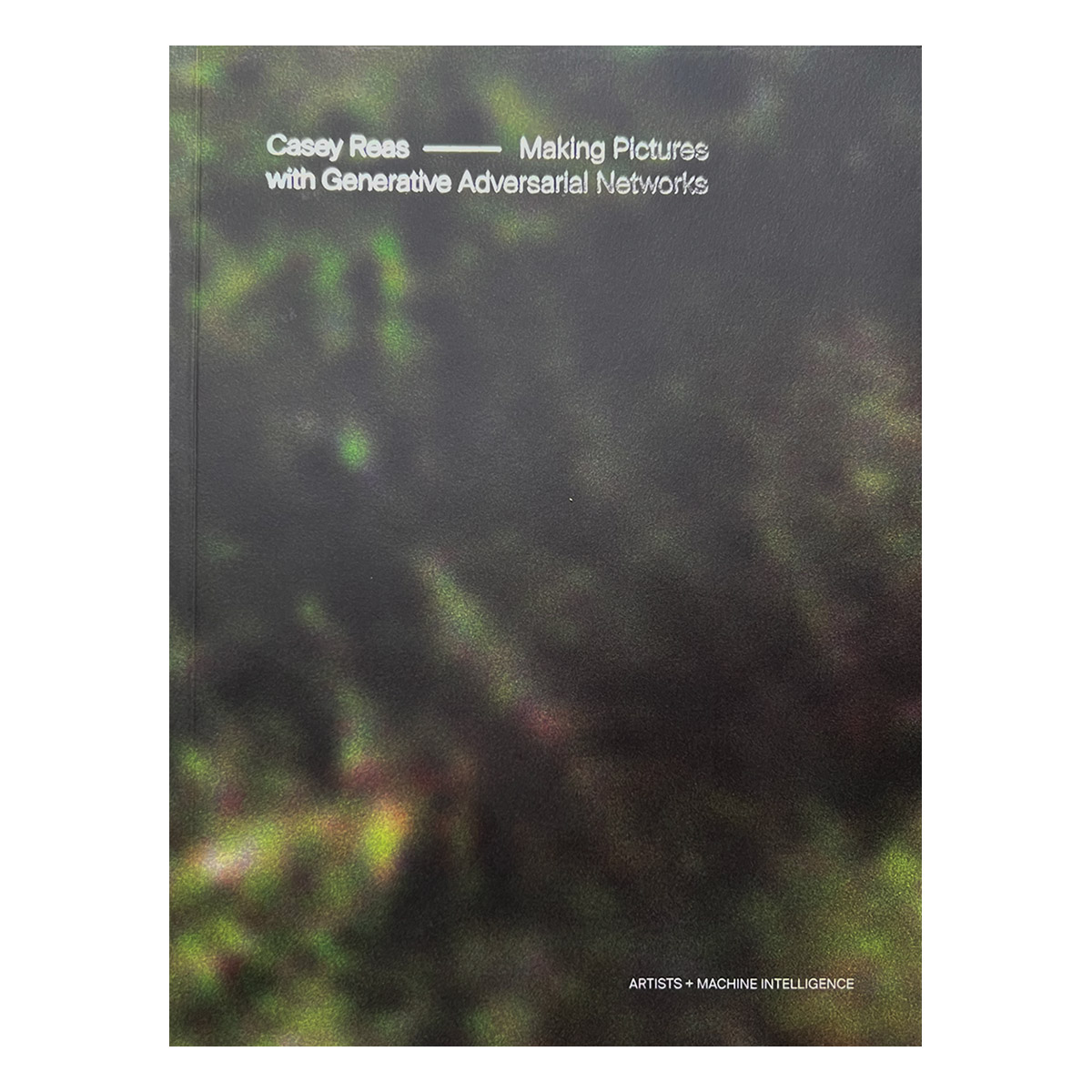
Review by Gerhard Clausing •
Casey Reas has the relatively unique position of being both an artist and a scientist. He has contributed greatly to the development of generating images with the help of artificial intelligence systems. This photobook, which I only discovered this summer, presents both a technical description of a major process, as well as sample image series, many of which can be likened to early images by Moholy-Nagy, especially when it comes to the photograms and other visual experiments by that artist of the early 20th century. Both innovators invite a multitude of viewer interpretations due to the inherent ambiguity of the images. I would like to present a brief comparison of these two artists.
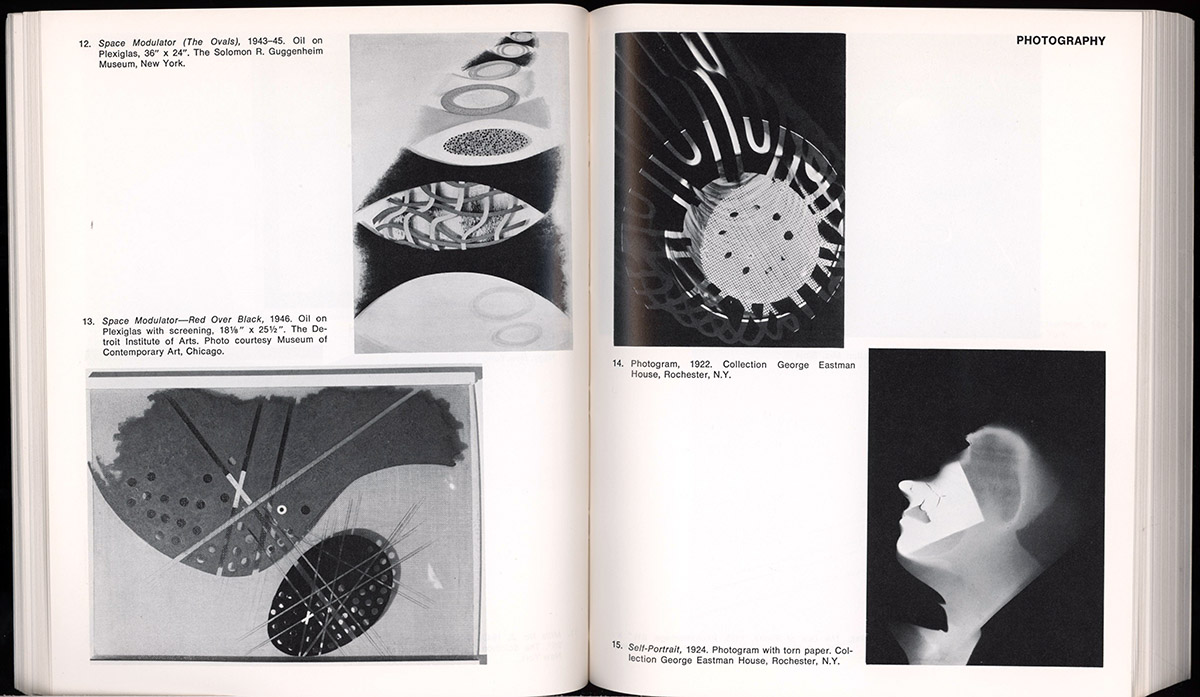
Reas and Moholy-Nagy share several characteristics. Moholy-Nagy, in his 1947 book Vision in Motion (examples of his images from another publication are shown in the last image below*) stated that he wanted artists to engage directly with modern technology. He saw the machine as a liberating tool that could extend human perception and creativity. Moholy-Nagy’s view was that rather than being at odds with artistic practice, technology should be fully integrated into the arts to reflect the realities of modern life. Casey Reas follows a similar path. His use of Generative Adversarial Networks (GANs) continues this integration, taking up machine learning – a contemporary and transformative technology – and treating it not just as a technical instrument, but as a medium for aesthetic inquiry. In both artists’ practices, the machine is not simply a tool, but a collaborator for photographs and photo-like images.
Ahead of his time, Moholy-Nagy’s Bauhaus approach emphasized a dynamic interplay between the viewer, the maker, and the evolving environment. He sought to dissolve boundaries between fine art, design, and science. He believed in constructing systems where aesthetic results are byproducts of designed processes. Similarly, Reas features systems-based image generation. His GAN projects involve curating training data, refining neural network outputs, and tuning parameters.
Moholy-Nagy wrote about expanding human perception, using technology to see what cannot normally be seen – through photography, film, and even early attempts at kinetic art. He was interested in exploring new sensory territories. Reas’ GAN-based work does exactly that as well: he produces photographically convincing images of things that never existed, leveraging vast datasets and an algorithmic “imagination” to make the invisible (latent data space) visible. GANs generate dreamlike images from the collective visual memory of culture, and Reas acts as both conductor and editor of this output. Where Moholy-Nagy once used the photogram to flatten and reconfigure physical forms, Reas uses GANs to produce spectral photograms of digital culture, operating in latent space rather than in optical space.
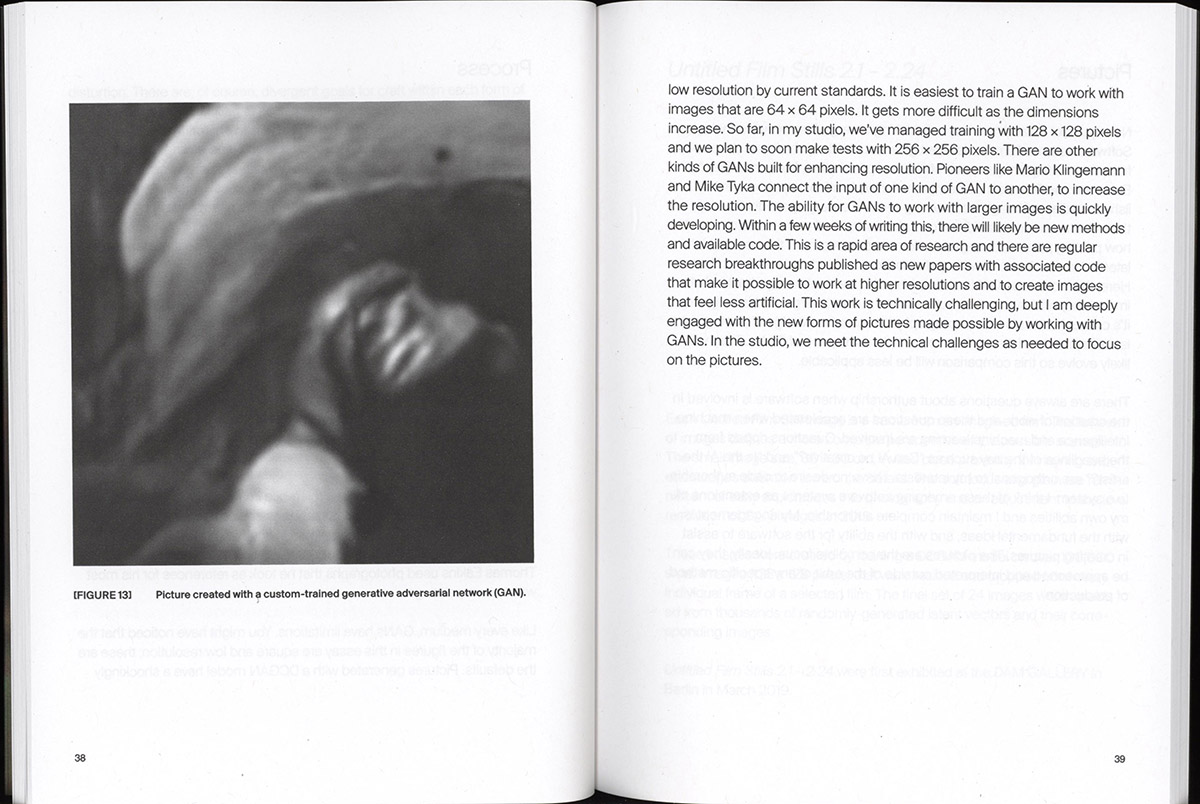
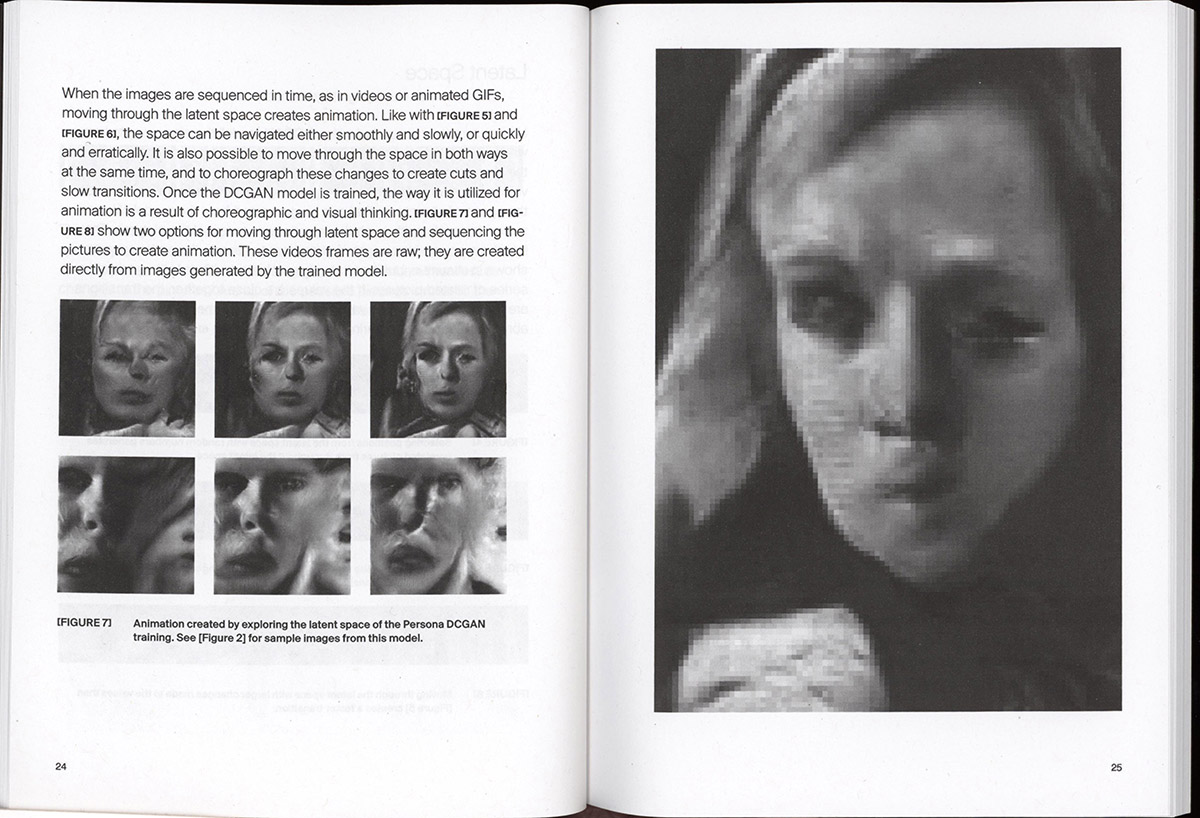
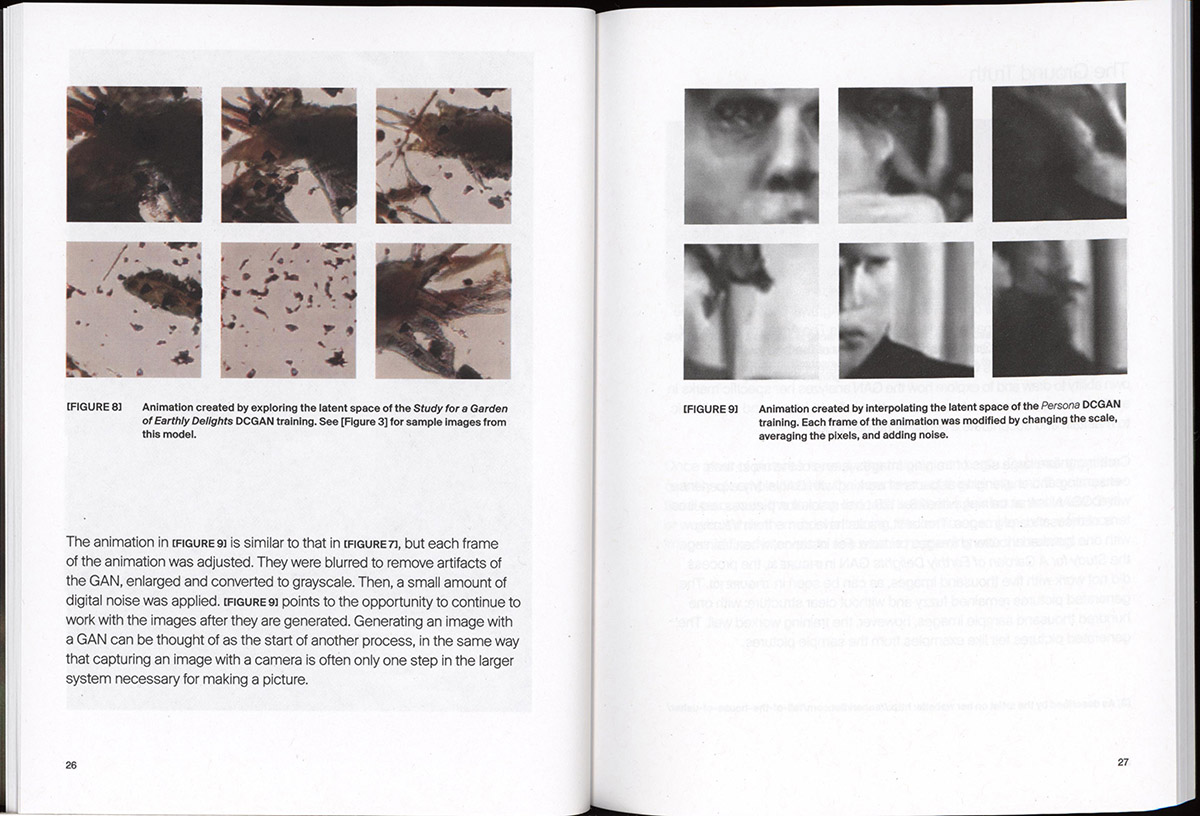
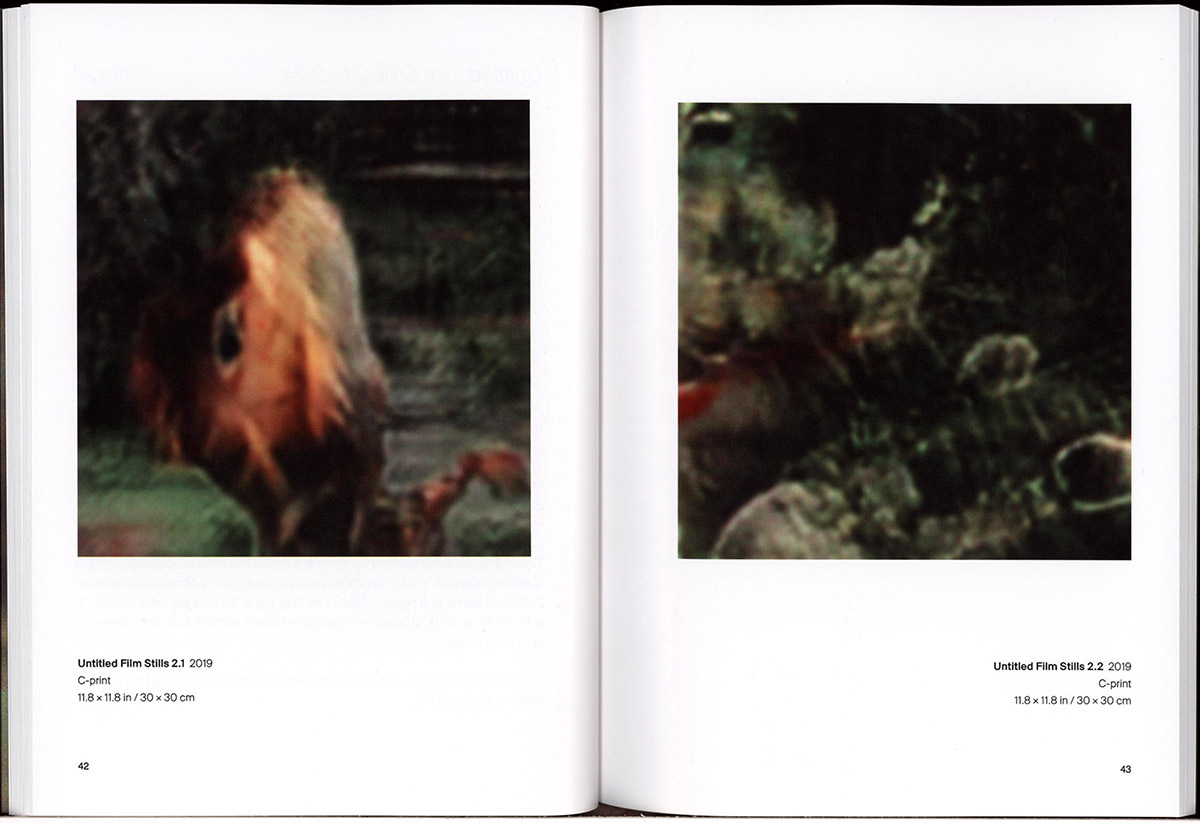
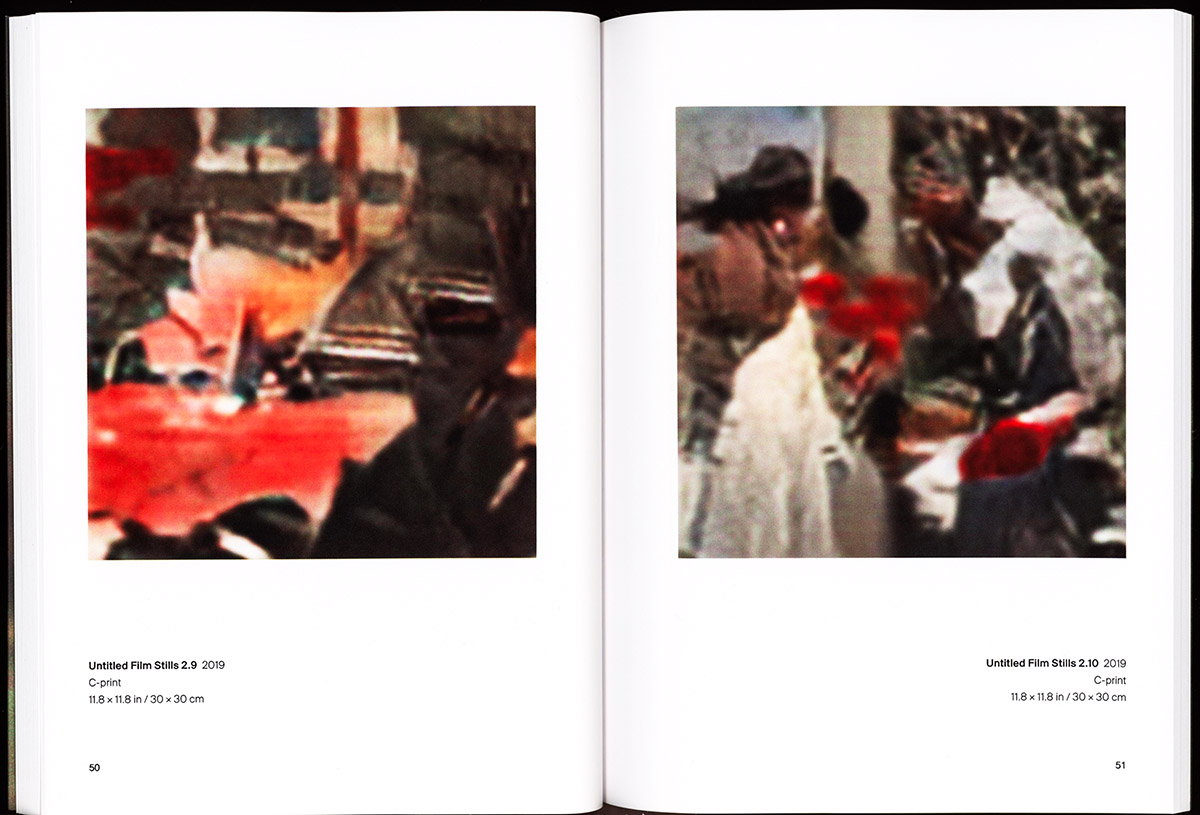
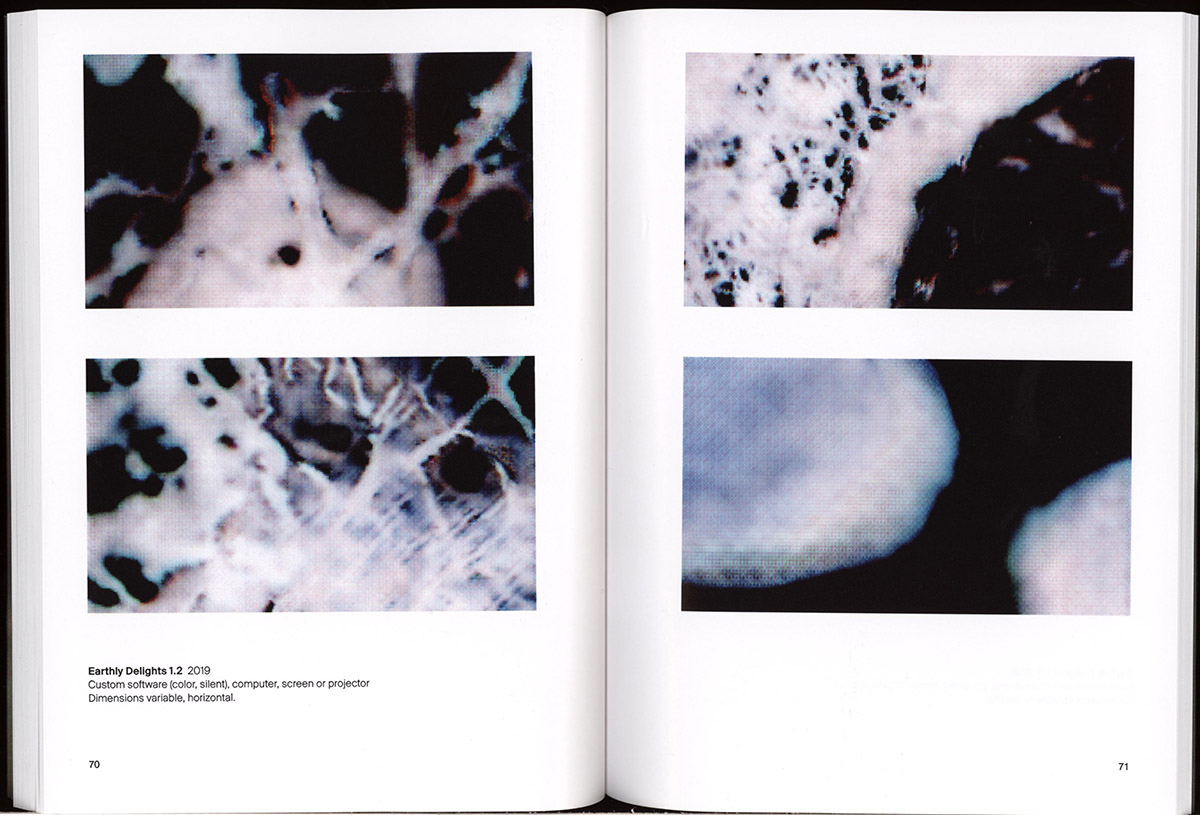
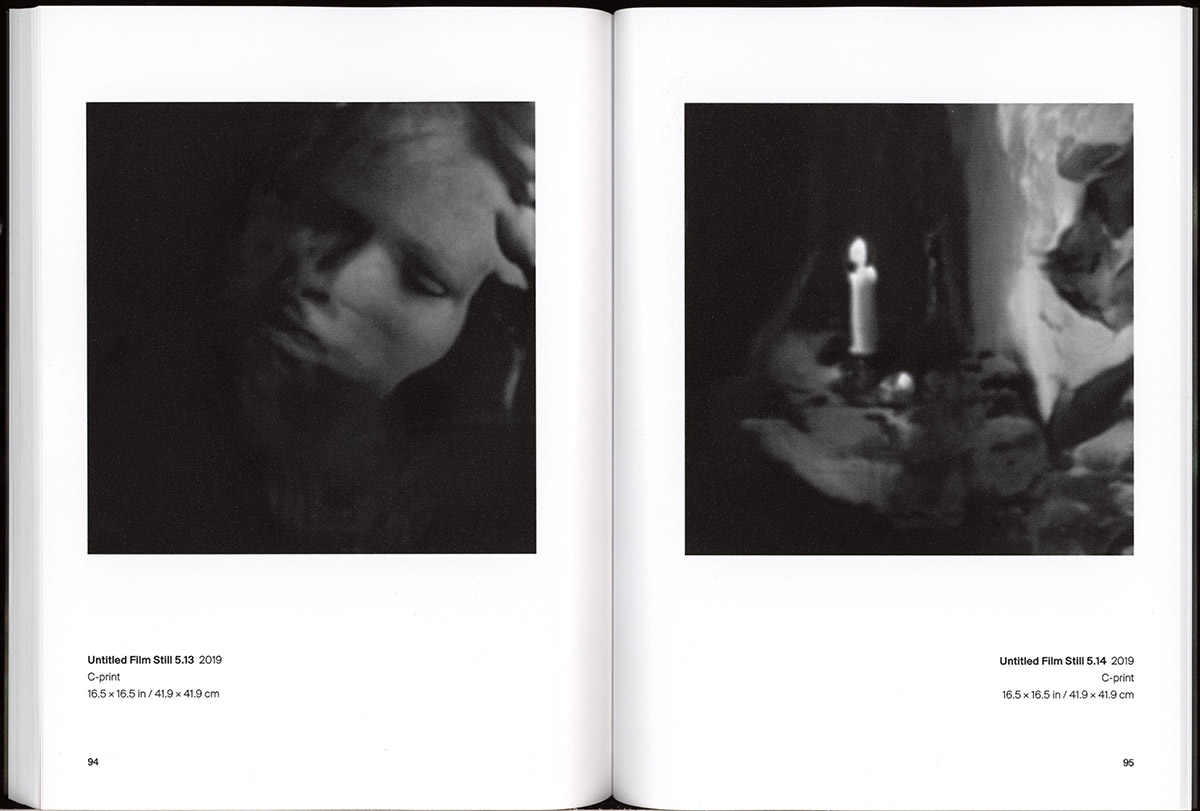
The several pages shown below present examples of Reas’s output images. All of them are new subjects, but based on previous input. They all display a sufficient amount of ambiguity to let the viewer surmise about possible meanings. While the latest AI images nowadays are able to generate more detailed pictures than double pages 24 to 25 shown below, the ambiguity and intrigue of images shown on pages 94 to 95 are as perfect as can be wished for. I chose to review this book because of the unmatched dreaminess of these early AI pictures. The volume contains two series of “Untitled Film Stills” and one series of “Earthly Delights.” One’s imagination can go wild!
Much has been done in the area of AI images since Casey Reas first published this volume, but the basic principles and techniques still hold true: many surprises are in store for those who step into this developing area of AI-supported images, and I leave it up to the interested reader to delve further into Reas’s explanations and early output, pointing to the future of AI-supported images in which we find ourselves right now.
____________
Gerhard Clausing, PBJ Editorial Consultant and Editor Emeritus, is an author and artist from Southern California and from Franconia.
____________
Casey Reas – Making Pictures with Generative Adversarial Networks
Author and Artist: Casey Reas
Texts: Foreword by Kenrick McDowell and Eva Kozanecka; Introduction by Nora N. Khan; Casey Reas
Language: English
Publisher: Anteism Books, Montreal, Canada; © 2019
Paperback, illustrated cover with flaps and foil stamping; 112 pages; 6 x 8 inches (15.3 x 20.3 cm); second revised edition; printed and bound by BookArt, Montreal; ISBN 978-1-926968-47-6
____________
* Double page photographed from: Moholy-Nagy, ed. by Richard Kostelanetz (Prager Publishers, Inc., New York, 1974; Documentary Monographs in Modern Art series).
Articles and photographs published in the PhotoBook Journal may not be reproduced without the permission of the PhotoBook Journal staff and the photographer(s). All images, texts, and designs are under copyright by the authors and publishers.
 PhotoBook Journal
Leave a comment