Review by Paul Anderson •
In 1971, singer-songwriter Steve Goodman penned the song “City of New Orleans,” which poetically captures a ride on the Illinois Central Railroad southbound out of Chicago. Wrapped up in the lyrics are images of Americana and the local landscape as the train “Rolls along past houses, farms and fields.” Much more than the train itself, this song captured the soul of that rail line and the society it served. The first two lines of the refrain tell it all:
Good morning, America, how are you?
So don’t you know me I’m your native son
Much in that same vein, but in a different medium, photographer William Cope has published a series of photobooks called The Rail Way that capture the cultural essence of four rail lines, one in Australia and three in India. They tell interesting stories about unique and colorful railways that had their beginnings in the late 19th or early 20th centuries, and were still in operation when these photographs were taken in the 1970’s and 1980’s. The titles of the books are Cement, Mountain: Matheran, Mountain: Darjeeling, and Mountain: Ootacamund.
Each book is, in effect, a brief historical survey. All have photographs of a rail line, surrounding scenery, rail cars, locomotives, railroad workers, passengers and civilians. The images are accompanied by substantial text that discuss the line’s historical importance and impact.
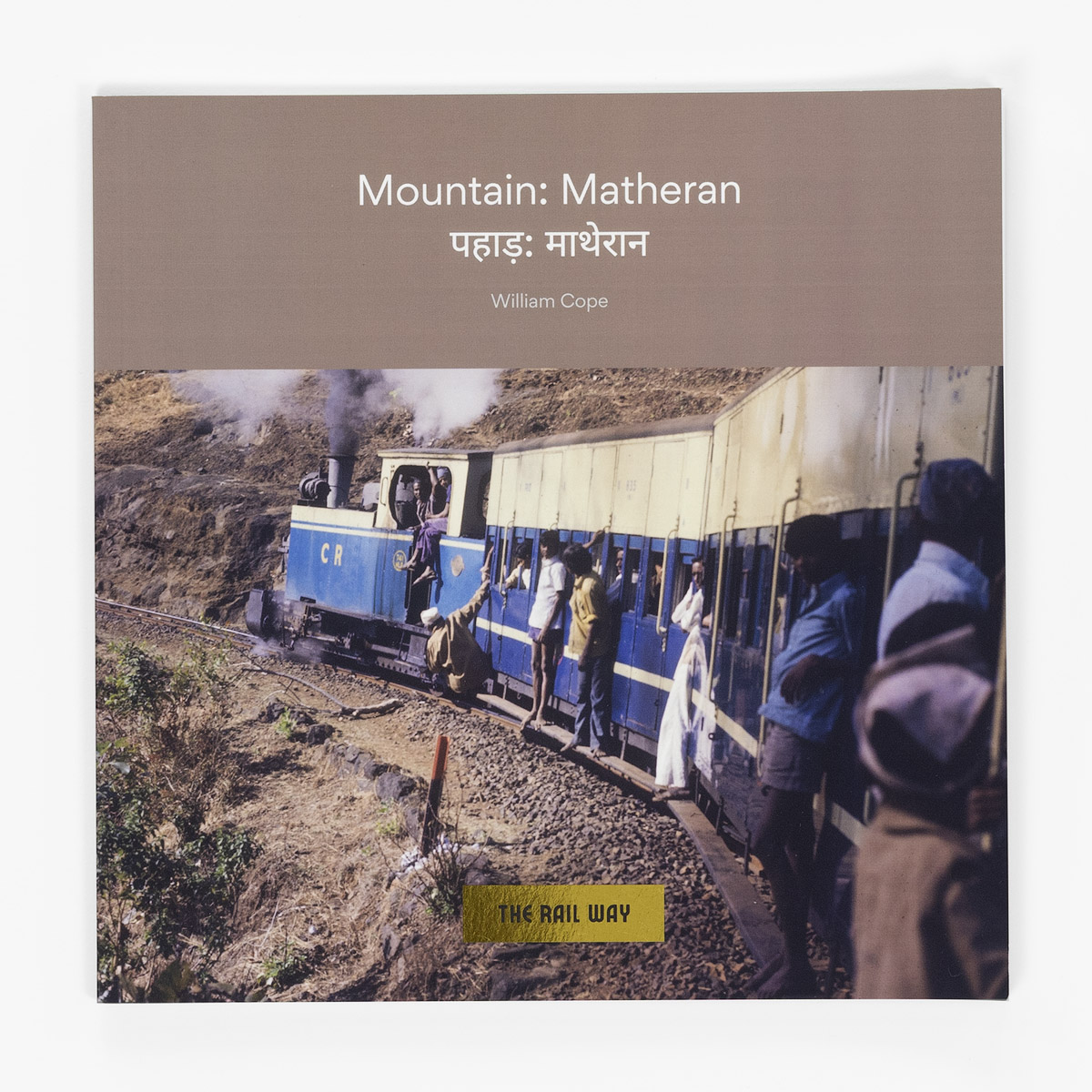
The subject of this review is the book Mountain: Matheran. This book concerns the 78-mile and approximately 4-hour train trip from Mumbai to Matheran in the mountains to the south and east of Mumbai, at 2,638 feet above sea level. Primarily a passenger train, it brought its passengers out of the heat of Mumbai to the relatively cooler mountain climes.
The book opens with a 4-page essay emphasizing the challenge of a mountain route on a conveyance originally meant for horizontal travel. The essay reflects on the colonial past of India, and discusses how this railway served the British elite.
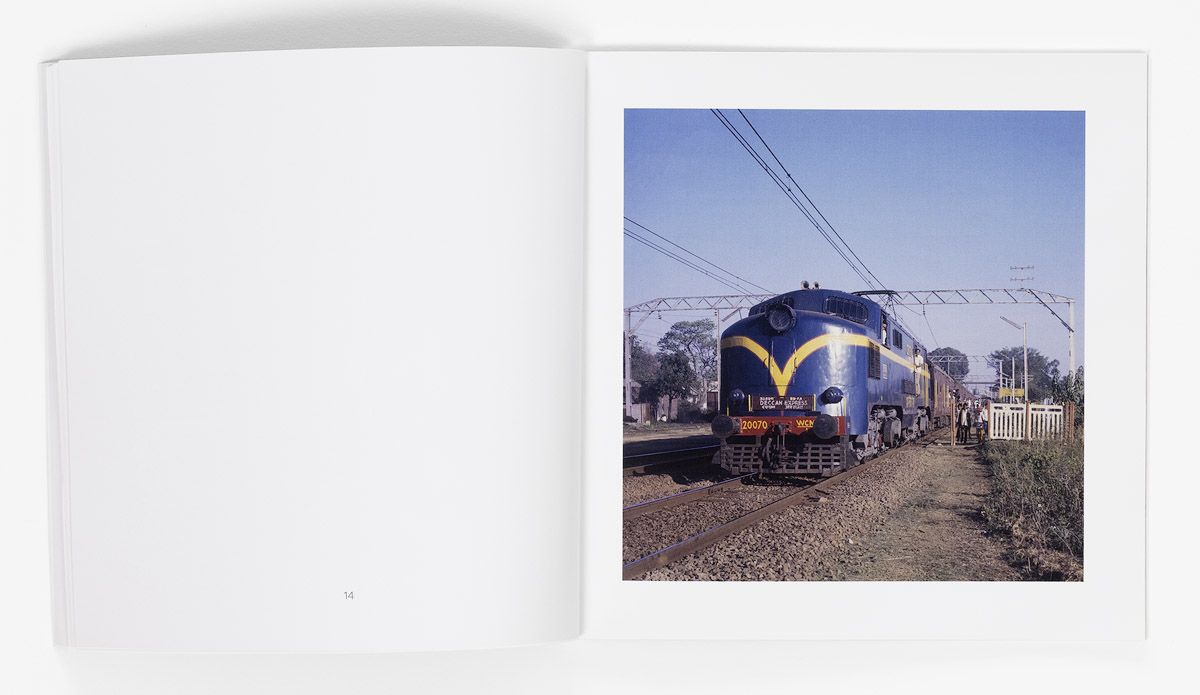
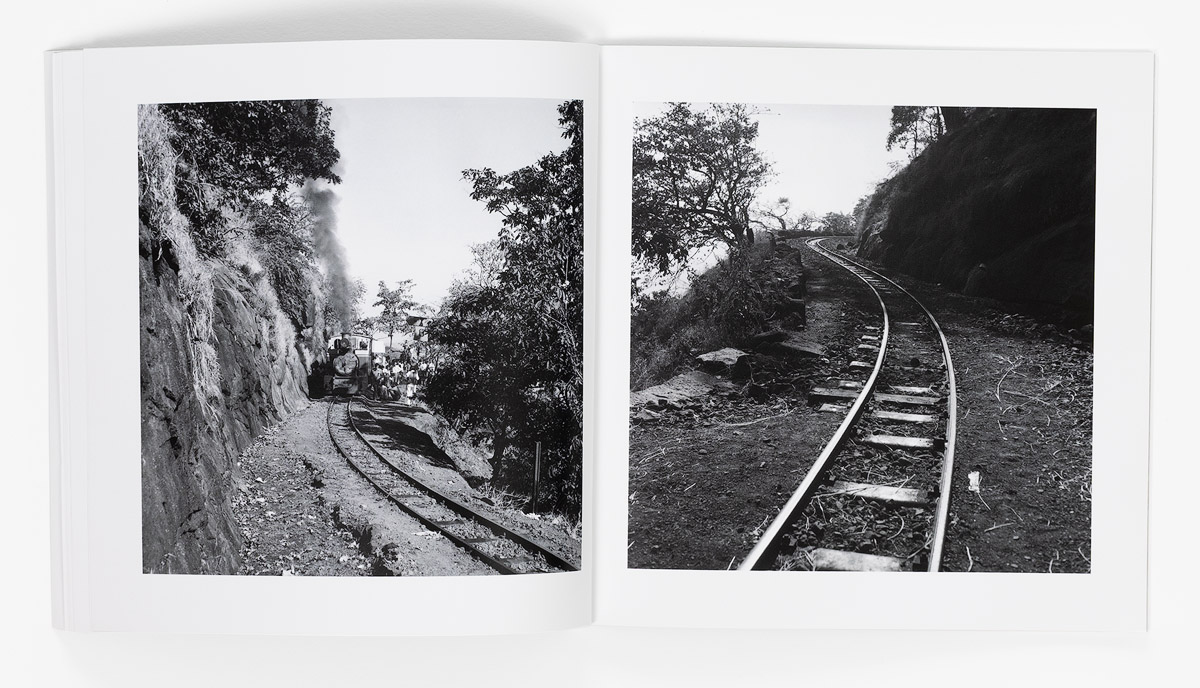
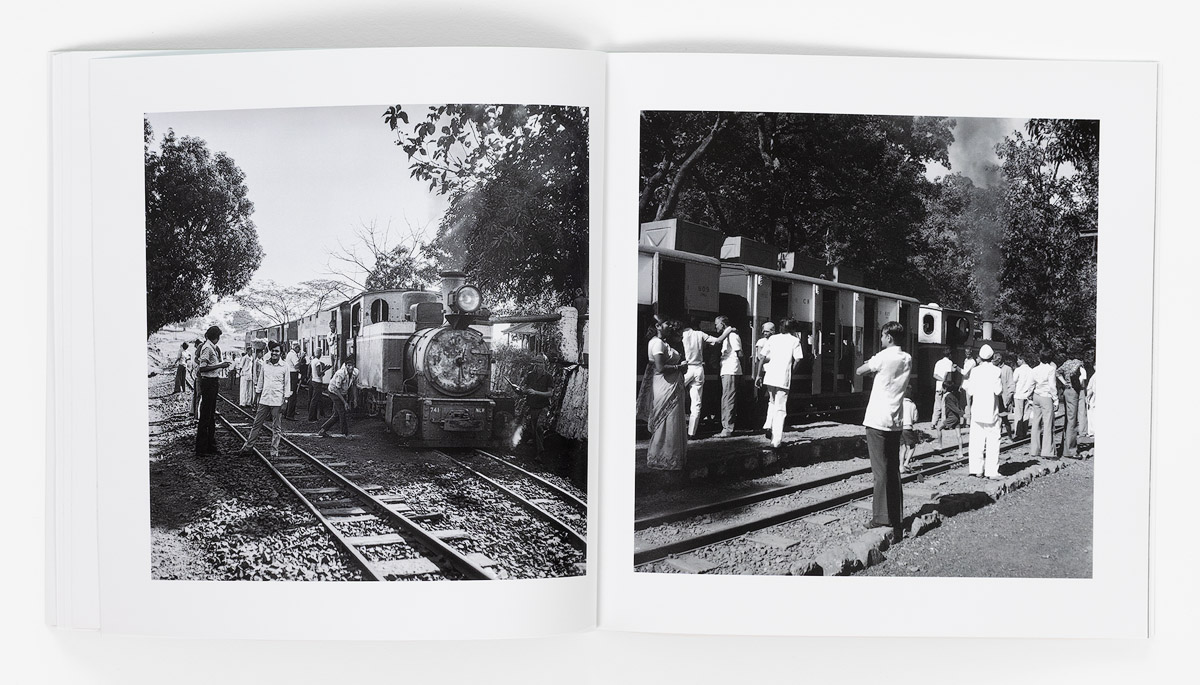
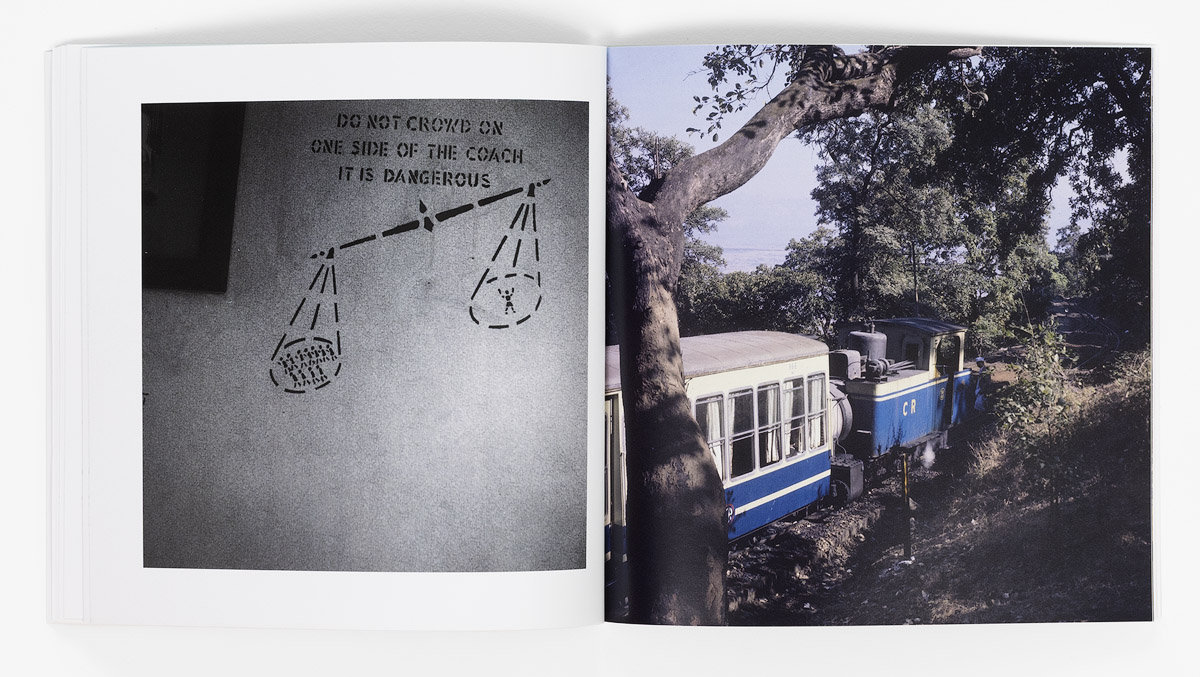
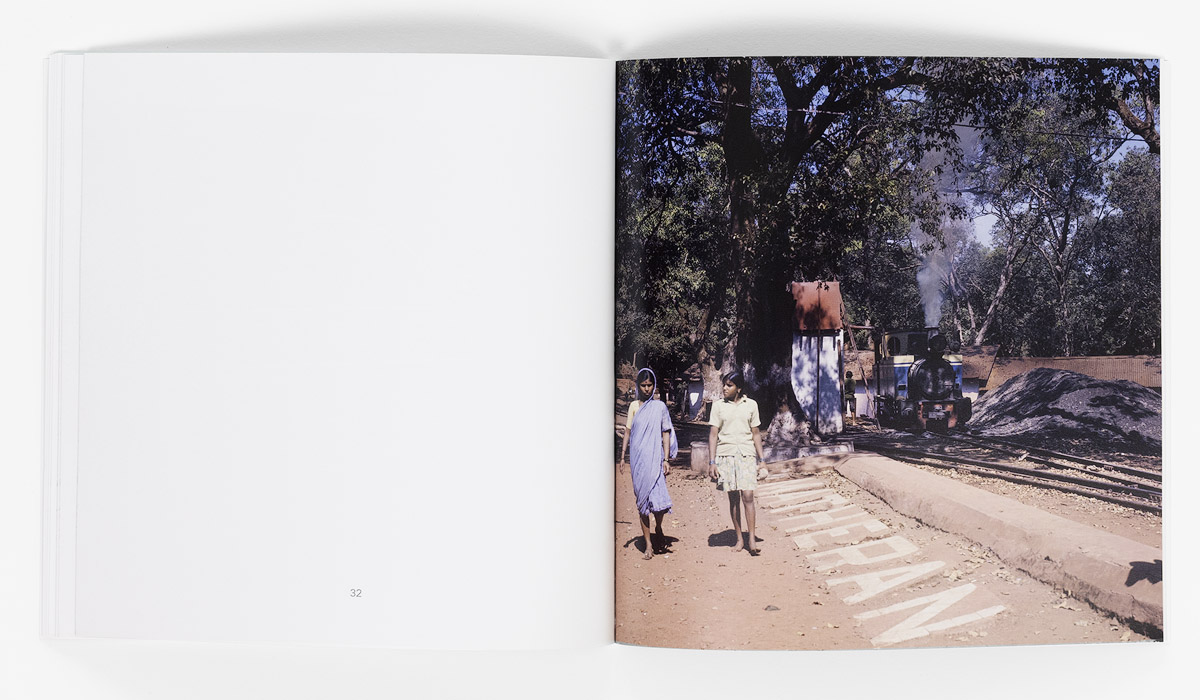
The photographs follow, highlighting mountain scenery, unusual looking locomotives, aging railroad infrastructure, and the many people that used the rail line. These trains were designed for steep grades and tight curves, making them an interesting subject for photography. The photographs are all from January 1977, and are in color and black and white.
The book concludes with a 4 page essay describing the specifics of the line from Mumbai to Matheran, including the history of the line and its construction, its common uses, its cultural impact, the locomotives, and a brief discussion of Matheran itself.
When taken together, the essays and photographs lay the groundwork for a question that the photographer raises in the introductory essay:
“In their mountain landscapes, these three railways are without doubt beautiful. The pictures speak to that. But behind the picturesque of the images are frequently fraught human stories. The question for each line: what does the railway mean?”
The ‘meaning’ of this railway will naturally be viewed differently by various groups. Historians might view it as a projection of power by colonial rulers. The local population might view it as a hazardous source of employment. The local government and monied interests might view it as an economic driver and as a means of transportation for tourists.
This book, although modest in size and appearance, is quite an interesting combination of text and photographs. It describes a piece of world history where the installation of a railway line significantly impacted culture, community, political structure, and economic development.
Two other books in this series by William Cope are reviewed in PhotoBook Journal. They are Cement and Mountain: Darjeeling. The book Mountain: Ootacamund was not available for review.
This book will be of interest to railway buffs, railroad historians, and those who enjoy photographing trains.
_____
Paul Anderson is a photographer/digital artist, working in Hermosa Beach, CA
_____
William Cope – Mountain: Matheran
Photographer: William Cope (born in Australia, currently resides in Champaign, Illinois)
Publisher: Immaterial Books, Champaign, Illinois, United States, Copyright 2023
Essays: A general essay on the nature of these city-to-mountain railways, and a second essay about the specific route of the train to Matheran.
Text: Hindi and English
Perfect Bound, 8 inches by 8 inches, 44 pages, 15 photographs, a limited edition of 100 that are numbered and signed. Includes notes and a list of photographs.
_____
Articles and photographs published in the PhotoBook Journal may not be reproduced without the permission of the PhotoBook Journal staff and the photographer(s). All images, texts, and designs are under copyright by the authors and publishers.
 PhotoBook Journal
Leave a comment